Written by: Luis Teran, Co-founder, CEO, TenantEvaluation | Last updated: July 28, 2026
Key Takeaways for Florida Community Associations
- FCRA compliance requires a documented permissible purpose, standalone written consent, and accurate identity verification before any tenant screening report is pulled.
- Every step of the seven-step FCRA checklist, from permissible purpose through dispute resolution, must be followed to avoid statutory damages, punitive awards, and attorney fees.
- Common violations include duplicate records, outdated information, missing pre-adverse notices, and failure to reinvestigate disputes within 30 days.
- Direct bureau reseller relationships, biometric identity verification, and automated adverse-action workflows reduce the risk of mismatched records and regulatory enforcement actions.
- Florida community associations can operationalize every FCRA requirement with TenantEvaluation’s SafeCheck+ audit trails, IDVerify, and QuickApprove board-ready workflows — see how these tools work together in a live demo.
7-Step FCRA Compliance Checklist for Tenant Screening
Step 1: Establish and Document Permissible Purpose
FCRA rules allow use of a consumer report only when a legitimate permissible purpose exists and is documented. Before a single record is pulled, the CRA must verify that the requesting party has a clear, recorded reason for access.
Common violations regulators flag at this step:
- Pulling reports without a signed end-user agreement certifying permissible purpose
- Allowing unauthorized staff to initiate screening requests
- Failing to re-certify purpose when a new community or portfolio is added
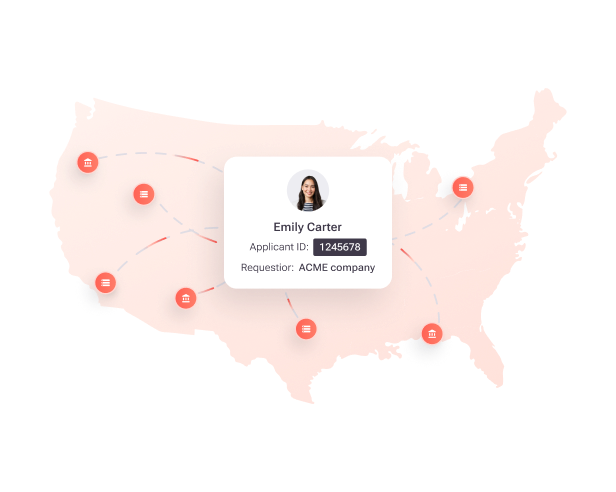
TenantEvaluation implementation: As a credentialed reseller of TransUnion and Equifax data, TenantEvaluation requires every community association to execute an end-user agreement before platform access is granted. IDVerify strengthens permissible-purpose validation by confirming applicant identity prior to screening authorization, which reinforces audit defensibility from the first touchpoint.
Step 2: Obtain Standalone Written Consent
Clear, conspicuous written authorization from the consumer must be obtained before any consumer report is requested. For tenant screening, this consent must stand alone and cannot be buried in a lease or general application form.
Common violations regulators flag at this step:
- Embedding consent language inside a multi-page rental application
- Using verbal or implied consent rather than a signed document
- Failing to retain a copy of the signed authorization
TenantEvaluation implementation: The platform presents a standalone digital consent form with e-signature capture before any background check is initiated. SafeCheck+ logs the timestamp, IP address, and document version, creating an immutable audit record for every application.
Step 3: Verify Applicant Identity Before Screening
Under the FCRA, consumer reporting agencies must achieve “maximum possible accuracy,” supported by documented data sources and matching logic. Accurate matching starts with confirmed identity, not just basic personal details.
Common violations regulators flag at this step:
- Matching records using name and date of birth alone, which produces false positives
- Attributing criminal records to the wrong individual due to similar names, the basis of the January 2026 Davis v. Checkr class action
- Accepting uploaded ID documents without liveness or biometric validation
TenantEvaluation implementation: IDVerify runs government ID validation, AI-powered liveness detection, and biometric selfie-to-ID comparison natively inside the platform. This shifts Florida community associations from document-based review to biometric-confirmed identity verification before any report is generated.

Step 4: Ensure Maximum Possible Accuracy in Report Assembly
15 U.S.C. § 1681e requires every consumer reporting agency to maintain reasonable procedures that prevent violations of section 1681c and limit reports to the purposes listed under section 1681b. The July 2026 FTC settlement with RentGrow for $2.25 million cited duplicate criminal and eviction records that made applicants appear to have more convictions than they actually had.
Common violations regulators flag at this step:
- Duplicate entries for the same criminal or eviction proceeding
- Reporting eviction or non-conviction criminal records older than seven years, which violates FCRA § 1681c(a)
- Including expunged records that are legally removed from public view
- Relying solely on national database aggregation without direct county-court verification
TenantEvaluation implementation: As a direct TransUnion and Equifax reseller, TenantEvaluation accesses bureau data under strict bureau rules, not gray-market or offshore data sources. SafeCheck+ audit tools document every data source and matching decision, which supports the “maximum possible accuracy” standard regulators enforce.
Step 5: Deliver the Pre-Adverse Action Notice and Consumer Report
A compliant adverse-action workflow routes a file into pre-adverse review before any final denial is issued, including sending the consumer report and Summary of Rights so applicants can dispute errors. This pre-adverse step is legally required and frequently skipped.
Common violations regulators flag at this step:
- Issuing a final denial without first providing the pre-adverse notice and report copy
- Failing to include the FCRA Summary of Rights with the pre-adverse package
- Not enforcing a waiting period before the final adverse action letter is sent
TenantEvaluation implementation: Automated adverse-action templates within the platform enforce the pre-adverse sequence by locking the workflow at the system level. This means the system cannot advance to a final denial until the configured waiting period, with 5 business days as a baseline and longer windows in higher-risk jurisdictions, has elapsed, which prevents premature denials that create FCRA exposure.
Step 6: Issue a Compliant Final Adverse Action Notice
Under the FCRA, the final adverse action notice must identify the consumer reporting agency, describe the consumer’s rights, and explain that the CRA did not make the decision. The adverse action notice remains one of the most commonly violated FCRA requirements in residential screening.
Common violations regulators flag at this step:
- Omitting the CRA’s contact information from the notice
- Failing to disclose that the CRA, not the association, did not make the decision
- Not disclosing the credit score, score range, and top four factors when a score was used
TenantEvaluation implementation: The platform auto-populates all required FCRA notice fields, including CRA name, address, phone number, decision reasons, and score disclosures, from the consumer report data. The QuickApprove board dashboard maintains a timestamped record of every notice sent.
Step 7: Process Disputes Within Required Timelines
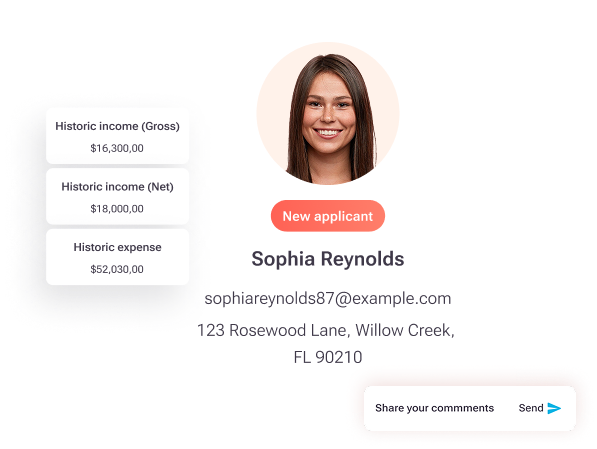
Tenant screening companies must investigate consumer disputes regarding report accuracy within 30 days under FCRA § 1681i. The FTC’s RentGrow complaint specifically cited the company for labeling disputes as “invalid” and failing to take further action, including on disputes about duplicate records.
Common violations regulators flag at this step:
- Dismissing disputes without reinvestigation
- Notifying the landlord of “no change” after a consumer successfully disputes information
- Exceeding the 30-day reinvestigation window
TenantEvaluation implementation: SafeCheck+ audit trails log every dispute submission, reinvestigation action, and resolution with timestamps. The platform’s direct bureau relationships allow corrections to flow from the source, and the QuickApprove dashboard notifies the association of any post-dispute report updates.
The following table summarizes the most common FCRA violations across these seven steps, contrasting red-flag practices with compliant alternatives and linking each to the enforcement actions that established the standard.
Red Flags vs. Compliant Practices in Tenant Screening
| FCRA Obligation | Red Flag Practice | Compliant Practice | Enforcement Reference |
|---|---|---|---|
| Permissible Purpose | No end-user agreement, staff pull reports without certification | Signed end-user agreement on file, access restricted to credentialed users | 15 U.S.C. § 1681b |
| Report Accuracy | Duplicate criminal or eviction entries, records older than 7 years included | De-duplication logic and FCRA § 1681c(a) age filters applied before report delivery | RentGrow settlement (see Step 4); FTC v. AppFolio, $4.25M settlement (2020) |
| Adverse Action Notice | Final denial sent without pre-adverse notice or waiting period, CRA contact info omitted | Automated pre-adverse and final notice with all required FCRA fields, waiting period enforced by system | One of the most commonly violated FCRA requirements in residential screening |
| Dispute Processing | Disputes labeled “invalid” without reinvestigation, landlord told “no change” after successful dispute | All disputes logged, reinvestigated within 30 days, and outcomes accurately communicated to all parties | FTC v. RentGrow (2026) |
Recognizing these red flags is only the first step. Florida community associations also need to confirm that any current or prospective screening provider can deliver compliant practices across each of these obligations.
What to Ask Your Screening Provider Before You Sign
Florida CAMs and Boards evaluating a CRA should request direct answers to the following questions before signing any agreement.
- Are you a direct reseller of TransUnion and Equifax data? Providers that aggregate data from secondary vendors introduce accuracy gaps and cannot guarantee bureau-level data integrity. TenantEvaluation is a legitimate reseller of TransUnion and Equifax data, accessed under strict bureau rules with regular compliance reviews and audits.
- How do you document permissible purpose for each community association client? Once you confirm direct bureau access, the provider should describe a signed end-user agreement and a credentialing process that verifies the association’s legal standing before platform access is granted.
- What audit trail does your platform maintain for every application? Beyond permissible purpose, SafeCheck+ should log every consent event, report pull, notice delivery, and dispute action with timestamps, producing the documentation an attorney’s letter demands.
- Does your platform enforce the pre-adverse waiting period automatically? Manual workflows often fail at this step. TenantEvaluation’s automated adverse-action templates enforce the waiting period at the system level and prevent premature final denials.
- Is identity verification biometric or document-only? Document-only matching drives much of the recent class action litigation against screening providers. IDVerify adds government ID validation, liveness detection, and biometric facial matching natively inside the TenantEvaluation workflow.
- Is your platform designed for community associations or generic rentals? Generic platforms lack the board-ready workflows, Florida-specific configuration, and QuickApprove voting dashboards that community associations require.
Request a walkthrough of these vendor evaluation criteria to see how TenantEvaluation’s direct bureau reseller credentials, SafeCheck+ audit trails, and board-ready workflows answer every question on this list.
Featured-Snippet-Ready Checklist: 7 Steps to FCRA Compliant Tenant Checks
- Establish and document permissible purpose — Execute a signed end-user agreement certifying a legitimate business need under 15 U.S.C. § 1681b before any report is requested.
- Obtain standalone written consent — Collect a separate, signed authorization from the applicant before initiating any background check, and retain a timestamped copy.
- Verify applicant identity before screening — Use biometric identity verification, including government ID validation, liveness detection, and facial matching, to prevent mismatched records.
- Ensure maximum possible accuracy in report assembly — Use direct bureau data, apply FCRA § 1681c(a) age filters, and de-duplicate criminal and eviction records before delivery.
- Deliver the pre-adverse action notice and consumer report — Send the report copy and FCRA Summary of Rights to the applicant before any final denial decision is communicated.
- Issue a compliant final adverse action notice — Include the CRA’s name, address, and phone, state the CRA did not make the decision, and disclose the applicant’s right to a free report copy within 60 days.
- Process disputes within 30 days — Log every dispute, reinvestigate with the original data source, and accurately communicate outcomes to all parties within the FCRA § 1681i window.
Frequently Asked Questions
What is the difference between a CRA and a landlord under the FCRA for tenant screening purposes?
A Consumer Reporting Agency is the company that assembles and sells the consumer report, which in tenant screening is the background screening company. The landlord or community association is the “user” of the report. The FCRA assigns distinct obligations to each party. The CRA must maintain reasonable procedures for accuracy, furnish reports only for permissible purposes, and process disputes within 30 days. The user, meaning the association or management company, must obtain written consent before ordering the report, issue a pre-adverse notice and final adverse action notice when the report contributes to an unfavorable decision, and identify the CRA in that notice. When a Florida community association uses a non-specialized or non-compliant CRA, both parties can face liability, with the CRA exposed for accuracy failures and the association exposed for notice failures.
How long does a Florida community association have to send an adverse action notice after denying an applicant?
The FCRA requires that an adverse action notice be provided to the consumer when an adverse action is taken based on a consumer report. In practice, the pre-adverse notice with the consumer report and Summary of Rights should be sent before the final denial decision is communicated, and the final adverse action letter should follow after the configured waiting period described in Step 5, typically 5 business days and extended in jurisdictions with heightened scrutiny. Florida community associations that use automated platforms like TenantEvaluation benefit from system-enforced waiting periods that prevent premature final denials and generate timestamped documentation of every notice event.
What specific FCRA violations have resulted in enforcement actions against tenant screening companies?
Federal regulators have pursued several major enforcement actions in recent years. In July 2026, the FTC announced a $2.25 million settlement with RentGrow for the duplicate-record and dispute-handling failures detailed in Step 7, plus additional accuracy violations. In December 2020, AppFolio reached a $4.25 million FTC settlement for reporting eviction and non-conviction criminal records older than seven years and for failing to verify accuracy of records from third-party vendors. TransUnion and its subsidiary TransUnion Rental Screening Solutions paid $15 million to settle FTC and CFPB charges related to inaccurate tenant screening reports. A January 2026 class action, Davis v. Checkr, alleges that the company attributed criminal records belonging to another person to the plaintiff. The pattern across all of these actions remains consistent: duplicate records, mismatched identities, outdated information, and inadequate dispute handling.
Does a Florida community association need FCRA consent even if it is not a landlord in the traditional sense?
Yes. Florida condominiums and HOAs that screen prospective residents, whether tenants or purchasers, are users of consumer reports under the FCRA whenever they rely on a third-party CRA to produce those reports. The FCRA’s permissible purpose and adverse action requirements apply regardless of whether the association holds a lease or deed. Community associations that use TenantEvaluation benefit from a platform designed specifically for this structure. The association retains decision-making authority while TenantEvaluation handles data provision, consent workflows, and adverse action documentation, which maintains the clear separation between user and CRA that regulators expect.
What makes TenantEvaluation more compliant than generic tenant screening platforms for Florida community associations?
Several structural differences distinguish TenantEvaluation from generic screening tools. First, TenantEvaluation is a direct reseller of TransUnion and Equifax data, so reports draw from bureau-level sources under strict bureau rules rather than secondary data aggregators. Second, SafeCheck+ audit trails document every consent event, report pull, notice delivery, and dispute action with timestamps, producing the documentation that regulators and plaintiff attorneys request. Third, IDVerify adds biometric identity verification, including government ID validation, liveness detection, and facial matching, natively inside the workflow, which reduces the mismatched-record risk that has driven recent class action litigation. Fourth, the QuickApprove board dashboard and automated adverse-action templates are configured for community association workflows, not generic multifamily rentals. Finally, TenantEvaluation’s Florida-specific setup accommodates the unique governing documents, screening criteria, and approval structures of condominiums and HOAs, including 55+ Communities Verification for age-restricted communities that need standardized documentation handling.
Conclusion: Turning FCRA Rules into Daily Practice
FCRA compliance for tenant screening functions as a seven-step operational chain in which a failure at any link creates liability for both the CRA and the community association. The enforcement record is clear: Since 2008, the FTC has settled 34 enforcement actions related to consumer reporting violations of the FCRA, with recent actions targeting duplicate records, mismatched identities, inadequate dispute handling, and deficient adverse action notices. Florida CAMs, Board Presidents, and property management executives cannot safely rely on generic platforms that were not built for community association workflows.
TenantEvaluation operationalizes every step of this checklist through direct TransUnion and Equifax reseller relationships, SafeCheck+ audit trails, IDVerify biometric identity verification, automated adverse-action templates, and the QuickApprove board-ready dashboard, all inside one platform built specifically for Florida community associations, with FCRA compliance as the foundation, not an afterthought.
See the full compliance workflow in action, from permissible purpose documentation through dispute resolution, in a demo tailored to your Florida community association’s screening requirements.
