Written by: Luis Teran, Co-founder, CEO, TenantEvaluation | Last updated: August 20, 2026
Key Takeaways for Florida HOAs and Condos
- Secure tenant screening for Florida HOAs and condos requires FCRA compliance, biometric verification, and detailed audit trails, not generic landlord tools.
- TenantEvaluation is a direct reseller of TransUnion and Equifax data, which removes gray-market sourcing risks that generic screening platforms create.
- Automatic PII redaction, end-to-end encryption, and PCI Level 1 compliance protect sensitive applicant data at every step of the screening workflow.
- Biometric identity verification with IDVerify+ and faster board approvals with QuickApprove reduce fraud and cut approval times by up to 70%.
- Lease Tracking and revenue-sharing models help Florida associations streamline operations and generate surplus fees, so explore TenantEvaluation today.
Security Comparison: 7 Key Features
The following table shows how TenantEvaluation’s security architecture compares to generic landlord tools across seven critical features for Florida associations.
| Security Feature | TenantEvaluation | Generic Tools (TransUnion SmartMove, TurboTenant, Avail) |
|---|---|---|
| FCRA Reseller Status | Direct reseller of TransUnion and Equifax data under strict bureau rules | Typically third-party aggregators, bureau relationship varies or is indirect |
| Biometric Verification | AI liveness detection, government ID validation, and selfie-to-ID biometric match via IDVerify+ | Not available, document upload only |
| Automatic PII Redaction | Automatic redaction of SSNs and sensitive identifiers, PCI Level 1 compliant | Manual handling, no automatic redaction standard |
| Board Audit Trails | Timestamped, detailed audit trail on every application action | Not designed for board review, no association-specific audit log |
| Association-Specific Workflows | Built exclusively for HOAs, condos, and management companies with Florida-specific configuration | Built for individual landlords, no HOA or condo workflow support |
| Data Encryption | End-to-end encryption for data at rest and in transit | Varies by vendor, encryption standards not consistently disclosed |
| Revenue Model | Pay-per-application, revenue-sharing returns surplus fees to the association | Monthly subscription or per-report fee, no revenue-sharing |
1. FCRA Compliance Built Into Every Application
The Fair Credit Reporting Act governs every consumer report used in a housing decision. When a rental decision is based in whole or in part on a consumer report, the applicant must receive a pre-adverse action notice, a copy of the report, the FTC Summary of Rights, a reasonable opportunity to dispute errors, and then a final adverse action notice. That obligation stays with the housing provider even when AI or algorithmic tools support the decision.
Florida law adds its own requirements for tenant screening disclosures, denial notices, and record maintenance. Associations must meet both federal FCRA rules and state-level obligations during every application review.
TenantEvaluation embeds automated adverse action workflows, strict permissible-purpose controls, and built-in audit trails directly into the platform. Every application across its 5,000+ communities follows the same FCRA-aligned sequence, so individual managers do not rely on manual workarounds or ad hoc processes.
2. Direct Credit Bureau Data for Clean, Auditable Reports
Direct bureau relationships give Florida associations cleaner data and lower compliance risk. Many generic tools aggregate credit and background data through intermediaries, which creates gray-market sourcing risks and unclear accountability.
TenantEvaluation acts as a direct reseller of TransUnion and Equifax data under strict bureau rules with regular compliance reviews and audits. Community associations gain clear documentation of where data comes from and how it is handled.
Willful noncompliance with any FCRA requirement, including adverse-action notice rules, carries liability for either actual damages or statutory damages of $100–$1,000 per violation, plus possible punitive damages and attorney’s fees. For a Florida management company processing thousands of applications each year, a non-compliant or opaque data source creates significant financial exposure.
Direct bureau reseller status also keeps a clear separation between data provision by TenantEvaluation and decision-making by the association. That structure supports defensible governance in a way generic landlord tools rarely match.
3. Automatic PII Redaction and Encryption for Sensitive Data
Manual handling of Social Security numbers, bank account details, and government ID copies creates one of the highest-risk activities in any screening workflow. HIPAA imposes $50,000 per incident for unintentional violations involving personal identifiers, while GDPR penalties reach 4% of global annual revenue. These penalties show how costly weak redaction can become in any system that processes applicant PII.
TenantEvaluation automatically redacts sensitive identifiers from uploaded documents before they are stored or shared. The platform is PCI Level 1 compliant and uses end-to-end encryption as a baseline control for data at rest and in transit.
These automated safeguards translate directly to operational savings. One Florida management company documented $240,000 in annual savings after switching from paper-based processes and removing manual handling of sensitive resident information.
Every redaction action is logged, which produces a defensible compliance record. A defensible redaction workflow must ensure the original unredacted copy is destroyed at processing so it does not linger on a server waiting to be breached. TenantEvaluation’s architecture supports that standard across all communities.
See how automatic PII redaction works in your workflow
4. Biometric Identity Verification with IDVerify+
Biometric identity verification helps Florida associations stay ahead of modern rental fraud. The National Multifamily Housing Council’s 2024 Pulse Survey found that 93.3% of rental-housing operators experienced some form of fraudulent activity, with 70% of those reporting identity theft, fraudulent ID, or stolen personal information. AI-generated document fraud now enables synthetic pay stubs and fabricated identities that pass simple visual review.
TenantEvaluation addresses this risk with IDVerify+, a biometric identity verification layer embedded directly into the screening workflow. It combines government-issued ID validation, AI-powered liveness detection, facial landmark recognition, and selfie-to-ID biometric comparison inside TenantEvaluation without external portals.
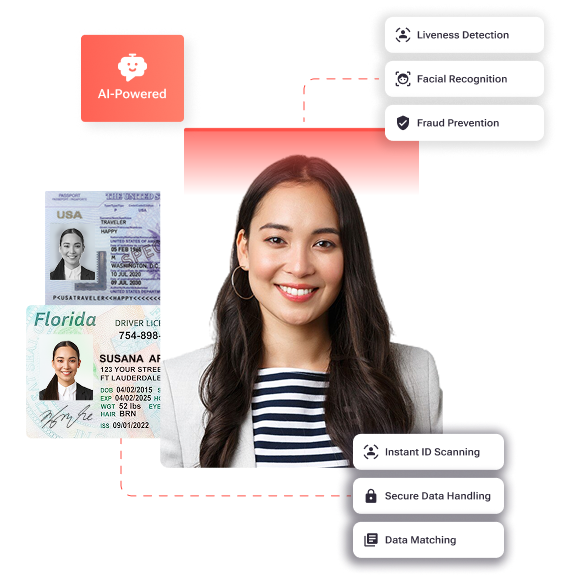
Advanced biometric systems detect signs of life such as blood flow to prevent fraudsters from using photos or pre-recorded videos during facial recognition checks. IDVerify+ applies these controls before any approval decision, which reduces identity fraud risk for boards and managers.
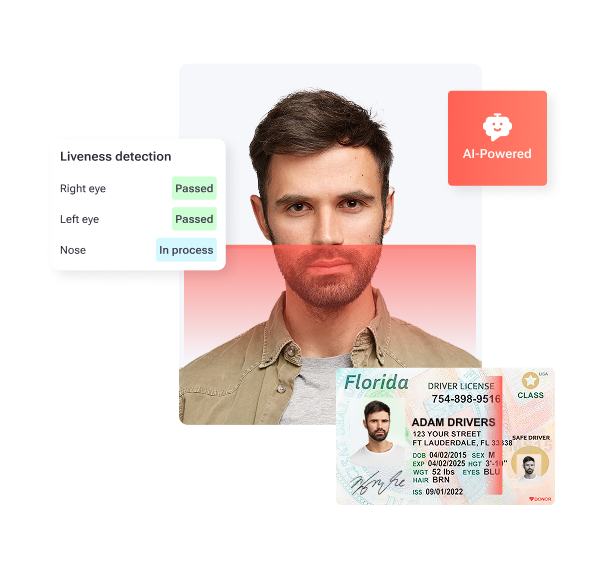
For Florida HOA and condo boards, IDVerify+ shifts the process from document-based review to biometric-confirmed identity verification. Communities can configure this layer by association or portfolio, so each property matches its own risk profile.
Start protecting your community with biometric verification
5. Faster Board Approvals with QuickApprove Workflows
Faster approvals help Florida associations protect revenue and reduce frustration for applicants and managers. Applications stuck in email chains, waiting for board review, or missing follow-up steps create bottlenecks that grow during peak leasing seasons.
Florida HOA rental approval workflows require separating the property manager’s screening decision from the association’s separate approval process. Each step uses distinct criteria and documentation, which generic tools rarely support in a structured way.
QuickApprove is TenantEvaluation’s accelerated approval workflow for CAMs, boards, and property management teams inside one connected platform. It starts with real-time application tracking that removes the need to chase email updates.
That tracking powers automated communication support, which keeps applicants informed at each stage without manual follow-up. Once an application reaches board review, the platform generates customized approval letters and a personalized welcome package, then presents everything in a review and voting dashboard that replaces email chains and spreadsheets while preserving oversight and visibility.
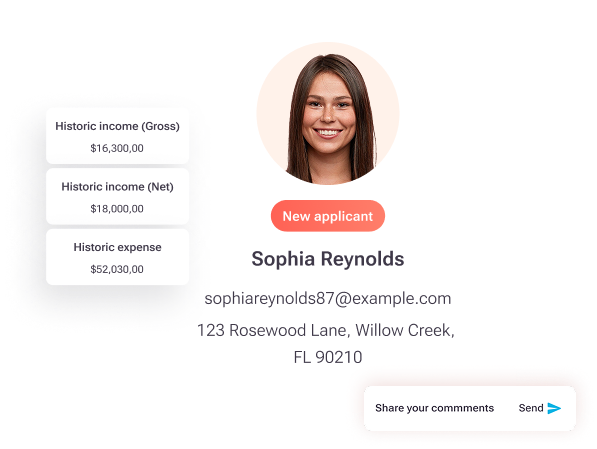
TenantEvaluation clients report the approval time reductions mentioned earlier, with some communities processing applications in days instead of weeks. QuickApprove gives high-volume and complex communities a faster, clearer, and more consistent approval experience.
Show me how QuickApprove cuts approval times by 70%
6. 55+ Communities Verification for Age-Restricted HOAs
Standardized 55+ verification helps Florida age-restricted communities stay compliant and organized. Florida leads the nation in age-restricted housing, and many associations still manage 55+ requirements through scattered emails, PDFs, and manual follow-ups.
These fragmented processes create documentation gaps, extra administrative work, and growing operational risk as portfolios expand. HOAs collect sensitive legal correspondence and financial data in addition to standard applicant information, and associations should collect only necessary information and restrict access via role-based controls.
55+ Communities Verification is a built-in capability within TenantEvaluation that standardizes how age-restricted requirements are handled across applications. It reduces manual work, supports consistent documentation, and improves efficiency for CAMs and boards managing 55+ communities at scale.

The result is a more structured process that strengthens internal control and improves record consistency across applicants and properties. TenantEvaluation’s 55+ Communities Verification supports documentation and workflow discipline while not replacing legal guidance.
7. Lease Tracking and TEpayments by Zinc for End-to-End Control
Centralized lease tracking gives Florida associations clear visibility from application to occupancy. Many communities still rely on missing lease copies, manual expiration tracking, and disconnected spreadsheets that break the audit trail once residents move in.
An audit trail in property management systems is a chronological record of who accessed what data, when, and what they did with it. Without centralized lease records, that trail becomes incomplete at the occupancy stage.
Lease Tracking is a centralized operational capability inside TenantEvaluation that connects resident onboarding, unit data, approvals, and lease documentation in one real-time workflow. It provides live lease status visibility, automated lease document collection during onboarding, unit-level tracking, and searchable digital records that remove the need for spreadsheets and scattered email chains.
TEpayments by Zinc adds a configurable payment workflow that collects application fees, deposits, and other required resident payments inside the same onboarding process. Payments move directly from the applicant to the association’s designated account, while TenantEvaluation organizes the workflow and never holds the funds.
Each association defines what to collect and at which stage, so payment collection aligns with governing documents and approval timelines. One connected workflow replaces payment chasing and manual reconciliation.
Frequently Asked Questions
Is TransUnion SmartMove legit for condos?
TransUnion SmartMove is a legitimate screening product for individual landlords, yet it is not designed for community association workflows. It lacks board-specific approval dashboards, association-level audit trails, automatic PII redaction, biometric identity verification, and the multi-stakeholder approval processes that Florida HOAs and condos require.
It also does not offer 55+ community verification, lease tracking, or integrated payment collection. For a community association managing dozens or hundreds of applications each year with board oversight and FCRA obligations, a platform built specifically for that environment, such as TenantEvaluation, delivers the structure and compliance support generic landlord tools do not provide.
Who pays for tenant screening in associations?
In most Florida community associations, the applicant pays the screening fee during the application process. TenantEvaluation’s revenue model collects the application fee from the applicant, deducts its service fee, and returns the remainder to the association or management company, which often creates a cost-neutral or revenue-generating process.
TenantEvaluation has generated over $150 million for communities through this model. Each association can configure the fee structure and timing, so payment collection aligns with governing documents and approval timelines.
What makes screening truly secure?
Truly secure tenant screening combines several layers that generic tools rarely offer together. These layers include direct credit bureau reseller relationships that remove gray-market data sourcing, automatic PII redaction that strips sensitive identifiers before storage or sharing, and end-to-end encryption for data at rest and in transit.
Security also requires biometric identity verification that confirms physical presence and ID authenticity before approval, detailed audit trails that log every application action with timestamps, and FCRA-aligned workflows with automated adverse action procedures. Security functions as the architecture of the entire platform, not a single feature.
TenantEvaluation incorporates all of these layers as its foundation for the multi-stakeholder environment of community associations and management companies.
Conclusion: Secure Screening Purpose-Built for Florida Associations
Florida HOAs and condos need screening tools that match their compliance obligations, board governance requirements, and data security standards. Generic landlord platforms do not address those needs in a consistent or auditable way.
TenantEvaluation combines direct bureau data from TransUnion and Equifax, biometric identity confirmation through IDVerify+, and detailed application audit records for CAMs, boards, and management companies. With 5,000+ communities, 100,000+ applications processed annually, and a 4.8/5 Google rating, TenantEvaluation gives Florida community associations a screening platform where security and compliance sit at the core of the design.
See how TenantEvaluation fits your association’s screening process
