Written by: Luis Teran, Co-founder, CEO, TenantEvaluation | Last updated: July 27, 2026
Key Takeaways for Florida Associations
- An FCRA-compliant tenant screening process requires written consent, permissible-purpose documentation, pre-adverse and final adverse action notices, and a documented decision trail that Florida associations must coordinate with board voting timelines.
- Standalone consent forms must identify the CAM as agent for the specific association and property, and cannot be generic management-company language if they are to satisfy FCRA §1681b.
- Board review of screening reports must produce a timestamped, attributable vote record. TenantEvaluation’s QuickApprove workflow supplies this audit-ready documentation inside a single platform.
- Age-restricted communities need standardized 55+ verification and biometric identity checks. TenantEvaluation’s 55+ Communities Verification and IDVerify+ capabilities automate these requirements while maintaining FCRA permissible-purpose records.
- Lease Tracking by TenantEvaluation connects every step of the FCRA workflow into one audit-ready system—see how Florida associations eliminate compliance gaps with a live demo of the platform.
Step 1: Issuing Adverse Action Notices for Florida Condos
FCRA requirement. FCRA §1681m requires users taking adverse action based on a consumer report to provide notice of the action plus written disclosure of any credit score used, the CRA’s name, address, and phone, a statement that the CRA did not make the decision, and the consumer’s rights to obtain a free report within 60 days and to dispute inaccuracies.
Florida overlay. Florida condo and HOA governing documents frequently require board approval before a denial is communicated. The adverse action sequence must therefore align with the board’s voting timeline, which generic landlord tools usually ignore.
Bottleneck solved. TenantEvaluation’s automated adverse action workflow generates both the pre-adverse and final notices at the correct trigger points, embeds the current CFPB Summary of Rights (including the 2024-updated version with Spanish-language requirements), and timestamps every delivery. This automation reduces the willful-violation exposure of $100–$1,000 per occurrence under §1681n.
With adverse action automation in place, the next compliance obligation is the consent form that authorizes the report.
Step 2: Drafting FCRA-Compliant Consent Language for HOAs
FCRA requirement. The FCRA requires a clear written disclosure and authorization before a consumer report may be obtained for a tenancy decision. The disclosure must be clear and conspicuous and cannot be buried among other information.
Florida overlay. When a CAM screens on behalf of an association, the consent form must identify the CAM firm as requester on behalf of the named association and explicitly state that the report will be shared with the board for the tenancy decision. A management-company-generic consent does not satisfy this requirement.
Sample language. “I authorize [CAM Firm Name], acting as agent for [Association Name], to obtain a consumer report, including credit, criminal, and eviction history, from [CRA Name] for the purpose of evaluating my application to reside at [Property Address].”
Bottleneck solved. TenantEvaluation delivers a property-specific, standalone consent form embedded in the digital application, pre-populated with the association name, CRA identity, and permissible purpose. CAMs no longer draft or audit consent language manually.
Valid consent establishes permissible purpose. The next step documents that purpose in a format that survives a regulatory audit.
Step 3: Building a Defensible Permissible-Purpose File
FCRA requirement. FCRA §1681b(a)(3)(F) authorizes consumer reports for tenancy decisions only when obtained from an FCRA-certified CRA for a permissible purpose. Reports from non-CRA data services, consumer-provided printouts, or uncertified aggregators are not authorized for adverse action decisions.
Florida overlay. Florida associations must also demonstrate that their screening criteria are codified in governing documents and applied consistently to every applicant. This requirement intersects with HUD’s 2016 guidance on criminal history screening, which cautions that blanket bans can constitute disparate impact discrimination under the Fair Housing Act.
To satisfy both FCRA and Florida expectations, your permissible-purpose file should contain these five elements.
Permissible-purpose documentation checklist:
- Written screening criteria published before any application is accepted
- Signed standalone consent form referencing the specific property address
- CAM management agreement authorizing screening on the association’s behalf
- CRA certification confirming FCRA-compliant data sourcing
- Timestamped record of every report pull, linked to the applicant file
Bottleneck solved. TenantEvaluation is a direct reseller of TransUnion and Equifax data, not a third-party aggregator. Every report request flows through a certified CRA chain of custody, which enables strict permissible-purpose controls with a logged record of every report request and satisfies the audit-trail requirement that regulators and bureaus expect.
Documented permissible purpose feeds directly into the board review step, where the screening report must be evaluated against the association’s pre-published criteria.
Step 4: Running Board Reviews and Documenting Decisions
FCRA requirement. The FCRA requires that the entity making the tenancy decision, in a community association context the board, base that decision on the consumer report obtained for a permissible purpose. A clean screening file must document the decision basis, the person who made the decision, the date, and any individualized exceptions considered.
Florida overlay. Florida condo and HOA bylaws typically require a formal board vote, creating a multi-member decision record that must be preserved alongside the consumer report. Email chains and spreadsheets do not produce the timestamped, attributable vote record that a regulatory audit demands.
Bottleneck solved. TenantEvaluation’s QuickApprove accelerated approval workflow gives board members a dedicated review and voting dashboard with AI-generated applicant summaries, real-time application tracking, and a timestamped vote record, all inside one connected platform. QuickApprove is built for CAMs, boards, and property management teams and supports high-volume seasons and communities with complex onboarding requirements while preserving control, compliance, and visibility.

Board review establishes the approval decision. For Florida’s age-restricted communities, which represent a significant portion of the state’s condo and HOA inventory, an additional identity and age verification layer must be completed before any approval is finalized.
Step 5: Verifying Identity and Age in 55+ Communities
FCRA requirement. The FCRA does not mandate biometric verification, but it does require that consumer reports be obtained for a permissible purpose tied to a verified applicant identity. IDVerify+ strengthens permissible-purpose validation by confirming identity before screening authorization, which reinforces FCRA-aligned workflows and audit defensibility.
55+ overlay. Florida age-restricted communities operating under the Housing for Older Persons Act must document that at least 80% of occupied units have one resident aged 55 or older. Inconsistent documentation across applications creates audit exposure. TenantEvaluation’s 55+ Communities Verification standardizes how age-restricted requirements are handled across applications, reduces manual work, supports documentation consistency, and improves operational efficiency for Florida condos and HOAs.
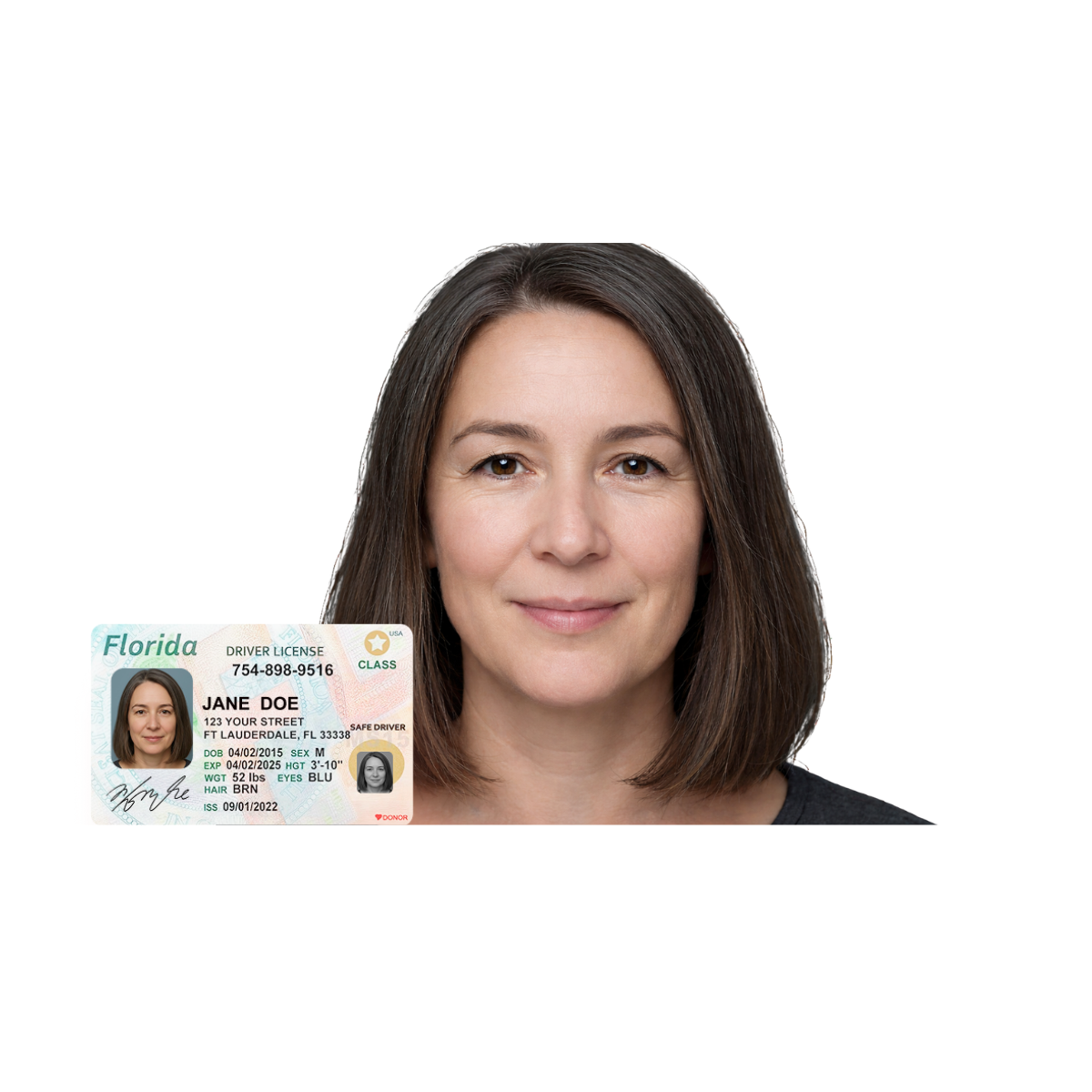
A complete identity verification file for age-restricted communities should include these five components.
Identity verification checklist:
- Government-issued ID validation via IDVerify+
- AI-powered liveness detection confirming physical presence
- Biometric selfie-to-ID facial comparison
- Redacted ID copy retained in the applicant file for compliance documentation
- Age documentation collected and stored through 55+ Communities Verification workflow
Bottleneck solved. IDVerify+ runs natively inside TenantEvaluation, with no external portals. Communities move from document-based review to biometric-confirmed identity verification before any approval decision.
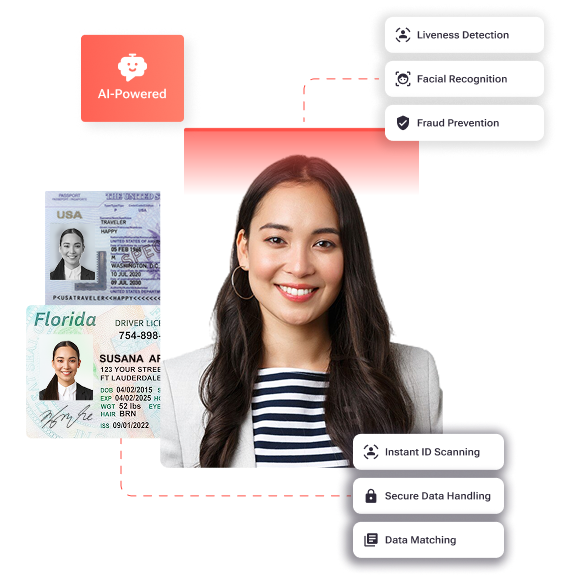
Verified identity and board approval create the conditions for the automated notice sequence that closes the FCRA loop.
Step 6: Automating Pre-Adverse and Final Adverse Notices
FCRA requirement. After sending the pre-adverse action notice, the FTC recommends waiting at least five business days before making a final decision. There is no specific statutory deadline in the FCRA, but FTC guidance and case law indicate that employers must wait at least five business days after a pre-adverse action notice before issuing the final adverse action notice. The final adverse action notice must include the CRA’s name, address, and phone number, a statement that the CRA did not make the decision, and notice of the right to a free report within 60 days. The CFPB’s 2024 updates to the Summary of Rights form remain mandatory. Using outdated versions creates a preventable compliance gap.
Florida overlay. The board vote timeline must be synchronized with the FCRA waiting period. A manual process that sends notices before the board has voted, or after the window has expired, creates independent willful-violation exposure.
Bottleneck solved. TenantEvaluation’s built-in automation triggers the pre-adverse notice at the correct point in the QuickApprove workflow, enforces the waiting period, and dispatches the final adverse action notice with the current CFPB Summary of Rights. All notices carry full delivery timestamps retained in the applicant file.
Automated notices are only as defensible as the audit trail that stores them. Step 7 addresses that requirement.
Step 7: Centralizing Audit Trails and Record Retention
FCRA requirement. Landlords must maintain complete records of all disclosure forms, signed authorizations, and consumer reports. A complete applicant file must include the written screening criteria in effect at the time of application, the application and authorization, the consumer report, screening notes, decision rationale, and any adverse action notice with proof of delivery. These records must be producible within 48 hours to close regulatory investigations.
Florida overlay. Florida landlords are required to maintain records related to tenant applications and screening. Associations with governing-document record-inspection rights face additional exposure when lease and screening records are stored in disconnected spreadsheets and email folders.
Bottleneck solved. TenantEvaluation’s Lease Tracking capability connects resident onboarding, unit data, approvals, and lease documentation into one centralized, real-time, audit-ready workflow. This integration means that every FCRA-required document, from the signed consent form to the final adverse action notice, is automatically linked to the unit and applicant record, delivering real-time lease status visibility (active, pending, expired, or missing), automated lease document collection, unit-level tracking, and a searchable digital history of lease records, resident activity, and document trails.
See TenantEvaluation’s audit-ready Lease Tracking and compliance workflow in a live demo.
With records secured, the final operational step is collecting fees without creating a funds-holding liability.
Step 8: Collecting Fees Without Holding Association Funds
FCRA requirement. The FCRA does not regulate fee collection directly, but it does require that permissible-purpose documentation be tied to a specific tenancy decision. Fee collection should therefore occur within the same onboarding workflow that generates the consent record, not in a disconnected system that creates documentation gaps.
Florida overlay. Florida association governing documents frequently specify which fees may be collected at application and require traceable records for board oversight. Boards have limited visibility into payment status when fees are tracked in spreadsheets or collected outside the onboarding process.
Bottleneck solved. TEpayments by Zinc is a connected payment workflow inside TenantEvaluation that collects application fees, deposits, and other required resident payments within the onboarding process associations already use. Payments go directly from the applicant to the association’s designated account, and TenantEvaluation never holds the funds. Each association defines what is collected and at which stage, and the capability adapts to the property’s process rather than forcing a universal sequence.
Frequently Asked Questions
How long does a Florida association have to issue an adverse action notice after a board vote?
The FCRA does not specify a fixed number of calendar days tied to a board vote, but it does require that the pre-adverse action notice be sent before the denial is finalized and that the final adverse action notice follow after the waiting period described in Step 6. For Florida associations, the practical requirement is to synchronize the board’s voting timeline with the FCRA waiting period. The pre-adverse notice should go out before the board vote is recorded as final, and the final adverse action notice should be dispatched within three business days of the board’s decision. Automating both notices inside the same platform that manages board voting removes the timing risk.
What records must a Florida condo association retain after screening an applicant?
A complete FCRA-compliant applicant file for a Florida association includes the written screening criteria in effect at the time of application, the signed standalone consent form referencing the specific property address, the consumer report from the CRA, the board’s documented decision with timestamps and vote attribution, any pre-adverse and final adverse action notices with proof of delivery, and the lease or denial record. Florida law requires credit reports to be retained for at least two years and applicant notifications for at least one year, while FCRA best practice calls for retaining all disclosure forms, authorizations, and consumer reports for at least five years. Records must be stored securely with limited access and disposed of properly at the end of the retention period.
Can a Florida HOA use a consumer-provided credit report printout for screening?
No. FCRA §1681b(a)(3)(F) authorizes consumer reports for tenancy decisions only when obtained directly from an FCRA-certified consumer reporting agency for a permissible purpose. A report printed by the applicant from a personal credit monitoring service is not a consumer report under the FCRA and cannot be used as the basis for an adverse action notice. Using such a report for a denial decision exposes the association to independent FCRA liability because the required CRA-sourcing chain is broken. Associations must obtain reports through a certified CRA, or a direct reseller of bureau data like TenantEvaluation, to maintain a defensible permissible-purpose record.
What consent language is required when a CAM screens on behalf of an association?
When a CAM screens applicants on behalf of an association, the standalone consent form must identify the CAM firm as the requester acting as agent for the named association, reference the specific property address, identify the CRA that will provide the report, specify the types of reports to be obtained (credit, criminal, eviction), and state that the report will be shared with the board for the tenancy decision. A management-company-generic consent that does not name the specific association or property does not satisfy FCRA §1681b’s property-specific permissible-purpose requirement. The CAM’s management agreement with the association should also explicitly authorize the CAM to conduct screening as the association’s agent.
Does TenantEvaluation’s 55+ Communities Verification replace legal guidance for age-restricted communities?
No. TenantEvaluation’s 55+ Communities Verification is a documentation-first workflow standardization capability. It helps Florida condos and HOAs standardize how age-restricted requirements are handled across applications, reduces manual work, supports documentation consistency, and improves operational efficiency and internal controls. It is not a legal verification system and does not replace the legal guidance associations should obtain from qualified Florida counsel regarding Housing for Older Persons Act obligations. Associations should use 55+ Communities Verification as an operational control layer that strengthens consistency and reduces administrative burden, while continuing to rely on legal counsel for compliance interpretation.
Conclusion: One Connected Platform for FCRA Compliance
The eight-step FCRA compliant tenant screening process for Florida community associations, covering adverse action notices, standalone consent, permissible-purpose documentation, board review, identity and age verification, automated notices, audit-ready record retention, and connected fee collection, creates a wide compliance surface that manual spreadsheets, email chains, and generic landlord tools rarely cover well. FCRA filings rose 40.1% year-to-date through March 2026, and enforcement actions against screening providers, including a $2.25 million FTC settlement with RentGrow in July 2026 and a $15 million settlement with TransUnion Rental Screening Solutions in 2023, show that the regulatory environment continues to tighten.
TenantEvaluation is built specifically for community associations and management companies, with FCRA compliance as the foundation, not an afterthought. With its direct bureau relationships, built-in adverse action automation, QuickApprove board workflows, IDVerify+ biometric verification, 55+ Communities Verification, Lease Tracking, and TEpayments by Zinc, TenantEvaluation delivers every step of this workflow inside one connected, audit-ready platform and serves 5,000+ communities while processing 100,000+ applications annually across Florida.
