Written by: Luis Teran, Co-founder, CEO, TenantEvaluation | Last updated: September 2, 2026
Key Takeaways for Florida Condo Boards in 2026
- Florida condo board members carry three fiduciary duties: care, loyalty, and obedience under Chapter 718. Willful failure to meet these duties can expose directors to personal liability.
- The 2026 SIRS deadline (December 31, 2026) is now non-waivable. Associations must complete a Structural Integrity Reserve Study and fully fund the eight mandated structural components or face DBPR fines and mortgage non-warrantability.
- Boards reduce cost and confusion when they coordinate milestone inspections and SIRS reports with the same licensed engineer. This approach produces a unified capital plan and satisfies statutory and lender requirements.
- Boards must maintain full-replacement-cost property insurance, fidelity coverage, D&O, and flood insurance where applicable. Independent appraisals every 36 months help prevent coverage gaps and surprise special assessments.
- Resident screening, lease tracking, and onboarding are fiduciary risk-management duties. TenantEvaluation centralizes FCRA-compliant screening, biometric ID verification, and real-time lease visibility to reduce liability and administrative burden.
Step 1: Know Your Fiduciary Duties and Legal Framework
The Three Legal Duties of a Board Member
Florida law identifies three core fiduciary duties for condo board members.
- Duty of Care: Board members make informed decisions by reading meeting materials, seeking expert advice, and acting as an ordinarily prudent person would under similar circumstances, as codified in § 718.111(1)(d).
- Duty of Loyalty: Directors place the association’s interests ahead of personal interests and disclose any conflicts of interest before voting.
- Duty to Act Within Authority: Boards follow the association’s governing documents and Florida law, enforce rules uniformly, and act only through properly noticed meetings.
Seven Core Duties of a Florida Condo Board
- Financial Oversight: Prepare annual budgets, fund reserves, and produce tiered financial reports within 90 days of fiscal year-end under § 718.111(13). Failure exposes the association to DBPR enforcement and owner lawsuits.
- Maintenance and Structural Integrity: Maintain all common elements and comply with milestone inspection and SIRS requirements under § 718.112(2)(g). Willful failure to complete a Structural Integrity Reserve Study (SIRS) constitutes a statutory breach of fiduciary duty under Florida law.
- Insurance: Maintain property, liability, fidelity, and D&O coverage under § 718.111(11). Board members who fail to maintain required insurance may be held personally liable for uncovered losses.
- Rule Enforcement: Enforce governing documents uniformly. Selective enforcement is unlawful and creates an independent claim in Florida courts.
- Record-Keeping: Maintain official records for 7 years generally and 15 years for milestone and SIRS reports, and produce records within 10 working days of a written request. Non-compliance triggers $50 per day in statutory damages.
- Meeting Compliance: Hold at least quarterly meetings with 48-hour posted notice, and provide 14-day mailed notice for special assessments or rule changes under § 718.112(2)(c).
- Resident Screening and Onboarding: Boards have a fiduciary duty to ensure applicants are qualified and do not pose a risk to the community. Negligent admission, or approving residents without proper screening, can expose the association to liability claims and weaken community safety. This duty forms a core part of the board’s risk management role.
Schedule a demo today to see how technology can reduce your board’s administrative burden.
Step 2: Meet the 2026 SIRS Deadline and Milestone Inspection Rules
Structural Integrity Reserve Study Basics
A Structural Integrity Reserve Study (SIRS) is a financial planning tool that calculates the funding needed to maintain eight specific structural components over a 10-year period. It applies to condominium buildings of three or more habitable stories. The eight mandated components are:
- Roof
- Structural systems (load-bearing walls and primary structural members)
- Fireproofing and fire protection systems
- Plumbing
- Electrical systems
- Waterproofing and exterior painting
- Windows and exterior doors
- Any other item exceeding $25,675 (the DBPR-adjusted 2026 threshold) whose failure would negatively affect the above items
The Exact 2026 SIRS Deadline
For most existing unit-owner-controlled associations, the initial SIRS deadline was December 31, 2025. Under HB 913 (effective July 1, 2025), associations required to complete a milestone inspection on or before December 31, 2026 may complete their SIRS at the same time. The SIRS must still be completed no later than December 31, 2026.
As of January 1, 2026, associations can no longer waive or reduce reserve funding for SIRS structural components, regardless of a membership vote. Reserve funding is now mandatory.
Milestone Inspections as Structural Safety Checks
A milestone inspection is a physical life-safety structural assessment, distinct from the SIRS, required under Florida Statute 553.899. A Florida-licensed architect or professional engineer must perform it. The two-phase process works as follows:
- Phase 1: A visual inspection of primary structural elements. If no substantial structural deterioration is found, the inspection ends.
- Phase 2: Triggered only if Phase 1 identifies substantial structural deterioration. This phase may involve destructive testing, concrete coring, and engineering load calculations.
The first milestone inspection is due by December 31 of the year the building turns 30, or 25 for buildings within three miles of a coastline. Under HB 913, building owners must commence repairs identified in a Phase 2 report within 365 days of receiving it.
Integrated Workflow for SIRS, Funding, and Repairs
- Confirm your building’s certificate of occupancy date and determine your milestone inspection trigger year.
- Engage a Florida-licensed engineer or architect. Coordinate the milestone inspection and SIRS at the same time to reduce cost and produce one coherent capital plan.
- Distribute the completed SIRS to unit owners within 45 days of completion, as required by statute.
- Adopt a budget that fully funds SIRS reserve components. The SIRS funding formula is: Annual Reserve Contribution = (Estimated Replacement Cost − Current Reserve Balance) ÷ Remaining Useful Life.
- If funding is insufficient, evaluate special assessments, a line of credit, or a loan. HB 913 permits these options with a majority vote of the unit owners.
- Commence any Phase 2-identified repairs within 365 days.
- Calendar the next 10-year SIRS and milestone inspection cycle immediately.
The Florida Division of Condominiums can fine associations up to $1,000 per day for failing to conduct a required reserve study or for improperly waiving reserves. Fannie Mae and Freddie Mac may also classify non-compliant buildings as “non-warrantable,” which makes conventional mortgages unavailable for units in that building.
Step 3: Build a Strong Insurance and Risk Transfer Program
Florida condo boards must maintain a layered insurance program that matches statutory requirements and real-world risk. Florida Statute 718.111(11) requires property insurance at full insurable replacement cost, with an independent appraisal at least every 36 months. The core coverage types include:
- Property Insurance: Covers all condominium property as originally constructed at full replacement cost, not actual cash value.
- General Liability: Covers common elements and association property. Most carriers recommend a minimum of $1 million per occurrence and $2 million aggregate for associations with 100 or fewer units.
- Fidelity/Crime Insurance: Required under § 718.111(11)(h) for all persons who control or disburse association funds. This coverage cannot be waived.
- Directors and Officers (D&O) Insurance: Protects board members from personal liability for good-faith decisions. D&O policies typically exclude willful violations of law, so knowing non-compliance with SIRS requirements can void coverage.
- Flood Insurance: Required under § 718.111(11)(a)2 for associations in FEMA Special Flood Hazard Areas, and strongly recommended for all Florida coastal communities.
Proper resident screening directly reduces insurance-related liability. A compliant, documented screening process lowers the risk of negligent admission claims, a category of liability that general liability policies may not fully cover without supporting documentation of due diligence.
Step 4: Use a Simple Risk Management Checklist
The following table summarizes the six core risk management areas for Florida condo boards. Every board can use this as a self-audit framework.
| Risk Area | Key Responsibilities | Statutory Reference | Compliance Indicator |
|---|---|---|---|
| Structural | Complete milestone inspection and SIRS, commence Phase 2 repairs within 365 days | Fla. Stat. 553.899; 718.112(2)(g) | SIRS completed by Dec. 31, 2026, milestone inspection on file with local building official |
| Financial | Fund SIRS reserves at 100%, produce annual financial report within 90 days of fiscal year-end, disclose reserve status in budget | Fla. Stat. 718.112(2)(f); 718.111(13) | Reserve funding schedule current, financial report distributed to owners, no unauthorized reserve waivers |
| Insurance | Maintain property at full replacement cost, carry general liability, fidelity, D&O, and flood coverage, obtain replacement cost appraisal every 36 months | Fla. Stat. 718.111(11) | All policies active, appraisal current, fidelity coverage equals maximum funds in custody |
| Operational | Digitize and centralize resident screening, lease tracking, and onboarding documentation | Fla. Stat. 718.111(12) | All records accessible within 10 working days, audit-ready digital lease and application records maintained |
| Governance | Hold quarterly meetings with proper notice, conduct elections by secret ballot, complete 4-hour director education within 90 days of election | Fla. Stat. 718.112(2)(c); 718.112(2)(d) | Meeting minutes on file, director certifications filed, election records retained |
| Legal | Enforce rules uniformly, provide 14-day notice before fines, comply with pre-suit mediation requirements, maintain FCRA-compliant screening processes | Fla. Stat. 718.303; 718.1255 | No selective enforcement, fines committee convened, screening process documented and FCRA-compliant |
Use this checklist to assess your current compliance status:
- SIRS completed or scheduled for simultaneous completion with milestone inspection by Dec. 31, 2026
- Milestone inspection report filed with local building official
- Reserve funding schedule adopted with no SIRS waivers
- All insurance policies reviewed within the past 12 months
- Independent replacement cost appraisal obtained within the past 36 months
- Director education certifications filed within 90 days of election
- Official records organized and producible within 10 working days
- Resident screening process documented, FCRA-compliant, and audit-ready
- Lease records centralized with real-time status visibility
Manual management of all these items creates significant risk. Schedule a demo today to see how TenantEvaluation centralizes resident screening, lease tracking, and onboarding compliance in one platform.
Step 5: Use Technology for Resident Screening and Onboarding
Resident screening functions as a core risk management duty under the board’s fiduciary umbrella. Approving residents without a documented, compliant process exposes the association to negligent admission claims, fair housing violations, and FCRA liability.

TenantEvaluation is built specifically for community associations and management companies, with FCRA compliance as the foundation. Serving 5,000+ communities and processing approximately 100,000 applications annually, TenantEvaluation offers capabilities that align directly with Florida condo board compliance:

- IDVerify: Biometric identity verification embedded directly into the screening workflow, using AI-powered liveness detection, government ID validation, and facial biometric matching. This feature moves communities from document-based review to verified physical identity confirmation and reduces fraud exposure before a resident enters the community.
- QuickApprove: An accelerated approval workflow built for CAMs, boards, and property management teams inside one connected platform. It delivers real-time application tracking, a board-ready approval process, automated communication support, customized approval letters, and a personalized welcome package while preserving control, compliance, and visibility.
- 55+ Communities Verification: A built-in capability that helps Florida condos and HOAs standardize age-restricted application handling, reduce manual work, improve documentation consistency, and strengthen internal operational control across 55+ communities.
- Lease Tracking: Centralized, real-time lease visibility and lifecycle control from application to occupancy. The platform connects resident onboarding, unit data, approvals, and lease documentation into one audit-ready workflow, replacing spreadsheets and scattered email chains.
- TEpayments by Zinc: A connected payment workflow inside TenantEvaluation that collects application fees and deposits during resident onboarding. Payments go directly to the association’s designated account, and TenantEvaluation never holds the funds.
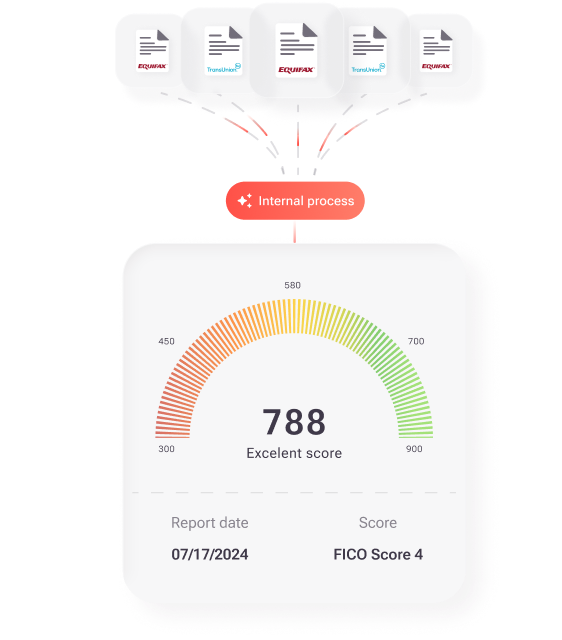
TenantEvaluation operates as a legitimate reseller of TransUnion and Equifax data, with built-in adverse action workflows, strict permissible purpose controls, and audit trails for every application. These features help keep community associations protected from liability exposure.
Frequently Asked Questions
What are the three legal duties of a board member?
Florida law recognizes three core fiduciary duties for condo board members. The duty of care requires directors to make informed decisions by reading materials, consulting experts, and acting as a prudent person would in similar circumstances. The duty of loyalty requires placing the association’s interests above personal interests and disclosing conflicts before voting. The duty of obedience, or acting within authority, requires following the association’s governing documents and Florida Chapter 718, enforcing rules uniformly, and acting only through properly noticed meetings. Breach of any of these duties can expose board members to personal liability, especially when the breach involves gross negligence, fraud, or willful misconduct.
Can condo board members be personally liable?
Florida’s business judgment rule generally protects board members who act in good faith, within their authority, and with reasonable care. That protection disappears when a director’s conduct amounts to gross negligence, fraud, criminal conduct, self-dealing, or willful misconduct. The willful failure to complete a Structural Integrity Reserve Study is a statutory breach of fiduciary duty under Section 718.112(2)(g). Directors and Officers (D&O) insurance typically excludes willful violations of law, so a board that knowingly ignores SIRS requirements may lose both the statutory shield and the insurance coverage at the same time.
What is the 2026 SIRS deadline?
For most existing unit-owner-controlled Florida condominium associations with buildings of three or more habitable stories, the initial SIRS deadline was December 31, 2025. Under HB 913 (effective July 1, 2025), associations required to complete a milestone inspection on or before December 31, 2026 may complete their SIRS at the same time. The SIRS may not be completed after December 31, 2026 under any circumstances. As of January 1, 2026, reserve funding for SIRS structural components is mandatory and cannot be waived by a membership vote. Associations that have not yet completed their SIRS should consult legal counsel promptly regarding disclosure obligations and liability exposure.
How can we ensure our resident screening is compliant?
FCRA-compliant resident screening requires a documented process that includes permissible purpose controls, proper adverse action procedures, secure handling of sensitive applicant data, and a clear audit trail for every application decision. Boards should use a platform designed specifically for community associations, not generic rental screening tools, that maintains these standards as a foundation. Key elements include FCRA-compliant background checks sourced from legitimate credit bureau resellers, biometric identity verification to prevent fraud, and a board-accessible approval workflow that documents every decision. Associations should also apply screening criteria uniformly to avoid fair housing violations.

What is a milestone inspection?
A milestone inspection is a physical life-safety structural assessment required under Florida Statute 553.899 for condominium buildings of three or more habitable stories. The first inspection is due by December 31 of the year the building turns 30, or 25 for buildings within three miles of a coastline, and every 10 years thereafter. A Florida-licensed architect or professional engineer must perform the inspection. Phase 1 is a visual inspection, and Phase 2 is triggered only if Phase 1 identifies substantial structural deterioration and may involve invasive testing. The completed report must be filed with the local building official and distributed to unit owners within 14 days. A milestone inspection functions as a structural safety check, distinct from the SIRS, which serves as a financial planning tool, but the two can be coordinated with the same engineering firm.
How often should we review our insurance coverage?
Florida condo boards should review all insurance policies at least annually, as the Florida Legislature updates Chapters 718 and 720 regularly. Florida Statute 718.111(11) requires an independent insurance appraisal of all insurable condominium property at least once every 36 months to confirm full replacement cost coverage. Flood insurance requirements and premium structures are also changing under FEMA’s Risk Rating 2.0 methodology, which makes annual review essential for coastal communities. Boards should review insurance coverage alongside the reserve schedule, SIRS findings, and repair planning because underinsurance can trigger special assessments and expose the board to governance risk.
Conclusion: Turn Compliance into a Repeatable System
Florida condo boards face a convergence of statutory deadlines, fiduciary obligations, and administrative complexity in 2026. The SIRS deadline is the most urgent catalyst, and it sits within a broader risk management framework that includes milestone inspections, reserve funding, insurance adequacy, meeting compliance, record-keeping, and resident screening.
Boards that navigate this environment successfully treat compliance as an integrated system. Conducting a self-audit against the six risk management areas outlined above gives you a clear starting point. Engaging a licensed engineer to coordinate the milestone inspection and SIRS at the same time reduces cost and produces a single, coherent capital plan. Reviewing insurance coverage annually against current statutory requirements closes the gap between perceived coverage and actual protection.
Resident screening and onboarding fit directly into this same compliance framework. A documented, FCRA-compliant screening process with biometric identity verification, a board-ready approval workflow, centralized lease tracking, and connected payment collection functions as a risk management necessity that reduces liability and administrative burden at the same time.
TenantEvaluation serves 5,000+ Florida communities with this type of infrastructure, built specifically for community associations and management companies. Schedule a demo today and see how TenantEvaluation helps your board fulfill its fiduciary duties with less manual work and greater confidence.
