Written by: Luis Teran, Co-founder, CEO, TenantEvaluation | Last updated: August 26, 2026
Key Takeaways for Florida Condo Boards
- Florida condo boards can enforce tenant screening and lease approval only when criteria appear in the declaration or a recorded amendment, not by board rule alone.
- Biometric identity verification and FCRA-compliant background checks reduce fraud exposure and strengthen audit defensibility for associations.
- Structured approval workflows and centralized lease tracking cut approval time by up to 70% while keeping occupancy and compliance records current.
- Requiring renter’s insurance and documenting move-in conditions shifts liability for damages back to tenants and supports enforcement under Florida statutes.
- Boards that adopt these repeatable processes reduce legal exposure and improve day-to-day operations. Learn more at TenantEvaluation.
7-Step Tenant Risk Mitigation Process for Florida Condos
-
Step 1: Embed Screening Criteria in Your Governing Documents
Florida condominium associations may require board approval of prospective tenants when the screening process is reasonable and applied uniformly. Screening criteria must appear in the declaration or a recorded amendment, not in a board rule alone, to withstand legal challenge.
F.S. 718.110(13) limits retroactive application of new rental restrictions to owners who consent or who acquire units after the amendment is recorded. Before enforcing any restriction, confirm the amendment recording date and whether the unit owner is grandfathered.
Without a centralized system, boards often apply screening criteria inconsistently, which increases selective enforcement risk. One manager may use a 650 credit threshold while another uses 600 for similar applicants.
TenantEvaluation addresses this problem by configuring each community’s credit score thresholds, income requirements, and document checklists inside one platform. Every applicant is evaluated against the same criteria that match your governing documents, which supports consistent and defensible decisions.
Step 2: Add Biometric Identity Verification Before Screening
Identity fraud now affects many Florida condo communities, especially in high-demand coastal markets. Traditional document uploads cannot reliably prevent impersonation or synthetic identity fraud because static images are easy to reuse or alter.
A biometric verification layer confirms that the applicant is physically present and matched to their government-issued ID before any background check proceeds. This step also reinforces FCRA-aligned workflows because confirming identity before screening authorization strengthens permissible-purpose validation and audit defensibility.
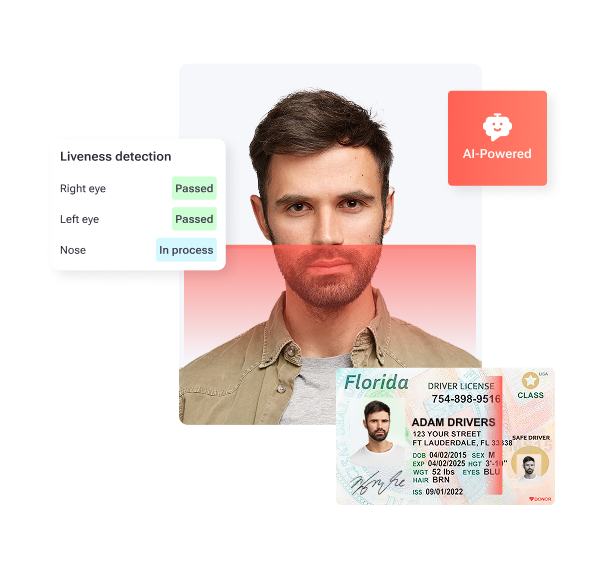
Expanding upon the Basic package, IDVerify Plus includes a critical Liveness feature, ensuring the person present matches the photo on the ID through sophisticated facial recognition technology. This advanced level of verification is ideal for high-security needs. Traditional upload-only workflows cannot confirm that the person submitting the application is the same person whose ID appears in the photo. That gap allows synthetic identities and borrowed credentials to slip through screening.
IDVerify closes that gap inside TenantEvaluation by combining government ID validation, AI-powered liveness detection, and biometric selfie-to-ID comparison without redirecting applicants to external portals. Verification results, including ID authenticity confirmation and biometric match status, appear directly in the screening report so boards see identity and background data in one place.
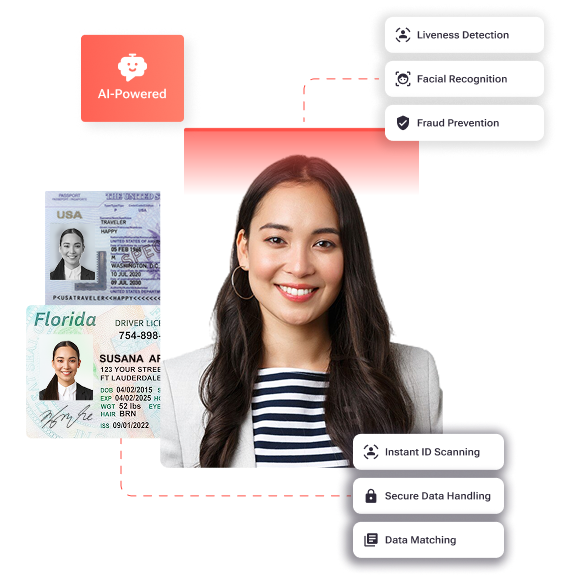
ID Verify Step 3: Use FCRA-Compliant Background and Credit Checks
Background checks should cover criminal history, eviction records, and credit while complying with the Fair Credit Reporting Act. Associations that rely on gray-market data sources or informal checks increase the risk of inaccurate reports, improper adverse action notices, and Fair Housing claims.
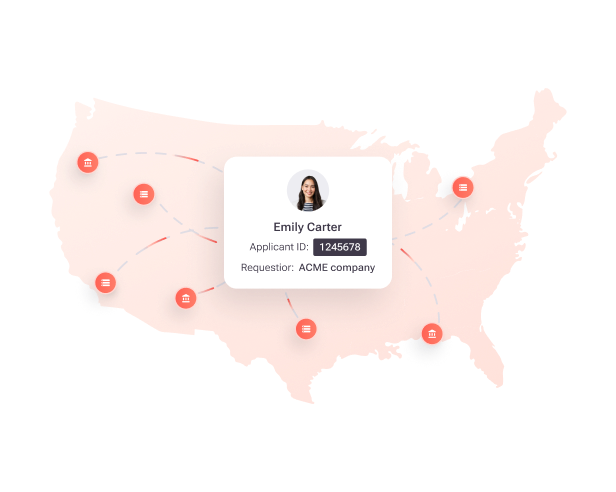
With SafeCheck+, our upgraded service provides you access to a comprehensive nationwide offender search, powered by real-time data from law enforcement agencies and trusted third-party sources. Our expanded coverage ensures that you never miss critical information, no matter where you operate. TenantEvaluation is built for community associations and management companies with FCRA compliance as the foundation. As a direct reseller of TransUnion and Equifax data, TenantEvaluation accesses bureau data under strict permissible-purpose controls, with automated adverse action workflows and built-in audit trails for every application.
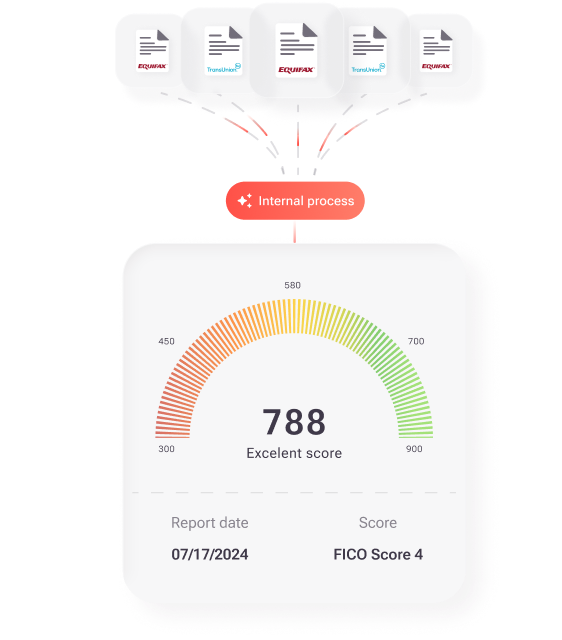
Trusted insights to evaluate financial responsibility. Access full credit reports and verified credit scores across the U.S. and Canada. Our reports provide detailed payment history, debt levels, and financial behavior—giving you a clear, reliable view of each applicant’s financial standing. Ideal for communities with diverse applicants, this tool helps you make confident, well-informed leasing decisions. Boards that move from email-based document collection and manual credit pulls to a structured FCRA-compliant workflow close common compliance gaps. They eliminate missing permissible-purpose documentation and reduce the chance of improper adverse action handling, which are two frequent sources of legal exposure in tenant screening.
-
Step 4: Streamline Board Approval With a Structured Workflow
Florida condominium associations may charge a reasonable fee for screening prospective tenants, so delays directly affect revenue and owner satisfaction. Email chains, missing documents, and unclear responsibilities slow approvals and frustrate owners, tenants, and realtors.
A structured, board-ready approval workflow replaces scattered communication with one clear process. Boards see which applications are ready for review, which need more information, and which are waiting on votes.
QuickApprove is TenantEvaluation’s accelerated approval workflow for CAMs, boards, and property management teams in one connected platform. It delivers real-time application tracking, a board-ready approval process with a dedicated voting panel, automated communication, customized approval letters, and a personalized welcome package. Associations using QuickApprove report up to 70% reduction in approval time while keeping control, compliance, and visibility.

QuickApprove: Fast, Informed Decisions at the Click of a Button Step 5: Centralize Lease Tracking From Approval to Occupancy
Accurate lease tracking becomes critical once the board approves a tenant. Missing or outdated lease copies, manual expiration tracking, and disconnected spreadsheets create operational blind spots and compliance risk.
Florida law allows an association to charge a unit owner or tenant directly for damages resulting from that party’s negligence or intentional conduct. That right depends on accurate occupancy records and documented lease terms.
TenantEvaluation’s Lease Tracking capability delivers centralized, real-time lease visibility and lifecycle control from application to occupancy. It provides real-time lease status, automated lease document collection during onboarding, unit-level tracking, and audit-ready digital lease records inside one connected platform.
Boards gain a clear picture of occupancy and resident activity without searching across folders, inboxes, and spreadsheets. This visibility supports enforcement, insurance claims, and communication with owners and tenants.
Step 6: Require Renter’s Insurance and Capture Move-In Condition
Under Florida Statute 718.111(11)(j), damages that exceed the association’s master policy coverage become common expenses shared by all unit owners unless caused by a specific owner or tenant’s negligence. Requiring tenants to carry an HO-6 policy shifts that liability back to the responsible party and protects other owners.
Best practice for Florida condo boards includes creating a contemporaneous audit trail with time-stamped photos, checklist signoff, and retained inspection records tied to the occupant’s move-in date to support damage claims or deposit disputes under Florida Statute 83.49. This documentation helps establish the unit’s condition at move-in when the burden of proof arises later.
Many South Florida high-rise buildings formalize this process by requiring pre- and post-move walkthroughs with a building representative to document existing condition. Both parties then agree on the unit’s condition before and after occupancy, which supports fair resolution of disputes.
TenantEvaluation’s document collection workflow captures insurance certificates and move-in documentation during onboarding and keeps records searchable and audit-ready. Consult an attorney to confirm what your governing documents permit you to require from tenants and owners.
Step 7: Document Violations and Enforce Owner Accountability
Florida condominium associations derive enforcement authority from Florida Statutes § 718.303, which permits levying reasonable fines for violations of the declaration, bylaws, or rules. Fines cannot take effect until approved by an independent fining committee of at least three unit owners who are not board members, and most fines are capped at $100 per violation and $1,000 in the aggregate.
Good documentation requires noting the date, time, and nature of the violation, collecting photos or other evidence, and recording all steps taken to contact the owner. Boards reduce selective-enforcement risk by following the same enforcement process for every resident, regardless of personal relationships or board member involvement.
TenantEvaluation’s audit trail records every application action with timestamps, which gives boards a defensible record that supports consistent enforcement. If the governing documents grant lease-approval authority, the board may disapprove a lease proposed by a delinquent owner, subject to legal advice.
Always involve legal counsel when a violation is serious, ongoing, or involves allegations of discrimination. This article does not constitute legal advice.
Frequently Asked Questions for Florida Condo Boards
Can a condo board reject a renter in Florida?
Florida condominium associations may reject a prospective tenant when the governing documents, specifically the declaration or a recorded amendment, grant the board lease-approval authority. The screening process must be reasonable and applied uniformly to every applicant.
Boards cannot reject tenants based on protected class characteristics under the Fair Housing Act, and any rejection must follow the procedures outlined in the governing documents. Criteria such as credit score minimums, income thresholds, and background check standards should be documented in advance and applied consistently.
Consult an attorney to confirm your association’s specific authority and procedures before denying any application.
How do you hold unit owners responsible for tenant violations in Florida?
Under Florida Statute § 718.303, condominium associations may fine unit owners for violations committed by their tenants. The enforcement process requires the board to identify the specific rule violated, issue written notice to the owner describing the violation and potential fine, and provide at least 14 days’ notice of a hearing before an independent fining committee of at least three unit owners who are not board members or officers.
The committee must approve the fine before it takes effect, and fines are generally capped at $100 per violation and $1,000 in the aggregate for continuing violations. Boards should document every step, including dates, notices, evidence, and committee decisions, to maintain a defensible record and demonstrate consistent enforcement.
This article does not constitute legal advice. Involve legal counsel for serious or ongoing violations.
What are the lease tracking requirements for Florida HOAs and condo associations?
Florida statutes do not require a specific digital lease tracking system, but operational and compliance realities make centralized lease records essential. Boards need accurate occupancy data to enforce rental restrictions, confirm lease terms, support damage claims under Florida Statute 718.111(11)(f), and demonstrate consistent rule application.
Missing or outdated lease copies create gaps that can undermine enforcement actions and expose associations to liability. Best practice is to collect executed lease copies during the tenant onboarding process, track lease status in real time, and maintain searchable, audit-ready records connected to unit and occupancy data.
TenantEvaluation’s Lease Tracking capability delivers this centralized visibility from application submission through occupancy and replaces disconnected spreadsheets and email chains with one connected workflow.
Conclusion: Protect Fiduciary Duties While Running Efficient Operations
Boards that adopt these seven repeatable processes reduce damage claims, strengthen compliance readiness, and improve turnover metrics while fulfilling fiduciary duties to owners. TenantEvaluation provides a single platform that connects screening, biometric verification, lease visibility, and payments for Florida associations, with FCRA compliance built into every step.
-
