Written by: Luis Teran, Co-founder, CEO, TenantEvaluation
Key Takeaways
- Section 67 of Alberta’s Condominium Property Act indirectly protects condo boards through the business judgment rule and good faith standards, shielding compliant governance from oppression claims.
- Proper documentation, consistent procedures, and transparent decision-making help defend against owner lawsuits and personal liability.
- Florida condo boards under Chapter 718 can apply Section 67 lessons by using standardized screening and audit trails to meet fiduciary duties.
- Common pitfalls such as arbitrary decisions and poor record-keeping increase risk, while systematic tools create defensible practices.
- Strengthen your board’s protection with TenantEvaluation’s FCRA-compliant screening and QuickApprove dashboard, and schedule a demo today for audit-ready compliance.
The Problem: How Florida Condo Boards Face Oppression-Style Claims
Condominium boards can be sued, yet many lawsuits are preventable through strong governance and clear compliance measures. Florida condo boards operate under constant scrutiny from owners who challenge decisions ranging from application approvals to financial management. Personal liability exposure, potential board removal, and costly legal disputes create pressure to balance owner expectations with strict fiduciary responsibilities.
Alberta’s Section 67 offers a practical framework for how boards can protect themselves through established legal standards. Most online guidance focuses on owner rights, but Section 67 actually provides indirect protections for boards that follow proper governance practices. Protect your board from Section 67-style claims and schedule a demo today to see how TenantEvaluation’s compliance tools support defensible decision-making.

Section 67 Protections: Why Compliant Boards Gain Legal Deference
Section 67 of Alberta’s Condominium Property Act creates an oppression remedy that lets owners seek court intervention when board actions unfairly harm their interests. This same provision also creates indirect protections for boards that operate within clear legal boundaries and follow documented processes.
The business judgment rule protects boards that make decisions in good faith, even when outcomes later appear unfavorable. Courts recognize that board members volunteer their time and expertise, so they receive deference when they follow proper procedures and act honestly. Recent 2026 updates to Alberta’s dispute resolution system exclude Section 67 claims from the streamlined tribunal process, which forces owners to pursue oppression claims in higher courts with stricter evidentiary standards.
Key protections under Section 67 include:
- Good faith conduct standards that shield reasonable business decisions
- Higher court thresholds that require substantial evidence of oppression
- Recognition of board authority when exercised within legal parameters
- Protection for documented and consistent decision-making processes
Consider a hypothetical 2026 case where a board denied an application because the file contained incomplete documentation. The court upheld the board’s decision because the directors followed established procedures, kept detailed records, and applied consistent standards. This example shows how proper governance and documentation create real legal protection.
Risky Board Behaviors and How Section 67 Favors Compliant Processes
Improper Conduct Examples That Trigger Oppression Claims
Boards face oppression claims when they make arbitrary decisions without clear rationale, operate with limited transparency, or ignore their own governing documents. Section 67’s framework, however, provides strong defenses for boards that maintain clear procedures and apply them consistently.
| Action | Risky (Manual Screening) | Protected (Compliant Process) | Florida Tie-In (Ch. 718) |
|---|---|---|---|
| Application Review | Inconsistent criteria, no documentation | Standardized screening, audit trails | Uniform approval standards required |
| Decision Making | Arbitrary rejections, personal bias | Objective criteria, board voting records | Fiduciary duty compliance |
The gap between risky and protected actions centers on documentation, consistency, and adherence to written procedures. Boards that rely on manual screening expose themselves to claims of arbitrary decision-making and bias. Boards that use systematic approaches with clear audit trails instead show the good faith conduct and fairness that Section 67 protects.
Five-Step Governance Playbook to Avoid Section 67-Style Claims
Boards improve their protection when they follow proactive governance strategies that align with Section 67 standards and similar Florida requirements.
1. Establish Transparent Processes: Create clear, written procedures for all board decisions, especially application approvals and financial matters. Place these procedures in governing documents and communicate them consistently to owners.
2. Document All Decisions: Keep detailed records of board meetings, voting rationales, and decision-making criteria. These records serve as crucial evidence of good faith conduct when disputes arise or owners challenge outcomes.
3. Practice Good Faith Governance: Directors must act honestly and in good faith with their duties to prevent governance issues that could lead to disputes. This duty includes avoiding conflicts of interest and making decisions based on community benefit rather than personal preferences or relationships.
4. Implement Professional Management: Engage professional property management services to support compliance with applicable laws and reduce governance risks. Experienced managers bring specialized knowledge, tested systems, and consistent processes that help boards meet their fiduciary duties.
5. Use FCRA-Compliant Screening: Deploy systematic screening tools such as TenantEvaluation that deliver consistent application processing, automated documentation, and audit-ready compliance records. These tools reduce human error and create a clear record of each decision.
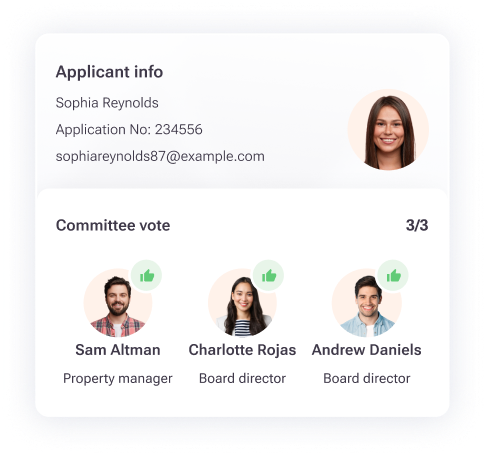
Strong governance practices make board removal difficult because they demonstrate competent and lawful management. Boards can block a sale when they follow documented procedures, rely on clear legal justification, and maintain thorough records that show fair and consistent treatment.
Schedule a demo today to see how TenantEvaluation’s QuickApprove dashboard delivers the documentation and consistency that Section 67 standards and similar Florida rules require.
Florida Governance Lessons From Section 67 for Chapter 718 Boards
Florida’s Chapter 718 creates fiduciary duties and liability exposure that closely resemble Alberta’s framework. The same governance principles that protect boards under Section 67 also apply to Florida associations, including consistent procedures, documented decisions, and good faith conduct toward all owners and applicants.
TenantEvaluation supports these requirements by providing systematic application processing with built-in audit trails and time-stamped records. With over 100,000 applications processed annually and a 4.8/5 Google rating, the platform shows how technology can support the governance standards that protect boards from oppression-style claims and similar lawsuits.
TenantEvaluation: FCRA-Compliant Screening and Documentation Shield
TenantEvaluation delivers the systematic approach and documentation that Section 67-style standards expect from a compliant board. The platform’s QuickApprove dashboard gives boards direct oversight of application decisions, while IDVerify biometric verification confirms identity authenticity before any approval.

| Feature | TenantEvaluation | ApplyCheck | Verify Screening |
|---|---|---|---|
| Board Dashboard | Dedicated QuickApprove panel | Limited board access | No board-specific tools |
| Audit Trails | Complete decision documentation | Basic reporting | Manual record keeping |
| Biometric Verification | Integrated IDVerify system | Document upload only | Third-party solutions |
FAQ
Does Section 67 protect boards from lawsuits?
Section 67 provides indirect protection by setting clear standards for board conduct and decision-making. Boards that operate in good faith, follow proper procedures, and maintain detailed documentation often receive judicial deference under the business judgment rule. The 2026 exclusion of Section 67 claims from Alberta’s dispute tribunal also pushes these cases into higher courts with stricter evidentiary standards, which favors well-governed boards.
How does resident screening prevent oppression claims?
Systematic screening supports consistent decision-making and creates clear audit trails for every application. When boards use standardized criteria and document their rationale, they show the good faith conduct and fairness that courts protect. Automated systems such as TenantEvaluation reduce arbitrary decisions and provide the documentation needed to defend board actions against oppression-style claims.
What is the best FCRA tool for Florida condo boards?
TenantEvaluation offers a comprehensive solution specifically designed for community associations and condo boards. The platform combines FCRA-compliant screening with board-focused tools such as QuickApprove dashboards and IDVerify biometric verification. Built-in audit trails and automated documentation support the governance standards that protect boards from liability and owner challenges.
Can boards be sued under Section 67?
Section 67 allows oppression claims against boards, yet successful lawsuits require substantial evidence of improper conduct. Boards that follow established procedures, act in good faith, and maintain proper documentation rarely face successful oppression claims. In practice, the legal framework protects compliant boards more than it threatens them.
Conclusion: Strengthen Your Board’s Protection Today
Section 67 of Alberta’s Condominium Property Act shows how strong governance standards protect boards from oppression claims. The same principles apply to Florida associations, including transparent processes, documented decisions, good faith conduct, and systematic resident screening that treats every applicant consistently.
TenantEvaluation provides the tools needed to put these protective strategies into daily practice. From QuickApprove board dashboards to comprehensive audit trails, the platform supports the governance practices that courts recognize and respect. Schedule a demo today to reduce your board’s liability exposure while streamlining application approvals with FCRA-compliant screening technology.
