Written by: Luis Teran, Co-founder, CEO, TenantEvaluation | Last updated: June 21, 2026
Key Takeaways for Florida HOA and Condo Boards
- Key HOA fraud red flags include financial irregularities, governance abuse, vendor manipulation, and behavioral concealment that signal misappropriation of association funds or breach of fiduciary duty.
- In Florida, board members who ignore known red flags risk personal liability under Chapters 718 and 720 of the Florida Statutes, with asset misappropriation as the most common form of occupational fraud.
- Early recognition of unreconciled reports, missing invoices, unauthorized transfers, closed meetings, withheld records, sole-source contracts, kickbacks, and resistance to audits gives boards the best chance to limit losses.
- Effective prevention relies on segregation of duties, mandatory audits, transparent vendor selection, and biometric identity verification at onboarding to reduce fraud exposure before residents enter the community.
- Schedule a demo today to see how TenantEvaluation helps Florida HOA and condo boards reduce fraud exposure through biometric verification, transparent onboarding workflows, and real-time board visibility.
Financial Red Flags in Association Accounts
-
Unreconciled financial reports. Consistently late, incomplete, or vague financial reports signal a risk of financial misstatement and weak oversight. When bank statements and board-presented reports do not match, the discrepancy requires immediate documentation.
Board Action: Under Section 718.111 of the Florida Condominium Act, boards must maintain financial controls including fidelity bonding for those handling funds, prohibitions on commingling, and restrictions on association debit cards. Request a full bank reconciliation at the next noticed meeting. If that reconciliation reveals discrepancies that management cannot explain with supporting documentation, engage an independent CPA to conduct a deeper review before the issue compounds.
Missing or altered invoices. Missing or altered invoices, payments to unfamiliar vendors, and unusual bank activity warrant immediate investigation. Checks made payable to cash or director reimbursements without receipts follow the same pattern and deserve the same scrutiny.
Board Action: Under Chapters 718 and 720, associations must maintain official records and provide owner access within statutory timeframes. Preserve all original documents, restrict further disbursements from affected accounts pending review, and consult association counsel about next steps.
Unauthorized transfers or reserve fund irregularities. Reserve fund manipulation red flags include reserve study numbers that do not match the visible condition of community property or transfers from reserves to cover operating expenses without proper approval.
Board Action: Under the financial controls required by Section 718.111, commingling of funds and misuse of association debit cards violate statutory duties. Freeze the affected accounts, document the transfer chain in detail, and notify the association’s attorney before authorizing any further movement of funds.
Governance Red Flags in Board Operations
-
Closed or improperly noticed meetings. Board votes cannot occur by email, and most board meetings must remain open to the membership, with limited exceptions for topics such as litigation. Repeated cancellations, last-minute venue changes, or decisions made outside properly noticed meetings create a clear governance red flag.
Board Action: Any director aware of a procedurally defective vote should raise the issue in writing at the next properly noticed meeting and ensure the objection appears in the minutes. Review Chapter 718 or 720 meeting requirements before ratifying any contested action.
Withheld or destroyed records. Intentional destruction of records, refusal to release records to conceal wrongdoing, or misuse of association funds can trigger civil penalties and, in some cases, criminal consequences under Chapters 718 and 720.
Board Action: Issue a written records request that cites the applicable statute and keep proof of delivery. If access is denied beyond the statutory timeframe, file a complaint with the Division of Florida Condominiums, Timeshares, and Mobile Homes.
Undisclosed conflicts of interest. Section 718.111 requires strict conflict-of-interest disclosure and recusal procedures, including member cancellation rights for conflicted transactions. Section 720.3033 requires directors to submit a certification or educational certificate, with suspension as a consequence for noncompliance.
Board Action: Any director with a financial interest in a pending contract must disclose that interest in writing, recuse from the vote, and confirm that the disclosure appears in the minutes. Failure to follow this process exposes the transaction to cancellation and the director to removal.
Vendor and Contract Red Flags to Watch
-
Sole-source awards without competitive bidding. Repeated use of the same vendor without competitive bids, payments to newly added vendors with thin documentation, and rush approvals with minimal review all signal vendor fraud risk.
Board Action: Section 468.4335 requires conflicted transactions to go through competitive bidding with detailed notice. Require at least three written bids for any contract above the threshold in your governing documents and record the selection rationale in the minutes.
Duplicate or inflated invoices. Failure to verify vendor legitimacy, require contracts, or review invoices carefully can allow fake or inflated invoices to slip through. Duplicate or unusually high invoices and frequent change orders that increase project costs without board approval are established vendor fraud indicators.
Board Action: Cross-reference every invoice against the executed contract and prior payment history. Require dual-signature authorization for payments above a defined threshold and verify vendor tax identification numbers through an independent source.
Kickback arrangements. Section 718.103(20) defines a kickback as any thing or service of value, for which consideration has not been provided, given for an officer’s, director’s, or manager’s own benefit or that of their immediate family, from any person providing or proposing to provide goods or services to the association. Section 718.111 imposes criminal penalties and mandatory removal from office for kickback violations.
Board Action: When a kickback arrangement is suspected, avoid direct confrontation with the individual. Preserve all related records, engage association counsel, and report the concern to law enforcement and the DBPR at the same time.
Behavioral Red Flags in Managers and Directors
-
Refusal to delegate or take leave. A financial person who refuses vacation or delegation can signal concealment or overcontrol of financial processes. Lack of segregation of duties, where one person collects dues, records transactions, and reconciles accounts, creates a major governance vulnerability.
Board Action: Mandate cross-training for key financial roles and enforce mandatory leave policies. Assign a second authorized signatory to all financial accounts immediately.
Resistance to audits or internal controls. Resistance by a financial manager to reasonable internal controls should raise concern, because honest managers usually welcome procedures that protect them from false accusations. More than half of fraud cases involve a lack of internal controls or management overriding existing controls.
Board Action: Pass a board resolution authorizing an independent financial audit and document any opposition in the minutes. Organizations with audits in their anti-fraud programs often experience smaller losses and detect fraud more quickly.
Lifestyle inconsistencies and unexplained budget variances. Unexplained budget variances and homeowner complaints about payment processing can signal misappropriation or procedural abuse. A board member or manager whose spending patterns do not match their known compensation warrants careful review.
Board Action: Document observations factually without accusation. Request a full budget variance report at the next noticed meeting and engage a forensic accountant if variances cannot be tied to authorized expenditures.
How Florida Boards Should Report HOA Fraud
Once any of these red flags appear, boards must act quickly and follow proper reporting procedures to preserve evidence and meet statutory obligations. Florida board members have several reporting channels available when fraud is suspected. The primary state agency for condominium associations is the Division of Florida Condominiums, Timeshares, and Mobile Homes within the Department of Business and Professional Regulation (DBPR). Chapter 718 designates this Division as the state agency responsible for oversight of condominium associations. HOA boards governed by Chapter 720 may also file complaints with the DBPR for certain statutory violations.
Before filing externally, boards should complete these documentation steps in sequence:
- First, preserve all financial records, bank statements, invoices, contracts, and meeting minutes in their original form so the evidence remains unaltered.
- Next, rely on the records maintenance requirements discussed earlier to support collecting and organizing documentary evidence for review.
- Then engage association counsel to review the evidence package and advise on proper reporting channels.
- After counsel confirms that the evidence supports a complaint, file with the DBPR for statutory violations involving records access, meeting procedures, or manager conduct under Section 468.4334 or 468.4335.
- For suspected criminal conduct such as embezzlement, wire fraud, or forgery, report directly to local law enforcement and, when appropriate, the Florida Attorney General’s Office.
- Throughout this process, follow the association’s meeting and notice requirements under Chapter 718 or 720 so internal governance remains compliant while the matter is investigated.
Fraud Prevention Framework for Florida Boards
Effective fraud prevention relies on layered controls that protect both internal operations and external entry points. These practices work together to reduce opportunity, increase transparency, and create an audit-ready record of board decisions.
Segregation of duties. Lack of a dual-signature requirement for large transactions or transfers allows a single individual to misappropriate HOA funds. Assign separate personnel to authorize payments, record transactions, and reconcile accounts so no one person controls the full cash cycle.
Mandatory audits and financial reviews. Skipping regular financial reviews such as monthly reports, bank reconciliations, and year-end audits allows irregularities to go undetected until significant embezzlement has occurred. Schedule independent audits annually and review bank reconciliations at every board meeting to confirm that segregation of duties operates as designed.
Transparent vendor selection. Require competitive bidding, document selection rationale, and enforce conflict-of-interest disclosures for every contract. Boards should rely on documented approvals and clear vendor files rather than personal trust, even when working with long-standing managers or directors. The audit practices discussed in this prevention framework help catch irregular vendor billing before losses grow.
Biometric identity verification at onboarding. Fraud exposure often begins at the application stage through impersonation, stolen IDs, or synthetic identities. TenantEvaluation’s IDVerify embeds automated KYC verification directly into the resident screening workflow, combining government ID validation, AI-powered liveness detection, and biometric selfie-to-ID comparison. This shifts communities from document-only review to verified physical identity confirmation before any approval decision, which reduces the liability exposure boards carry under their fiduciary duties.
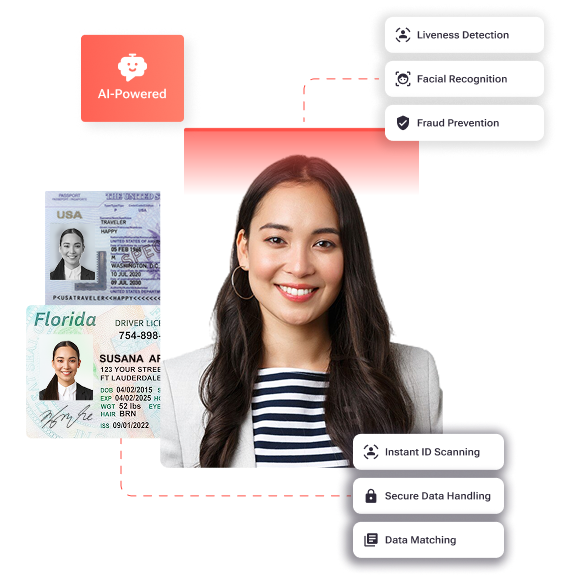
ID Verify Real-time board visibility with QuickApprove. QuickApprove replaces email chains and spreadsheets with a connected, board-ready approval workflow inside TenantEvaluation. Board members use a dedicated review and voting dashboard with real-time application tracking and automated communication support, which speeds up approvals while preserving control, compliance, and visibility. Combined with IDVerify, it gives Florida boards a structured, audit-ready onboarding process that supports fiduciary accountability at every step.
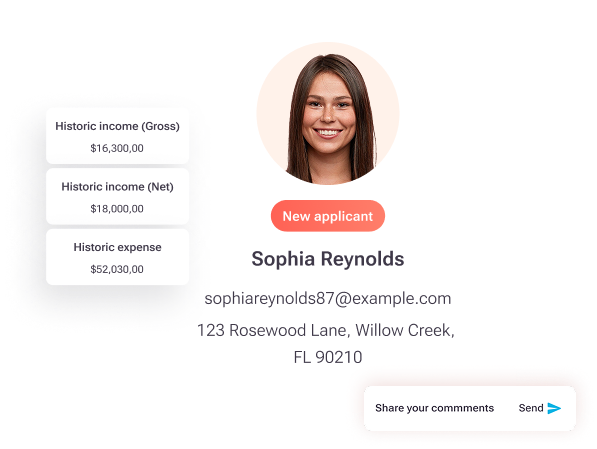
QuickApprove: Fast, Informed Decisions at the Click of a Button See how IDVerify and QuickApprove work together to reduce fraud exposure across your community’s onboarding workflow.
Frequently Asked Questions
What are the most common HOA fraud red flags Florida board members should watch for?
The most common red flags fall into four categories. Financial red flags include unreconciled bank statements, missing or altered invoices, and unauthorized reserve fund transfers. Governance red flags include improperly noticed meetings, withheld records, and undisclosed conflicts of interest. Vendor red flags include sole-source contract awards, duplicate invoices, and payments to unverifiable companies. Behavioral red flags include refusal to delegate financial responsibilities, resistance to audits, and unexplained budget variances. Florida boards operating under Chapters 718 and 720 have statutory obligations to investigate and document these patterns before escalating to the DBPR or law enforcement.
What fiduciary duties do Florida HOA and condo board members have under Chapters 718 and 720?
Under Section 718.111 of the Florida Condominium Act, officers and directors have a fiduciary relationship with unit owners and must act in good faith, with the care an ordinarily prudent person would exercise, and in a manner reasonably believed to be in the association’s best interests. Chapter 720 imposes parallel obligations on HOA directors. Both statutes require directors to complete educational training on financial literacy, reserves, meeting procedures, and records management. Violations involving self-dealing, kickbacks, or intentional destruction of records can result in criminal penalties, mandatory removal from office, and civil liability. Florida law provides qualified immunity to directors, but that protection does not extend to criminal conduct, improper personal benefit, recklessness, or bad faith.
How do Florida board members report suspected HOA fraud to state authorities?
The primary reporting channel for condominium associations is the Division of Florida Condominiums, Timeshares, and Mobile Homes within the DBPR, which accepts complaints online through the DBPR complaints portal. HOA boards governed by Chapter 720 may also file DBPR complaints for certain statutory violations. Criminal conduct, including embezzlement, forgery, and wire fraud, should be reported directly to local law enforcement and, where appropriate, the Florida Attorney General’s Office. Before filing externally, boards should preserve all original records, engage association counsel to review the evidence package, and ensure that any internal board actions comply with the meeting and notice requirements of Chapters 718 or 720.
How does biometric identity verification reduce fraud exposure for Florida HOAs and condo boards?
Traditional resident screening relies on document uploads, which cannot reliably detect impersonation, stolen IDs, or synthetic identities. Biometric identity verification adds a physical presence confirmation layer by validating a government-issued ID, running AI-powered liveness detection, and performing a facial biometric comparison between the applicant’s selfie and their ID photo. For Florida boards with fiduciary duties under Chapters 718 and 720, this creates a more defensible approval record because the board can show that identity was confirmed before occupancy was authorized. TenantEvaluation’s IDVerify operates natively inside the screening workflow, so verification results appear directly in the screening report alongside ID authenticity confirmation, liveness status, and a redacted ID copy for compliance documentation.
What immediate steps should a Florida board take when fraud is suspected?
The first priority is preservation: secure all financial records, bank statements, invoices, contracts, and meeting minutes in their original form without alteration. Next, restrict further disbursements from affected accounts pending legal review. Engage association counsel before confronting any individual or making external reports, because procedural errors can compromise later investigations. Call a properly noticed board meeting to document the concern formally in the minutes. Then file a complaint with the DBPR for statutory violations and refer criminal matters to local law enforcement. Throughout this process, boards must continue to comply with the meeting and notice requirements of Chapters 718 or 720 so internal governance remains intact during a fraud investigation.
Conclusion: Strengthen Fraud Detection and Identity Controls
Florida HOA and condo board members carry fiduciary obligations under Chapters 718 and 720 that require active recognition of fraud risks, not passive reliance on trust. The financial, governance, vendor, and behavioral red flags outlined above represent documented patterns that, when identified early, allow boards to preserve evidence, engage counsel, and report through the correct statutory channels before losses compound. The median duration of occupational fraud schemes is 12 months (source: fraudorder.co). The board that acts on early warning signs reduces both financial exposure and personal liability.
Prevention also extends beyond internal controls. Modern communities face identity fraud at the application stage, including impersonation and synthetic identities that manual document review cannot reliably catch. TenantEvaluation addresses this through IDVerify, a biometric identity verification layer built directly into the resident screening workflow, and QuickApprove, a board-ready approval dashboard that gives directors real-time visibility and a structured voting process. Together, these tools replace email chains with an audit-ready workflow inside one connected platform and support the documentation consistency and operational control that Florida boards need to fulfill their fiduciary duties with confidence.
Schedule a demo today and see how TenantEvaluation helps Florida HOA and condo boards reduce fraud exposure through biometric verification, transparent onboarding workflows, and real-time board visibility.
-
-
-
