Written by: Luis Teran, Co-founder, CEO, TenantEvaluation | Last updated: August 19, 2026
Key Takeaways
- HOA fraud-protection controls must address six distinct attack surfaces: role-based access control (RBAC), immutable audit trails, multi-factor authentication (MFA), biometric identity verification, FCRA-compliant screening, and tokenized payments.
- RBAC with named accounts and least-privilege permissions prevents shared-credential abuse and keeps every action tied to a specific user.
- Immutable, hash-linked audit trails create defensible evidence for audits and deter embezzlement by making every change tamper-proof and searchable.
- Biometric liveness detection and government-ID validation stop synthetic-identity fraud that document-only screening misses in most cases.
- Centralized lease tracking and tokenized payment workflows reduce occupancy and payment fraud while giving Florida CAMs and boards a single, audit-ready record. Learn more at TenantEvaluation.
The following sections break down each control and show how they work together to protect Florida HOAs and CAMs from fraud.
1. Role-Based Access Control (RBAC) for HOA Platforms
HOA management platforms should assign named user accounts with separate permissions for treasurer, secretary, compliance, resident, and administrator roles, never shared credentials. Shared logins make actions untraceable, which creates the conditions where embezzlement schemes take root.
Role-based access controls should follow the principle of least privilege so board members see only the data their role requires. After every board transition, someone must review access permissions and revoke access for former officers, committee members, and vendors.
More than half of occupational fraud cases are linked to a lack of internal controls or management overriding existing controls, with smaller organizations typically having fewer controls in place. RBAC addresses both failure modes by creating clear internal controls through named accounts with defined permissions and by making every action traceable to a specific user, even when that user is a board officer.
2. Immutable Audit Trails for Every HOA Action
Audit trails in regulated systems must use immutable, append-only architecture with hash-linked records, isolated storage tiers, and integrity validation routines to prevent tampering and produce defensible evidence during audits or incidents. A comprehensive event log captures actor identity, action type, object reference, timestamp, outcome, and authority.
Robust HOA management systems provide comprehensive audit trails that track who accessed the system and what changes they made, which serves as a cornerstone for preventing fraud and ensuring accountability. Without this layer, a bookkeeper can write checks to herself for months before detection, as happened in a 2026 Florida case where a property management bookkeeper allegedly embezzled hundreds of thousands of dollars from two HOAs by creating fake invoices and forging signatures.
TenantEvaluation builds audit trails into every application, approval, and document action inside its platform, giving CAMs and boards a searchable, timestamped record from onboarding through occupancy.
3. Multi-Factor Authentication (MFA) for Administrative Access
Multi-factor authentication is one of the most effective defenses against unauthorized access to HOA platforms. A password alone cannot protect bank ledgers or payment records, so a second verification layer is required for anyone accessing the administrative backend.
PCI DSS 4.0 requires MFA for all access into the cardholder data environment, including remote access and privileged accounts. Florida CAMs who manage multiple portfolios remotely fall directly within this requirement.
Requiring strong passwords and multi-factor authentication for all financial systems is a key cybersecurity control recommended by forensic CPAs who audit HOA fraud losses. MFA combined with RBAC closes the most common internal-access attack vectors.
See how RBAC, MFA, and audit trails work together in a live demo.
4. Biometric Identity Verification for HOA Applicants
Traditional fraud tools fail to detect most synthetic identity fraud cases because fraudsters combine real identifiers with fabricated personal data. Document-only review cannot reliably distinguish a genuine applicant from a synthetic identity built with convincing paperwork.
Gartner predicts that by 2028, one in four candidate profiles will be fake, which makes biometric identity verification essential to counter deepfakes, voice cloning, and synthetic headshots that bypass document-only verification. Biometric and liveness checks confirm the presence of a real person and detect deepfakes or injection attacks during onboarding.
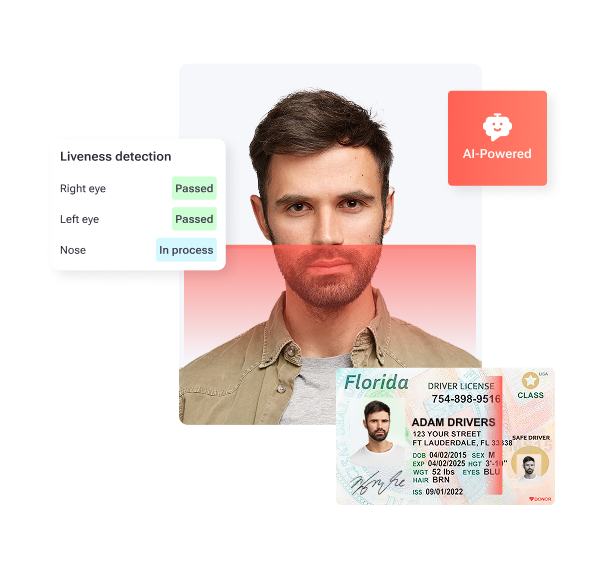
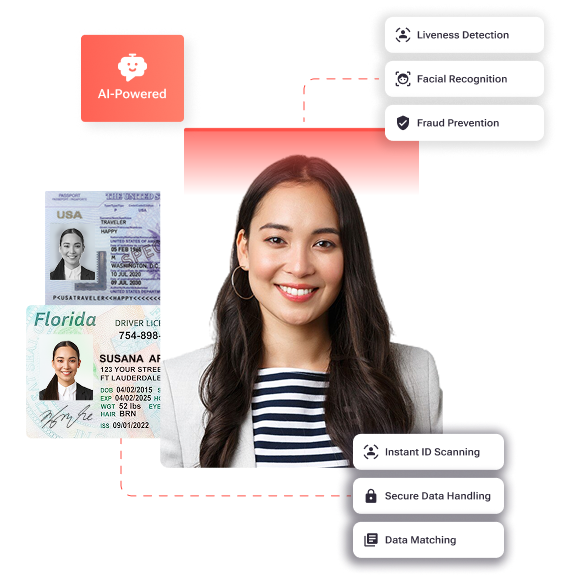
IDVerify from TenantEvaluation embeds automated KYC verification directly into the screening workflow with government ID validation, AI-powered liveness detection, and biometric selfie-to-ID facial matching, all natively inside the platform with no external portal redirect. CAMs see verification results, including ID authenticity confirmation, liveness status, and biometric match result, embedded directly within the screening report.
5. FCRA-First Screening with Permissible Purpose Controls
FCRA compliance requires a standalone written disclosure and explicit consent from the candidate before any background checks are initiated, which establishes proper sequencing in screening workflows. Running a background check on stolen or fabricated credentials exposes the association to both fraud loss and regulatory liability.
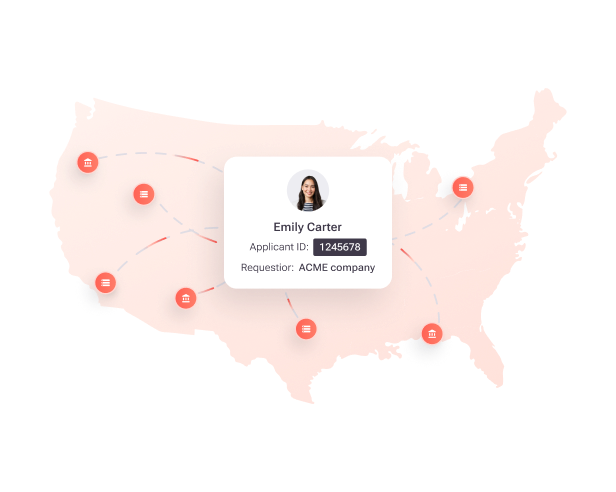
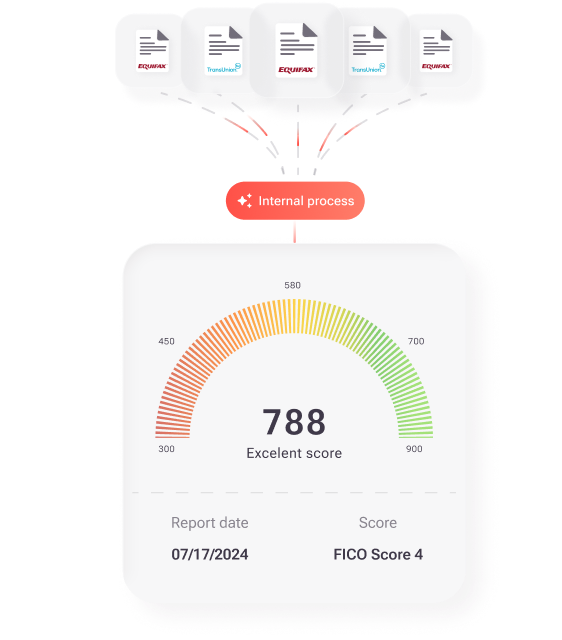
TenantEvaluation is built with FCRA compliance as the foundation, not as an add-on. As a direct reseller of TransUnion and Equifax data under strict bureau rules, TenantEvaluation maintains permissible purpose controls, automated adverse action workflows, and clear separation between decision-making by the association and data provision by TenantEvaluation. IDVerify strengthens permissible-purpose validation by confirming identity before screening authorization, which reinforces FCRA-aligned workflows and audit defensibility.
6. Immutable Lease Records and Centralized Lifecycle Tracking
Fragmented lease management with missing copies, manual expiration tracking, and disconnected spreadsheets creates operational blind spots that enable occupancy fraud and complicate audits. Failure to protect resident data and maintain organized records can expose individual board members to legal claims and erode community trust.
TenantEvaluation’s Lease Tracking connects resident onboarding, unit data, approvals, and lease documentation into one centralized, real-time workflow. It delivers real-time lease status visibility, automated lease document collection during onboarding, unit-level tracking, and searchable audit-ready digital records, which replaces spreadsheets and scattered email chains from application to occupancy.
Book a walkthrough of Lease Tracking’s centralized workflow.
7. Tokenized Payments with Direct-to-Account Flow
Modern HOA management systems use secure payment gateways that tokenize financial data instead of exposing vulnerable paper-check workflows, which ensures the board never stores full account numbers. The average amount requested from BEC wire transfer attackers was $24,586 in January 2025, and vendor email compromise rose 66% in the first half of 2024.
TEpayments by Zinc is a connected payment workflow integrated into TenantEvaluation that collects application fees, deposits, and other required resident payments within the onboarding process. Payments go directly from the applicant to the Association’s designated account, and TenantEvaluation never holds the funds. Each Association defines what is collected and at which stage, and the workflow adapts to the property’s process rather than forcing a universal sequence.
The fraud-prevention controls above apply to every HOA, but the way you roll them out depends on how the community is managed.
8. Self-Managed vs. Professionally Managed: Security Responsibilities
The security controls required do not change based on management structure, but the implementation path does. Self-managed HOAs rely on volunteer boards to configure, maintain, and audit platform controls directly. Professionally managed communities delegate that operational layer to a CAM or management company, while the board still retains fiduciary responsibility. Florida HOA board members may face legal consequences if fraud or financial losses result from intentional misconduct, gross negligence, or a failure to implement reasonable financial controls.
The evaluation criteria differ by structure:
- Self-managed HOAs need platforms with intuitive RBAC setup, built-in MFA enforcement, and audit trails that volunteer boards can interpret without forensic expertise, because they handle configuration themselves.
- Professionally managed portfolios need platforms that support multi-community configuration, portfolio-level lease visibility, and payment workflows that adapt per association, since one CAM team oversees many properties.
- Both structures require FCRA-compliant screening, biometric identity verification, tokenized payments, and immutable audit records to meet the same fraud-prevention baseline, regardless of who manages daily operations.
TenantEvaluation serves both structures across 5,000+ Florida communities, processing approximately 100,000 applications annually with a platform built exclusively for community associations, not generic rentals.
The following matrix maps each major fraud type to the specific platform controls that prevent it, so you can see how TenantEvaluation’s capabilities address each threat.
HOA Fraud-Type Matrix: Controls by Threat Category
| Fraud Type | How It Happens | Platform Control | TenantEvaluation Capability |
|---|---|---|---|
| Embezzlement | Ghost vendor schemes, unauthorized credit card use, forged check signatures | RBAC, segregation of duties, immutable audit trails | Named-user audit trails on every application and document action, plus a board voting dashboard with timestamped records |
| Synthetic-Identity Application Fraud | Real PII combined with fabricated data creates identities that pass document-only review | Biometric liveness detection, government ID validation, FCRA-compliant screening sequencing | IDVerify: AI liveness detection, facial biometric matching, ID authenticity validation natively inside the workflow |
| Payment Fraud / Vendor Email Compromise | Spoofed invoices redirect wire transfers, and VEC rose 66% in H1 2024 | Tokenized payments, direct-to-account flow, MFA on financial access | TEpayments by Zinc: payments go directly from applicant to Association’s designated account, and TenantEvaluation never holds funds |
Frequently Asked Questions
What HOA software security features should Florida CAMs prioritize in 2026?
Florida CAMs should prioritize platforms that combine role-based access control with named user accounts, multi-factor authentication on all administrative access, immutable audit trails for every transaction and document action, PCI Level 1 compliant tokenized payment workflows, and biometric identity verification embedded in the screening process. FCRA-compliant screening with direct credit bureau data, not third-party scraping, is also essential for communities that process resident applications. TenantEvaluation includes all of these controls in one connected platform built exclusively for community associations.
How does biometric identity verification reduce application fraud in HOAs?
Document-only screening cannot confirm that the person submitting an application is the genuine owner of the presented identity. Biometric identity verification adds government ID authenticity validation, AI-powered liveness detection, and facial biometric matching to confirm a real, live person is applying before any background screening occurs. This multi-layer approach materially reduces synthetic identity fraud, where fraudsters combine real and fabricated personal data, and impersonation attempts that bypass traditional document review. TenantEvaluation’s IDVerify+ runs this entire process natively inside the platform, with results embedded directly in the screening report for CAMs and boards.
What is the difference between self-managed and professionally managed HOA software security needs?
The required security controls stay the same regardless of management structure and include RBAC, MFA, audit trails, tokenized payments, and biometric verification. The difference lies in who configures and maintains those controls. Self-managed HOAs need platforms with intuitive setup that volunteer boards can operate without technical expertise. Professionally managed portfolios need multi-community configuration, portfolio-level visibility, and payment workflows that adapt per association. In both cases, the board retains fiduciary responsibility for fraud prevention, and Florida law may hold board members personally liable for losses that result from a failure to implement reasonable financial controls.
How does TEpayments by Zinc protect HOAs from payment fraud?
TEpayments eliminates payment redirection risk by routing funds directly from applicant to Association without intermediary holding accounts. This direct-to-account flow, combined with the workflow integration described in Section 7, removes the manual payment-tracking gaps that vendor impersonation schemes exploit. Each Association configures what is collected and at which stage, so the workflow adapts to the property’s process rather than forcing a universal sequence.
Does TenantEvaluation’s platform support audit readiness for Florida HOA compliance requirements?
TenantEvaluation is built with FCRA compliance as the foundation and includes built-in audit trails for every application, approval, document action, and payment event. As a direct reseller of TransUnion and Equifax data under strict bureau rules, TenantEvaluation maintains permissible purpose controls and automated adverse action workflows. Lease Tracking connects onboarding, unit data, approvals, and lease documentation into one searchable, audit-ready digital record from application to occupancy. These capabilities support internal compliance-related processes and audit readiness without replacing legal guidance or guaranteeing specific regulatory outcomes.
