Written by: Luis Teran, Co-founder, CEO, TenantEvaluation | Last updated: August 9, 2026
Key Takeaways for Florida HOA Screening
- Florida HOAs and condominiums have statutory authority under Chapters 718 and 720 to require background checks when screening criteria appear in governing documents and are applied uniformly.
- FCRA compliance is mandatory. Associations must obtain written authorization before ordering consumer reports and issue adverse action notices when reports influence denial decisions.
- Structured screening platforms reduce administrative bottlenecks, remove fragmented records, and protect against identity fraud while keeping documentation audit ready.
- Revenue-sharing models let associations offset screening costs by collecting application fees and retaining net proceeds after platform service fees.
- TenantEvaluation delivers an FCRA-first platform with biometric ID verification, board approval dashboards, and centralized lease tracking built for Florida community associations.
Florida HOA Authority to Require Background Checks
Florida law gives both condominium and homeowners associations clear authority to screen prospective residents, including requiring background checks as a condition of approval. This authority comes from two primary statutes.
Florida Statute Chapter 718 governs condominium associations and their declaration and bylaws. Florida Statute Chapter 720 governs homeowners associations and their recorded governing documents.
Key statutory requirements for Florida associations conducting background checks include:
- Screening criteria must appear in the association’s declaration, bylaws, or rules and regulations before enforcement begins.
- Criteria must be applied consistently across all applicants to reduce Fair Housing Act disparate impact exposure, and HUD recommends uniform application of screening standards.
- Associations must provide written disclosure and obtain written authorization from applicants before ordering a consumer report, as required by FCRA 15 U.S.C. § 1681.
- If an application is denied or modified based on a consumer report, an adverse action notice is required under FCRA § 615. The notice must identify the consumer reporting agency and explain the applicant’s right to a free report copy within 60 days.
- Applicants retain the right to dispute inaccurate information with the consumer reporting agency under FCRA § 611, and the agency must investigate within 30 days.
Florida Fingerprint Retention Rules for HOA-Related Screening
The fingerprint retention rule describes how long fingerprints stay on file within the Florida Care Provider Background Screening Clearinghouse. Under this system, fingerprints submitted for Level 2 background screenings are retained by the Florida Department of Law Enforcement (FDLE).
Relevant operational details for associations and their vendors include:
- After the retention period expires, a Clearinghouse Renewal is required to extend retention and avoid a full new screening cycle.
- If an individual experiences an employment or occupancy lapse, Clearinghouse providers pay only for a new national criminal history check.
- A resubmission screening for individuals with a lapse updates the criminal history check but does not extend the retained prints expiration date.
- Clearinghouse providers can request a free Agency Review when an applicant has already been screened, which avoids the full cost of new fingerprinting.
The Clearinghouse framework applies primarily to care providers and regulated employment contexts, yet it shows the broader fingerprint retention infrastructure that shapes how Florida screening vendors design workflows for community associations. Understanding this infrastructure becomes more critical as Florida’s regulatory landscape continues to evolve.
New Florida HOA Screening Laws and Trends for 2026
Florida’s legislative environment for community associations continues to evolve. 2026 regulatory updates affecting HOAs and condominiums reflect a broader push toward transparency, financial accountability, and stronger documentation requirements for associations statewide.
Key regulatory themes affecting screening and approvals in 2026 reflect a coordinated push toward accountability and transparency:
- Increased documentation requirements for board decisions, including approval and denial records that must be retained and accessible, create the foundation for audit-ready operations.
- Stronger emphasis on consistent application of screening criteria reduces liability exposure under fair housing frameworks and depends on having documented, accessible records of every decision.
- Growing expectations around digital recordkeeping support proof of consistent application across all applicants and replace fragmented paper trails.
- Continued enforcement focus on associations that apply screening criteria inconsistently or without documented governing authority targets the same gaps that digital recordkeeping and documentation requirements are designed to close.
Florida Statute Chapter 720.3033 sets officer and director requirements for HOAs and reinforces the accountability framework that governs board approval decisions, including resident screening outcomes. Associations that lack structured, auditable screening workflows face growing exposure as regulatory scrutiny increases.
Typical Florida HOA Background Check Costs
Background check costs for Florida community associations vary by report type, provider model, and geographic market. The following information reflects available data.
Government fee components for Level 2 screenings processed through the Florida Clearinghouse include federal fees of $12.00, $27.00, or $36.00 to the FBI depending on the applicant type.
Private vendor and association-facing cost ranges include:
- FDLE name-based criminal history checks in Florida cost $0–$24 depending on applicant type
- Non-fingerprint state criminal history checks in Florida cost $24 or $25 for most public or personal requests, with some applicant types at $8
- Fingerprint-based Level 2 checks that include FDLE and FBI components vary in cost by provider.
- Combined state-and-federal FBI packages vary in cost by provider.
- Private vendor packages with full report depth typically range from $25 to $150.
At the association level, condominium and HOA boards often charge applicants for background checks as a separate line item from other fees. Similar pass-through structures appear across Miami, Tampa, Orlando, and Jacksonville markets.
TenantEvaluation’s revenue-sharing model allows associations to collect application fees from applicants, deduct the platform service fee, and return the remainder to the association. Screening becomes a compliant revenue stream instead of a pure operational cost center.
Florida HOA Screening Statutes and Compliance Duties
The following table summarizes the primary statutory and regulatory frameworks that govern resident screening for Florida community associations.
| Statute / Authority | Applies To | Key Obligation | Operational Impact |
|---|---|---|---|
| Florida Statute Ch. 718 | Condominium Associations | Permits screening criteria in declaration and bylaws and requires consistent application | Screening rules must be recorded before enforcement, and board approval workflows must be documented. |
| Florida Statute Ch. 720 | Homeowners Associations | Authorizes approval requirements through governing documents and mandates uniform criteria | Denial decisions require documented rationale tied to recorded criteria. |
| Florida Statute Ch. 720.3033 | HOA Officers and Directors | Establishes accountability standards for board members making approval decisions | Board voting records and approval documentation must remain audit ready. |
| FCRA 15 U.S.C. § 1681 | All Associations Using Consumer Reports | Requires written disclosure and authorization before ordering and requires adverse action notices on denial | Associations must maintain signed consent records and issue compliant adverse action letters. |
Key compliance obligations for Florida associations include:
- Maintaining signed written authorization from every applicant before a consumer report is ordered
- Issuing adverse action notices that identify the consumer reporting agency and applicant dispute rights
- Retaining audit-ready records of all screening decisions, board votes, and applicant communications
- Applying screening criteria uniformly across all applicant types to reduce disparate impact exposure
Comparing HOA Background Check Vendors in Florida
Florida associations evaluating screening vendors face a fragmented market. Generic tenant screening tools, background-check-only providers, and broad property management platforms each cover parts of the workflow, yet few are built exclusively for community associations with FCRA compliance as the starting point.
| Capability | TenantEvaluation | ApplyCheck / Verify Screening Solutions | Generic Property Management Platforms |
|---|---|---|---|
| Built for Community Associations | Yes, exclusively | No, general screening focus | No, broad rental market |
| FCRA-First Design | Yes, foundation rather than add-on | Partial, screening layer only | Varies by platform |
| Biometric Identity Verification | Yes, IDVerify built into the platform | Not available | Not available |
| Board Approval Dashboard | Yes, QuickApprove with voting panel | Not available | Limited or absent |
| 55+ Age-Restricted Workflow | Yes, 55+ Communities Verification | Not available | Not available |
| Centralized Lease Tracking | Yes, real-time and audit ready | Not available | Varies and often disconnected from screening |
| Connected Payment Workflow | Yes, TEpayments by Zinc with funds sent directly to the association account | Not available | Varies and often handled in a separate system |
| Revenue-Sharing Model | Yes, application fees rebated to the association after service fee deduction | Not available | Typically subscription based |
| Direct Credit Bureau Reseller | Yes, TransUnion and Equifax | Third-party platform (TazWorks) | Varies |
The revenue-sharing model creates a material difference for many boards. One Florida-based management company documented $240,000 in annual savings after switching to TenantEvaluation. The change freed 50 hours of staff time per day, cut processing time by 50%, and removed paper-based data handling risks. ApplyCheck and Verify Screening Solutions, both built on the TazWorks platform, do not offer comparable end-to-end onboarding, board dashboards, or revenue-sharing structures.
Schedule a demo today to compare TenantEvaluation’s capabilities against your current vendor.
How TenantEvaluation Fits Florida HOA Workflows
TenantEvaluation is built specifically for community associations and management companies, with FCRA compliance as the foundation rather than an afterthought. Founded in 2007 and serving more than 5,000 communities with roughly 100,000 applications processed each year, the platform covers every stage of resident onboarding across major Florida markets.

Core platform capabilities include:
- QuickApprove: An accelerated approval workflow for CAMs, boards, and property management teams inside one connected platform. It delivers real-time application tracking, automated communication support, customized approval letters, a personalized welcome package, and a board-ready approval process with a dedicated voting panel. These features reduce manual follow-ups and support high-volume seasons and complex onboarding requirements while preserving control, compliance, and visibility.
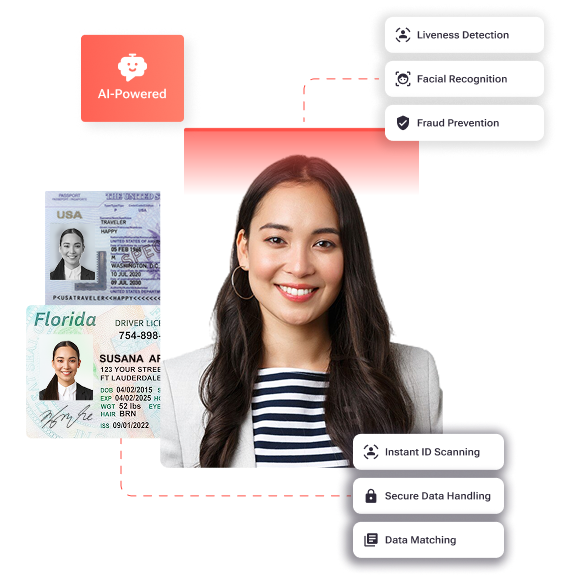
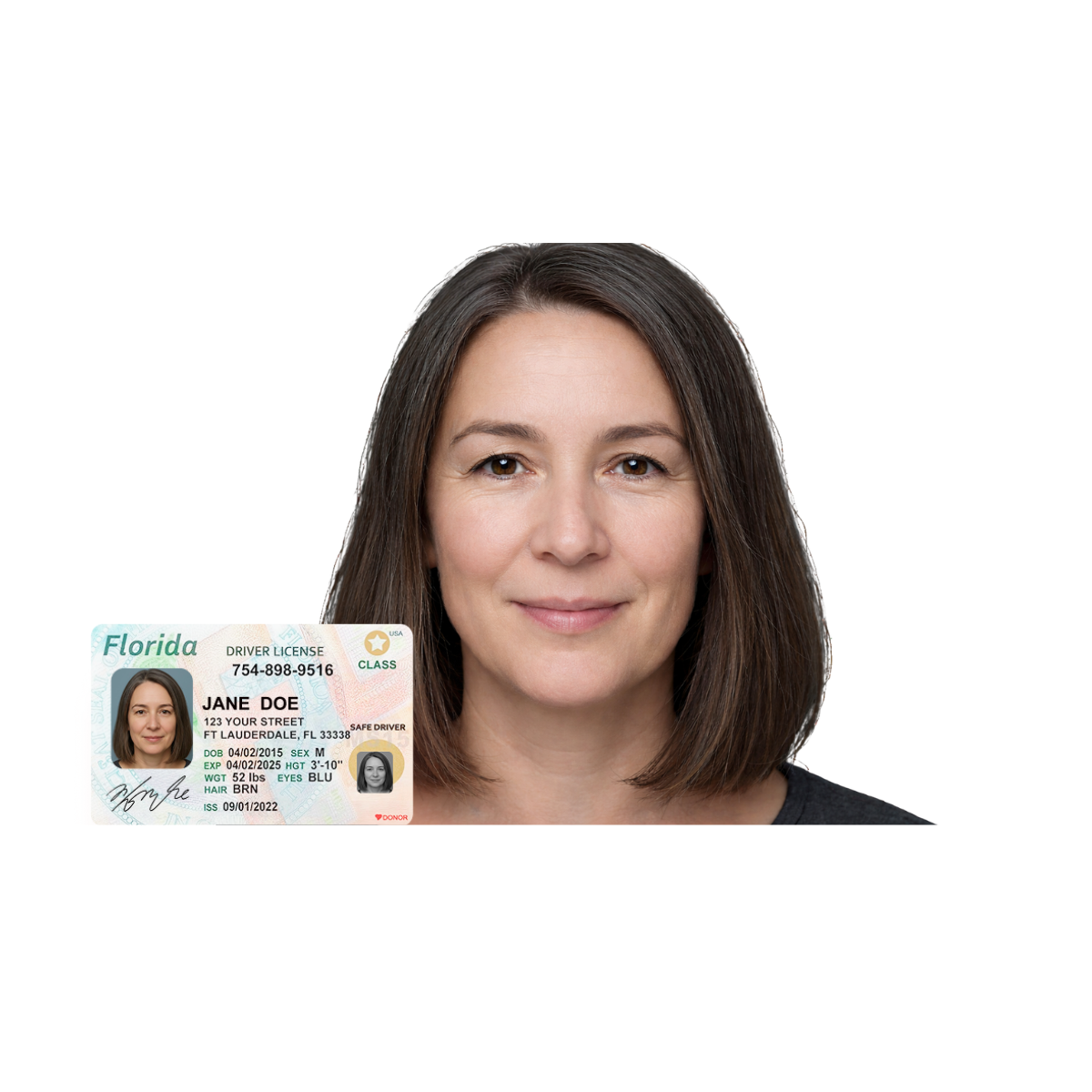
- IDVerify: A biometric identity verification layer embedded directly into the screening workflow. It uses government ID validation, AI-powered liveness detection, and biometric facial matching to move communities from document-based review to verified physical identity confirmation inside TenantEvaluation without external portals.
- 55+ Communities Verification: A built-in capability that helps Florida condos and HOAs standardize how age-restricted requirements are handled across applications. It reduces manual work, supports documentation consistency, and improves operational efficiency for CAMs and boards that manage age-restricted communities.
- Lease Tracking: A centralized, real-time lease visibility and lifecycle control capability that connects resident onboarding, unit data, approvals, and lease documentation in one streamlined, audit-ready workflow. It delivers real-time lease status, automated lease document collection, unit-level tracking, and searchable digital history, which replaces spreadsheets and scattered email chains.
- TEpayments by Zinc: A connected payment workflow inside TenantEvaluation that collects application fees, deposits, and other required resident payments during onboarding. Payments go directly to the association’s designated account, and TenantEvaluation never holds the funds. Each association defines what is collected and at which stage.
TenantEvaluation is a direct reseller of TransUnion and Equifax data and accesses this data under strict bureau rules with regular compliance reviews. Built-in adverse action workflows, automatic redaction of sensitive PII, PCI Level 1 compliance, and end-to-end encryption complete the compliance infrastructure. The platform has generated $150M for communities and holds a 4.8 out of 5 Google rating.
Frequently Asked Questions
How far back do HOA background checks go in Florida?
Florida HOAs and condominiums typically review criminal history going back seven years for most offenses, which aligns with FCRA § 605 guidelines that restrict reporting of most negative information beyond that period. Bankruptcies may be reported for up to ten years. No uniform federal time limit exists on criminal record reporting, so some associations and vendors may access records beyond seven years depending on the offense and the association’s governing criteria. Associations should document their lookback period in their screening criteria and apply it consistently across all applicants to reduce fair housing liability exposure.
What can disqualify an applicant on a background check?
Disqualifying criteria vary by association and must appear in the governing documents before enforcement. Common disqualifying factors include felony convictions within the lookback period, prior evictions, credit scores below the association’s stated minimum, unverifiable income, and identity verification failures. Florida associations using biometric verification through platforms such as TenantEvaluation’s IDVerify can also flag identity mismatches between submitted documents and biometric confirmation. Associations must apply disqualifying criteria uniformly and issue a compliant adverse action notice whenever a consumer report contributes to a denial or modified approval decision.
How long does an HOA background check take?
Processing time depends on the screening method and platform. Manual processes that rely on paper submissions, email follow-ups, and disconnected document review can take five to ten business days or longer. Automated platforms such as TenantEvaluation reduce application processing to five to ten minutes for submission and deliver screening results much faster by removing manual handoffs. Board approval timelines create a separate variable. QuickApprove addresses this variable by giving boards a dedicated review and voting dashboard that reduces approval bottlenecks while preserving board oversight and compliance controls.
Which background check services integrate with board approval workflows?
Most background check vendors, including ApplyCheck and Verify Screening Solutions, provide screening reports but do not offer integrated board approval workflows. TenantEvaluation stands out through QuickApprove, a board-ready approval process with a dedicated voting panel, real-time application tracking, and automated communication support built directly into the same platform used for screening, document collection, and lease tracking. This structure removes the need for separate email chains, spreadsheets, or third-party approval tools and gives boards direct visibility into application status without requiring managers to relay information manually.
Next Steps for Reviewing Your HOA Screening Process
Florida associations reviewing their screening vendor should measure their current process against the criteria presented in this guide. These criteria include FCRA-first design, biometric identity verification, board approval integration, 55+ workflow standardization, centralized lease tracking, and a connected payment workflow that routes funds directly to the association. Manual processes and single-function screening tools often fall short across several of these criteria at once, which creates compounding compliance, operational, and revenue risk.
TenantEvaluation serves associations across Florida’s major markets with a platform built exclusively for community associations rather than adapted from generic rental tools. This track record, built across thousands of communities and hundreds of thousands of applications, supports direct evaluation against any incumbent vendor or manual process.
Schedule a demo today to assess how TenantEvaluation’s all-in-one platform compares to your association’s current screening, approval, and lease management workflow.
