Written by: Luis Teran, Co-founder, CEO, TenantEvaluation | Last updated: July 29, 2026
Key Takeaways for Florida HOA Boards
- Florida leads the U.S. in identity theft complaints, so biometric liveness detection now plays a critical role in HOA screening.
- Modern HOA onboarding works best when identity verification happens before board review and appears inside the screening report for CAMs.
- Email chains and spreadsheets slow approvals and increase liability, while native platforms keep everything in one controlled workflow.
- FCRA compliance requires direct credit bureau reseller status, automated adverse action workflows, and clear permissible purpose controls.
- TenantEvaluation combines biometric verification, board dashboards, and lease tracking in one platform. Protect your community with a tailored demo that shows the full workflow.
Identity Verification Inside a Modern Resident Onboarding Flow
A modern HOA onboarding workflow starts when an applicant receives a community property code and submits an online application. The same platform handles document collection, background checks, and payment collection. Identity verification confirms the applicant is the person they claim to be, and this step should complete before the application reaches the board.
IDVerify from TenantEvaluation inserts automated KYC verification directly into this flow. Applicants upload a government-issued ID and complete a guided selfie step. AI-powered liveness detection runs instantly, then facial landmark biometric mapping compares the selfie to the ID photo. Results such as ID authenticity, liveness status, and biometric match outcome appear inside the screening report visible to the Community Association Manager. No external portals and no broken workflows. The board then uses a dedicated review and voting dashboard through QuickApprove to make a final decision with full application visibility.

See the complete workflow in action and watch how IDVerify fits inside TenantEvaluation’s end-to-end onboarding process.
Florida HOA Market Pressures and Board Pain Points
New-account fraud has surged in recent years according to the Javelin Strategy & Research Identity Fraud Study. For HOA boards, this surge increases liability when fraudulent applicants gain access through weak screening.
Operational friction makes the risk worse. Many Florida HOA boards still manage approvals through email threads, PDF attachments, and manual follow-ups. Applications stall while they wait for board review. Managers spend hours chasing missing documents. Lease records sit in disconnected spreadsheets with no real-time occupancy visibility. For 55+ age-restricted communities, inconsistent documentation of eligibility requirements creates audit exposure.
TenantEvaluation reduces these bottlenecks with QuickApprove, an accelerated approval workflow built for CAMs, boards, and property management teams in one connected platform. It provides real-time application tracking, automated communication support, customized approval letters, a personalized welcome package, and a board-ready approval process. Lease Tracking connects resident onboarding, unit data, approvals, and lease documentation into one centralized, real-time, audit-ready workflow that replaces spreadsheets and scattered email chains.

Compliance Rules Shaping Florida Community Association Screening
Florida community associations that use consumer reports for screening must comply with the FCRA, including obtaining written authorization, establishing permissible purpose, and providing adverse action notices when a denial is based even partly on a report, with willful violations exposing associations to statutory penalties up to $1,000 per instance. For Florida condominiums, screening fees are capped at $150 per applicant under the Florida Condominium Act (Chapter 718). For HOAs, fees must be reasonable and authorized in governing documents.
TenantEvaluation acts as a direct reseller of TransUnion and Equifax data, not a third-party scraper. The platform enforces strict permissible purpose controls, automated adverse action workflows, and built-in audit trails for every application, while keeping data provision separate from association decision-making. Florida Statutes § 720.303 governs official records for homeowners’ associations, while redaction of personal identifying information such as Social Security numbers is addressed under Chapter 119. TenantEvaluation automates this redaction at the platform level.
Where Traditional HOA Screening Breaks Down
Generative AI tools have lowered the cost of producing realistic deepfakes for biometric spoofing, with ready-to-go synthetic identities offered for as little as $15 in some reported cases. Document-only screening, where applicants upload an ID image and the review stops there, cannot detect these threats. The process never confirms that the person submitting the document matches the person on the ID.
Additional failure points in traditional HOA screening include:
- Disconnected spreadsheets with no real-time lease or occupancy visibility
- Manual document review prone to human error and inconsistency
- Email-chain approval workflows with no audit trail
- Inconsistent handling of 55+ age-restricted eligibility documentation
- No biometric confirmation layer before board approval decisions
Best Practices Florida HOAs Use for Identity Verification
PropTech platforms require robust, real-time KYC solutions combining passive and active liveness detection with biometric verification and document validation to protect platforms and users during onboarding while maintaining compliance. These same requirements now apply to HOA operations, where document-only screening, disconnected workflows, and inconsistent compliance demand a coordinated response. For HOAs in 2026, effective practices include:
- Multi-layer biometric checks using government ID validation, AI liveness detection, and selfie-to-ID facial comparison
- Configurable per-community risk settings instead of a single global rule set
- Centralized digital lease records connected to the full onboarding lifecycle
- Standardized documentation workflows for age-restricted 55+ communities
- Connected payment collection inside the onboarding process through TEpayments by Zinc
The global biometric access control market is projected to grow at a CAGR of 8.4% through 2029, reflecting rising adoption across commercial and residential properties. Liveness detection now functions as a baseline requirement rather than an optional upgrade.
Five-Part Evaluation Framework for Florida HOA Boards
Florida HOA boards and CAMs can evaluate identity verification platforms using five connected criteria that cover the full onboarding lifecycle, from fraud prevention through long-term compliance protection:
- HOA workflow fit: The platform should handle application intake, document collection, board review, approval, and lease tracking natively, without external portals.
- Biometric fraud prevention: The solution should combine government ID validation, AI liveness detection, and facial biometric matching in a single embedded workflow.
- Board dashboard transparency: Board members should see real-time application status, summarized reports, and a voting panel without relying on email.
- FCRA compliance posture: The provider should act as a direct credit bureau reseller and include adverse action workflows, permissible purpose controls, and automated redaction.
- Measurable time and cost savings: The platform should document outcomes such as faster approvals, reduced staff hours, and lower operational costs.
Side-by-Side Comparison of HOA Identity Verification Providers
The table below scores six providers against the five-part framework. TenantEvaluation’s figures reflect published platform capabilities and documented outcomes across thousands of communities and high annual application volume. Generic tool scores rely on publicly available feature documentation.
| Provider | HOA Workflow Fit | Biometric Fraud Prevention | FCRA Compliance Posture | Time Savings |
|---|---|---|---|---|
| TenantEvaluation | Native end-to-end HOA platform: application, IDVerify+, QuickApprove board dashboard, Lease Tracking, TEpayments by Zinc, 55+ Communities Verification, no external portals | Government ID validation plus AI liveness detection and selfie-to-ID biometric matching, all embedded natively | Direct TransUnion and Equifax reseller, built-in adverse action, automated redaction, permissible purpose controls, full audit trail | Up to 70% faster approvals, up to 50 hours of daily staff-time savings, $240K annual savings documented in one Florida management company case |
| iDenfy | Generic KYC tool, no native HOA board dashboard, lease tracking, or 55+ workflow | Document verification plus liveness detection, not embedded in HOA onboarding workflow | GDPR-oriented, FCRA permissible purpose controls not documented for HOA use cases | Verification speed documented, HOA-specific time savings not published |
| Onfido | Enterprise identity API that requires custom integration, no HOA board approval workflow | Document, biometric, and liveness checks, identity verification results can be delivered in as little as 30 seconds at scale | SOC 2 certified, FCRA HOA-specific posture not documented | Enterprise-scale speed, HOA-specific outcomes not published |
| ApplyCheck | Background check focus via TazWorks platform, limited applicant interaction, no board dashboard | Document-based review, biometric liveness not a documented core feature | FCRA-oriented background checks, not a direct credit bureau reseller | HOA-specific time savings not published |
| Verify Screening Solutions | White-labeled TazWorks platform, background checks only, no native HOA onboarding workflow | Document review, biometric liveness not a documented core feature | FCRA background checks, not a direct credit bureau reseller | HOA-specific time savings not published |
| AppFolio | Broad property management platform, screening available but not HOA-native, no dedicated board voting dashboard | Standard screening, biometric liveness not a documented core feature | FCRA screening included, not positioned as direct credit bureau reseller for HOA use | General property management efficiency gains, HOA-specific outcomes not published |
Board Approval Workflows with Embedded Identity Verification
Florida CAMs and board presidents want identity verification results to flow directly into the board’s approval process without extra manual steps. TenantEvaluation delivers that connection. QuickApprove gives board members a dedicated review and voting dashboard inside TenantEvaluation. IDVerify+ biometric results, including ID authenticity, liveness status, and biometric match, appear alongside the full screening report.
Board members review summarized applicant data, cast votes, and trigger automated approval letters and welcome packages within the same platform. Real-time application tracking keeps CAMs and boards aligned without email back-and-forth. The QuickApprove dashboard becomes especially valuable during high-volume seasons and in communities with complex onboarding requirements, while preserving board oversight and compliance review.
Biometric Liveness Detection for Florida Condo Applications
Biometric liveness detection for condo applications works by asking the applicant to complete a guided selfie step during the application process. Active liveness detection, which requires prompted user actions such as turning the head or blinking, provides the highest spoof resistance and is recommended for high-risk scenarios including remote identity verification. IDVerify runs this process natively inside TenantEvaluation, so applicants stay in one platform.
The system validates the government-issued ID for authenticity, runs AI-powered liveness detection to confirm physical presence, and performs facial landmark biometric mapping to compare the live selfie against the ID photo. This creates a multi-layer fraud prevention system that moves Florida condo communities from document-based review to biometric-confirmed identity verification before any board approval decision. IDVerify can be configured per community and per property portfolio to match each association’s risk profile.
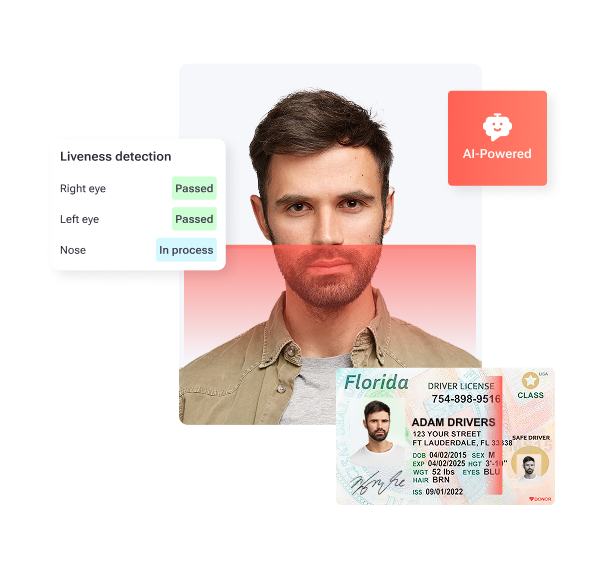
Watch a live demonstration of IDVerify biometric liveness detection inside an HOA screening workflow.
FCRA-Focused HOA Screening Platforms in 2026
FCRA compliance for HOA screening tools in 2026 requires more than a checkbox. Beyond the authorization, permissible purpose, and adverse action requirements outlined earlier, associations need platforms that automate these workflows instead of relying on manual tracking. TenantEvaluation acts as a direct reseller of TransUnion and Equifax data, accessed under strict bureau rules with regular compliance reviews and audits.
The platform avoids gray-market and offshore data sources. Built-in adverse action workflows, automated PII redaction, and a complete timestamped audit trail for every application help protect associations from liability. IDVerify+ strengthens permissible-purpose validation by confirming identity before screening authorization, which supports FCRA-aligned workflows and audit defensibility for Florida condos and HOAs.
Conclusion: Selecting a Florida HOA Identity Verification Partner
The five-part framework of HOA workflow fit, biometric fraud prevention, board dashboard transparency, FCRA compliance posture, and measurable time savings gives boards a clear way to compare platforms. Before choosing a vendor, Florida CAMs and board presidents should map their current process, identify where applications stall, where fraud exposure exists, how board members access and vote on applications, and whether lease records stay centralized or scattered.
TenantEvaluation brings these elements together in one FCRA-first platform built for Florida community associations. The system combines native HOA board dashboards, direct TransUnion and Equifax reseller status, biometric liveness detection through IDVerify, accelerated approvals through QuickApprove, standardized age-restricted handling through 55+ Communities Verification, and centralized lease lifecycle visibility.
Protect your community from identity fraud and see how TenantEvaluation’s IDVerify accelerates board approvals while strengthening security.
Frequently Asked Questions
What is biometric liveness detection and why does it matter for Florida HOA applications?
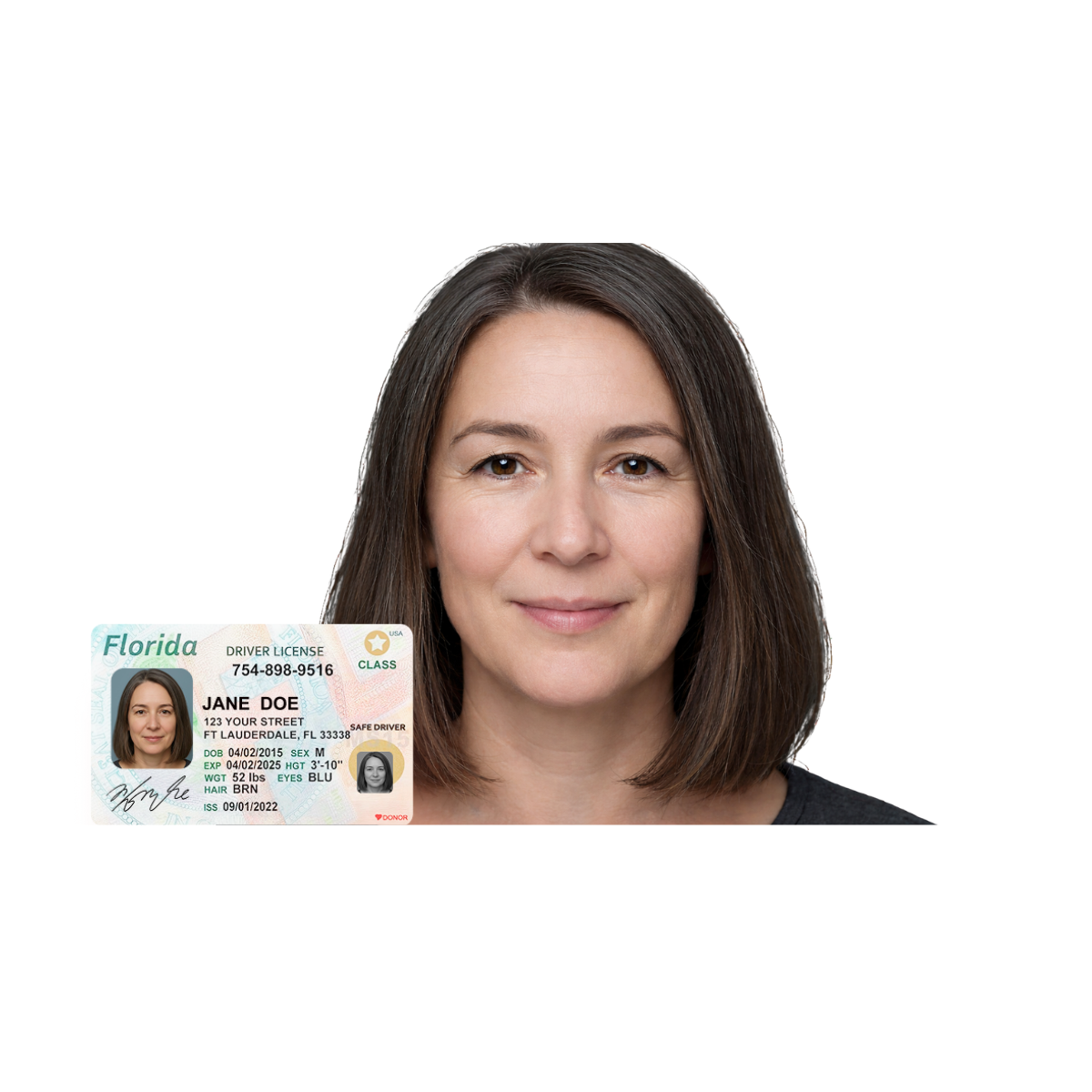
Biometric liveness detection is a technology that confirms a real, physically present person is completing an identity verification step, not a photo, video, deepfake, or silicone replica. For Florida HOA and condo applications, this matters because traditional document-upload screening cannot detect synthetic identities or impersonation attempts. When an applicant submits a scanned ID without any biometric confirmation, the association cannot verify that the person submitting the document matches the person on it.
Liveness detection closes this gap by analyzing subtle physical cues such as blinking, head movement, and skin texture in real time. TenantEvaluation’s IDVerify+ combines government ID validation, AI-powered liveness detection, and selfie-to-ID biometric facial matching inside the native screening workflow, so CAMs and boards receive verified identity confirmation before any approval decision.
How does TenantEvaluation’s board approval workflow differ from generic identity verification tools?
Generic identity verification tools such as iDenfy or Onfido support enterprise KYC flows and usually require custom integration to connect verification results to downstream workflows. These tools do not include HOA board dashboards, lease tracking, 55+ age-restricted handling, or Florida-specific compliance configurations. TenantEvaluation’s QuickApprove functions as a board-ready approval workflow built natively inside the platform.
Board members access a dedicated panel with summarized applicant reports, IDVerify+ biometric results, and a voting interface without leaving TenantEvaluation or relying on email. Real-time application tracking, automated communication support, customized approval letters, and a personalized welcome package all sit inside the same connected workflow designed for CAMs, boards, and property management teams that manage Florida community associations.
What does FCRA compliance mean for a Florida HOA using a screening platform?
The Fair Credit Reporting Act governs how consumer reports such as credit checks, background checks, and eviction history may be obtained and used. For Florida community associations, FCRA compliance requires written authorization from the applicant, a documented permissible purpose for obtaining the report, and an adverse action notice delivered to the applicant if a denial or conditional approval is based even partly on the report. Willful violations can result in statutory penalties up to $1,000 per instance.
A compliant screening platform should also maintain a complete audit trail, enforce permissible purpose controls, and automate adverse action workflows. TenantEvaluation acts as a direct reseller of TransUnion and Equifax data, not a third-party aggregator, and includes built-in adverse action workflows, automated PII redaction, and timestamped audit trails for every application. This structure helps keep associations protected from liability without heavy manual compliance management.
How does TenantEvaluation handle 55+ age-restricted community applications?
Florida condos and HOAs operating as 55+ age-restricted communities face a specific documentation challenge. Eligibility requirements must be applied consistently across all applicants, and records must stay organized and accessible for audits or disputes. Many associations still manage this through manual email follow-ups, PDFs, and spreadsheets, which creates inconsistency and operational risk.
TenantEvaluation’s 55+ Communities Verification is a built-in capability that standardizes how age-restricted requirements are handled across applications. It reduces manual work, improves documentation consistency, and creates more structured records for internal control. The feature supports Community Association Managers and boards managing Florida age-restricted communities while leaving room for legal guidance where needed.
What time savings can Florida HOAs realistically expect from TenantEvaluation?
TenantEvaluation automates the resident onboarding lifecycle from application intake and document collection through identity verification, board approval, and lease tracking. Documented outcomes include approval time reductions of up to 70 percent and staff-time savings of up to 50 hours per day for management teams. One Florida-based management company documented $240,000 in annual savings after switching from manual processes to TenantEvaluation, with processing time cut by half and paper-based handling of sensitive resident information eliminated.
These results come from replacing disconnected email chains, spreadsheets, and manual follow-ups with one connected platform that manages biometric identity verification, board voting, lease tracking, and payment collection through TEpayments by Zinc.
