Written by: Luis Teran, Co-founder, CEO, TenantEvaluation | Last updated: August 12, 2026
Key Takeaways for Florida Associations
- Florida HOAs and condos face elevated fraud risks, with 93.3% of providers reporting incidents and 528 identity-theft reports per 100,000 residents, the highest rate in the country.
- Traditional document uploads and phone verification no longer provide reliable protection because AI-generated documents and synthetic identities routinely bypass these controls.
- Biometric liveness detection combined with direct-source employer verification closes the most common fraud vectors that manual checks miss.
- A seven-step FCRA-compliant workflow covering intake, AI analysis, biometric checks, board review, and lease tracking delivers consistent, audit-ready results for CAMs and boards.
- Protect your community with the same workflow used by leading Florida associations and see how the seven-step process works in a live demo.
Common Fraud Red Flags in Resident Applications
Fraudulent resident applications share several patterns across NMHC, TransUnion, and Snappt research. CAMs and boards can train staff to recognize these signals early.
- Mismatched identity signals: Name, date of birth, or SSN produce inconsistent results across background check systems, or a photo ID appears altered or inconsistent with the applicant’s appearance.
- AI-generated or perfectly formatted documents: AI tools can generate a convincing fake pay stub in under 60 seconds, and perfect formatting, rounded income figures, or mismatched year-to-date totals often reveal manipulation.
- Unverifiable employer contacts: Employer phone numbers routing to personal cell phones or voicemail, or employer email addresses on free consumer domains, signal elevated risk.
- Rapid or unexplained address changes: Prior addresses are absent from public records, or the applicant lists multiple addresses in rapid succession without a clear explanation.
- Excessive recent credit inquiries: Applicants with 15 or more credit inquiries in the seven days before applying carried a 32% charge-off rate within one year, based on TransUnion analysis of more than 1.1 million renters.
- Behavioral pressure: Applicants push to skip verification steps, resist biometric identity checks, or offer to pay several months in advance in cash.
- Thin or synthetic file: A clean credit report does not confirm the applicant is a real person, because synthetic identities use a real but unmonitored SSN combined with fabricated details.
Among these red flags, unverifiable employer contacts deserve special attention because they represent one of the most common and most easily exploited weaknesses in traditional screening.
Why Phone Verification Alone Fails for Income Checks
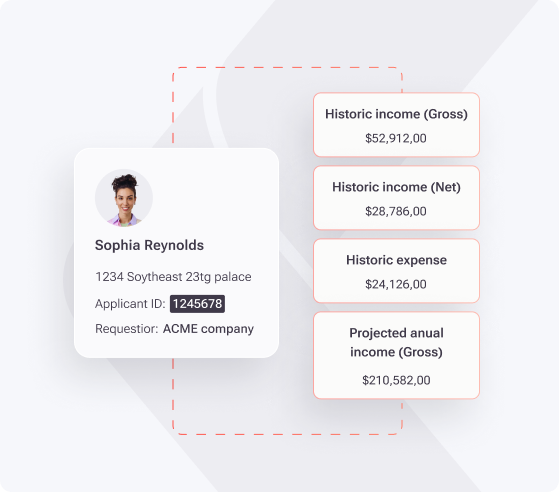
Employer phone numbers provided by applicants frequently route to personal cell phones, VoIP lines, or scripted third parties rather than legitimate HR departments. Fraudsters working in organized rings can answer calls while posing as employers, provide rehearsed details, and pass a verbal reference check completely. Document upload flows in rental screening complete around 40% of the time, while direct-source verification flows complete above 95%, which reflects both applicant friction and the structural weakness of relying on applicant-supplied contact information. Independent, direct-source verification that uses employer contacts sourced by the screening platform, not the applicant, now represents the minimum standard for income and employment validation.
Verifying Identity Without Relying Only on Documents
Document verification alone cannot detect many synthetic identities. These identities often combine legitimate data such as real SSNs with fabricated details, so the document passes authenticity checks while the overall identity remains fake. A shift from document uploads to biometric liveness detection and facial matching closes this gap.
Biometric liveness detection confirms that a real, physically present person completes the verification, not a printed photo, video replay, 3D mask, or AI-generated imitation. A complete identity verification stack runs document forensics first, then biometric capture and liveness detection. This approach confirms both the document’s authenticity and the applicant’s physical presence through separate controls. Automated forensic and biometric layers catch fraud that manual review frequently misses.
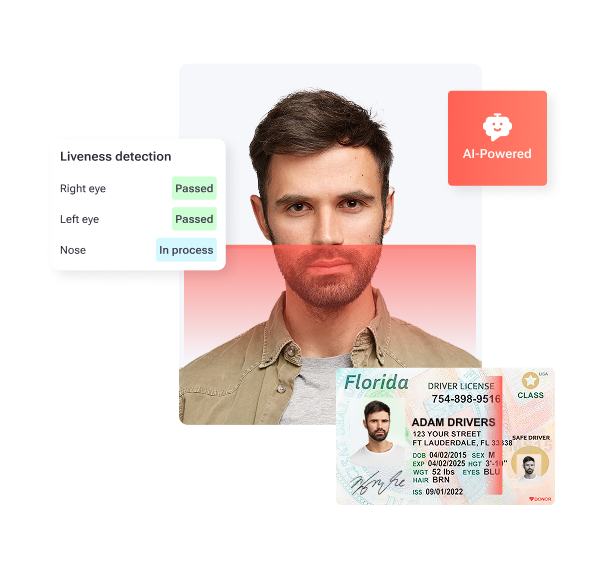
TenantEvaluation’s IDVerify embeds government ID validation, AI-powered liveness detection, and biometric selfie-to-ID facial matching directly inside the screening workflow, with no external portals, extra logins, or added headcount.
These individual fraud-prevention capabilities, including AI document analysis, biometric verification, and direct-source validation, provide maximum protection when they operate inside one consistent process. The next section shows how Florida CAMs and boards can apply them through a repeatable seven-step workflow.
The Seven-Step Fraud-Prevention Workflow for Florida CAMs
The following workflow is designed for Florida CAMs and HOA or condo boards that run FCRA-compliant resident screening. Each step addresses a specific fraud vector and maintains a complete audit trail.
- Secure digital intake: Applicants complete a 100% online application with intelligent form logic that adjusts fields based on applicant type, such as tenant, purchaser, or additional resident. The system rejects incomplete submissions automatically before staff review begins.
- AI document analysis: Uploaded documents are analyzed for formatting anomalies, metadata inconsistencies, rounded figures, and font mismatches, which are primary signs of AI-generated fraudulent documents. Sensitive PII is auto-redacted at this stage.
- Biometric identity verification with IDVerify: Applicants complete a guided selfie verification. Government ID authenticity is validated, AI-powered liveness detection confirms physical presence, and facial landmark biometric mapping compares the selfie to the ID. The platform embeds results directly in the screening report.
- Direct-source income and employment verification: Income and employment are verified through the direct-source method described earlier, which closes the VoIP and scripted-reference vulnerabilities that applicant-provided contacts create.
- Board-ready review via QuickApprove: Applications move to a dedicated board review and voting dashboard with AI-generated applicant summaries, real-time status tracking, and automated communication support. Board members review, vote, and approve inside one connected platform, without email chains or spreadsheets.
- FCRA adverse-action and audit-trail generation: When a consumer report influences a denial, higher deposit, or co-signer requirement, FCRA law requires the association to provide an adverse action notice to the applicant. The notice identifies the consumer reporting agency, clarifies that the agency did not make the decision, and explains the applicant’s right to obtain a free copy of the report within 60 days. TenantEvaluation timestamps every notice and stores it in a built-in audit trail so associations can demonstrate compliance during future audits.
- Lease-tracking closure and record retention: Approved applications connect directly to centralized lease records with real-time status visibility, including active, pending, expired, or missing. Automated lease document collection and unit-level tracking replace scattered email chains and spreadsheets with one audit-ready workflow from application through occupancy.
Walk through each of these seven steps in a live demo and see how your board’s current process compares.

Document-Only vs Biometric-Backed Screening
| Dimension | Document-Only Screening | Biometric-Backed Screening (TenantEvaluation) |
|---|---|---|
| Identity accuracy | Relies on uploaded ID; fraudsters can submit genuine documents belonging to someone else | Government ID validation, liveness detection, and biometric facial matching confirm physical presence |
| Fraud detection rate | Manual controls often miss a substantial portion of document fraud | Layered AI document analysis and biometric verification address both document and identity fraud vectors |
| Board visibility | Email chains, spreadsheets, and manual follow-ups limit real-time status | QuickApprove board dashboard with real-time tracking, AI summaries, and a voting panel |
| FCRA audit readiness | Manual recordkeeping and inconsistent adverse-action documentation | Automated adverse-action workflows, timestamped audit trails, and centralized lease records built in |
Standardizing Age Verification in 55+ Communities
Florida age-restricted communities carry additional documentation requirements that standard screening workflows often overlook. Manual handling of age-verification records across applications creates inconsistent documentation, unnecessary administrative burden, and gaps that surface during audits or disputes. TenantEvaluation’s 55+ Communities Verification standardizes how age-restricted requirements are handled across applications, which reduces manual work, improves documentation consistency, and strengthens operational efficiency for Florida CAMs and boards. This feature provides documentation-first workflow standardization, not legal verification, and it does not replace legal guidance.
Required Documentation Standards Checklist
The following documents and verification steps satisfy both community governing requirements and FCRA permissible-purpose standards when applied consistently.
- Completed, signed application with written consent for credit, criminal, eviction, rental history, employment, and income reports, obtained from every adult applicant before any consumer report is accessed
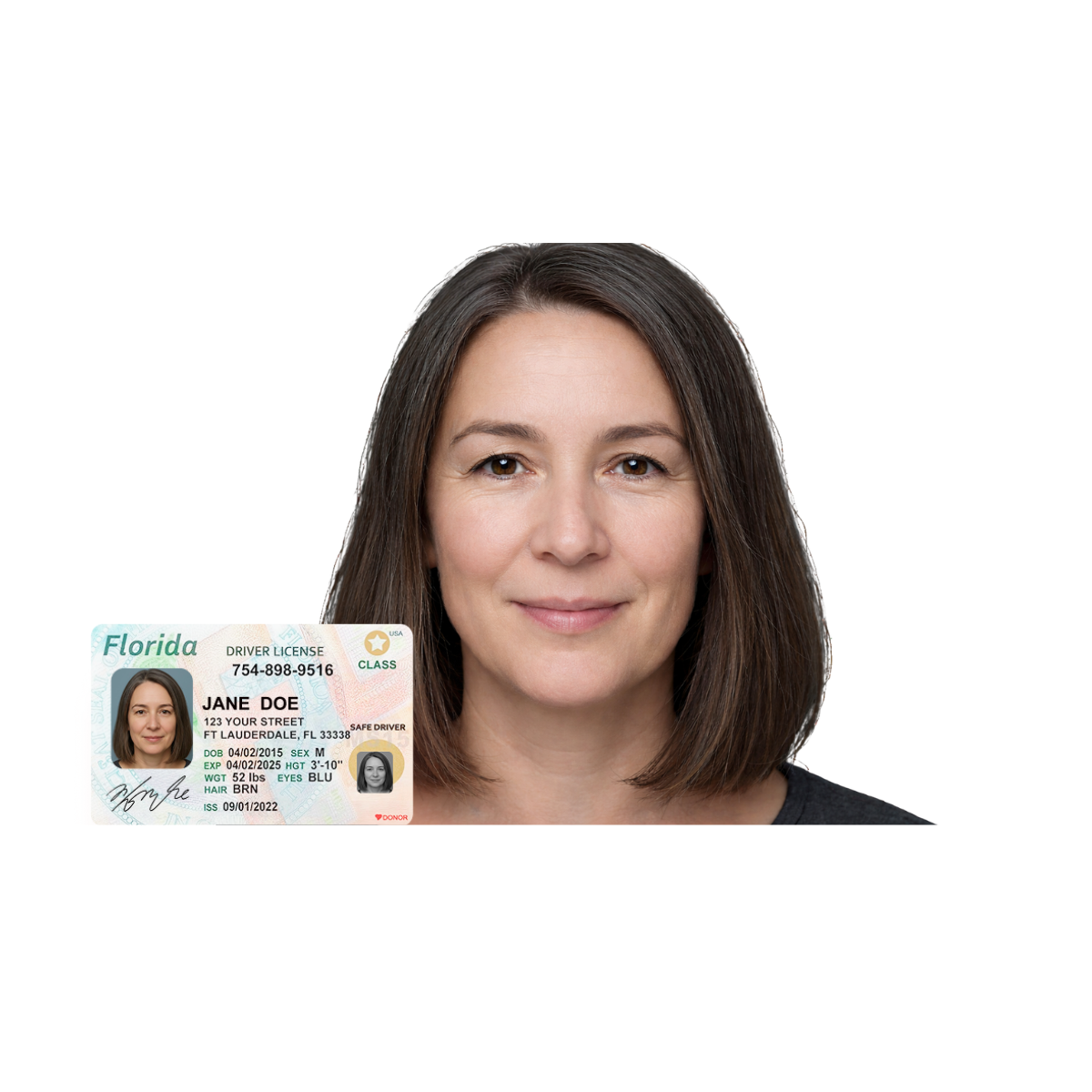
- Government-issued photo ID submitted through biometric verification, not document upload alone
- Income documentation such as pay stubs, bank statements, or tax returns cross-checked against direct-source employer verification
- Executed lease or purchase agreement confirming the applicant’s relationship to the unit
- Prior landlord references verified through independently sourced contact information
- Written rental criteria published before applications are accepted and applied identically to every applicant
- Adverse action notice, when applicable, identifying the consumer reporting agency and the applicant’s right to a free copy of the report
- Stored copies of all of the above, including applications, consent forms, consumer reports, communications, and decision notes, kept in a searchable, audit-ready digital record
Frequently Asked Questions
What is biometric liveness detection?
See the “Verifying Identity Without Relying Only on Documents” section above for a detailed explanation of biometric liveness detection. In brief, it confirms physical presence during identity verification, and TenantEvaluation’s IDVerify runs this check natively inside the screening workflow with results embedded directly in the applicant’s report.
How long does the seven-step workflow take?
TenantEvaluation processes applications in 5 to 10 minutes for the applicant-facing steps, compared to 5 to 10 days under manual processes. The biometric identity verification step is completed by the applicant during the application itself and does not require separate scheduling or external portals. Board review through QuickApprove operates in real time, with board members accessing a dedicated dashboard to review AI-generated summaries and cast votes without waiting for email chains or manual document packages. The full workflow, from application intake through lease-tracking closure, runs inside one connected platform and removes the handoff delays that extend timelines in fragmented systems.
Who is responsible for final approval, the board or the CAM?
Under FCRA requirements, the association, not the screening platform, makes the final approval or denial decision. TenantEvaluation maintains a clear separation between data provision by TenantEvaluation and decision-making by the association. CAMs manage the workflow, track application progress, and coordinate communication. Board members access the QuickApprove voting dashboard to review applicant summaries and cast their votes. The platform supports the decision process with organized data, audit trails, and automated adverse-action documentation, while approval authority remains with the board and CAM as defined by the community’s governing documents and Florida law.
How do condo and HOA workflows differ under this process?
Both condo and HOA communities in Florida can require an application, background check, board review, and approval process for buyers or tenants. The specific screening criteria, including credit score thresholds, income requirements, required documents, and approval timelines, vary by community governing documents. TenantEvaluation configures each community’s rules directly into the platform, so the seven-step workflow adapts to the community’s specific requirements rather than applying a generic template. For age-restricted communities, the 55+ Communities Verification capability adds a standardized documentation layer for age-eligibility requirements. For communities with complex onboarding or high application volume, QuickApprove’s board-ready dashboard and automated communication support reduce bottlenecks while preserving board oversight and compliance controls.
Conclusion: Protecting Your Community From Application Fraud
Among property managers who experienced rental application fraud in the past two years, 38% did not identify it until after the applicant had moved in. Florida’s identity-theft exposure of 528 reports per 100,000 residents magnifies this risk for CAMs and HOA or condo boards. Associations that rely on document-only background checks, applicant-provided employer contacts, and manual review face growing exposure to AI-generated pay stubs, synthetic identities, and organized fraud rings.
TenantEvaluation delivers the complete seven-step workflow, including secure digital intake, AI document analysis, biometric identity verification, direct-source income verification, board-ready review, FCRA adverse-action documentation, and lease-tracking closure, inside one platform built specifically for Florida community associations with FCRA compliance as the foundation.
See how Florida associations are catching fraud before move-in and request your demo now.
