Written by: Luis Teran, Co-founder, CEO, TenantEvaluation
Key Takeaways
- Use a 7-step identity verification process that combines document checks, biometrics, and FCRA compliance to block tenant fraud.
- Biometric verification with liveness detection catches 85-95% of fraud attempts, far more than document-only screening.
- Florida HOAs face growing synthetic identity fraud, and automated systems cut processing time by about 70% while easing manual review.
- Watch for red flags such as mismatched data, low-quality documents, and evasive behavior to spot impersonation early.
- Choose TenantEvaluation’s IDVerify for biometric screening, measurable ROI, and HOA-focused workflows.
1. Tenant Identity Verification for Florida HOAs and Condos
Tenant identity verification confirms applicant identity through document checks and biometric analysis to prevent fraud in screening. This step ensures the person applying matches the identity on record, which protects property managers from impersonation and synthetic identity schemes. Fewer than half of workers believe platforms have effective identity verification systems, which creates serious risk for Florida HOAs and condos that still rely on document-only screening.
|
Method |
Pros |
Cons |
|
Government ID Documents |
Simple, widely accepted |
Can be forged or copied |
|
Biometric Verification |
Liveness detection, strong fraud protection |
No added burden for legitimate users |
Modern identity verification uses both methods, with government-issued IDs as the base and biometrics as an added security layer. Property managers that adopt this combined approach see fewer fraudulent applications and faster, more confident approvals.

2. Why Florida Property Managers Need Strong ID Checks in 2026
The 2026 fraud environment forces Florida property managers to tighten identity controls now. Operators using biometric evidence win over 85% of chargeback disputes, compared to under 20% with document-only verification. Synthetic identities and account sharing now target high-value residential communities, which places HOAs and condos directly in the crosshairs.
Consider a typical scenario. A fraudster submits a rental application using a stolen identity and forged documents. Manual document review misses the forgery, and the imposter gains access to the community. The real identity owner later disputes charges, which exposes the association to financial loss and safety concerns. Manual checks alone rarely catch this level of fraud, while biometric systems flag it within minutes.
TenantEvaluation’s IDVerify+ solves these issues with biometric verification built directly into the screening workflow. Competing tools often send applicants to outside portals, while IDVerify+ keeps the process in one place and still delivers strong identity confirmation.
Schedule a demo today to secure your workflows and shield your communities from identity fraud.
3. Five-Step Tenant Identity Verification Workflow
Effective tenant identity verification follows a clear five-step process that layers fraud protection.
Step 1: Collect Government-Issued Documents
Valid government-issued photo identification such as driver’s licenses or passports forms the base of identity checks. Accepted options include state driver’s licenses, passports, military IDs, permanent resident cards, and state ID cards.
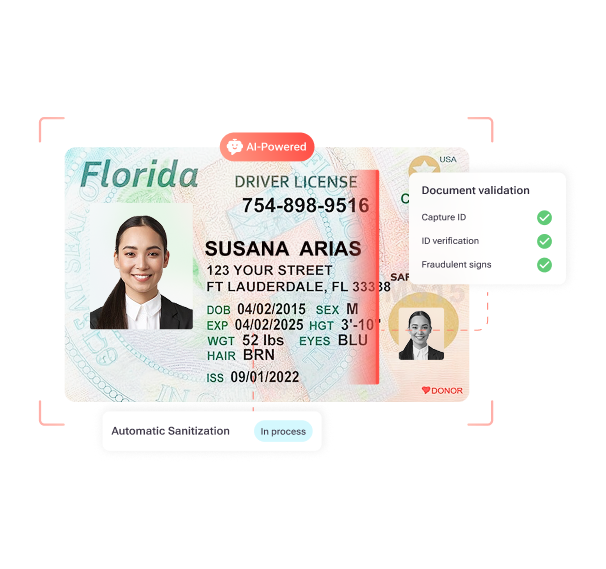
Step 2: Validate Document Authenticity
Advanced systems review security features, fonts, layout, and embedded data to spot forged or altered IDs. Automated checks shorten review time and improve accuracy compared to manual inspection.
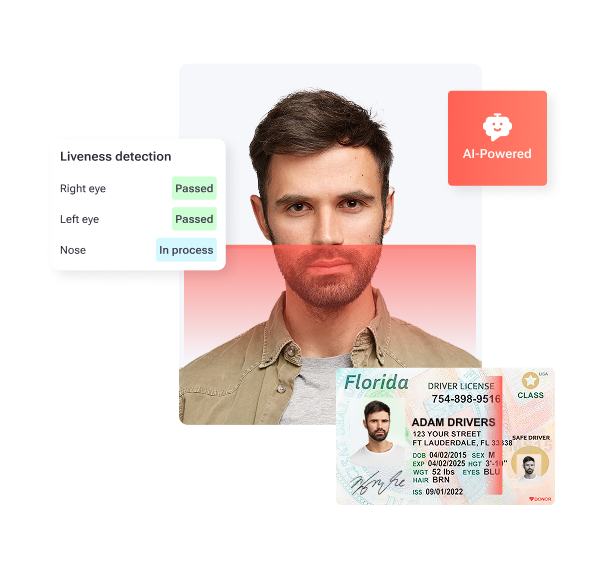
Step 3: Run Biometric Verification
Liveness detection and facial matching confirm that the applicant in front of the camera matches the ID photo. This step blocks fraud that uses printed photos, recorded videos, or masks to mimic real identity holders.
Step 4: Cross-Reference Background Data
Verified identity details then connect with credit reports, criminal checks, and eviction history to build a complete applicant profile.
Step 5: Maintain FCRA-Compliant Audit Trails
The system records each verification step with timestamps and results to support compliance reporting and dispute handling.
|
Verification Method |
Fraud Detection Rate |
Processing Time |
Applicant Experience |
|
Document Only |
Low (20-30%) |
2-5 days |
Simple upload |
|
Biometric + Document |
High (85-95%) |
5-10 minutes |
Guided verification |
4. Red Flags That Signal Risky Rental Applications
Property managers need to spot common warning signs that suggest identity theft or impersonation. Mismatched details between the application and the ID often provide the first clue. Inconsistent addresses, name spellings, or birth dates frequently point to fraudulent submissions.
Physical document issues also matter. Blurry images, visible edits, missing security features, or photocopied documents instead of clear scans all raise concern. Behavioral red flags appear when applicants avoid video calls, resist extra verification, or give vague answers about their identity or history.
TenantEvaluation’s automated fraud tools highlight these issues in real time, so property managers see risky files before deep review. AI-driven analysis uncovers subtle patterns that humans often overlook and adds another layer of protection.
5. FCRA Compliance Steps for Identity-Focused Tenant Screening
FCRA compliance supports every lawful tenant screening program. Written consent from applicants on a separate document containing no other information must be obtained before ordering consumer reports such as credit and background checks.
Essential FCRA Requirements:
- Obtain written consent before requesting credit or background reports
- Disclose clearly how reports will be used during screening
- Follow adverse action rules when denying or conditioning applications
- Use screening partners that maintain strict FCRA compliance
- Keep audit trails for every screening decision
- Confirm permissible purpose for each data request
TenantEvaluation acts as a direct TransUnion and Equifax reseller, which ensures legitimate data access under bureau rules. Built-in adverse action tools and automated documentation help associations reduce legal risk while staying aligned with regulations.
6. Why TenantEvaluation Leads in Biometric Tenant Screening
TenantEvaluation’s IDVerify+ moves screening from basic document checks to biometric-backed identity confirmation. The system unites government ID validation, AI-based liveness detection, and facial matching in one workflow.
Key strengths include native integration that avoids external redirects, multi-layer fraud controls tailored to association risks, and flexible settings for each HOA or condo. The QuickApprove dashboard gives Boards of Directors real-time visibility and simple approval paths.

ROI metrics show clear impact. Communities see about 70% time savings in application processing and more than $150 million generated overall. The platform handles roughly 100,000 applications each year, holds a 4.8/5 Google rating, and supports over 5,000 communities with Florida-focused compliance and revenue-sharing programs.
7. Rolling Out Biometric ID Verification in Your HOA
Successful biometric rollouts start with a review of current screening workflows and pain points. Property managers identify manual identity checks that automation can replace and then set verification rules based on risk level and board direction.
Integration with TenantEvaluation gives communities advanced biometric tools without forcing a full process rebuild. Guided setup supports FCRA compliance while improving fraud detection. Training resources and 24/7 multilingual support help teams adjust quickly.
Scenario-based ROI shows the payoff clearly. A 200-unit community that processes 50 applications each month can save about 35 hours of manual review, worth roughly $1,750 in labor. Communities also gain lower fraud exposure, quicker approvals, and stronger security through verified resident identities.
Schedule a demo today to add biometric identity verification and modernize your community’s screening process.
Frequently Asked Questions
What is tenant identity verification?
Tenant identity verification confirms that rental applicants match the identities they present through document checks and biometric analysis. This screening step blocks identity fraud, impersonation, and synthetic identity attacks that focus on residential communities. Modern systems combine government ID authentication with liveness detection and facial matching to create strong identity assurance.
What documents are accepted as proof of identity?
Accepted identity documents include state driver’s licenses, U.S. passports, military IDs, permanent resident cards, and state ID cards. These documents must be current, unaltered, and show clear photos. Biometric tools then confirm that the person presenting the ID is physically present and matches the photo, which prevents use of stolen or borrowed credentials.
What are red flags on a rental application?
Common red flags include mismatched data between the application and the ID, low-quality or edited document images, and inconsistent personal details across forms. Risky behavior includes avoiding video verification, resisting extra identity checks, or giving evasive answers. Suspicious timing patterns, such as bursts of applications that look similar, can also signal automated fraud.
How long does renters verification take?
Traditional document-only checks usually take 2 to 5 business days for manual review. Biometric verification systems complete identity checks in about 5 to 10 minutes using automated document authentication, liveness detection, and facial matching. Faster processing supports same-day approvals while improving fraud protection compared to manual methods.
What is biometric tenant screening?
Biometric tenant screening uses physical and behavioral traits to verify identity. The process includes government ID validation, AI-driven liveness checks to confirm presence, and facial matching between selfies and ID photos. This layered method blocks advanced fraud such as deepfakes, photo swaps, and impersonation that simple document review often misses.
Conclusion: Protect Your Community with Modern Identity Screening
The seven steps in this guide create a complete framework for identity-focused tenant screening in 2026. Growing fraud pressure requires solutions that pair document validation with biometric checks, FCRA compliance, and automation that reduces admin work while raising security.
TenantEvaluation stands out for Florida HOAs and condos that want reliable, fraud-resistant screening. Native biometric tools, community association features, and proven ROI make the platform a strong choice for managers who prioritize safety, compliance, and efficiency.
Schedule a demo today with TenantEvaluation for FCRA-compliant identity verification tenant screening that protects your communities and streamlines daily operations.
