Written by: Luis Teran, Co-founder, CEO, TenantEvaluation | Last updated: June 17, 2026
Key Takeaways
- Florida condo associations face specific regulatory pressures under Chapters 718 and 720 that require purpose-built software instead of generic property management platforms.
- Essential features include statutory document management, FCRA-compliant screening, biometric verification, and integrated lease lifecycle tracking to reduce compliance risk and operational delays.
- Associations should prioritize platforms with board voting dashboards, automated document redaction, and real-time visibility to streamline approvals and maintain audit-ready records.
- Biometric identity verification and direct credit bureau sourcing are critical for preventing fraud and ensuring permissible purpose compliance in high-volume Florida markets.
- TenantEvaluation delivers these Florida-specific capabilities in one connected platform. Explore the full solution at TenantEvaluation.
Key Florida Terms for Community Association Software
Statutory document management refers to the organized digital storage, access control, and disclosure of official association records required under Florida law, including board minutes, governing documents, financial records, and lease-related files. The system must support member inspection rights and keep records audit-ready.
FCRA-compliant screening describes a resident screening process that follows the Fair Credit Reporting Act, including written consent requirements, permissible purpose controls, adverse action workflows, and direct credit bureau data sourcing instead of third-party aggregation.
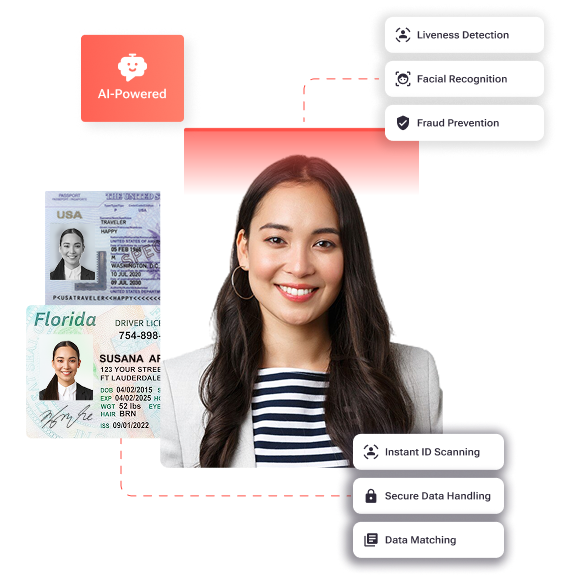
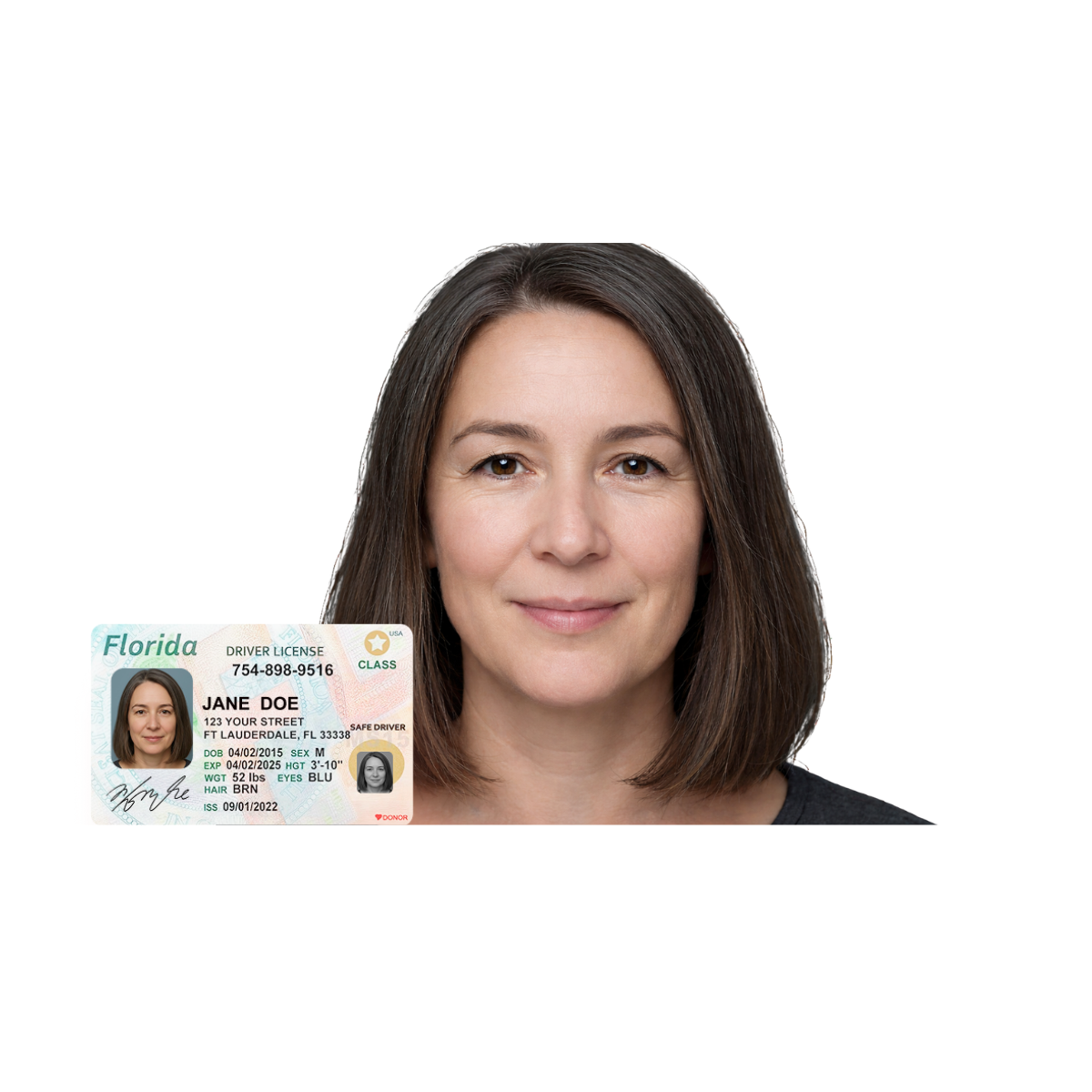
Biometric verification is the use of AI-powered identity confirmation, including government ID validation, liveness detection, and facial biometric matching. This confirms that an applicant is physically present and matches their submitted identification before an approval decision.
Lease lifecycle tracking is the centralized, real-time management of lease-related activity from application submission through occupancy. It connects onboarding records, unit data, approvals, and lease documentation into one searchable, audit-ready workflow.
Regulatory and Market Pressures Shaping Florida HOA Software
After January 1, 2026, Florida condominium associations with 25 or more units must post specified official records online under amendments to Chapter 718, including additional requirements added by HB 913, while HOAs with 100 or more parcels faced this requirement effective January 1, 2025 under HB 1203. These mandates increase demand for software with statutory record management, automated redaction, and secure member-facing portals.
Chapter 718 imposes stricter meeting notice, open-access rules, and board education requirements on condominium associations than Chapter 720 does on HOAs. This creates demand for software that accelerates board approvals and maintains auditable decision workflows. Chapter 718 also prohibits the use of association debit cards and imposes stricter financial reporting and reserve funding obligations compared to Chapter 720, which further raises the bar for financial and document controls.
Identity fraud now affects many Florida condo and HOA communities. Traditional document-based screening that relies on uploaded IDs without biometric confirmation cannot reliably prevent impersonation, synthetic identities, or stolen credential fraud. Multi-algorithm biometric consensus approaches using three independent matching methods significantly reduce false acceptance rates compared to single-algorithm solutions, so layered verification now functions as a best-practice standard instead of an optional feature.
Generic platforms such as AppFolio and Buildium were built for broad rental markets and do not align with these pressures. They lack Florida statute-mapped document workflows, biometric verification layers, board voting dashboards, and integrated lease lifecycle tracking, which leaves CAMs patching gaps with spreadsheets, email chains, and manual follow-ups. These gaps translate directly into the feature requirements that Florida associations must prioritize when evaluating purpose-built alternatives.
See how TenantEvaluation’s statutory workflows align with Chapters 718 and 720 requirements.
Operational Features Florida Associations Need Every Day
Florida condo associations need software that supports the full operational lifecycle, not just isolated tasks. The capabilities below reflect what CAMs and boards handle in daily work across high-volume Florida markets.
Digital application intake with intelligent form logic. Applications should dynamically adjust based on applicant type, such as tenant, purchaser, or additional resident, and automatically reject incomplete submissions. This reduces manual document review, which often causes administrative delay and error.
Automated document collection and redaction. Role-based permissions ensure board members receive full internal access, managers receive operational access, and residents receive access only to published documents. Software should auto-redact sensitive PII from uploaded files to reduce data breach liability and support statutory disclosure rules.
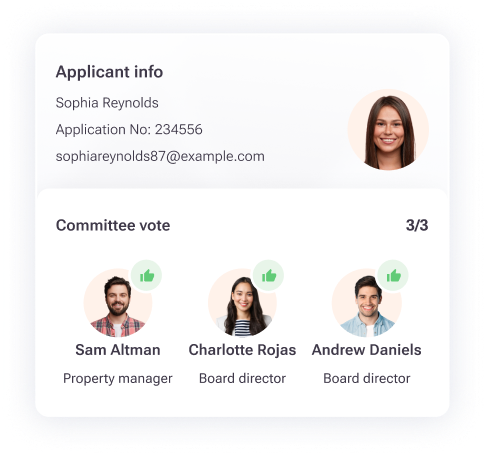
Board review and voting dashboards. Boards using automated payment reminders and maintenance routing spend meeting time on decisions rather than catching up on operational tasks. A dedicated board panel with summarized applicant reports and a structured voting workflow replaces email chains, shortens approval cycles, and keeps decisions auditable.
Lease tracking from approval through occupancy. Missing or outdated lease copies, manual expiration tracking, and disconnected spreadsheets create operational blind spots and compliance risk. Centralized, real-time lease visibility with active, pending, expired, or missing status connects onboarding to occupancy in one auditable workflow.
Multilingual and 24/7 support. Florida’s diverse resident population requires clear, accessible communication. Software that offers AI-powered support in multiple languages reduces follow-up work for CAMs and improves the applicant experience across communities.
Compliance and Risk Controls Built into the Platform
FCRA compliance must sit at the core of any resident screening workflow. Credit reports used in screening require written consent and compliance with the Fair Credit Reporting Act. Software should enforce permissible purpose controls, automate adverse action workflows, and maintain a complete audit trail for every application decision.
Direct credit bureau reseller relationships, instead of third-party data aggregation, protect associations from liability tied to gray-market or offshore data sources. Automated adverse action workflows then ensure that applicants receive legally required notices when decisions rely on screening data.
Application audit logs retained for the life of the subscription plus seven years support the compliance-evidence purpose of the platform, providing long-term traceability for records that may be needed in resident screening disputes. Built-in audit trails for every application, timestamped and searchable, function as a non-negotiable requirement for Florida associations operating under Chapters 718 and 720.
Biometric identity verification adds a critical pre-screening layer that directly addresses fraud risk. Biometric identity verification capabilities must be an explicit design choice rather than a default in HOA software. Associations should confirm that a platform has built this capability natively instead of relying on external redirects or third-party portals.
Operational Pain Points in Florida Condo and HOA Management
HOA and condominium association records accumulate quickly across board minutes, tax records, legal documents, maintenance reports, and communications, creating document clutter and retrieval challenges for volunteer boards. Board turnover poses a key risk in HOA document management because when records are controlled by individuals instead of the association, access and continuity suffer during leadership changes.
Lengthy manual approval cycles also create friction. Applications sit waiting for board review, managers spend hours chasing missing documents, and applicants repeatedly request status updates. During peak seasons in high-volume Florida markets, these bottlenecks compound and slow move-ins.
Inconsistent 55+ documentation creates a specific challenge for age-restricted communities. Fragmented manual processes that rely on emails, PDFs, and follow-ups often produce incomplete or unreliable documentation, which increases risk during audits or disputes.
Security gaps from paper-based or basic digital systems leave associations exposed to identity fraud. Mobile access control systems using smartphone-based credentials with FaceID or fingerprint authentication are raising client expectations for real-time visibility into who entered a building, when, and via what authorized credential. Residents and boards now expect similar standards for screening and onboarding.
Best-Practice Principles for Evaluating HOA Software
Workflow standardization. Workflow standardization forms the foundation of any compliant platform. Every application type, including tenant, purchaser, and 55+ community resident, should follow a defined, repeatable process because manual variation introduces error and compliance risk.
Layered identity verification. Standardized workflows alone cannot prevent identity fraud, so layered identity verification becomes the second core principle. Browser-based biometric systems enable verification on phones, tablets, and desktops with no app download required. This supports a seamless resident application experience while strengthening fraud controls.
Real-time visibility. Once identity is confirmed and workflows are standardized, real-time visibility allows CAMs, boards, and community operations teams to monitor application progress without manual status requests. Live views of applications, lease activity, and occupancy replace end-of-day reports and spreadsheet updates.
Audit-ready recordkeeping. Legal documents including CC&Rs, bylaws, vendor contracts, and settlement agreements should be retained indefinitely to reference obligations and defend the association in disputes. Software should support permanent retention of governing documents alongside searchable, timestamped application and lease records so associations can respond quickly to audits and challenges.
Framework for Comparing Florida-Focused HOA Platforms
Compliance readiness. The platform should map directly to Chapters 718 and 720 requirements and include FCRA-first screening with direct credit bureau sourcing, permissible purpose controls, and automated adverse action workflows.
Operational efficiency. The platform should automate document collection, application intake, and approval communication. It should also reduce manual follow-ups and free CAM staff for higher-value tasks.
Board transparency. The platform should provide a dedicated board review and voting dashboard with real-time application visibility, AI-generated summaries, and a timestamped audit trail.
Scalability. The platform should handle high-volume application seasons without adding headcount and support multiple communities and portfolio-level management.
Risk mitigation. The platform should include biometric identity verification, PCI Level 1 compliance, end-to-end encryption, and automatic PII redaction. It should also connect lease documentation to onboarding records in a centralized, audit-ready workflow.
How TenantEvaluation Meets Florida HOA Requirements
TenantEvaluation is built specifically for community associations and management companies, with FCRA compliance as the foundation rather than an add-on. Founded in 2007 and serving 5,000+ communities with approximately 100,000 applications processed annually, TenantEvaluation delivers purpose-built features that align with Florida’s statutory environment.
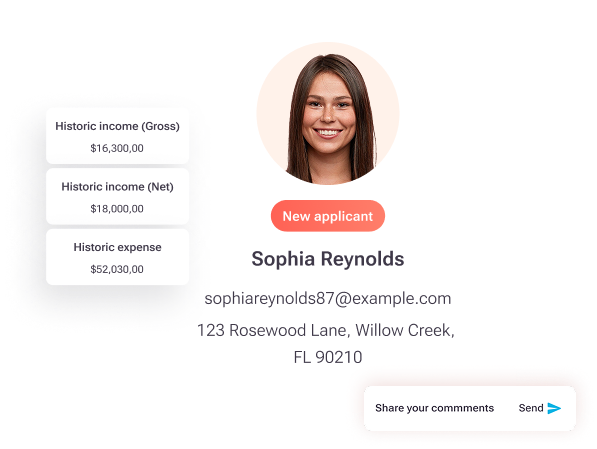
QuickApprove is TenantEvaluation’s accelerated approval workflow for CAMs, boards, and property management teams inside one connected platform. It delivers real-time application tracking, automated communication support, customized approval letters, a personalized welcome package, and a board-ready approval process. These capabilities reduce manual follow-ups and accelerate decisions while preserving control, compliance, and visibility, especially during high-volume seasons and complex onboarding scenarios.
IDVerify introduces biometric identity verification directly into the TenantEvaluation screening workflow. It combines government ID validation, AI-powered liveness detection, and biometric selfie-to-ID facial matching inside the platform with no external portal redirects. Verification results appear directly in the screening report, including ID authenticity confirmation, liveness status, and biometric match result. IDVerify can be configured per community or portfolio to match each association’s risk profile.
55+ Communities Verification is a built-in capability that helps Florida condos and HOAs standardize age-restricted application handling across communities. It reduces manual work, supports documentation consistency, and improves operational efficiency for CAMs and boards managing age-restricted requirements, while still leaving room for legal guidance.
Lease Tracking delivers centralized, real-time lease visibility and lifecycle control from application to occupancy in one connected workflow. Built for CAMs, boards, property management companies, and community operations teams, it connects resident onboarding, unit data, approvals, and lease documentation inside one platform. Real-time lease status, automated lease document collection during onboarding, unit-level tracking, and audit-ready digital lease records replace spreadsheets and scattered email chains.
TenantEvaluation operates as a legitimate reseller of TransUnion and Equifax data under strict bureau rules with regular compliance reviews. Its revenue-sharing model allows associations to generate income from application processing with no upfront platform cost, turning onboarding into a compliant and controlled revenue stream.
Frequently Asked Questions
How do Florida condo associations maintain statutory records under Chapter 718?
Florida condominium associations with 25 or more units are required to maintain a website or mobile-friendly platform that provides owners access to specified official records, effective January 1, 2026, following the threshold reduction in HB 1021 and further amendments in HB 913 to Chapter 718. Required records include board meeting minutes, financial statements, governing documents, and contracts. Software used to meet this obligation should support secure digital storage, role-based access controls, and member-facing disclosure workflows. Records such as board minutes and governing documents should be retained permanently, while financial supporting documents are generally retained for at least seven years. Purpose-built platforms like TenantEvaluation centralize these records alongside application and lease documentation, creating one audit-ready repository that supports statutory disclosure and internal operational control.
What screening features support FCRA compliance for community associations?
FCRA-compliant screening for community associations requires written applicant consent before any credit or background data access, strict permissible purpose controls that limit data use to the stated screening purpose, and automated adverse action workflows that notify applicants when decisions rely on screening results. Direct credit bureau data sourcing, instead of third-party aggregation, and complete audit trails for every application decision also play key roles. TenantEvaluation is built with FCRA compliance as the foundation and operates as a direct reseller of TransUnion and Equifax data under strict bureau rules. IDVerify+ strengthens permissible-purpose validation by confirming applicant identity before screening authorization, which reinforces audit defensibility.
How can boards gain real-time visibility into lease activity without spreadsheets?
Centralized lease tracking software connects resident onboarding, unit data, approvals, and lease documentation into one real-time workflow. Boards gain visibility into lease status, including active, pending, expired, or missing, at the unit level without searching across folders, inboxes, or disconnected spreadsheets. TenantEvaluation’s Lease Tracking capability delivers automated lease document collection during onboarding, a searchable digital history of lease records and resident activity, and audit-ready records that support compliance readiness. Boards then gain a clearer operational picture of occupancy and resident activity across communities and reduce risk tied to incomplete or disconnected records.
Which software capabilities help standardize 55+ community application requirements?
Age-restricted communities in Florida face specific documentation and consistency challenges when handling applications under HOPA-related requirements. Fragmented manual processes that rely on emails, PDFs, and individual follow-ups often produce inconsistent records and increase risk during audits or disputes. Purpose-built software addresses this through standardized application workflows that collect required documentation consistently across all applicants, structured internal controls that reduce manual handling by CAMs, and organized digital records that support operational efficiency and scalability. TenantEvaluation’s 55+ Communities Verification is a built-in capability designed specifically for Florida condos and HOAs, which reduces manual work, standardizes application handling, and improves documentation consistency while still preserving the role of legal guidance.
Conclusion: Selecting Software Built for Florida Condo Associations
The evaluation framework and feature list above reflect the real operational and regulatory demands that Florida condo associations face under Chapters 718 and 720. Generic platforms built for broad rental markets cannot deliver the statutory document workflows, FCRA-first screening infrastructure, biometric verification layers, board voting dashboards, and centralized lease lifecycle tracking that Florida’s environment requires.
CAMs and boards reviewing their current tools should assess each platform against compliance readiness, operational efficiency, board transparency, scalability, and risk mitigation, and then prioritize solutions built for community associations instead of adapted rental software. With this track record across Florida’s community association market, including $150M generated for communities, TenantEvaluation has demonstrated the operational and financial impact of purpose-built compliance infrastructure that includes FCRA compliance, biometric verification, accelerated approvals, and centralized lease tracking in one connected platform.
