Written by: Luis Teran, Co-founder, CEO, TenantEvaluation | Last updated: August 19, 2026
Key Takeaways for Florida CAMs and Boards
- Persona-based KYC tailors verification depth, screening scope, and re-verification frequency to each community role, instead of using a single checklist for everyone.
- Florida’s high fraud and identity-theft rates require biometric confirmation and risk-tiered screening to catch impersonation and synthetic identities that document-only checks miss.
- A six-step workflow of intake, IDVerify+ biometric verification, risk scoring, QuickApprove board review, automated adverse-action notices, and Lease Tracking automates persona-based KYC for Florida CAMs and boards.
- Re-KYC triggers such as lease renewals, board elections, contract renewals, and ownership transfers keep records current and prevent audit or security gaps.
- TenantEvaluation unifies IDVerify+, QuickApprove, Lease Tracking, and related tools into one FCRA-compliant platform; learn more to see how it streamlines persona-based KYC for your community.
Persona-Risk Matrix for Florida HOA, Condo, and Vendor Roles
The table below maps each community persona to a risk tier, the minimum documents required at onboarding, and the primary verification trigger. Each row translates directly into an onboarding action inside a compliant workflow.
| Persona | Risk Level | Required Documents | Verification Trigger |
|---|---|---|---|
| Tenant / Resident | Medium | Government-issued photo ID, executed lease, income verification, background authorization | New lease application or occupancy change |
| Board Member | High — exercises substantial control over association decisions | Government-issued photo ID, biometric selfie match, criminal history check, financial history check | Election, appointment, or assumption of officer role |
| Vendor / Contractor | Medium-High — gate and portal access to community | Government-issued photo ID, business license, insurance certificate, background authorization | New contract execution or access credential issuance |
| Beneficial Owner / Trust Beneficiary | High — land trusts reduce public-record visibility while disclosure obligations to associations remain | Trust agreement excerpt, government-issued photo ID of controlling individual, beneficial ownership declaration | Unit acquisition by entity or trust, or ownership transfer |
The risk levels in the table above reflect each persona’s exposure and authority. Board members occupy the high-risk tier because they exercise authority over financial decisions, vendor contracts, and rule enforcement. Governance best practices recommend full criminal history, identity verification, and financial history checks before formal appointment, with targeted rechecks when a member assumes a higher-access role such as treasurer. Vendors receive medium-high classification because gate or portal credentials create physical access risk independent of financial exposure.
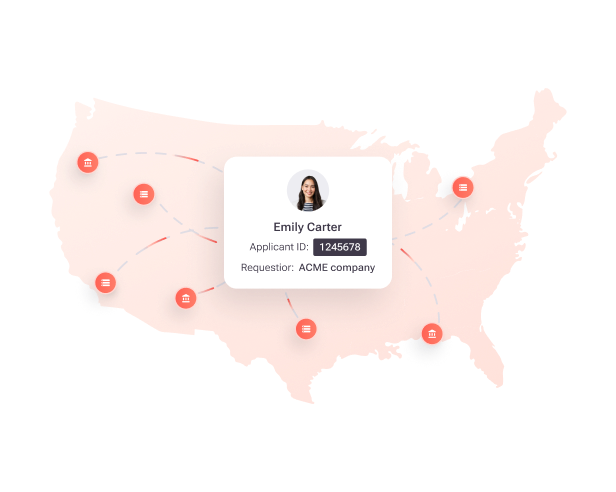
Six-Step Persona-Based KYC Implementation Workflow for CAMs
The persona-risk matrix above defines what to verify for each role, and the following six-step workflow shows how to execute that verification at scale. This workflow mirrors the resident journey inside TenantEvaluation and applies, with role-appropriate modifications, to board members and vendors.
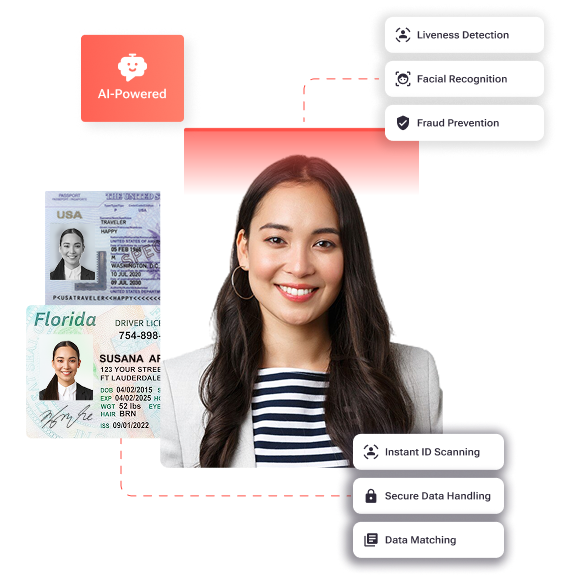
- Intake: The applicant receives a community-specific Property Code and completes a 100% online application. Intelligent form logic adjusts required fields based on persona, such as tenant, purchaser, board candidate, or vendor. This approach removes irrelevant questions and ensures complete data collection before submission.
- Identity Verification via Government ID and Liveness Detection: IDVerify+ runs government-issued ID authentication, AI-powered liveness detection, and biometric selfie-to-ID facial comparison natively inside TenantEvaluation. Biometric capture should be treated as one input to trust rather than proof of trust, so IDVerify+ combines it with authoritative document validation and risk scoring instead of relying on liveness alone. For age-restricted communities, 55+ Communities Verification standardizes age-eligibility documentation handling across applications, which reduces manual work and improves documentation consistency.
- Risk Scoring: The platform assigns a risk tier based on persona, verification results, background check outcomes, and income verification data. A risk-based framework focuses compliance resources on relationships carrying the highest exposure. High-risk personas such as board members with financial authority receive enhanced due diligence, while low-risk returning residents may qualify for a streamlined confirmation-based review.
- Board Review Dashboard via QuickApprove: QuickApprove moves applications from submission to decision faster inside one connected platform. Board members use a dedicated review and voting panel with AI-generated applicant summaries, real-time application tracking, and automated communication support. This setup replaces email chains and spreadsheets with a board-ready approval process designed for high-volume seasons and complex onboarding requirements.
- Automated Adverse-Action Notices: When a screening result supports a denial or conditional approval, TenantEvaluation’s automated adverse-action workflow generates the required FCRA-compliant notices, including the report copy and Summary of Rights. The system maintains a complete audit trail for every decision.
- Ongoing Re-KYC Triggers and Lease Tracking: Lease Tracking connects resident onboarding, unit data, approvals, and lease documentation into one centralized, real-time workflow. CAMs gain real-time lease status visibility, including active, pending, expired, or missing, along with automated lease document collection. Lease expiration dates, ownership transfers, and contract renewals automatically surface as re-KYC triggers, so no persona ages out of compliance without review.
Schedule a demo today to walk through this six-step workflow with a TenantEvaluation specialist.
Re-KYC Events by Persona and Trigger
Re-KYC is the ongoing process of updating identity information, refreshing screening results, and reassessing risk during an active relationship. Over 30 percent of compliance alerts are linked to stale or incomplete KYC records, so event-driven triggers matter as much as periodic review schedules. The table below maps each community persona to its primary re-KYC events.
| Persona | Periodic Review Frequency | Event-Driven Re-KYC Triggers | Verification Action |
|---|---|---|---|
| Tenant / Resident | At lease renewal (typically annual) | Lease assignment, sublease request, occupancy change, expired government ID | Updated ID verification via IDVerify+, refreshed background check, new lease documentation in Lease Tracking |
| Board Member | Every 2–3 years for seated members; annually for high-access officer roles | Election to officer position, assumption of finance committee role, adverse media alert, sanctions match | Full identity re-verification, criminal and financial history recheck, biometric liveness confirmation |
| Vendor / Contractor | At contract renewal | New contract scope, expanded access credentials, license or insurance expiration, ownership change in vendor entity | Updated business license and insurance, identity recheck for controlling individual, access credential review |
| Beneficial Owner / Trust Beneficiary | At ownership transfer or trust amendment | Unit sale, trust restructuring, new controlling individual identified, non-financed transfer to legal entity or trust | Updated beneficial ownership declaration, government ID verification of new controlling individual, association records update |
Every trigger event, risk score, verification result, and manual decision in a re-KYC workflow should be logged to support compliance, investigation, and audit defensibility. TenantEvaluation’s built-in audit trails capture this record automatically for every application and re-verification event.
Beneficial Ownership, FinCEN Rules, and Association Risk
FinCEN issued a final rule on August 11, 2026, permanently removing the requirement for U.S. companies and U.S. persons to report beneficial ownership information under the Corporate Transparency Act. For most Florida HOAs and condo associations formed under U.S. state law, no CTA filing obligation currently exists because domestically formed entities fall outside FinCEN’s revised reporting-company definition.
This regulatory status does not remove the operational rationale for beneficial owner verification inside community associations. Florida associations commonly require owner and occupant information for operations, access control, and compliance with building rules, and FinCEN has noted that illicit actors often use legal entities and trusts to obscure identity in residential real property transfers. A persona-based KYC process that captures beneficial owner declarations and verifies controlling individuals at unit acquisition addresses this operational risk independent of any federal filing requirement.
CAMs and boards should monitor fincen.gov and the Federal Register for changes to the residential real estate reporting framework, as ongoing litigation and pending congressional activity could alter the current domestic-entity exemption. Nothing in this article constitutes legal advice, and associations should consult qualified legal counsel regarding their specific obligations.
How TenantEvaluation Automates Persona-Based KYC for Communities
TenantEvaluation is built specifically for community associations and management companies, with FCRA compliance as the foundation, not an afterthought. The platform connects five purpose-built capabilities into one end-to-end, FCRA-compliant workflow that supports persona-based KYC from intake through payment.

- IDVerify+ moves communities from document-based review to biometric-confirmed identity verification before any approval decision is made, using the biometric identity verification introduced in Step 2 of the workflow.
- QuickApprove provides the accelerated approval workflow introduced in Step 4, with real-time application tracking, automated communication support, customized approval letters, and a personalized welcome package that automate post-decision communication.
- 55+ Communities Verification standardizes age-restricted application handling across Florida condos and HOAs, which improves documentation consistency and reduces manual work for CAMs managing eligibility requirements.
- Lease Tracking delivers centralized, real-time lease visibility and lifecycle control from application to occupancy. It connects resident onboarding, unit data, approvals, and lease documentation into one audit-ready workflow, with automated lease document collection and unit-level tracking that replaces spreadsheets and scattered email chains.
- TEpayments by Zinc provides a connected payment workflow inside TenantEvaluation that collects application fees, deposits, and other required resident payments during onboarding. Payments go directly from the applicant to the association’s designated account, and TenantEvaluation never holds the funds.
TenantEvaluation is a direct reseller of TransUnion and Equifax data, accessed under strict bureau rules with regular compliance reviews, not gray-market or offshore data sources. Automated adverse-action workflows, built-in audit trails, and PCI Level 1 compliance complete a compliance infrastructure that generic screening tools do not provide.
FAQ: Board Authority, LCAM Duties, and Vendor Screening
Does a Florida HOA board have authority to require biometric identity verification?
Florida HOA boards derive their authority from the association’s governing documents, including the declaration, bylaws, and rules and regulations, along with Florida Statutes Chapter 720. Chapter 720 does not expressly prohibit boards from adopting enhanced identity verification requirements as part of their application and approval process, as long as those requirements are applied consistently and do not violate fair housing laws or other applicable statutes. Boards considering a biometric verification requirement should work with qualified legal counsel to confirm that the requirement is authorized by their governing documents or can be adopted by board resolution, and that the process complies with applicable privacy and data-security obligations. TenantEvaluation’s IDVerify+ is configurable per community, so boards can enable biometric verification in a manner consistent with their specific governing framework.
How does persona-based KYC affect LCAM licensing obligations in Florida?
Licensed Community Association Managers in Florida operate under Chapter 468, Part VIII of the Florida Statutes and the rules of the Florida Department of Business and Professional Regulation. LCAMs carry professional responsibility for the administrative and operational functions they perform on behalf of associations, which includes maintaining accurate records, following FCRA-compliant screening procedures, and ensuring that adverse-action notices are issued correctly when screening results affect an applicant. A persona-based KYC process supports LCAM obligations by creating documented, consistent, and auditable verification workflows for each applicant category. TenantEvaluation’s built-in audit trails and automated adverse-action workflows support the compliance posture that LCAMs are professionally required to maintain, though LCAMs should consult their licensing board and legal counsel regarding any specific obligations that apply to their practice.
What vendor screening steps are required before granting gate or portal access?
No Florida statute prescribes a specific vendor screening checklist for community associations, but associations have broad authority under their governing documents to establish access control requirements. A defensible vendor onboarding process under a persona-based KYC framework includes verifying the controlling individual’s government-issued photo ID, confirming active business licensure and adequate insurance coverage, running a background check with criminal history review, and documenting the scope and expiration date of access credentials. Vendor access should be tied to an active contract, and credentials should be reviewed or revoked at contract renewal or termination. TenantEvaluation’s platform supports vendor document collection, identity verification, and background screening within the same workflow used for resident onboarding, which creates a consistent and auditable record across all persona types.
When must associations trigger re-KYC after a lease assignment or ownership transfer?
A lease assignment introduces a new occupant whose identity, background, and risk profile the association has not previously verified. Florida condominium and HOA governing documents typically require board approval for lease assignments, which creates a natural re-KYC trigger. The incoming assignee should complete the full application and identity verification process before occupancy, rather than inheriting the prior tenant’s approved status. Ownership transfers similarly require the association to collect owner and occupant information for access control, emergency contacts, and records purposes. When a unit is acquired by a legal entity or trust, the association’s KYC process should capture the identity of the controlling individual or beneficial owner, because land trust structures can reduce public-record visibility while disclosure obligations to the association remain. TenantEvaluation’s Lease Tracking capability surfaces lease expirations and status changes in real time, which enables CAMs to identify re-KYC events as they occur instead of discovering gaps during audits.
Conclusion: Turn Persona-Based KYC into a Practical Workflow
A persona-based KYC process maps verification depth to actual risk, applying biometric identity confirmation and enhanced due diligence where exposure is highest and streamlined confirmation workflows where risk is low. For Florida CAMs, LCAMs, and HOA and condo boards, this framework reduces fraud exposure, closes compliance gaps created by manual document-only screening, and produces the audit-ready records that protect associations in disputes and regulatory reviews.
TenantEvaluation delivers this framework as a single, connected, FCRA-compliant platform that combines IDVerify+, QuickApprove, 55+ Communities Verification, Lease Tracking, and TEpayments by Zinc into one end-to-end workflow built exclusively for community associations. With more than 5,000 communities served, approximately 100,000 applications processed annually, and the FCRA-compliant infrastructure described above, TenantEvaluation provides a purpose-built solution that generic screening tools cannot replicate.
Schedule a demo today and let a TenantEvaluation specialist show you how to implement a persona-based KYC process tailored to your community’s risk profile.
