Written by: Luis Teran, Co-founder, CEO, TenantEvaluation
Key Takeaways
- Florida tenant KYC relies on seven core documents: government-issued photo ID, SSN or ITIN, proof of income, rental history, FCRA consent, lease agreement, and HOA-specific documents.
- Community Association Managers face growing fraud risk in 2026, with 85% of landlords encountering rental fraud and synthetic identities.
- Manual document reviews can consume up to 50 hours weekly and expose HOAs to FCRA violations, while automated biometric tools sharply reduce that risk.
- FCRA compliance requires written consent for background checks, proper adverse action notices, and complete audit trails for every screening.
- TenantEvaluation’s IDVerify platform streamlines Florida HOA tenant screening with biometric fraud prevention and automated workflows.
Florida Tenant KYC: Required Documents Checklist
Florida tenant KYC verification relies on seven core documents that confirm identity, financial strength, and legal compliance. Each document plays a clear role in reducing fraud while supporting FCRA and Fair Housing compliance.
1. Government-Issued Photo ID (Florida Driver’s License or Passport)
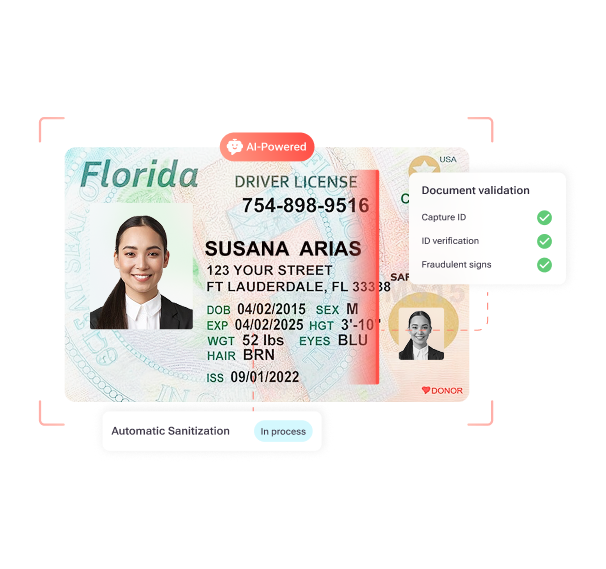
Tenant identity verification starts with a valid government-issued photo ID. Proper identification protects landlords legally and ensures accurate background and credit screening. Florida driver’s licenses must be current and unexpired, and passports provide federal-level identity confirmation. Community Association Managers should confirm expiration dates and review security features closely to spot fraudulent documents.
2. Social Security Number or Individual Taxpayer Identification Number (ITIN)
Social Security Numbers support identity verification during background checks. Florida landlords must obtain written consent from applicants before running tenant background checks and must verify applicant identity using the Social Security Number. FCRA rules require clear written authorization before accessing any SSN-linked consumer report.
3. Proof of Income Documentation
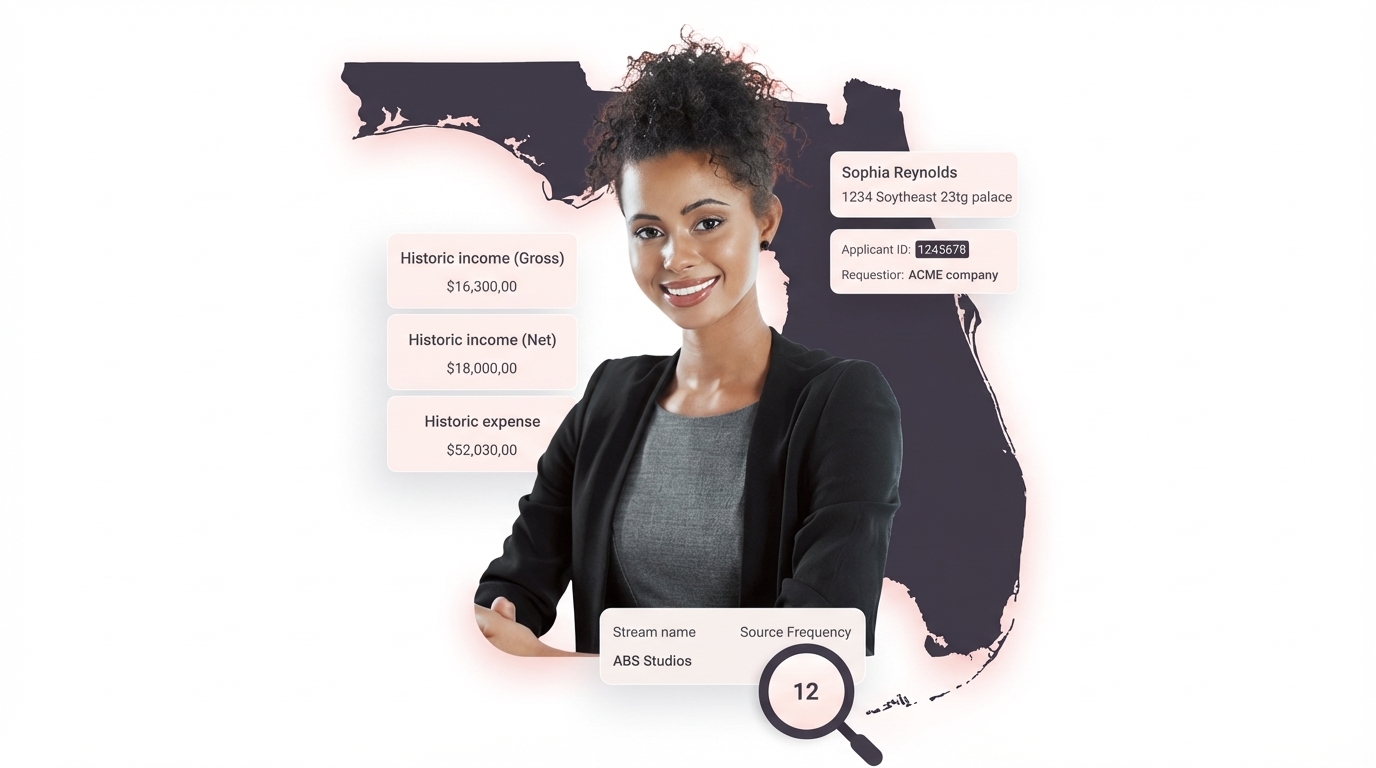
Income verification reduces rental default risk and confirms tenant financial capacity. Typical documents include two to three recent pay stubs, tax returns, or employment verification letters. Self-employed applicants should submit 1099 forms, bank statements, or profit-and-loss statements. Property managers in 2026 face more sophisticated application fraud with manipulated documents and fake pay stubs, so automated income verification has become critical.
4. Rental History and References
Rental history and landlord references help confirm tenant reliability. Typical documentation includes contact details for previous property managers, prior lease agreements, and eviction history checks. Florida’s accelerated application processing expectations require thorough reference checks within defined timelines.
5. FCRA Consent Form
Written authorization is legally required before any background check. Tenant screening reports that include credit, eviction, and court records fall under the Fair Credit Reporting Act (FCRA). The consent form must clearly describe the screening process and explain applicant rights under federal law.
6. Executed Lease Agreement or Purchase Contract
Signed lease agreements or purchase contracts define the legal relationship between the tenant and the association. Electronic signatures are acceptable when properly authenticated and stored for audit purposes.
7. HOA-Specific Documentation
Community associations often require additional documents such as pet registration, vehicle information, and board consent forms. Authority for tenant screening in HOAs and condominiums must appear clearly in governing documents such as declarations, bylaws, or rules.
|
Document Type |
Manual Review Risks |
Automated Verification Benefits |
|
Government ID |
Fraud detection errors, time-intensive review |
Biometric matching, instant authentication |
|
Income Proof |
Falsified pay stubs, manual calculation errors |
Direct employer verification, automated analysis |
|
Background Consent |
Missing signatures, compliance gaps |
Digital consent tracking, FCRA audit trails |
Florida HOA and Condo Screening Rules Community Managers Must Know
Florida community associations follow specific regulations that extend beyond standard rental screening. Community associations may charge tenant screening fees when that authority appears in governing documents, and HOAs have no statutory fee caps as long as fees remain reasonable.
Florida Statute 83 requires screening for all occupants aged 18 and older, not only primary lease holders. This broad requirement helps prevent unauthorized occupants and supports full community oversight. Association bylaws often add documentation such as pet policies, parking permits, and architectural review approvals for property changes.
Self-employed applicants in Florida usually need enhanced documentation, such as business licenses, professional certifications, and longer bank statement histories. Screening criteria should reflect each community profile, from Miami high-rises to Jacksonville suburbs, so risk rules match local demographics and fraud patterns.
Modern Identity Fraud Protection for Tenant KYC
Document-only screening no longer keeps pace with the fraud tactics emerging in 2026. Synthetic identities that mix real and fake data now represent the fastest-growing fraud type in rental applications, according to TransUnion.
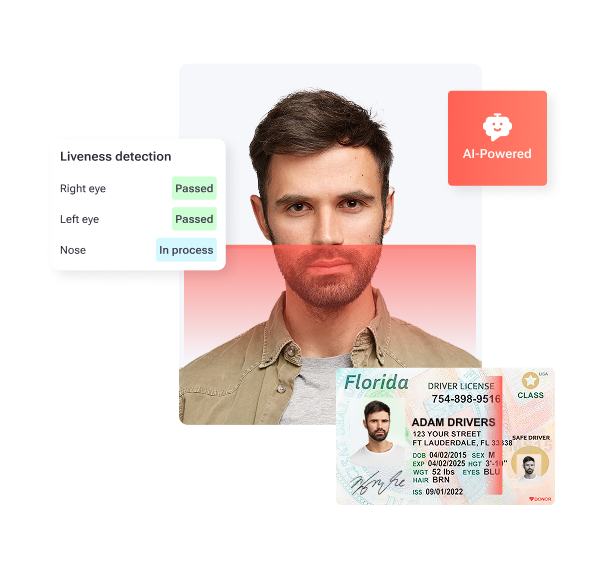
Effective fraud prevention now relies on biometric identity verification that confirms both physical presence and document authenticity. Common red flags include mismatched addresses, conflicting personal details, or Social Security Numbers tied to multiple identities. Nearly half of property managers rank background checks as the most critical screening element in 2026, ahead of credit checks, because of rising application fraud.
TenantEvaluation’s IDVerify platform brings AI-powered liveness detection, government ID validation, and facial biometric matching into a single screening flow. This approach removes third-party redirects and gives Community Association Managers instant fraud detection that manual review cannot provide.
Schedule a demo today to see how automated biometric verification shifts community association screening from reactive document review to proactive fraud prevention.
FCRA Compliance Steps and Screening Workflow Tips
FCRA compliance creates the legal foundation for every tenant screening decision. When landlords deny an applicant based on consumer reports, they must send adverse action notices under FCRA rules. Written consent must always come before background checks, with clear language about screening scope and applicant rights.
Detailed audit trails should record each screening decision to protect associations from discrimination claims and regulatory penalties. TenantEvaluation maintains direct credit bureau reseller relationships with TransUnion and Equifax, which support data accuracy and strict bureau compliance. This structure avoids gray-market data sources that can increase liability.
How TenantEvaluation Improves Screening Over Manual and Generic Tools
TenantEvaluation supports more than 5,000 communities and processes over 100,000 applications each year, which proves scalability across Florida’s varied associations. End-to-end automation cuts processing time by about 70 percent and can generate new revenue through compliant fee collection.
|
Feature |
TenantEvaluation |
Manual Process |
Generic Competitors |
|
Processing Time |
5–10 minutes automated |
5–10 days manual review |
Varies, often fragmented |
|
Biometric Verification |
Native IDVerify integration |
Document review only |
Third-party redirects |
|
Board Dashboard |
QuickApprove specialized panel |
Email coordination |
Generic interfaces |
|
FCRA Compliance |
Built-in audit trails |
Manual documentation |
Basic compliance tools |
The QuickApprove dashboard gives Boards of Directors real-time visibility into applications, structured voting tools, and complete audit trails. This focused interface replaces scattered email threads and supports clear, defensible decisions that generic platforms rarely match.
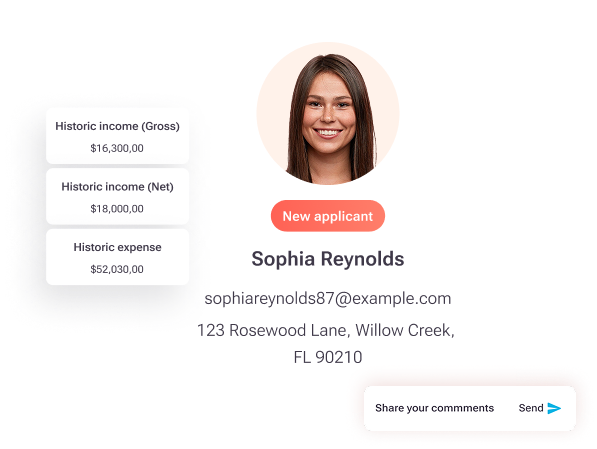
TenantEvaluation’s revenue-sharing model turns screening into a new income stream instead of a pure cost center. Clients report savings of about $240,000 per year through automated workflows and lower administrative overhead.
Frequently Asked Questions
What is tenant KYC in Florida?
Tenant KYC in Florida means collecting and verifying seven key documents: government-issued photo ID, Social Security Number, proof of income, rental history, FCRA consent forms, executed lease agreements, and HOA-specific documentation. This process confirms identity, evaluates financial capacity, and supports regulatory compliance for community associations.
Do Florida HOAs require biometric verification for tenant screening?
Florida law does not currently mandate biometric verification, but many communities now treat it as essential for fraud prevention. Modern associations increasingly adopt biometric identity checks to fight synthetic identity fraud and document tampering. TenantEvaluation’s IDVerify offers AI-powered liveness detection and facial matching inside the screening workflow.
Is a Social Security Number mandatory for Florida tenant screening?
Social Security Numbers are required for full background checks in Florida, and landlords must obtain written consent first. FCRA rules demand explicit authorization before any SSN-linked consumer report. Some applicants may qualify to use an Individual Taxpayer Identification Number (ITIN) as an alternative identifier.
What documents are required for KYC verification in community associations?
Community associations collect standard KYC documents plus association-specific items such as pet registration, vehicle information, architectural review approvals, and board consent forms. Florida Statute 83 requires screening for all occupants aged 18 and older, not just primary lease holders, which supports complete community oversight.
How can Florida property managers prevent identity fraud in tenant applications?
Effective fraud prevention combines document checks with biometric authentication, automated red flag detection, and thorough background screening. Platforms like TenantEvaluation integrate AI-based fraud detection, government ID validation, and facial biometric matching to uncover synthetic identities and document tampering that manual review often misses.
Florida’s tenant KYC environment now requires advanced verification that manual methods rarely deliver. The seven essential documents in this checklist create a strong base for compliant, fraud-resistant screening when paired with automated tools.
Schedule a demo today to see how TenantEvaluation supports community association screening with biometric verification, FCRA compliance, and revenue-focused automation.
