Written by: Luis Teran, Co-founder, CEO, TenantEvaluation
Key Takeaways
- AI-generated fake documents and deepfakes now create serious identity fraud risks for Florida HOAs, so communities need biometric KYC that goes beyond basic screening.
- The 7-step KYC process, from property code distribution through compliance analytics, maintains FCRA compliance while automating resident verification.
- Automated platforms cut screening time from days to hours, save more than 50 admin hours per day, and create new revenue for associations.
- Manual KYC exposes CAMs to liability, delays, and fraud, while biometric tools with board dashboards provide transparent and secure alternatives.
- TenantEvaluation supports Florida communities with IDVerify+ biometrics, QuickApprove dashboards, and direct credit bureau access, so you can schedule a demo today for Florida-focused screening.
How KYC Works in Property Management
KYC (Know Your Customer) in property management covers identity verification, financial validation, and background screening that confirm applicant authenticity before community approval. Complete KYC includes customer identification, document collection, identity verification, AML screening, and risk assessment tailored to residential communities.
The four-step KYC framework for Florida HOAs follows a clear sequence. Collect means gathering government IDs, financial documents, and references. Verify confirms document legitimacy through biometric validation. Screen covers criminal, credit, and eviction checks. Approve involves board review with audit trails. This structure goes beyond generic rental screening by including community bylaws, Florida FCRA permissible purpose rules, and HOA governance that requires board oversight and transparency.
2026 KYC Trends Shaping Florida Communities
Identity fraud targeting Florida communities has increased sharply. The US identity verification market is projected to grow from $4.34B in 2025 to $8.16B by 2030, driven by AI-generated documents and synthetic identities that traditional document checks miss.
Manual KYC creates approval delays and exposes more than 100,000 annual applications to fraud risks. Biometric presentation attack detection and anti-injection measures have become essential as deepfakes challenge older verification methods. Florida CAMs now favor layered biometric tools that combine government ID validation, liveness detection, and facial matching to counter modern fraud tactics.
Automated KYC platforms process applications in hours instead of days, with AI workflows replacing up to 50 hours of staff work per day. This shift positions biometric identity verification as the new standard for community protection.
7-Step KYC Workflow for Resident Screening
The 7-step KYC process for Florida community associations simplifies resident onboarding while maintaining FCRA compliance and strong fraud prevention.
Step 1: Property Code Distribution Community managers share unique property codes with prospective residents and realtors. This step triggers the digital application workflow that follows the association’s customized screening rules.
Step 2: Digital Document Collection Applicants complete online forms and upload documents such as government IDs, lease agreements, financial statements, and references. They use secure, encrypted portals that stay available 24/7 on web and mobile.
Step 3: Biometric Identity Verification Advanced IDVerify+ systems authenticate government-issued IDs, run AI-powered liveness checks, and perform facial biometric matching. These steps confirm physical presence and block impersonation attempts.
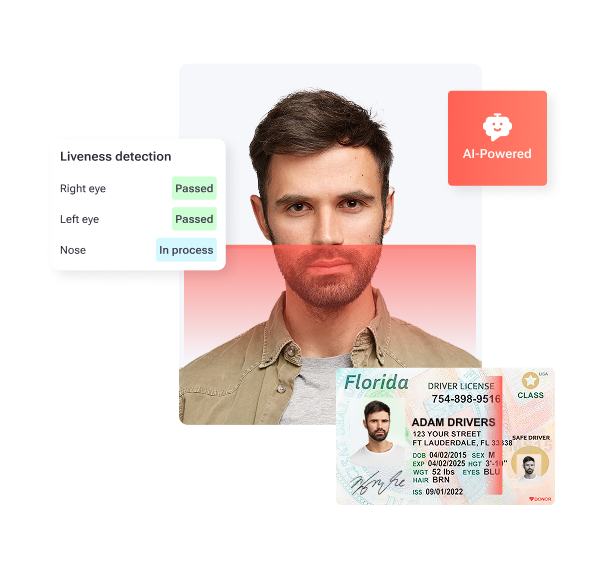
Step 4: FCRA-Compliant Background Screening Automated tools run criminal, credit, and eviction checks through direct credit bureau connections. The system supports permissible purpose compliance and manages adverse action workflows.
Step 5: Board Dashboard Review QuickApprove dashboards give board members real-time access to application summaries, verification results, and voting panels. This setup supports transparent decisions and complete audit trails.
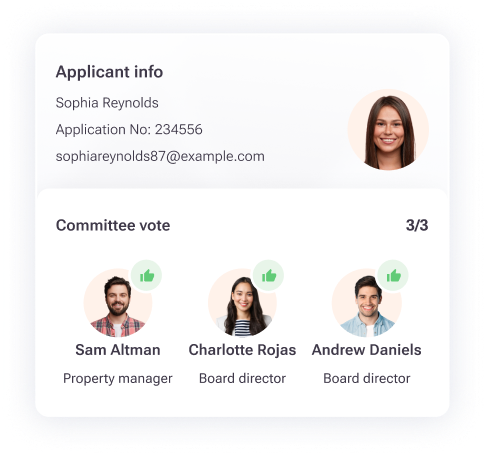
Step 6: Automated Approval Processing Qualified applications receive instant approvals based on community criteria. Flagged cases move to board review with detailed risk assessments and clear recommendation summaries.
Step 7: Compliance Documentation and Analytics Every decision creates timestamped audit trails, adverse action notices when needed, and community analytics that support planning and regulatory compliance.
Tenant Verification Timelines with Automation
Automated KYC systems complete resident verification much faster than manual workflows. AI workflows replace up to 50 hours per day of administrative tasks, so CAMs can focus on higher-value community management while keeping screening standards high.
Core Components of Tenant Screening
Comprehensive resident screening combines identity verification, criminal background checks, credit reporting, eviction history, income validation, reference checks, and biometric authentication. Modern platforms connect these elements in a single workflow that avoids third-party redirects and keeps applicants engaged until completion.
Manual KYC Pain Points for Florida HOAs
Manual KYC creates heavy operational strain for Florida community associations. Constant follow-ups with applicants, realtors, and owners consume staff time, while incomplete applications delay approvals and frustrate everyone involved. Document authenticity checks also demand expertise that many CAMs do not have, which opens the door to sophisticated fraud.
FCRA compliance violations create major legal risk when manual processes miss adverse action steps, permissible purpose records, or secure data handling. Board approval delays add to the problem when members lack direct access to application details, which creates communication bottlenecks and longer processing times.
FCRA-Safe KYC Practices for Florida Communities
FCRA compliance depends on clear permissible purpose rules, automated adverse action workflows, and secure data handling. Effective KYC verification includes tailored due diligence levels, defined risk policies, and audit-ready traceability that stand up during regulatory reviews.
Strong practices include using end-to-end biometric platforms that avoid unnecessary third-party data sharing and keeping direct credit bureau relationships instead of data aggregators. Boards should have transparent access to screening results without exposing sensitive applicant data. Revenue-sharing models can offset platform costs and generate income from the screening process.
Florida communities also need to account for state privacy rules, HOA governance structures that require board oversight, and screening criteria that differ by property type and demographic focus. You can schedule a demo today to review FCRA-compliant automation options for your community.
Screening Platforms for Florida Property Managers
|
Tool |
Biometric KYC |
HOA Dashboard |
FCRA Direct Reseller |
Florida Focus |
|
TenantEvaluation |
Yes (IDVerify+) |
Yes (QuickApprove) |
TransUnion/Equifax |
5,000+ FL communities |
|
ApplyCheck |
Limited |
No |
Third-party |
Generic |
|
Verify Screening |
No |
No |
Third-party |
Generic |
|
Snappt |
Income only |
Limited |
No |
Generic |
TenantEvaluation supports Florida community screening with biometric KYC, HOA-focused board dashboards, direct credit bureau relationships, and results across more than 5,000 communities. The platform has generated $150M in revenue for associations and processes over 100,000 applications each year with a 4.8/5 Google rating.

Upgrade Your KYC Process with Automation
Automated KYC delivers clear gains such as 70 percent time savings, stronger fraud prevention, FCRA compliance support, and new revenue for Florida community associations. Modern biometric platforms remove manual administrative work and give board members transparent oversight with audit-ready documentation.
Florida communities can modernize screening with TenantEvaluation’s platform, which includes IDVerify+ biometric verification and QuickApprove board dashboards. Schedule a demo today to see how more than 5,000 communities have automated KYC workflows while generating revenue and reducing fraud.
FAQs: KYC for Resident Screening
What Is KYC in Property Management?
KYC in property management is a structured verification process that confirms applicant identity, financial capacity, and background suitability before community approval. It includes government ID checks, biometric verification, credit and criminal screening, income validation, and reference checks. For Florida HOAs and condos, KYC must follow FCRA rules while fitting community bylaws and board governance. Modern KYC platforms automate these steps and cut approval times from days to minutes while keeping screening thorough.
How Do You Implement Biometric Tenant Verification?
Biometric tenant verification combines government ID validation, AI-powered liveness detection, and facial matching inside the application workflow. Applicants upload a government-issued ID and complete a guided selfie step that confirms physical presence and blocks impersonation. The system validates ID authenticity, runs biometric comparison, and returns verification results inside the screening platform. This approach removes manual document review and provides stronger fraud protection than paper-based methods.
What Is the Best FCRA-Compliant Screening for Florida?
FCRA-compliant resident screening relies on direct credit bureau relationships, automated adverse action workflows, clear permissible purpose documentation, and secure data handling. Leading solutions separate data provision from decision-making, include built-in audit trails, and offer features tailored to community association governance. Florida communities must also consider state privacy rules, HOA board oversight needs, and screening criteria that vary by property type and resident profile.
How Does TenantEvaluation Compare to Competitors?
TenantEvaluation focuses on Florida community associations, integrates biometric KYC, and offers dedicated board dashboards with direct credit bureau reseller status. Competitors such as ApplyCheck and Verify Screening provide basic background checks through third-party tools. TenantEvaluation instead delivers end-to-end automation with revenue-sharing options, about 70 percent time savings, and results across more than 5,000 communities. The platform processes over 100,000 applications per year and treats FCRA compliance as a core requirement.
How Much Time Can Automated KYC Save?
Automated KYC can save up to 50 hours per day for community association staff by removing manual document review, follow-up messages, and administrative processing. Application timelines shrink from days to hours, and board approvals move faster through dashboards that show real-time screening results. Communities often report large annual savings from lower admin costs, faster revenue collection, and reduced compliance risk. Automation lets CAMs focus on higher-value community work while keeping screening standards consistent.
