Written by: Luis Teran, Co-founder, CEO, TenantEvaluation
Florida HOA and condo boards often struggle with slow, paper-based application processes that waste time and create compliance risks. Automating these tasks can save hours, reduce errors, and improve the experience for everyone involved. Let’s explore seven straightforward strategies to modernize condo applications and streamline operations in Florida communities.
Why Automation Matters for Florida HOAs
Community management faces growing demands for speed and accountability. Sticking with manual processes creates unnecessary delays, communication gaps, and administrative headaches for managers and applicants alike.
These outdated methods carry real costs. Community managers and boards deal with challenges like inconsistent rule enforcement, declining engagement, and resistance to necessary fee increases for improvements. Add in frequent board changes and differing homeowner expectations, and manual systems become a significant bottleneck.
Financially, the impact is clear. A typical Florida management company might spend 50 hours each day on manual tasks like processing applications and verifying documents. At $10 per hour per property, that adds up to $240,000 yearly, money that could be better spent on valuable services.
Security and compliance are also at risk with manual methods. Poor communication, delayed responses, and inconsistent rule application often result from handling applications by hand. When personal data is managed without automation, the chance of breaches or privacy violations increases sharply.
Automation offers a practical way to tackle these issues. Digital tools tailored for community associations simplify every step of the application process while ensuring compliance with Florida’s specific regulations.
7 Key Strategies to Automate Condo Applications in Florida
1. Switch to a Fully Digital Application System
Moving from paper to an online platform is the first step to efficiency. Digital forms guide applicants through the process, allow secure document uploads, and support e-signatures. Everything gets stored in one central, accessible spot, cutting out the mess of paper files and scattered systems.
This directly solves a common frustration for managers. Lost paperwork and poor communication with residents are persistent issues in older setups. A digital system prevents these delays and offers a user-friendly experience for applicants and realtors.
Choose a platform that works well on both desktop and mobile devices. It should handle various file types, like leases or financial records, and even auto-sort uploads to the right review category. Property managers often see up to 70% less time spent on applications after making this switch.
2. Use Smart Forms to Customize Applications
Smart forms adjust questions and document requirements based on an applicant’s answers or a community’s specific rules. They can distinguish between renters and buyers, or local versus out-of-state applicants, showing only relevant fields to avoid confusion.
This cuts down on incomplete submissions, saving follow-up time for managers and boards.>For renters, the form might request lease details; for buyers, it asks for purchase agreements. Tailoring the process like this speeds up reviews and improves accuracy.
These forms also help meet Florida’s regulations and unique community policies, such as pet rules or income standards. Look for platforms with easy-to-use tools that let staff set up custom logic without needing technical skills. Fewer resubmissions mean less wasted effort.
3. Automate Detailed Resident Screening
Automated screening goes beyond basic checks by integrating ID verification, income confirmation, credit reports, and criminal history into one smooth workflow. It ensures compliance with laws like the FCRA while giving a full picture of each applicant.
This approach delivers consistent results, reducing risks for communities. Manual screening often varies by staff member, leading to missed details. Automation applies the same standards every time, ensuring fairness.
Speed is another major benefit. Results that once took days now come back in hours, shortening approval times for everyone’s benefit. Modern tools connect to services for verifying IDs, contacting employers, and checking backgrounds, providing a complete view for better decisions.
Schedule a demo with TenantEvaluation to see how streamlined screening can improve compliance and efficiency for your association.
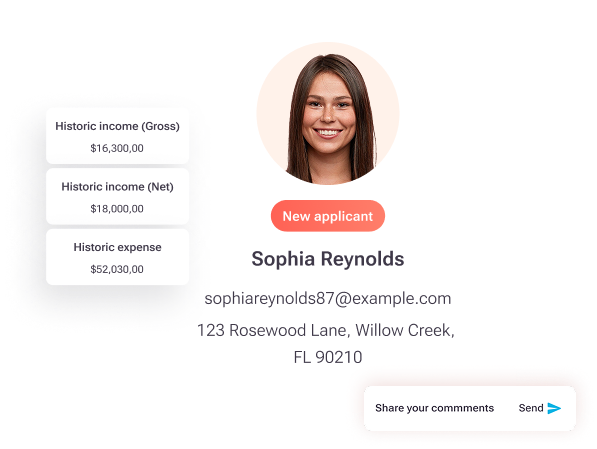
4. Strengthen Data Security with Auto-Redaction
Protecting applicant data is critical, and automated tools do this with features like auto-redaction of personal details and strong encryption. This meets privacy laws and reduces the risk of costly data breaches.
Handling sensitive documents manually is risky. Printing or emailing things like Social Security numbers creates multiple points where data can be exposed. Automated systems track interactions and maintain secure logs tied to each unit.
Look for platforms with top-tier security standards, like PCI Level 1 compliance. They should obscure sensitive info in real-time and limit access to only what reviewers need. This keeps both applicants and associations safe from data theft.
5. Simplify Board Reviews with Digital Tools
Secure online dashboards for board members make reviewing applications and voting much easier. They can access summaries, reports, and documents from any device, speeding up decisions without paper or in-person meetings.
This fixes common governance delays. Manual reviews often lack clarity and rely on closed-door decisions. Digital tools offer full visibility while keeping data confidential, with records of every action taken.
These dashboards show key applicant details and allow electronic voting, so every board member can weigh in, no matter their location. Audit trails log every step, protecting against legal challenges and ensuring compliance.
6. Keep Everyone Updated with Automated Notifications
Automated messages and status updates improve communication with applicants, realtors, and board members. Confirmations, requests for more info, and final decisions are sent instantly, cutting down on manual follow-ups.
Clear updates boost satisfaction and ease the workload for managers swamped with inquiries. Automated chats and notifications enhance resident interactions significantly. Everyone stays informed without extra effort.
Set up notifications via email, SMS, or app alerts to match user preferences. Online dashboards let applicants check their status anytime, reducing calls to the office and saving staff time.
7. Collect Fees and Generate Revenue Automatically
Integrating online payments into your application system eliminates manual billing and tracking. Some platforms even share a portion of fees back to the association, turning a routine task into extra income.
Applicants pay securely during submission, and the system matches payments to applications automatically. This cuts accounting work. Revenue-sharing setups deduct service costs from fees and send the rest to the association, creating cash flow without upfront expenses.
Pick a platform with secure payment options, clear receipts, and detailed financial reports. Flexible fee setups can adapt to different application types, supporting better budgeting for your community.
Comparing Automated and Manual Condo Applications for Florida HOAs
|
Feature/Metric |
Automated System |
Manual Process |
Impact |
|
Application Submission |
Online, available 24/7 |
Paper forms, limited hours |
Easier access for applicants |
|
Document Collection |
Digital uploads, auto-validation |
Physical copies, manual checks |
Fewer errors, faster processing |
|
Approval Timeline |
Up to 70% faster |
Weeks of waiting |
Quicker move-ins, happier residents |
|
Administrative Work |
Cuts up to 50 hours/day |
Endless follow-ups |
Staff can focus elsewhere |
|
Data Security |
Auto-redaction, high standards |
Risk of breaches |
Better protection, less risk |
|
Board Review |
Online dashboard, e-voting |
Paper reviews, meetings |
Faster, clearer decisions |
|
Revenue Opportunity |
Fee-sharing options |
Only costs, no gains |
Financial upside for HOAs |
Real Benefits Automation Brings to Florida Communities
Switching to automated systems delivers clear, measurable improvements for Florida HOAs, far beyond just saving a few minutes here and there.
Time savings stand out immediately. Managers often free up 40 to 50 hours daily by automating repetitive tasks. This lets staff shift focus to resident needs or property upgrades instead of paperwork.
Cost reductions add up fast. Saving 50 hours a day can mean $240,000 less in yearly expenses from labor, printing, and storage. Plus, fee-sharing models can bring in extra funds, with some communities earning thousands annually.
Compliance gets easier too. Automated systems log every action, apply consistent screening rules, and secure data tightly. This lowers the risk of legal or regulatory issues down the line.
Residents notice the difference. Faster approvals and clear updates improve their first interactions with the community, fostering goodwill and supporting property values.
Schedule a demo to learn how automation can enhance your community’s operations with real results.
Addressing Implementation Concerns
Automation offers clear advantages, but some HOAs hesitate due to practical concerns. Let’s look at how to handle these challenges effectively.
Adopting new technology can feel daunting for staff used to manual ways. AI tools can simplify tasks like document checks and resident queries without needing a full tech overhaul. Start small with gradual changes to ease the transition.
Budget worries are common, especially for smaller associations. Fee-sharing models help by removing upfront costs and adding income from day one. Automation becomes a financial gain, not a burden.
Training staff doesn’t have to be complicated. User-friendly platforms and solid support resources make learning manageable. Roll out changes step by step to keep operations running smoothly.
Moving old data to a new system takes planning but isn’t a blocker. Expert teams can handle the transfer, so past records stay accessible while new applications benefit from automation.
Preparing Florida HOAs for the Future
Automating applications isn’t just a trend; it’s a necessary shift for how communities operate today. Florida HOAs adopting these tools now gain an edge for whatever comes next.
Younger residents expect digital convenience in every interaction. Sticking to paper processes could turn away potential community members who value modern systems.
Regulations keep changing, often focusing on data protection and transparency. Automated tools adapt quickly to new rules, keeping associations compliant without constant manual updates.
Today’s automation platforms connect easily with other management tools. They set a foundation for integrating future tech, ensuring your investment stays useful as needs evolve.
Professionally managed communities are raising the bar with advanced systems. Smaller associations can keep up by adopting automation, gaining access to capabilities once out of reach.
Common Questions About Automated Condo Applications
How Much Time Can Automation Save for Managers?
Automation cuts down daily workloads significantly. Managers often save 40 to 50 hours each day, reducing application processing time by about 70% compared to manual methods.
Tasks like data entry, chasing documents, and answering status calls disappear. Staff can then prioritize resident engagement and community improvements instead of paperwork.
Do These Systems Handle Florida’s Specific HOA Rules?
Yes, modern platforms are designed to meet Florida’s complex regulations. They adjust workflows for different community types and applicant needs, like credit or background checks.
Updates to the system keep it aligned with changing laws, and detailed records support compliance during audits or legal reviews.
How Does Automation Improve Board Decision-Making?
Digital dashboards give board members instant access to applicant data and summaries. They can review details and vote online, no matter where they are, speeding up approvals.
Every decision is logged with timestamps, creating clear documentation. This transparency protects against disputes and outperforms paper-based methods.
What Keeps Applicant Data Safe in These Systems?
Automated platforms use high-level security, including encryption for all data and automatic redaction of personal details. Access is limited by role, so users see only what’s needed.
Constant monitoring and regular updates defend against threats, offering protection far beyond what manual handling can achieve.
How Does Revenue-Sharing Work for Associations?
This model turns application processing into income. Fees collected online are split, with the service provider taking a portion and the rest going to the association, often without upfront costs.
For a $100 fee, if the provider keeps $30, the association gets $70. With 100 applications a year, that’s $7,000 in net revenue, scaling with volume.
Wrap-Up: Upgrade Your Florida HOA with Automation
Moving to automated condo applications is a smart step for Florida HOAs aiming to improve efficiency, stay compliant, and keep residents satisfied. These seven strategies offer a clear path to modernize operations.
The benefits are hard to ignore. Managers save 40 to 50 hours daily, cut costs by up to $240,000 a year, and even earn revenue through fee-sharing. Automation also prepares communities for future expectations and rules.
Implementation is manageable with the right support. Revenue-sharing removes cost barriers, and training ensures staff adapt easily. Most importantly, automation frees up time for what matters: building a stronger community.
Ready to improve your application process and boost efficiency? Schedule a demo with TenantEvaluation today.
