Written by: Luis Teran, Co-founder, CEO, TenantEvaluation | Last updated: July 9, 2026
Key Takeaways for Florida Associations
- Florida community associations face compliance, fraud, and workflow challenges that generic landlord screening tools do not solve.
- FCRA rules, Florida transfer fee limits, biometric fraud prevention, and board voting requirements call for purpose-built screening platforms.
- Secure platforms need direct credit bureau access, automated adverse-action workflows, biometric identity checks, and centralized lease tracking.
- TenantEvaluation delivers IDVerify, QuickApprove, 55+ verification, and Lease Tracking to remove manual work and lower liability.
- See how TenantEvaluation streamlines screening and lease management for your Florida association at TenantEvaluation.
The Growing Risks of Generic Screening Tools in Florida HOAs and Condos
Florida associations now face sophisticated credit history fraud and AI-generated fake documents. Modern applicants use AI tools to create realistic fake pay stubs, altered bank statements, and fabricated employment letters that pass visual review without biometric or database-level checks.
Generic landlord platforms increase this risk because they lack strong identity verification tools that detect synthetic identities and impersonation attempts. Community associations face even more exposure because approvals involve CAMs, board members, realtors, and applicants who communicate through email chains and spreadsheets with no unified audit trail.
These operational gaps become legal liabilities when FCRA obligations are considered. FCRA requirements apply fully to community associations and property management boards. Under 15 U.S.C. §1681b(b)(2)(A), any party conducting tenant screening must obtain standalone written consent before pulling a consumer report, and embedded checkboxes in rental applications do not satisfy this requirement. Under FCRA §1681m, when an adverse action is based in whole or in part on a consumer report, the user must provide the consumer notice of the adverse action plus required disclosures such as any credit score used. Willful FCRA violations carry either actual damages or statutory damages of $100–$1,000, plus punitive damages and attorney fees.
Florida regulations add another layer of complexity. Florida condominium associations are limited to a maximum transfer fee of $100 per applicant for leases. Community associations may charge a fee for screening rental tenants only if their governing documents explicitly allow it. Generic tools ignore these state-specific rules, so associations must track compliance on their own.
Fragmented lease management then creates additional operational risk. When lease copies sit in scattered folders, inboxes, and spreadsheets with no link to the original application, associations lose occupancy visibility, miss expiration dates, and build incomplete records that increase liability during audits or disputes.
What Secure, FCRA-Compliant Screening Looks Like for Associations
A secure, FCRA-compliant resident screening platform for community associations differs from a multifamily or landlord tool in several core ways. The platform needs direct credit bureau reseller relationships, not third-party data aggregators, so data accuracy and permissible-purpose controls stay intact. It must automate adverse-action workflows so pre-adverse and final adverse notices are generated and delivered without manual steps.
The platform also needs a complete, timestamped audit trail for every application action. It should include association-specific workflows such as board voting dashboards, 55+ age verification, biometric identity confirmation, and centralized lease tracking that ties directly to each unit.
When platforms lack these capabilities, CAMs must bridge every gap manually. They track adverse-action deadlines in spreadsheets, verify identities by eye from uploaded documents, and coordinate board votes through email. These workarounds bring back the administrative burden, compliance risk, and fraud exposure that purpose-built platforms are meant to remove.
How TenantEvaluation Solves Florida Association Challenges
TenantEvaluation is an all-in-one resident screening and onboarding platform built only for community associations and management companies, with FCRA compliance as the base. The company launched in 2007 and was created by property managers, board members, and software engineers with decades of combined experience. TenantEvaluation now processes more than 100,000 applications each year across over 5,000 communities and has generated $150 million for those communities through its revenue-sharing model.
Four capabilities set TenantEvaluation apart from generic alternatives:
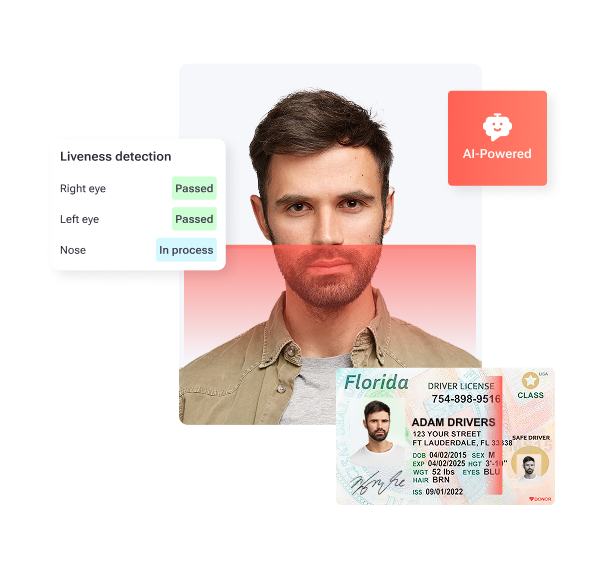
- IDVerify adds a biometric identity verification layer directly inside the screening workflow. It combines government ID validation, AI-powered liveness detection, and biometric selfie-to-ID facial matching. Verification results, including ID authenticity, liveness status, and biometric match, appear inside the CAM’s screening report without sending applicants to outside portals.
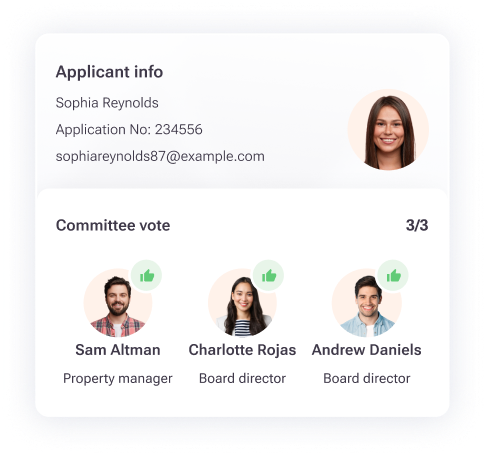
- QuickApprove accelerates approvals by keeping applications, board voting, and communication in one platform. CAMs and boards get real-time application tracking, a board-ready voting dashboard, automated communication support, customized approval letters, and a personalized welcome package while maintaining control and visibility.
- 55+ Communities Verification standardizes how age-restricted requirements are handled across applications. This reduces manual work, improves documentation consistency, and strengthens internal controls for Florida condos and HOAs.
- Lease Tracking provides centralized, real-time lease visibility and lifecycle control. It connects resident onboarding, unit data, approvals, and lease documentation into one audit-ready workflow that replaces spreadsheets and scattered email threads.
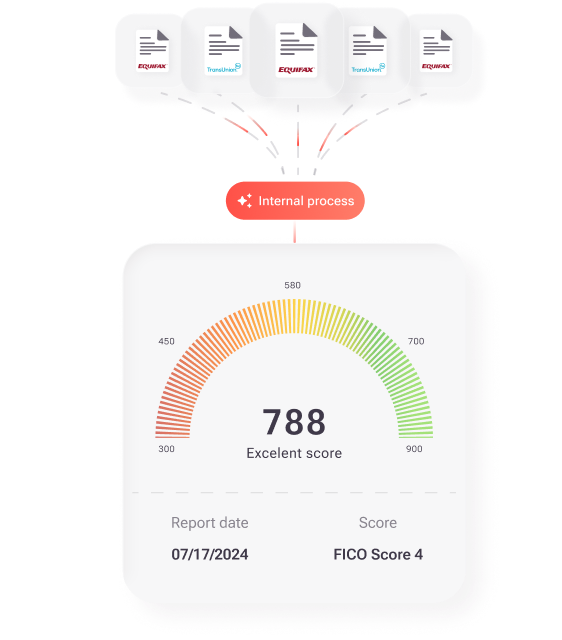
TenantEvaluation also serves as a legitimate reseller of TransUnion and Equifax data. The platform accesses bureau data under strict rules with regular compliance reviews and audits, not through gray-market or offshore sources.
The Resident Journey from Application to Lease Record
TenantEvaluation organizes the resident journey as one connected sequence with no manual handoffs between stages:
- Application intake: The applicant receives a Property Code from the association, creates or logs into a TenantEvaluation account, and completes a fully online application in about 5 to 10 minutes. The process covers personal, financial, and contact details, document uploads, and secure fee payment.
- IDVerify+ biometric verification: The applicant completes a guided biometric step, uploads a government-issued ID, and takes a live selfie. AI-powered liveness detection and facial matching run inside TenantEvaluation to confirm physical presence and identity authenticity before review.
- CAM review: The CAM reviews the application, screening reports, and IDVerify+ results in a single dashboard. Smart form logic has already rejected incomplete submissions, so CAMs avoid chasing missing documents.
- QuickApprove board voting: Board members use a dedicated review panel, receive AI-generated applicant summaries, and cast votes inside TenantEvaluation. All actions are timestamped and auditable, and the system generates automated communication and customized approval letters.
- Approval and onboarding: Approved applicants receive a personalized welcome package, and the association receives a customized approval letter. The platform retains all records.
- Lease Tracking record retention: Lease documentation connects to the application and unit record inside Lease Tracking. CAMs see real-time lease status, including active, pending, expired, or missing, and maintain a searchable, audit-ready digital history.
Operational Impact for CAMs, Boards, Applicants, and Realtors
TenantEvaluation cuts application processing time by up to 70 percent and can free as much as 50 staff hours per day. Automation covers document collection, identity verification, board communication, and approval letter generation. One Florida management company that adopted TenantEvaluation reduced processing time by 50 percent, saved $10 per hour per property, and achieved $240,000 in annual savings while removing the liability of handling sensitive information on paper.
Boards gain QuickApprove, which replaces email chains and spreadsheets with a connected decision process. Members see exactly what needs attention without constant CAM coordination. Applicants and realtors benefit from 24/7 AI chat support in 11 languages and automated status updates that reduce follow-up calls and speed up move-in timelines and commissions.
Risk Reduction and Compliance Advantages for Florida Communities
TenantEvaluation’s FCRA-first design addresses the three statutory obligations that most often create liability for community associations. The platform captures written consent through a standalone disclosure before any consumer report is pulled. It automates adverse-action workflows so pre-adverse notices, report copies, and the FTC Summary of Rights are generated and delivered inside the platform, and the final adverse notice goes out only after the required dispute window. Failure to send a compliant adverse action notice exposes HOAs and boards to FCRA liability, including actual damages, statutory damages up to $1,000 per incident, and attorney fees.
Every application action is timestamped and stored in a built-in audit trail, which creates a defensible record for regulatory reviews or disputes. IDVerify strengthens permissible-purpose validation by confirming identity before screening authorization, which supports FCRA-aligned workflows and audit readiness. PCI Level 1 compliance and end-to-end encryption protect sensitive data, and automatic redaction of Social Security numbers and banking details from uploaded documents reduces breach exposure.
For 55+ communities, Florida 55+ communities must verify resident ages using documentation such as driver’s licenses or birth certificates to maintain HOPA compliance and preserve age-restricted legal status. 55+ Communities Verification standardizes how these documents are collected and stored across applications, which improves consistency and reduces risk during audits or disputes.

Efficiency Gains and Revenue Potential Without Subscriptions
TenantEvaluation uses a pay-per-application revenue-sharing model with no upfront subscription fees. The platform deducts its service fee from the application fee it collects and returns the remainder to the association or management company. This structure turns application processing into a controlled income stream. It also aligns TenantEvaluation’s incentives with client success in a way that fixed-subscription competitors such as AppFolio and RealPage do not.
Automated workflows reduce the headcount needed to manage manual processes. Document collection, ID verification, board communication, approval letters, and lease record retention all run inside one system, so management companies can scale onboarding volume without adding staff.
Key Criteria for Comparing Tenant Screening Providers
Several criteria reveal whether a tenant screening platform is truly built for association workflows or adapted from a generic landlord tool:
- Permissible-purpose controls: The platform should enforce standalone written consent before pulling consumer reports, separate from the application form.
- Audit trails: All application actions, including document uploads, board votes, and approval decisions, should be timestamped and stored in a searchable, audit-ready record.
- Biometric liveness detection: Identity verification should include AI-powered liveness detection and facial biometric matching, not just document uploads.
- Board voting access: The platform should offer a dedicated board dashboard with summarized applicant reports and a structured voting workflow.
- 55+ standardization: A built-in capability should handle age-restricted application requirements consistently across communities.
- Lease Tracking: Lease documentation should connect to the application and unit record with real-time status visibility and automated collection.
- Revenue model: The platform should generate revenue for the association through a pay-per-application model instead of charging a fixed monthly subscription regardless of volume.
- Florida configuration: The system should support Florida transfer fee limits, governing document requirements, and HOA and condo workflows.
- Direct bureau access: The provider should be a legitimate reseller of TransUnion and Equifax data rather than relying on third-party aggregators.
- Adverse-action automation: Pre-adverse and final adverse action notices should be generated and delivered automatically inside the platform.
Security and Compliance Comparison in Plain Language
TenantEvaluation includes native biometric liveness detection through IDVerify, while ApplyCheck and Verify Screening Solutions do not document this capability. AppFolio and RealPage do not offer association-specific biometric verification. TenantEvaluation also provides a dedicated board voting dashboard through QuickApprove, which ApplyCheck and Verify Screening Solutions lack, and broader property management platforms do not match with a focused board panel.
For age-restricted communities, TenantEvaluation offers built-in 55+ Communities Verification, while the comparison platforms do not provide an equivalent feature. TenantEvaluation delivers centralized, real-time Lease Tracking that is audit-ready, whereas ApplyCheck and Verify Screening Solutions do not, and AppFolio and RealPage focus on multifamily lease workflows instead of association needs.
TenantEvaluation maintains direct reseller relationships with TransUnion and Equifax. ApplyCheck and Verify Screening Solutions access bureau data through the TazWorks platform, and AppFolio and RealPage rely on third-party integrations. TenantEvaluation automates FCRA-aligned adverse-action workflows and keeps a timestamped audit trail for each application. Competing platforms either do not document these capabilities or offer only partial coverage. TenantEvaluation also operates on a revenue-sharing model with no subscription and includes Florida-specific configuration, while the other providers do not focus on Florida association requirements.
Frequently Asked Questions
What are the biggest red flags to look for in a community association rental application?
The most serious red flags in community association applications fall into identity inconsistencies, financial misrepresentation, and documentation fraud. Identity issues include mismatches between the name on a government ID and the application, addresses that do not match reported credit history, and applicants who cannot complete biometric liveness checks. Financial concerns include income-to-rent ratios below 2.5 to 3 times monthly rent, self-reported income that payroll databases or employers cannot verify, and bank statements with unusual formatting.
Documentation fraud has grown as AI tools now create convincing fake pay stubs and employment letters. A platform that combines biometric identity verification, direct payroll verification, and automated document review, instead of manual visual inspection, offers the strongest defense against these fraud patterns.
How reliable is biometric identity verification for HOA and condo screening?
Biometric identity verification now serves as a standard layer in professional resident screening. A strong implementation combines government ID authenticity checks, AI-powered liveness detection to confirm physical presence, and facial biometric matching between a live selfie and the ID photo. One property management operator using biometric verification reported that the system diverted about one potential fraudster per day, a volume that manual document review never revealed.
Best practices require consistent use of biometric verification for every applicant, regular audits of algorithms for accuracy across demographic groups, and human review of flagged applications instead of fully automated declines. TenantEvaluation’s IDVerify is configured per community and tailored to condo and HOA risk, with results embedded directly in the CAM’s screening report.
How should boards be involved in the tenant approval process without creating bottlenecks?
Board involvement is a governance requirement in most Florida community associations, yet unstructured involvement through email, PDFs, and manual vote collection creates delays. A structured board workflow inside the screening platform solves this problem. A dedicated board dashboard that presents AI-generated applicant summaries, a voting panel, and real-time status gives members what they need to decide quickly without extra CAM coordination.
TenantEvaluation’s QuickApprove provides this structure. Board members log into their panel, review summarized reports, and cast timestamped votes inside the platform. All actions remain auditable, and automated communication handles approval letters and welcome packages without extra CAM work.
Why does centralized lease visibility matter for community association compliance?
Centralized lease visibility reduces one of the most common compliance risks in Florida community associations. When lease copies sit in scattered folders, inboxes, and spreadsheets with no link to the original application or unit record, associations cannot reliably confirm occupancy, track expiration dates, or produce complete records during audits or disputes.
Florida condominium associations also face specific rules around transfer fees and screening documentation, and incomplete lease records increase exposure when regulators review those requirements. TenantEvaluation’s Lease Tracking connects resident onboarding, unit data, approvals, and lease documentation into one real-time workflow. CAMs can confirm lease status instantly, boards gain a clearer view of occupancy, and audit-ready digital records reduce risk tied to missing or disconnected documentation.
Does TenantEvaluation work for both HOAs and condominiums in Florida?
TenantEvaluation supports both HOAs and condominium associations across Florida, including communities in Miami, Fort Lauderdale, Palm Beach, Tampa, St. Petersburg, Clearwater, Sarasota, Fort Myers, Orlando, Jacksonville, and other markets. The platform accommodates different governing document structures, transfer fee rules, and screening criteria for HOAs and condos under Florida law.
For age-restricted communities, 55+ Communities Verification standardizes how age documentation is handled across applications, which improves consistency and reduces manual work for CAMs and boards. Custom setup for each community’s rules, credit score thresholds, and required documents ensures that the platform reflects actual governing documents instead of a generic template.
Why Purpose-Built Platforms Outperform Generic Options
Generic landlord screening tools such as AppFolio, RealPage, and RentSpree were built for multifamily operators that manage individual unit rentals. These tools lack board voting dashboards, biometric liveness detection, 55+ age verification workflows, Florida transfer fee configurations, direct credit bureau reseller status, and centralized lease tracking tied to the application lifecycle. Community associations that rely on these tools must fill every gap manually, which restores the administrative burden, compliance risk, and fraud exposure that a purpose-built platform removes.
TenantEvaluation is the only platform in the Florida market that combines FCRA-compliant screening, biometric identity verification through IDVerify+, accelerated board approval through QuickApprove, age-restricted community standardization through 55+ Communities Verification, and real-time lease lifecycle control through Lease Tracking. All of this runs inside one connected platform with no monthly subscription and a revenue-sharing model that generates income for the association.
For CAMs, board members, and management companies that manage Florida HOAs and condos, the operational, compliance, and security case for a purpose-built platform is clear. The decision now centers on which purpose-built platform delivers the complete capability set that Florida associations require.
