Written by: Luis Teran, Co-founder, CEO, TenantEvaluation | Last updated: July 26, 2026
Key Takeaways for Florida Associations
- AI-generated fake IDs and synthetic identities have surged 311% in North America, while traditional optical card readers flag only 26% of fraudulent documents.
- Florida community associations face heightened liability when they rely on manual document review, with a single fraudulent tenancy costing $5,000–$15,000+ in losses and regulatory exposure.
- The seven-step compliant workflow uses government ID validation, biometric liveness detection via IDVerify, FCRA-regulated background checks, income verification, QuickApprove board voting, and centralized Lease Tracking.
- 55+ communities benefit from TenantEvaluation’s specialized verification that standardizes age-restricted eligibility documentation and reduces audit vulnerabilities across applications.
- Schedule a demo today to see how TenantEvaluation protects Florida associations with purpose-built biometric verification and FCRA-first compliance.
The Rising Risk of Fake IDs and Synthetic Identities
Fraud in leasing applications is rising across multifamily housing, and many operators describe the increase as significant. Many report a clear spike in AI-generated fraud that slips past traditional checks and reaches leasing teams.
The threat has accelerated sharply. As noted above, synthetic identity fraud has surged 311% in North America, according to Sumsub’s Q1 2025 identity fraud trends data. Inscribe’s 2026 report documented a 5x increase in AI-generated document fraud in 2025.
Traditional optical card readers, which many teams still rely on, cannot keep pace with this volume. MRI Real Estate Software tested 200 AI-generated fake IDs and confirmed the detection gap noted above: optical readers flagged only 26% of them. Mitigating a single case of rental fraud can cost up to $25,000 for a housing provider, according to the Real Estate Technology & Transformation Center.
For Florida’s age-restricted communities, the stakes rise even higher. A fraudulent occupant who misrepresents age-related eligibility can create documentation inconsistencies, audit risk, and internal liability for an HOA or condo association. TenantEvaluation’s 55+ Communities Verification capability standardizes how age-restricted requirements are handled across applications, which reduces manual work and improves documentation consistency for Florida condos and HOAs.
Seven-Step Tenant Identity Verification Workflow
Given the surge in synthetic identity fraud and the low detection rate of optical readers, Florida associations need a verification process that combines biometric confirmation with FCRA-compliant screening. The following workflow reflects those best practices for Florida CAMs and HOA or condo boards, bringing biometric verification, automated screening, and centralized lease management into one platform.
- Collect a complete digital application with signed consent. Require every adult applicant to submit a fully completed online application and provide written FCRA authorization before you pull any consumer report.
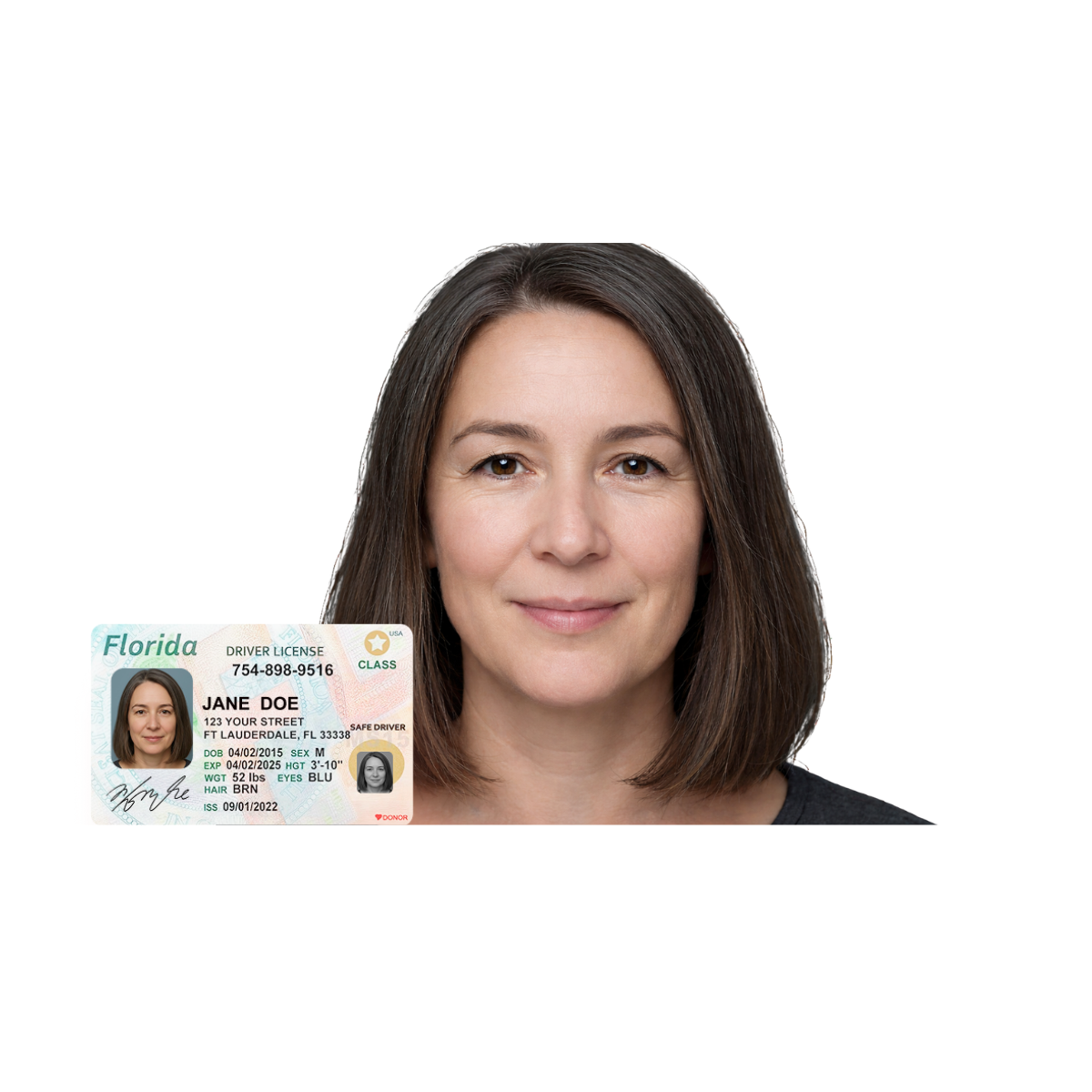
- Validate government-issued ID through document authentication. Request a current driver’s license or passport and run automated OCR checks against security features such as holograms, barcodes, and MRZ data.
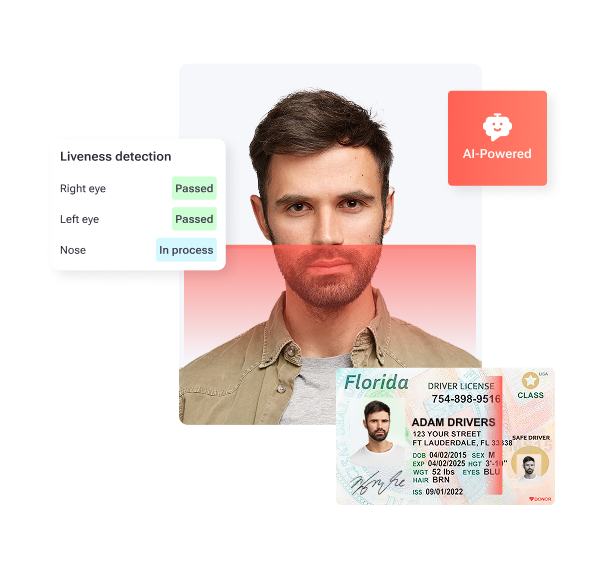
- Confirm physical identity with IDVerify biometric verification. Applicants complete a guided selfie capture inside TenantEvaluation. AI-powered liveness detection confirms physical presence, and facial landmark biometric mapping matches the selfie to the government-issued ID photo, all within the same platform without an external portal.
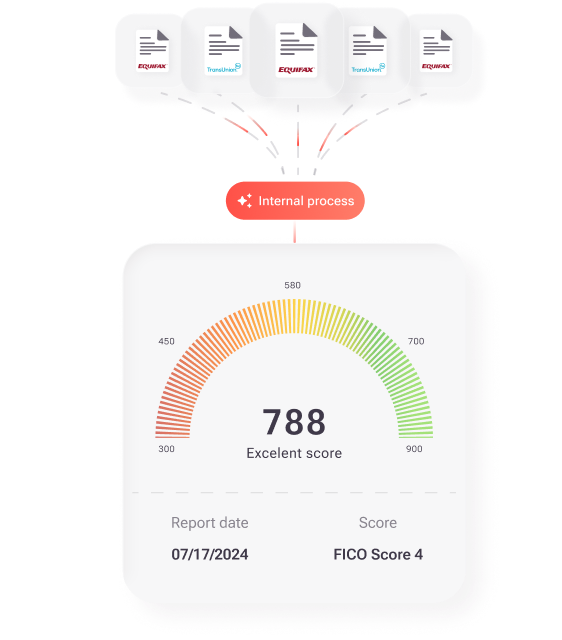
- Run FCRA-regulated credit and criminal background checks. TenantEvaluation pulls reports under strict permissible-purpose controls. These reports cover credit history, criminal records, sex offender registry data, and FBI Most Wanted databases.
- Verify income and employment at the source. Cross-reference applicant-provided pay stubs against independent payroll or bank-account data to catch document manipulation. Then contact employers using publicly listed numbers rather than applicant-supplied contacts, which adds a second verification layer that exposes fabricated employment letters.
- Route the completed file through QuickApprove for board review and voting. QuickApprove accelerates resident approvals inside one connected platform. Boards receive a dedicated review and voting dashboard with real-time application tracking, automated communication support, and customized approval letters, while maintaining control, compliance, and visibility.
- Activate Lease Tracking for real-time lease lifecycle visibility. After approval, connect the resident’s onboarding record, unit data, and lease documentation inside TenantEvaluation’s centralized Lease Tracking workflow. This approach replaces spreadsheets and scattered email chains with audit-ready digital records from application through occupancy.

Risks of Skipping Verification in Florida Communities
Florida community associations that rely on manual document review alone carry measurable liability. The financial exposure noted earlier, $5,000 to $15,000 or more per fraudulent tenancy, reflects lost rent, legal fees, and turnover costs, according to RL Property Management. Studies indicate that a significant portion of fraud surfaces only after the applicant has already moved in.
Florida HOA and condominium associations that use tenant screening reports to deny an application, require a co-signer, or increase a deposit must issue FCRA adverse action notices to the applicant. Failure to send these notices creates direct regulatory exposure for the board and the CAM.
For 55+ communities, inconsistent documentation across applications creates audit vulnerabilities that generic screening tools cannot resolve. TenantEvaluation’s 55+ Communities Verification capability is built for Florida condos and HOAs. It standardizes application handling and improves operational efficiency while leaving legal guidance with association counsel.
TenantEvaluation’s compliance infrastructure supports this risk management approach. The platform includes PCI Level-1 encryption, automatic redaction of sensitive PII, built-in adverse action workflows, and relationships with TransUnion and Equifax accessed under strict bureau rules with no gray-market or offshore data sources. These proof points show a platform where FCRA compliance forms the base of every workflow.
Manual Checks vs. Biometric-Backed Verification
Biometric-backed verification catches fraud that manual processes and optical readers often miss, and it does so with less manual effort. The table below highlights how TenantEvaluation’s workflow improves fraud detection, processing time, and income verification accuracy across four operational dimensions, with all figures cited inline.
| Dimension | Manual Document Review | TenantEvaluation Biometric + Automated Workflow | Source |
|---|---|---|---|
| Fake ID detection rate (optical readers) | 26% of AI-generated fake IDs flagged by optical card readers | AI liveness detection and biometric selfie-to-ID matching via IDVerify; biometric platforms can achieve high identity verification accuracy | MRI Real Estate Software |
| Average application processing time | Substantially longer under manual review | Faster with AI-powered screening and document automation | Industry data |
| Fraud caught post-move-in | Significant percentage of operators experienced fraud after the applicant had already moved in under document-only processes | Biometric integration identified 5,400+ fraudulent applications and prevented $10M+ in potential bad debt before applicants reached leasing teams | Industry studies; CLEAR + Snappt 2024 |
| Income verification time | Time-intensive manual processes for income verification | AI document parsing for income verification achieves end-to-end extraction in 1–3 minutes at 94–98% field-level accuracy | LandingAI case study |
Frequently Asked Questions
How long does the full seven-step verification process take with TenantEvaluation?
TenantEvaluation’s standard processing time extends up to 14 business days, or 1 business day for platinum service, with 24–48 business hours typically needed for initial review after document upload. The biometric verification step completes quickly. QuickApprove then moves the file from submission to board decision faster, with real-time tracking and automated communication support that reduce bottlenecks during peak application seasons.
How does board voting work inside TenantEvaluation’s approval process?
QuickApprove provides a dedicated board-ready review and voting dashboard built directly into TenantEvaluation. Board members log in to view AI-generated applicant summaries, cast votes, and track application status in real time, without relying on email chains or spreadsheets. All actions are timestamped and stored in a built-in audit trail, which gives boards full visibility and compliance documentation for every decision.
What FCRA adverse action obligations apply when a Florida association denies an applicant?
When a consumer report influences a denial, a higher deposit requirement, or a co-signer requirement, the association must issue an FCRA adverse action notice to the applicant. That notice must include the screening company’s name and contact information, a statement that the company did not make the rental decision, and notice of the applicant’s right to a free copy of the report and the right to dispute inaccuracies. TenantEvaluation’s platform includes automated adverse action workflows to support this obligation, with a clear separation between data provision by TenantEvaluation and the actual decision by the association or board.
What makes TenantEvaluation specifically suited for Florida HOAs and 55+ communities?
TenantEvaluation was founded in Florida in 2007 and reflects Florida-specific governing documents, screening criteria, and association workflows. The 55+ Communities Verification capability standardizes how age-restricted application requirements are handled across communities, which improves documentation consistency and reduces manual work for CAMs and boards. This support complements, rather than replaces, legal guidance, and no generic national screening tool matches this level of Florida-specific operational design.
Conclusion: Protect Your Community with a Florida-Built Workflow
Manual document checks no longer provide a defensible standard for Florida community associations. AI-generated fake IDs, synthetic identities, and fabricated income documents now outpace every optical reader and paper-based review process in use today. The seven-step workflow outlined above, anchored by IDVerify biometric confirmation, FCRA-regulated background checks, QuickApprove board voting, and centralized Lease Tracking, delivers an end-to-end process built specifically for Florida CAMs, HOA boards, and condo associations.
TenantEvaluation’s compliance infrastructure underpins every workflow. The platform maintains strict FCRA compliance with relationships to TransUnion and Equifax under bureau rules and without gray-market or offshore data sources.
