Written by: Luis Teran, Co-founder, CEO, TenantEvaluation | Last updated: June 22, 2026
Key Takeaways
- Florida HOAs face heightened fraud risks in 2026 from wire-transfer schemes, vendor impersonation, and internal embezzlement amid new legislative requirements.
- Internal controls based on the fraud triangle (pressure, opportunity, and rationalization) help associations protect assets and ensure accurate financial reporting.
- HB 1203 and Florida Statute 720.303 impose stricter financial transparency, prohibit debit cards, and mandate official websites or portals for associations with 100 or more parcels.
- A 12-control checklist covering segregation of duties, dual authorization, vendor verification, monthly reconciliations, and director education provides a practical roadmap for compliance and fraud prevention.
- TenantEvaluation helps Florida associations strengthen fraud-resistant operations with audit-ready lease tracking and biometric screening, learn more.
Internal Controls, the Fraud Triangle, and HOA Risk
Internal controls are the policies, procedures, and structural safeguards an organization uses to protect assets, ensure accurate financial reporting, and deter misconduct. The fraud triangle, a framework developed by criminologist Donald Cressey, identifies three conditions that must coexist for fraud to occur: pressure (a personal financial need), opportunity (access without oversight), and rationalization (a mental justification). HOAs are structurally vulnerable to all three. Volunteer boards rotate frequently, which can create rationalization opportunities such as “I am just borrowing until the next treasurer takes over.” Financial access is often concentrated in one manager or officer, which provides unchecked opportunity. Small operating budgets limit professional oversight, so pressure signals can remain undetected.
Florida associations face compounded exposure in 2026. Social-manipulation fraud cases have increased substantially in recent years, and Americans lost $12.5 billion to fraud in 2024, a 25 percent increase from 2023. AI-generated deepfakes now produce realistic voices and synthetic video that make fraudulent payment requests appear entirely authentic, which raises the bar for every association’s verification procedures. Florida’s legislative response to this evolving threat landscape has been equally significant.
Florida HOA Fraud Landscape and 2026 Legal Changes
The legislative environment has shifted materially. Florida’s 2024 House Bill 1203 requires HOAs to provide homeowners with timely, detailed financial information upon request. Separately, Florida Statute 720.303(7) imposes tiered financial-statement requirements based on association revenue, a mandate detailed in Control 7 below.
A critical operational change under HB 1203 directly addresses payment fraud. Florida HOAs and their officers, directors, employees, and agents are prohibited from using a debit card issued in the association’s name or billed directly to the association for any expense. The shift to ACH, wire, and digital payment channels that replaced debit cards has increased the attack surface for wire-fraud and vendor-impersonation schemes. Documented authorization controls now carry greater urgency.
These payment-control requirements operate alongside new transparency mandates. Under Florida Statute 720.303(4)(b), effective January 1, 2026, HOAs with 100 or more parcels must operate an official website or secure member portal that provides access to governing documents, budgets, contracts, insurance policies, meeting minutes, and required notices. This transparency mandate creates a parallel obligation. The records posted must be accurate, complete, and audit-ready.
Five Core Internal Control Categories for HOAs
Five core control categories frame the 12-control checklist that follows. First, segregation of duties divides authorization, recording, and custody functions among different individuals so no single person can initiate and conceal a transaction. Second, authorization and approval controls require documented sign-off at defined dollar thresholds before funds move. Third, reconciliation and verification controls compare recorded transactions against independent source documents on a defined schedule. Fourth, access and custody controls restrict who can view, modify, or disburse association funds and ensure access is revoked promptly at turnover. Fifth, monitoring and audit controls provide periodic independent review that surfaces anomalies the daily workflow may miss. The 12 controls below map directly onto these five categories.
12 Internal Financial Controls Florida HOAs Should Implement in 2026
Control 1 — Segregate Collection, Recording, and Reconciliation
Different individuals must handle receiving and depositing money, writing and signing checks, reconciling bank accounts, and preparing financial reports. Implementation steps: (1) Map every financial task to a named role to clarify responsibilities. (2) Identify any single person performing two or more incompatible functions. (3) Reassign duties or add oversight so incompatible tasks separate. (4) Document the role matrix in board minutes for transparency. (5) Review the matrix annually to reflect staffing or board changes. Sample policy language: “The Board of Directors hereby adopts a segregation-of-duties policy requiring that no individual authorized to deposit association funds shall also be authorized to reconcile the corresponding bank account or approve disbursements from that account.”
Control 2 — Tiered Dual-Authorization for Disbursements
A recommended tiered authorization policy requires: expenses under $1,000, property manager or treasurer approval; $1,000–$5,000, board president or two officers; $5,000–$25,000, majority board vote; over $25,000, super-majority board vote plus membership notice. Implementation steps: (1) Adopt thresholds by board resolution to create the policy foundation. (2) Embed those thresholds in the signature card on file with the bank so the bank enforces them at the transaction level. (3) Require written approval documentation for every tier to create an audit trail. (4) Retain approvals with the corresponding invoice so auditors can verify compliance. (5) Audit quarterly to confirm the system works as designed. Sample policy language: “No disbursement exceeding $1,000 shall be authorized by fewer than two board officers, and no disbursement exceeding $5,000 shall be made without a recorded majority board vote.”
Control 3 — Debit-Card Prohibition and Wire-Transfer Protocol
Building on the debit-card prohibition discussed earlier, associations must also establish a written wire-transfer protocol to govern the payment methods that replace debit cards. Wire transfers must follow a documented process. Implementation steps: (1) Cancel all association debit cards immediately and confirm closure in writing. (2) Draft a wire-transfer authorization form that requires two officer signatures. (3) Establish a verbal callback procedure to a known number before any wire executes. (4) Log every wire with payee, amount, purpose, and authorizing officers. (5) Reconcile the wire log to the bank statement monthly. Sample policy language: “The Association shall maintain no debit card in its name. All wire transfers require dual officer authorization documented on the Association’s Wire Authorization Form and confirmed by telephone callback to the payee’s verified contact number.”
Control 4 — Vendor Verification and Change-of-Banking Controls
Business imposter scams are a costly financial scam category in the U.S. Vendor impersonation frequently targets payment-routing changes. Implementation steps: (1) Maintain a board-approved vendor register with verified banking details. (2) Require any change to vendor banking information to be confirmed by phone to the vendor’s number on file, never a number provided in the change request itself. (3) Require two officer approvals for any vendor banking update. (4) Document the verification call in writing and store it with the change request. (5) Review the vendor register annually. Sample policy language: “No change to a vendor’s payment routing information shall be processed without dual officer approval and a documented telephone confirmation to the vendor’s previously verified contact number.”
Control 5 — Separate Operating and Reserve Accounts
HOA boards must maintain separate bank accounts for operating and reserve funds and never commingle them, as this is essential for proper tax treatment and legal compliance. Implementation steps: (1) Confirm operating and reserve accounts are held under separate account numbers, even if at the same institution. (2) Establish a board resolution that prohibits transfers from reserve to operating without a recorded vote. (3) Require reserve transfers to document the purpose and repayment plan. (4) Reconcile each account independently. (5) Report both balances in every monthly financial package. Sample policy language: “Association reserve funds shall be maintained in a dedicated account separate from operating funds. No transfer from reserve to operating accounts shall occur without a recorded majority board vote stating the purpose and anticipated repayment schedule.”
Control 6 — Monthly Bank Reconciliation by an Independent Reviewer
Monthly bank reconciliations must be performed by someone other than the check writer. Implementation steps: (1) Designate a reconciler who has no check-writing or deposit authority. (2) Obtain bank statements directly from the bank, not from the manager. (3) Complete reconciliation within 15 days of month-end. (4) Present the reconciliation to the full board monthly. (5) Retain reconciliation workpapers for at least seven years. Sample policy language: “Bank reconciliations for all association accounts shall be completed monthly by an individual who does not have check-writing or deposit authority, and the completed reconciliation shall be presented to the Board at the next regular meeting.”
Control 7 — Independent Annual Audit or Review Aligned to Florida Statute 720.303(7)
Florida Statute 720.303(7) requires HOAs to prepare annual financial statements according to revenue tiers: compiled for $150,000–$299,999; reviewed for $300,000–$499,999; and audited for $500,000 or more. Implementation steps: (1) Confirm the association’s revenue tier and parcel count. (2) Engage a CPA who performs no day-to-day accounting for the association. (3) Complete the report within 90 days of fiscal year-end. (4) Deliver copies to members within 21 days of completion. (5) Retain the report as an official record. Sample policy language: “The Association shall engage an independent CPA annually to prepare the financial statement required by Florida Statute 720.303(7) at the level mandated by the Association’s revenue and parcel count, with the report completed within 90 days of fiscal year-end.”
Control 8 — Fidelity Bond / Employee Dishonesty Coverage
Audits are often essential for confirming proper separation of duties and financial integrity in community associations. Fidelity bonds provide a financial backstop when controls fail. Implementation steps: (1) Obtain a fidelity bond covering all officers, directors, employees, and the management company. (2) Size the bond at a minimum of three months of assessments plus reserve balances. (3) Verify the bond is renewed annually and that coverage limits are reviewed when assessments or reserves increase. (4) Confirm the management company carries its own fidelity coverage. (5) Document bond details in the insurance schedule posted to the association website. Sample policy language: “The Association shall maintain a fidelity bond in an amount no less than three months of total assessments plus current reserve balances, covering all officers, directors, employees, and contracted management personnel.”
Control 9 — Restricted Financial-System Access and Role-Based Permissions
HOA boards must restrict financial access based on role and responsibility and revoke access credentials for outgoing board members or managers, as leaving credentials intact increases fraud risk during turnover. Implementation steps: (1) Audit all users with access to banking portals, accounting software, and payment platforms. (2) Assign minimum necessary permissions per role to follow a least-privilege model. (3) Require unique login credentials and prohibit shared passwords. (4) Establish a written offboarding checklist that includes credential revocation within 24 hours of departure. (5) Review access logs quarterly to spot unusual activity. Sample policy language: “Access to association financial systems shall be granted on a least-privilege basis. All access credentials for departing officers, directors, or managers shall be revoked within 24 hours of the effective date of departure.”
Control 10 — Board Turnover and Transition Financial Checklist
During board or management turnover, associations should verify that adequate reserves were turned over, obtain complete financial records for the entire prior period, confirm all vendor contracts and terms, verify assessment collection status and delinquencies, review insurance coverage adequacy, ensure all required tax returns were filed, and verify compliance with state reporting requirements. Implementation steps: (1) Adopt a written transition checklist as a board policy. (2) Require the outgoing treasurer or manager to certify completion of each checklist item. (3) Conduct a joint bank-account review with incoming and outgoing signatories. (4) Document the transition in meeting minutes. (5) Retain the completed checklist as an official record. Sample policy language: “Upon any change in board officers or management company, the Association shall complete its adopted Transition Financial Checklist, with the outgoing officer or manager certifying each item in writing before the transition is deemed complete.”
Control 11 — Kickback and Conflict-of-Interest Disclosure Policy
Florida law establishes criminal penalties for any officer, director, or manager of a Florida HOA who knowingly solicits, offers to accept, or accepts a kickback in connection with any contract or work order. Implementation steps: (1) Adopt a written conflict-of-interest and anti-kickback policy. (2) Require annual written disclosures from all board members and the management company. (3) Recuse any conflicted party from related votes. (4) Document disclosures and recusals in meeting minutes. (5) Post the policy to the association website. Sample policy language: “All board members and management personnel shall annually disclose any financial interest in vendors or contractors doing business with the Association. Any individual with a disclosed conflict shall be recused from related contract discussions and votes, with the recusal recorded in meeting minutes.”
Control 12 — Board Financial Literacy and Director Education Requirement
Florida Statute 720.3033 requires new HOA directors to complete a state-approved four-hour educational curriculum covering financial literacy and transparency, recordkeeping, levying of fines, and notice and meeting requirements within 90 days of election or appointment, with the certification valid for four years. Implementation steps: (1) Track each director’s certification status and expiration date. (2) Provide new directors with the approved course list at orientation. (3) Document completion certificates in the official records. (4) Include certification status in the annual meeting agenda. (5) Budget for course fees in the operating budget. Sample policy language: “Each newly elected or appointed director shall complete the state-approved four-hour financial literacy curriculum within 90 days of taking office. Completion certificates shall be retained as official records of the Association.”
Monthly Bank Reconciliation and Why It Matters
The monthly reconciliation requirement in Control 6 is non-negotiable, and boards need to understand why this frequency matters. Small self-managed HOAs should implement monthly bank reconciliations performed by someone other than the check writer. The reconciliation must compare the bank statement, obtained directly from the financial institution and not from the manager, against the association’s general ledger. Any variance must be investigated and resolved before the reconciliation is presented to the board.
Before an audit or turnover-related financial review, managers should confirm all bank and investment accounts are reconciled and verify receivables, payables, prepaids, accruals, debt, and reserve activity to ensure the trial balance is finalized. Monthly reconciliation is the mechanism that makes this possible. Associations that allow reconciliations to lapse for multiple months create a compounding blind spot that conceals fraud and complicates the annual audit. Reserve accounts require the same monthly reconciliation discipline as operating accounts.
Red-Flag Monitoring and Fraud Warning Patterns
Observable indicators of potential fraud cluster around three patterns. Opportunity signals include bank statements that arrive directly to one manager rather than to the board and a single individual who controls collections, disbursements, and reconciliation without oversight. Rationalization signals include board members or managers who resist independent audits or delay producing financial records on request. Execution signals include unexplained changes to vendor banking information, invoices that lack purchase orders or board approval documentation, vendors with no verifiable business address or license, and reserve balances that decline without a corresponding board-approved project.
Warning signs that deserve attention in HOA financial oversight include boards having access to cash or investment accounts, reserve funds being used for operating expenses, and missing documentation for invoices and approvals. A community in Indian Trail, NC, discovered its property manager had been overpaying the management company and pocketing vendor kickbacks after the manager left suddenly; proper segregation of duties would have prevented the fraud. Any single red flag warrants immediate board inquiry. Multiple simultaneous indicators warrant engagement of an independent CPA and, when appropriate, legal counsel.
Strengthen Your Resident Screening and Lease Operations
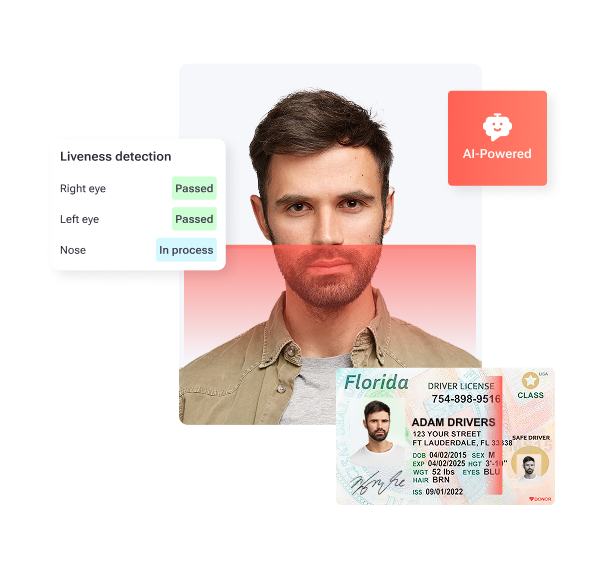
Fraud prevention extends beyond financial controls. Associations that screen residents with biometric identity verification, maintain centralized audit-ready lease records, and operate structured onboarding workflows reduce the operational blind spots that fraudsters exploit. TenantEvaluation’s IDVerify provides AI-powered liveness detection, government ID validation, and biometric facial matching directly inside the screening workflow. Lease Tracking connects resident onboarding, unit data, approvals, and lease documentation into one centralized, real-time, audit-ready platform, which replaces spreadsheets and scattered email chains from application to occupancy.

Frequently Asked Questions
What transition controls should a Florida HOA implement when a board officer or management company changes?
A written transition checklist should be adopted as board policy and completed at every turnover event. The checklist should cover verification that reserve funds match the most recent reserve study balance and receipt of complete financial records for the full prior fiscal year. It should also confirm all active vendor contracts, terms, and expiration dates, review assessment collection status and outstanding delinquencies, and confirm insurance coverage adequacy including fidelity bond. The checklist should verify that all required state and federal tax returns were filed and that all financial-system access credentials for departing personnel were revoked within 24 hours. The outgoing officer or manager should certify completion of each item in writing, and the certification should be recorded in meeting minutes and retained as an official association record.
How should a Florida HOA size its fidelity bond?
Industry practice recommends sizing the fidelity bond at a minimum of three months of total annual assessments plus the current reserve fund balance. This approach helps ensure that a single fraud event affecting both operating and reserve funds does not exceed coverage limits. The bond should cover all officers, directors, employees, and contracted management company personnel. Coverage limits should be reviewed annually when the budget is adopted, and any significant increase in assessments or reserve balances should trigger a mid-year coverage review. Associations should also confirm that the management company carries its own separate fidelity coverage and obtain a certificate of insurance as evidence.
How does a Florida HOA board formally adopt these internal controls as policy?
Adoption requires a recorded board vote at a properly noticed open meeting. The board should present the written policy document, incorporating the controls above, as an agenda item, move to adopt it by resolution, record the vote in the meeting minutes, and retain the signed resolution in the official records. The adopted policy should be posted to the association’s website or member portal as required by Florida Statute 720.303(4)(b) for associations with 100 or more parcels. Annual review of the policy should appear as a standing agenda item, with any amendments adopted by the same resolution process. Boards should also ensure that the management company acknowledges the policy in writing and agrees to operate within its requirements.
How does resident screening connect to HOA fraud prevention?
Resident screening serves as the first line of defense against fraudulent occupants entering a community. Associations that rely on document uploads alone face growing exposure to stolen IDs, synthetic identities, and impersonation attempts. Biometric identity verification, such as TenantEvaluation’s IDVerify+, which combines government ID validation, AI-powered liveness detection, and facial biometric matching, confirms that the applicant is a real, present individual matched to their identification before any approval decision. Centralized lease tracking further supports fraud prevention by maintaining audit-ready records that connect applications, approvals, and active leases in one searchable platform, which removes the operational blind spots that fraudulent occupancy arrangements depend on.
Conclusion: Turning Fraud Awareness into HOA Policy
Florida HOAs in 2026 operate in a fraud environment shaped by AI-enabled impersonation, rising wire-transfer schemes, and a legislative framework that now mandates audited financials for large associations, prohibits debit cards, and requires board director financial education. The 12 controls in this guide, spanning segregation of duties, tiered dual authorization, debit-card prohibition, vendor verification, separate accounts, monthly reconciliation, independent audits, fidelity bonding, access controls, transition checklists, conflict-of-interest disclosure, and director education, address every vertex of the fraud triangle and satisfy the requirements of Florida Statutes 720.303(7), 720.3033, and HB 1203.
Operational control does not stop at the financial ledger. Associations that pair these financial controls with structured, biometric-backed resident screening and centralized lease tracking close the full loop on fraud exposure, from who enters the community to how every dollar moves through it. TenantEvaluation is built specifically for Florida community associations and management companies, with FCRA compliance as the foundation rather than an afterthought.
