ACH Fraud Prevention Best Practices for Florida HOAs
Written by: Luis Teran, Co-founder, CEO, TenantEvaluation | Last updated: July 15, 2026
Key Takeaways for Florida HOA ACH Fraud Protection
Florida HOAs must follow Nacha’s 2026 Risk Management Rules, which require written, risk-based ACH fraud monitoring for all non-consumer originators, regardless of transaction volume.
Associations must maintain fidelity bond coverage under Florida Statute 720.3033(5) equal to the maximum funds in custody, and obtain separate endorsements for wire fraud and phishing attacks.
ACH debit blocks on reserve accounts, filters on operating accounts, and a 48-hour out-of-band verification process for vendor bank changes form core controls that prevent unauthorized transactions.
Board-approved ACH policies should define dual authorization thresholds, vendor onboarding protocols, annual reviews, and seven-year record retention to satisfy Nacha and Florida statutory requirements.
TenantEvaluation strengthens ACH fraud prevention by providing biometric identity verification at resident onboarding, helping Florida HOAs reduce impersonation and synthetic identity risks—see how biometric screening protects your community.
The rules apply to non-consumer Originators that use the ACH Network to send or receive payments. This category includes Florida HOAs and condominium associations that originate assessment debits or vendor payments.
Key 2026 Nacha and Florida Statute Control Requirements
The table below maps primary banking controls to their governing authority, applicable statute or rule, and the association role responsible for implementation.
ACH debit blocks and filters allow community associations to block unauthorized debits or restrict transactions to only preapproved vendors, which helps prevent fraudulent withdrawals. The following steps build a debit block framework that aligns with Nacha expectations.
Enforce a 48-hour waiting period for vendor changes. No change to a vendor’s ACH destination account is processed until out-of-band verification is complete and a second authorized officer approves the update in writing. This delay creates time to catch impersonation attempts.
Document and review annually. Schedule the annual review required under the 2026 Nacha rules described earlier, and use this debit block audit as the starting point for that review.
Florida Statute 720 Controls That Support ACH Security
Every request to change a vendor’s ACH destination account should trigger an out-of-band callback before the change is entered into the vendor master file. The following script works well for CAMs and board treasurers:
“Hello, this is [Name] calling from [Association Name]. I am calling to verify a bank account change request we received for your company. I am using the phone number we have on file from your original contract — [number]. Can you confirm: (1) your company submitted this change request, (2) the new routing number ending in [last 4], and (3) the new account number ending in [last 4]? I will also need the name of the person at your organization who authorized this change. We have a 48-hour processing hold on all account updates, so the change will take effect on [date]. I will send a written confirmation to [email on file] once it is processed.”
A board-adopted ACH policy should address the following elements at minimum:
Purpose and scope, which identifies all accounts, payment types, and personnel covered by the policy.
Authorized signatories and access tiers, which list individuals with ACH origination, approval, and release authority, with least-privilege access assignments.
Dual authorization thresholds, which specify dollar thresholds requiring two-person approval, and require dual approval for all new payees regardless of amount.
Debit block and filter configuration, which documents which accounts carry full blocks, which carry filters, and the approved originator list with Company IDs.
Vendor onboarding and bank change protocol, which incorporates the 48-hour waiting period, out-of-band callback requirement, and documentation standard.
Fidelity bond compliance, which confirms the association maintains the statutory coverage described earlier and names all covered persons on the bond schedule.
Incident response procedures, which reference the checklist below and designate the primary contact at the association’s financial institution.
Annual review requirement, which aligns with Nacha’s 2026 mandate for documented annual review of fraud monitoring controls.
Record retention, which specifies seven-year retention for ACH authorizations, verification records, and bank statements per Chapter 720 official records requirements.
Incident-Response Checklist for ACH Fraud Events
Even with preventive controls in place, associations should prepare for a successful attack. The incident-response checklist below supports the policy framework described above and should be rehearsed annually with all authorized signatories.
Upon discovering a suspected unauthorized ACH transaction or vendor bank change fraud, the board treasurer or CAM should take the following steps immediately:
Contact the association’s bank fraud line within 24 hours. Unauthorized ACH debits targeting community associations often require reporting within 24 hours to be recoverable.
Request a hold or recall on the transaction and ask the bank to initiate an R06 or R17 return if applicable.
Freeze access credentials for any compromised email account or banking portal login.
Preserve all emails, wire instructions, and communications related to the suspected fraud without alteration.
Notify the association’s fidelity bond or crime insurance carrier and open a claim.
File a complaint with the FBI’s Internet Crime Complaint Center (IC3) and, if applicable, submit a Suspicious Activity Report through FinCEN.
Notify the board president and legal counsel, and document all actions taken with timestamps.
Conduct a post-incident review to identify the control gap and update the ACH policy and vendor master file accordingly.
How TenantEvaluation Supports ACH Fraud Prevention
ACH fraud in Florida HOAs frequently starts at the resident onboarding stage. When a fraudulent resident gains occupancy using a stolen or synthetic identity, they can later impersonate that resident to redirect assessment payments, submit fake vendor invoices for property damage claims, or pressure management into changing payment details. Unverified identities at intake create the foundation for payment fraud downstream, so biometric identity confirmation should serve as the first layer of defense, not the last.
ID Verify
TenantEvaluation is built for community associations and management companies, with FCRA compliance as the foundation rather than an afterthought. Serving more than 5,000 communities and processing over 100,000 applications annually, TenantEvaluation closes the identity verification gap that manual screening leaves open.
QuickApprove: Fast, Informed Decisions at the Click of a Button
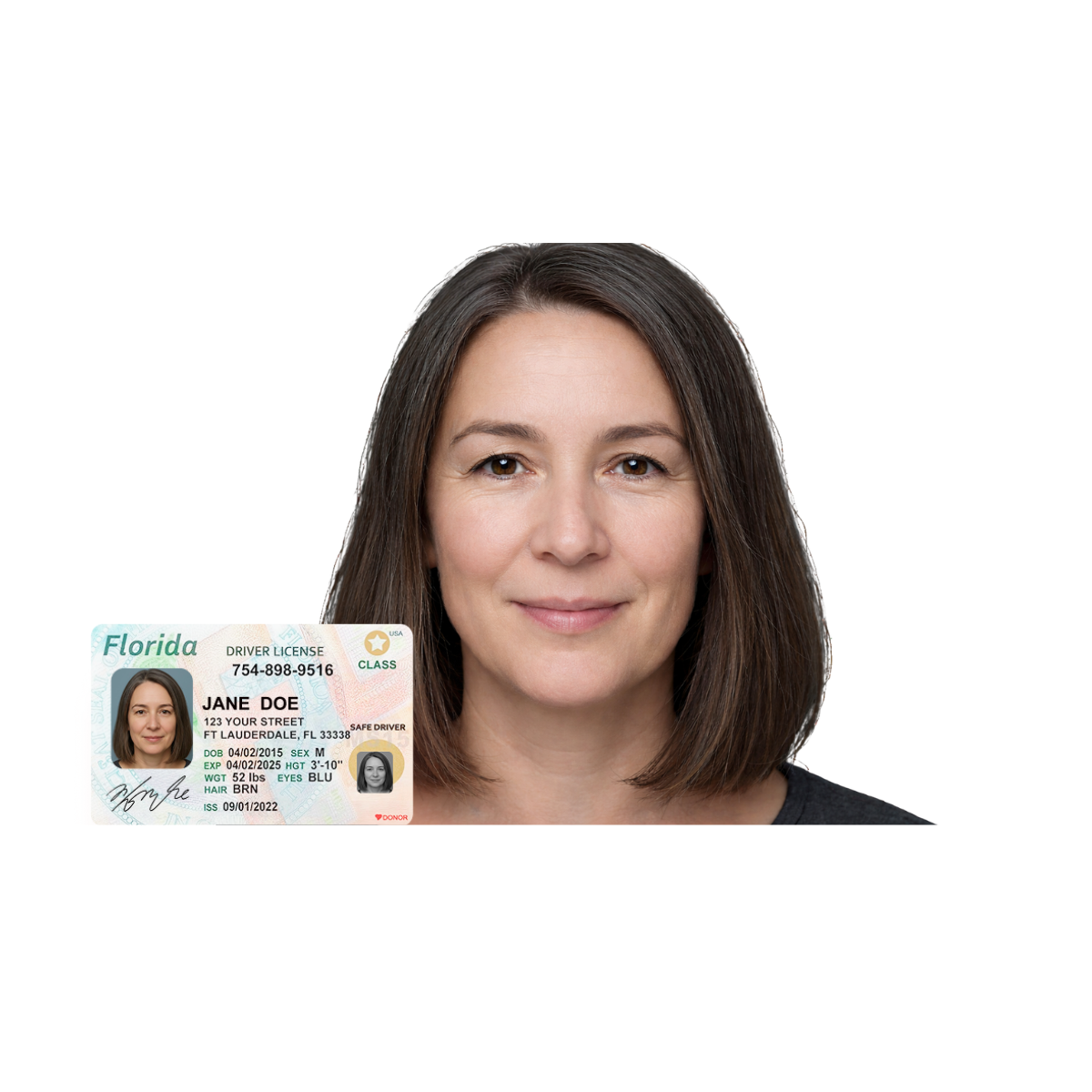
IDVerify embeds biometric identity verification directly into the resident screening workflow, combining government-issued ID validation, AI-powered liveness detection, and biometric selfie-to-ID facial comparison. This approach moves communities from document-based review to biometric-confirmed identity verification, and confirms that the person submitting an application is physically present and matched to their identification before any approval decision. For board treasurers and CAMs, IDVerify results appear directly within the screening report, including ID authenticity confirmation, liveness verification status, and biometric match result, creating an audit-defensible record that supports FCRA-aligned workflows.
+55 Communities
QuickApprove accelerates resident approvals inside one connected platform, replacing email chains and spreadsheets with real-time application tracking, automated communication support, customized approval letters, and a board-ready approval process. Faster, cleaner approvals narrow the window during which unverified applicants can exploit manual handoff gaps.
For age-restricted communities, 55+ Communities Verification standardizes how age-restricted application requirements are handled across applications, reduces manual work, improves documentation consistency, and strengthens internal processes for Florida condos and HOAs that manage 55+ communities.
TenantEvaluation’s revenue-sharing model allows communities to generate income from application fees with no upfront platform cost. The platform’s PCI Level 1 compliance, end-to-end encryption, and automatic redaction of sensitive data reduce the liability exposure that manual document handling creates.
What is the difference between an ACH debit block and an ACH filter?
An ACH debit block instructs the bank to reject all incoming ACH debit transactions from a designated account with no exceptions. An ACH filter, sometimes called Positive Pay for ACH, allows the account holder to pre-authorize specific vendors by their ACH Company ID, so only transactions from those approved originators are processed. All other debit attempts are flagged or returned. Florida HOAs typically apply a full debit block to reserve accounts and ACH filters to operating accounts, and they maintain a current approved originator list that is reviewed at least annually under the 2026 Nacha requirements.
Who is responsible for ACH fraud compliance under Florida Chapters 718 and 720?
Under both Chapter 718 (condominiums) and Chapter 720 (HOAs), the board of directors holds fiduciary responsibility for association funds. This responsibility includes maintaining adequate fidelity bond coverage under FS 720.3033(5) and FS 718.111(11)(h), keeping official financial records available for inspection, and ensuring that payment controls meet the association’s governing documents and applicable statutes. Community Association Managers (CAMs) share operational responsibility for implementing controls such as dual authorization, vendor verification protocols, and ACH block configurations, but the board cannot delegate its fiduciary duty. Under the 2026 Nacha rules, the association as a non-consumer Originator is directly responsible for maintaining documented, risk-based fraud monitoring, and this obligation cannot be fully outsourced to a bank or payment processor.
When do the 2026 Nacha fraud monitoring rules apply to a small Florida HOA?
Phase 2 of the 2026 Nacha Risk Management Rules, effective June 22, 2026, eliminates the prior 6-million-transaction volume threshold. Every non-consumer Originator, including a small self-managed Florida HOA that originates even a single ACH payroll or vendor payment, must maintain documented, risk-based fraud monitoring processes and procedures. The rules do not require any specific technology or transaction-by-transaction review. They require that controls be proportionate to the association’s ACH usage and risk level, documented in writing, and reviewed at least annually. A small HOA that originates only a handful of vendor payments per month can satisfy the requirement with straightforward controls such as dual authorization, a vendor bank change verification protocol, and an annual policy review.
Does TenantEvaluation’s IDVerify+ replace the fidelity bond requirement under Florida law?
No. IDVerify+ is a biometric identity verification layer embedded in the resident screening and onboarding workflow. It confirms that applicants are who they claim to be before they enter a community, which reduces the risk of impersonation, synthetic identity fraud, and unauthorized occupancy that can create downstream financial exposure for the association. The fidelity bond requirement under FS 720.3033(5) and FS 718.111(11)(h) is a separate statutory obligation that covers theft, embezzlement, and fraudulent transfers by persons who control or disburse association funds. Both controls serve complementary roles. IDVerify+ addresses identity fraud at the resident intake stage, while the fidelity bond provides financial recovery coverage if an insider or management agent misappropriates funds. Florida HOAs and condos should maintain both.
Conclusion: Building a Layered ACH Fraud Defense
ACH fraud prevention best practices for Florida HOAs require a layered approach that combines statutory and operational controls. Associations need statutory fidelity bond coverage under FS 720.3033(5) and FS 718.111(11)(h), documented risk-based monitoring aligned with the 2026 Nacha Phase 1 and Phase 2 mandates, debit blocks and Positive Pay filters on all association accounts, dual authorization and out-of-band vendor verification protocols, and biometric identity confirmation at the resident onboarding stage. The AFP’s 2025 Payments Fraud and Control Survey found that 79% of organizations experienced attempted or actual payments fraud in 2024. Florida associations that rely on manual processes face compounding exposure as fraudsters adopt AI-generated voice calls and deepfake communications to bypass traditional controls.
TenantEvaluation provides the identity verification infrastructure that closes the resident onboarding gap and moves communities from document-based validation to biometric-confirmed identity verification inside one FCRA-compliant platform built for Florida HOAs and condos.