Written by: Luis Teran, Co-founder, CEO, TenantEvaluation | Last updated: June 25, 2026
Key Takeaways
- Florida community associations must follow a precise two-step FCRA notice sequence, with a pre-adverse action notice, a waiting period, and then a final adverse action notice before denying any residency application based on a background check.
- Manual processes that rely on email chains, spreadsheets, and calendar reminders create timing, documentation, and oversight gaps that increase FCRA liability for associations.
- Automated workflows with system-triggered notices, configurable waiting-period timers, structured dispute routing, and centralized audit trails close compliance gaps and ensure every required step runs correctly.
- Clear governance policies that assign responsibility for each step to the association, board, CAM, applicant, and CRA, combined with board dashboard visibility, prevent premature decisions and support audit readiness.
- TenantEvaluation automates the entire adverse-action workflow for Florida community associations; see how the platform keeps your association compliant.
7-Step Integration Checklist for FCRA-Compliant Workflows
- Define screening criteria and decision rules in writing, aligned with the association’s governing documents and Florida statutes, before the association accepts any application.
- Configure the screening platform to flag adverse results automatically and route them to the designated compliance workflow instead of a general inbox.
- Automate pre-adverse action notice generation so the system produces the required notice, attaches the consumer report summary, and delivers it to the applicant without manual drafting.
- Start a configurable waiting-period timer immediately after the pre-adverse action notice is delivered, with the timer visible on the board and manager dashboard.
- Route dispute submissions to a defined review queue with timestamped receipt confirmation and a documented response path.
- Automate final adverse action notice generation only after the waiting period expires and no dispute has changed the decision, with all required disclosures included.
- Retain all records, including notices, timestamps, dispute communications, and decision rationale, in a searchable, audit-ready digital trail for the minimum required retention period.
Pre-Adverse Action Notice Phase Responsibilities
The FTC’s guidance on using consumer reports explains that in employment decisions, users must provide a copy of the report and a description of FCRA rights before taking adverse action, while some other adverse actions require only a final notice. For Florida community associations, this phase involves several parties, each with specific process responsibilities. The specific contents required in each notice are detailed in the Key Requirements section below.
Association Responsibilities
The association, as the entity making the residency decision, holds the legal obligation to issue the pre-adverse action notice. The association must ensure the notice is delivered before anyone communicates a denial decision to the applicant or their realtor.
Board Responsibilities
The board must delay any vote to deny an application until the pre-adverse action notice has been issued and the waiting period has elapsed. A board dashboard should display a clear status indicator that shows whether the waiting period is active, which helps prevent premature votes.
Manager (CAM) Responsibilities
The CAM coordinates notice delivery, confirms that the applicant’s contact information is current, and documents the delivery method and timestamp. In automated systems, the CAM verifies that the system trigger fired correctly and that the notice reached the applicant.
Applicant Responsibilities
The applicant has the right to dispute the accuracy or completeness of the consumer report during the waiting period. The pre-adverse action notice must inform the applicant of this right and direct them to the consumer reporting agency (CRA) that furnished the report.
Third-Party (CRA) Responsibilities
The CRA that provided the background check report must be identified in the notice. The CRA handles disputes submitted directly to it and maintains the applicant’s right to a free file disclosure.
Waiting Period and System Triggers in Practice
The FCRA does not specify an exact number of days for the waiting period between the pre-adverse action notice and the final adverse action notice. FTC guidance and established practice treat a reasonable period, commonly five business days, as the minimum necessary to give the applicant a meaningful opportunity to dispute the report. Florida associations should configure their systems to reflect this standard and document the rationale for the chosen interval in their screening policy.
Configurable waiting-period timers support compliance in three concrete ways. They prevent the board from receiving a final denial recommendation before the period expires. They create a timestamped record of when the period began and ended. They also trigger the next workflow step automatically, either routing a dispute for review or generating the final adverse action notice, without requiring manual intervention from the CAM.
Board dashboard visibility during the waiting period has operational impact. Boards that can see the timer status in real time are less likely to request premature action. The dashboard record itself contributes to the audit trail that shows the association followed the required sequence.
Final Adverse Action Notice Phase Responsibilities
Once the waiting period expires and no dispute has changed the decision, the system should generate the final adverse action notice and deliver it to the applicant. The specific contents required in the final notice appear in the Key Requirements section below, which serves as the definitive checklist.
Permissible-purpose controls at this stage ensure that the consumer report data is used only for the stated screening purpose and that access to the full report remains restricted to authorized personnel. Timestamped audit trails must capture the exact moment the final notice was generated, the delivery method, and confirmation of receipt where available.
Defining FCRA Two-Step Notice Responsibilities
The two-step sequence, with a pre-adverse action notice, a waiting period, and then a final adverse action notice, applies whenever a consumer report influences an adverse residency decision. Florida community associations must map each step to a named responsible party in their internal screening policy.
Association
The association owns the decision and the legal obligation to issue both notices. It must maintain records that demonstrate compliance for the duration of the required retention period.
Board
The board must not finalize a denial vote until the waiting period has elapsed. It should receive notice status updates through a dedicated dashboard instead of through informal communication channels.
Manager (CAM)
The CAM executes or oversees the notice workflow, confirms system triggers, and escalates disputes to the appropriate review queue.
Applicant
The applicant receives both notices, retains the right to dispute the consumer report, and is entitled to the CRA’s contact information in both notices.
Third Party (CRA)
The CRA furnishes the consumer report under permissible purpose, handles disputes submitted directly, and provides the applicant with their rights summary.
Key Requirements for Compliant Notices and Records
- Pre-adverse action notice must include: a copy of the consumer report, a copy of the FCRA Summary of Consumer Rights, the CRA’s name, address, and phone number, and a statement that the CRA did not make the decision.
- Final adverse action notice must include: the CRA’s name, address, and phone number, a statement that the CRA did not make the decision, the applicant’s right to a free report within 60 days, and the right to dispute inaccurate or incomplete information.
- Permissible-purpose controls: Access to consumer report data must be restricted to individuals with a documented permissible purpose. Screening platforms should enforce role-based access controls.
- Record retention: Maintaining records helps demonstrate compliance with the FCRA. Federal regulations require retaining most adverse action records for 25 months under ECOA for consumer credit transactions, though associations should confirm applicable state and local requirements with legal counsel.
Common Challenges in HOA Background-Check Workflows
Incomplete submissions. Applications that arrive without required documents delay the screening trigger, which in turn delays the adverse action clock. Smart form logic that rejects incomplete submissions at intake prevents this bottleneck.
Manual bottlenecks. When notice generation depends on a CAM drafting and sending emails, timing errors are common. A missed notice or a notice sent after a premature denial creates direct FCRA exposure.
Board-voting delays during waiting periods. Boards that are unaware of the active waiting period may request a denial vote before the period expires. Without a system-enforced hold, the CAM must manually communicate the restriction, which becomes unreliable at scale.
Florida timing considerations. Florida’s broader fair housing framework and local ordinances in jurisdictions such as Miami-Dade require associations to sequence screening decisions carefully. Associations should confirm with legal counsel whether any local ordinance affects the timing or content of adverse action notices for resident screening.
Best Practices for Governance and Workflow Clarity
Governance clarity starts with a written screening policy that names the responsible party for each step of the adverse action sequence, specifies the waiting-period duration the association has adopted, and documents the dispute routing path. Because FCRA guidance and Florida law evolve, this policy should be reviewed annually to ensure it remains current. When regulatory changes occur, the policy must be updated immediately so the association does not operate under outdated procedures that fail to meet legal requirements.
Workflow clarity requires that every party, including board members, CAMs, and applicants, receives information through the system instead of through informal channels. Automated notifications replace email chains and reduce the risk of miscommunication.
Documentation standards should require that every notice, timer event, dispute submission, and decision is captured with a timestamp and stored in a searchable digital record. Paper records and shared drives rarely meet this standard reliably.
For associations that need to accelerate board review without sacrificing compliance, QuickApprove provides an accelerated approval workflow with a board-ready dashboard that gives board members direct, real-time access to application status and a structured voting panel, which keeps approvals moving while preserving board oversight.

To understand why automation matters for FCRA compliance, boards and CAMs benefit from seeing how manual and automated workflows differ at the specific points where manual processes most often fail.
Manual vs. Automated Adverse Action Workflow: Comparison
The following table shows how automation addresses the four most common compliance failure points in manual workflows: notice timing, waiting-period enforcement, dispute tracking, and audit trail completeness.
| Metric | Manual Workflow | Automated Workflow | Risk Implication |
|---|---|---|---|
| Notice generation time | Hours to days, dependent on CAM availability | System-triggered within minutes of adverse result | Delay in manual notice increases FCRA exposure window |
| Waiting-period enforcement | Calendar reminders, manual tracking | Configurable timer with board dashboard visibility | Manual tracking errors can result in premature final notices |
| Dispute routing | Email inbox, no structured queue | Timestamped queue with documented response path | Untracked disputes create audit gaps |
| Audit trail completeness | Scattered across email, folders, and spreadsheets | Centralized, timestamped, searchable digital record | Incomplete trails undermine compliance defense |
The table above highlights outcome differences between manual and automated workflows. The following description walks through the automated sequence step by step and shows how each system trigger removes the manual failure points identified in the table.
Automated workflow diagram (textual description): When a background check returns an adverse result, the system immediately generates a pre-adverse action notice that contains the consumer report and FCRA rights summary, delivers it to the applicant through the configured channel, and starts a configurable waiting-period timer. The board dashboard displays the active timer status, which prevents premature voting. If a dispute is submitted, the system routes it to a timestamped review queue. When the timer expires and the decision remains unchanged, the system generates the final adverse action notice with all required disclosures, timestamps delivery, and archives all records in the audit trail.
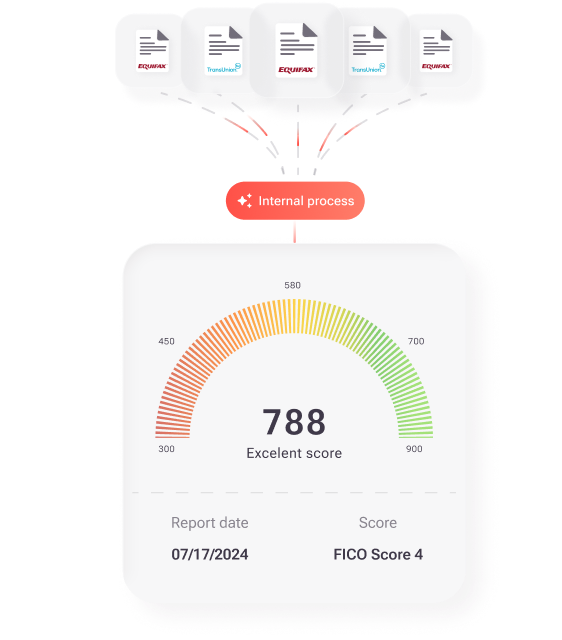
How TenantEvaluation Automates the Entire Adverse-Action Workflow
TenantEvaluation is built specifically for community associations and management companies, with FCRA compliance as the foundation, not an afterthought. Every requirement described in this guide maps directly to a feature inside SafeCheck+: system-triggered pre-adverse and final adverse action notices, configurable waiting-period timers with board dashboard visibility, structured dispute routing with timestamped records, and a complete audit trail stored in a searchable, audit-ready format. As a direct reseller of TransUnion and Equifax data operating under strict bureau rules, TenantEvaluation maintains clear separation between data provision and association decision-making, which creates a structural compliance control that generic screening platforms do not match. For Florida CAMs and boards managing 100 or 10,000 applications annually, this structure means the two-step notice sequence runs correctly every time without manual intervention, and every record needed to defend a compliance decision remains available on demand.
See how SafeCheck+ handles the full adverse action workflow for your community association.
Frequently Asked Questions
What is the FCRA two-step adverse action notice sequence for Florida community associations?
The FCRA two-step sequence requires that before a community association takes adverse action based on a consumer report, such as denying a residency application, it must first issue a pre-adverse action notice to the applicant. This notice must include a copy of the consumer report and the FCRA Summary of Consumer Rights. The association must then allow a reasonable waiting period before issuing the final adverse action notice, which must identify the consumer reporting agency, state that the agency did not make the decision, and inform the applicant of their right to a free copy of the report and the right to dispute inaccurate information. Both steps are required, and skipping or combining them creates FCRA liability for the association.
How long must a Florida HOA or condo association wait between the pre-adverse action notice and the final adverse action notice?
As discussed in the Waiting Period section, the FCRA does not prescribe a specific number of days, but five business days functions as the established minimum based on FTC guidance. Florida community associations should document their chosen waiting period in their written screening policy and confirm the appropriateness of that interval with legal counsel, particularly if local ordinances in their jurisdiction impose additional requirements.
Who is responsible for issuing adverse action notices in a Florida community association, the board, the CAM, or the management company?
The association, as the entity making the residency decision, bears the legal obligation to issue both adverse action notices. In practice, the CAM or management company typically executes the notice workflow on the association’s behalf. The board must not finalize a denial vote until the waiting period has elapsed. Clear written policies should name the responsible party for each step, and automated platforms should enforce the sequence so that no step depends on a single individual’s availability or memory.
What records must a Florida community association retain to demonstrate FCRA adverse action compliance?
Associations should retain copies of both notices, the consumer report that was the basis for the adverse action, the timestamp of each notice delivery, any dispute submissions received and the association’s response, and documentation of the board’s decision and the date it was made. As noted in the Key Requirements section above, the baseline federal retention period is 25 months under ECOA, though associations should confirm applicable requirements with legal counsel. Records should be stored in a searchable digital format that allows rapid retrieval in the event of a regulatory inquiry or legal challenge.
Does Florida have any state-specific rules that affect the adverse action process for resident screening in HOAs and condos?
Florida’s fair housing statutes and local ordinances in certain jurisdictions, including Miami-Dade County, impose requirements that interact with the FCRA adverse action sequence. Associations operating in jurisdictions with local fair chance or screening ordinances should confirm with legal counsel whether those ordinances affect the timing, content, or sequencing of adverse action notices for resident applications. Florida community associations are also subject to the Florida Condominium Act and the Florida Homeowners’ Association Act, which govern screening criteria and approval processes independently of the FCRA. Compliance with the FCRA does not substitute for compliance with these state and local frameworks.
