Written by: Luis Teran, Co-founder, CEO, TenantEvaluation | Last updated: August 17, 2026
Key Takeaways for Florida Condo Rental Workflows
- Manual rental application handling creates delays and compliance risks for Florida condo associations. TenantEvaluation replaces paper and email with smart online forms that enforce Florida-specific eligibility rules before screening begins.
- Board approval delays shrink when boards use TenantEvaluation’s QuickApprove dashboard, which provides AI summaries, structured voting, and real-time tracking for board members and CAMs.
- Leasing caps and amendment tracking are configured inside TenantEvaluation at the unit level, automatically verifying owner eligibility against recorded governing documents and Florida Statutes section 718.110(13).
- 55+ communities and FCRA compliance are supported through standardized documentation workflows and biometric ID verification that align with Florida’s data-security requirements while maintaining audit-ready records.
- Lease lifecycle visibility and payment collection sit in one platform inside TenantEvaluation, giving associations centralized tracking from application to occupancy. See how TenantEvaluation streamlines every Florida condo rental workflow by scheduling a demo today.
1. Manual Application Handling vs. Automated Intake for Florida Condos
Manual application intake remains the single largest source of administrative burden for Community Association Managers (CAMs) in Florida. Paper forms, email attachments, and phone follow-ups create incomplete submissions, missed deadlines, and data-entry errors that delay approvals and expose associations to liability. Generic landlord platforms designed for multifamily rentals do not account for the dual-gate structure required by Florida condo law, where unit eligibility must be confirmed before occupant screening can proceed.
TenantEvaluation replaces this fragmented intake with a fully online application platform accessible via web and mobile. Smart form logic dynamically adjusts required fields based on applicant type, such as tenant, purchaser, or additional adult resident, and automatically rejects incomplete submissions before they reach the CAM’s queue. One Florida-based management company reported freeing up 50 hours of staff time per day after switching to TenantEvaluation, with processing time cut by 50% and total annual savings of $240,000.
Platforms such as AppFolio and RealPage provide general property management intake but lack the Florida-specific governing-document verification layer and board voting dashboard that Chapter 718 workflows require. ApplyCheck and Verify Screening Solutions focus narrowly on background checks without automating document collection, redaction, or board communication.
2. Board Voting Delays and the QuickApprove Dashboard
Automated intake solves the submission problem and moves complete applications into review, which exposes the next bottleneck: board approval delays. Board approval delays are a structural problem in Florida condo associations. Without a dedicated review interface, board members receive applications through email chains, vote informally, and leave no auditable record of the decision. This pattern creates compliance exposure and slows approvals during peak leasing seasons.
TenantEvaluation’s QuickApprove accelerated approval workflow addresses this directly by giving board members a dedicated panel with AI-generated applicant summaries, a structured voting workflow, and real-time application tracking inside one connected platform. Because CAMs can see application status in real time, they can trigger automated communication and generate customized approval letters without leaving TenantEvaluation. This integration is especially valuable during high-volume seasons and in communities with complex onboarding requirements, where QuickApprove maintains board oversight and full screening while reducing bottlenecks.

In 2026, communities increasingly expect AI-powered workflows and modern interfaces that volunteer board members can use confidently, according to platform analysis from ManageCasa. TenantEvaluation’s board dashboard is a capability that competitors including Buildium, Vantaca, and generic screening vendors do not replicate.
3. Leasing Cap and Amendment Tracking Inside the Approval Workflow
Once boards have a structured way to review applications, associations still need to confirm whether a unit is even eligible to lease under current caps and amendments. Florida condominium leasing caps are among the most legally complex elements of condo governance. Under Florida Statutes section 718.110(13), amendments that prohibit rentals, alter lease duration, or limit rental frequency apply only to owners who consent or who acquire title after the amendment’s effective date. A proper workflow must verify the owner’s acquisition date against every recorded amendment before confirming eligibility.
Generic HOA tools do not track amendment effective dates or waiting-list queue priority at the unit level. TenantEvaluation configures each community’s governing documents, including the declaration, recorded amendments, bylaws, current rules, and fee schedule, directly into the platform. The approval file then retains the controlling provision, cap or queue status, waiting-period calculation, and amendment dates as audit-ready digital records. This structure replaces scattered folders and spreadsheets that create compliance blind spots.
4. 55+ Communities Verification and Consistent Documentation
Many Florida condos operate as 55+ communities, so the application workflow must support age-restricted documentation without turning CAMs into legal reviewers. Age-restricted communities operating under the Housing for Older Persons Act face documentation requirements that generic rental application platforms are not designed to handle. Manual processes that rely on emails, PDFs, and follow-up phone calls produce inconsistent records and create risk exposure in audits or disputes.
TenantEvaluation’s 55+ Communities Verification is a built-in capability that standardizes how age-restricted application requirements are handled across applications. It reduces manual work, supports documentation consistency, improves operational efficiency, and strengthens internal processes for Florida condos and HOAs. This capability provides workflow standardization and documentation-first onboarding designed for Community Association Managers, not a legal verification system and not a guarantee of compliance. CAMs and boards gain a more structured, scalable process for handling 55+ application requirements while still relying on legal guidance for interpretation.

5. Biometric Identity Verification with IDVerify+
After eligibility and age documentation are confirmed, associations still need to know that each applicant is who they claim to be. Identity fraud is increasing across condo and HOA communities. Traditional screening that relies on uploaded document images cannot reliably detect stolen IDs, synthetic identities, or impersonation attempts. The CFPB’s November 2022 analysis of tenant-screening complaints identified more than 24,000 complaints in its reviewed dataset, including over 16,000 involving incorrect information in screening reports, which underscores the systemic risk of document-only verification.
TenantEvaluation’s IDVerify+ embeds automated KYC verification directly inside the screening workflow. It combines government-issued ID validation, AI-powered liveness detection, facial landmark recognition, and biometric selfie-to-ID comparison inside TenantEvaluation, without external portals or workflow disruption. CAMs see ID authenticity confirmation, liveness verification status, biometric match results, and a redacted ID copy inside the screening report. IDVerify+ can be enabled per condo or HOA and configured per property portfolio.
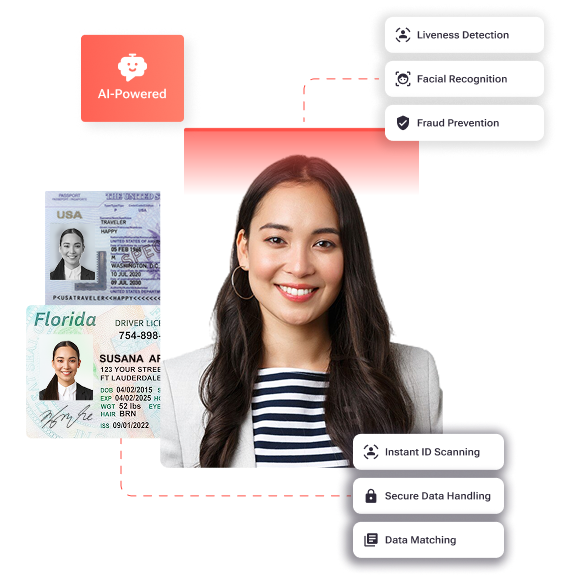
Florida’s data-security framework reinforces the need for this layer. The Florida Information Protection Act (FIPA, Fla. Stat. 501.171) requires covered entities to implement reasonable measures to protect personal information, including biometric records when combined with other identifiers. The FDBR requires prior consent for the sale of sensitive personal data and does not specify civil penalties of $50,000 or $150,000 for minors in the available evidence. IDVerify+ is designed with consent, retention, and access controls aligned to these requirements.
6. Lease Lifecycle Visibility and Real-Time Tracking
Once applicants are approved and identities verified, associations must keep leases organized for the full term of occupancy. Fragmented lease management is a persistent operational problem for Florida condo associations. Missing lease copies, manual expiration tracking, disconnected spreadsheets, and no direct connection between applications and active leases create compliance risk and slow down every team involved. Property teams using manual compliance tracking report spending more time on compliance activities than teams with centralized compliance systems.
TenantEvaluation’s Lease Tracking delivers centralized, real-time lease visibility and lifecycle control from application to occupancy. It connects resident onboarding, unit data, approvals, and lease documentation into one streamlined workflow inside TenantEvaluation. CAMs and boards gain real-time lease status visibility, including active, pending, expired, or missing, automated lease document collection during onboarding, unit-level tracking tied to occupancy records, and a searchable digital history of lease records and document trails. Audit-ready digital lease records replace spreadsheets and scattered email chains.
Florida Statutes section 718.111 identifies the declaration, amendments, bylaws, articles, current rules, minutes, and question-and-answer sheet as association official records that must be available for owner inspection, with qualifying associations of at least 25 units required to post specified records online. Lease Tracking supports this operational requirement by keeping every document organized, searchable, and audit-ready.
7. Connected Payment Collection with TEpayments by Zinc
Lease tracking provides visibility into occupancy, but associations still need a reliable way to collect the fees and deposits tied to each lease. Payment collection separated from resident onboarding creates a predictable set of problems. When payment sits outside the onboarding workflow, managers must chase confirmations by email and phone because there is no automated record. This pattern forces fees and deposits into spreadsheets, which leaves applicants unsure what to pay and when. Boards then have limited visibility into where funds go or whether they have been collected at all.
TEpayments by Zinc is a connected payment workflow inside TenantEvaluation that collects application fees, deposits, and other required resident payments within the onboarding process associations already use. Each association defines what is collected and at which stage, so the capability adapts to the property’s process rather than forcing a universal sequence. Payments go directly from the applicant to the association’s designated account, and TenantEvaluation never holds the funds. Boards receive traceable records and operational clarity, while applicants receive clear instructions inside the application itself.
TenantEvaluation’s revenue-sharing model means the platform can function as a cost-neutral or revenue-generating solution. The company has already generated $150 million for communities across its 5,000+ association client base.
8. FCRA-Compliant Screening and Audit-Ready Records
Even with payments connected, Florida condo associations must still protect themselves through compliant screening and clear records. FCRA compliance is not optional for Florida condo associations conducting resident screening. In 2023, the FTC and CFPB announced a $15 million settlement with TransUnion over tenant-screening and credit-reporting violations involving inaccurate and incomplete eviction records. Associations using non-compliant screening vendors inherit that liability exposure.
TenantEvaluation is built specifically for community associations and management companies, with FCRA compliance as the foundation. It operates as a direct reseller of TransUnion and Equifax data accessed under strict bureau rules, with no gray-market or offshore data sources. The platform includes automated adverse action workflows, strict permissible purpose controls, clear separation between decision-making by the association and data provision by TenantEvaluation, and built-in audit trails for every application. The CFPB has stated that name-only matching fails the FCRA requirement for reasonable procedures to assure maximum possible accuracy. TenantEvaluation’s layered screening, including IDVerify+ biometric confirmation, addresses this requirement. Compliance software can help reduce compliance violations compared to manual processes.
Frequently Asked Questions
-
How does TenantEvaluation handle leasing caps and waiting-list workflows for Florida condo associations?
The platform verifies unit-level eligibility before screening begins by checking the owner’s acquisition date against every recorded amendment that affects leasing. If an amendment restricts rentals, the system confirms whether the owner consented or acquired title after the amendment’s effective date, consistent with Florida Statutes 718.110(13). This verification happens automatically, with the controlling provision, cap status, and amendment dates retained in the approval file as an audit-ready record.
How does TenantEvaluation support 55+ community application handling?
TenantEvaluation’s 55+ Communities Verification is a built-in capability that standardizes how age-restricted application requirements are handled across applications for Florida condos and HOAs. It reduces manual work, supports documentation consistency, and improves operational efficiency for Community Association Managers and boards. The capability creates a more structured process for collecting and organizing age-restricted documentation, reducing reliance on emails, PDFs, and manual follow-ups. It functions as a workflow standardization and documentation-first onboarding solution and does not replace legal guidance or guarantee compliance with any specific regulation.
What FCRA audit trail capabilities does TenantEvaluation provide?
TenantEvaluation maintains built-in audit trails for every application processed on the platform. As a direct reseller of TransUnion and Equifax data, it accesses credit information under strict bureau rules with regular compliance reviews and audits. The platform includes automated adverse action workflows, permissible purpose controls, and clear separation between the association’s decision-making role and TenantEvaluation’s data-provision role. Auto-redaction of sensitive personal information, PCI Level 1 compliance, and end-to-end encryption protect applicant data throughout the process. Every action taken on an application, including document submission, board vote, approval letter, and payment, is timestamped and retained as an auditable record.
How does the board dashboard work inside TenantEvaluation?
Board members access a dedicated panel inside TenantEvaluation through QuickApprove, TenantEvaluation’s accelerated approval workflow. Inside this panel, board members see pending applications, review AI-generated summaries, and cast votes to approve, deny, or request more information. All actions are timestamped and retained as part of the application’s audit trail. The dashboard replaces email chains and informal voting with a connected, board-ready approval process inside one platform, which gives boards clearer visibility into what needs attention while preserving oversight, compliance, and control.
Conclusion: Eight Connected Capabilities for Florida Condo Screening
Florida condominium associations face governance, compliance, and workflow requirements that generic rental application software does not address. The eight capabilities covered in this article represent the full scope of what a specialized platform must deliver in 2026.
- Automated intake that enforces Florida’s dual-gate eligibility structure
- A board voting dashboard with real-time visibility and audit-ready records
- Leasing cap and amendment tracking at the unit level
- Standardized 55+ documentation workflows built for Florida condos and HOAs
- Biometric identity verification that moves communities beyond document-only screening
- Centralized, real-time lease lifecycle visibility from application to occupancy
- A connected payment workflow that collects fees and deposits inside resident onboarding
- FCRA-compliant screening with direct credit bureau reseller relationships and built-in adverse action
TenantEvaluation is engineered specifically for Florida condo associations across all eight of these capabilities. With 5,000+ communities, approximately 100,000 applications processed annually, a 4.8/5 Google rating, and $150 million generated for communities, it serves as a proven compliance-first choice for CAMs, LCAMs, and board members across Miami, Fort Lauderdale, Palm Beach, Tampa, Orlando, and the rest of Florida.
