Written by: Luis Teran, Co-founder, CEO, TenantEvaluation | Last updated: June 24, 2026
Key Takeaways for Florida Associations
- Florida HOAs and condos face compliance, governance, and fraud-prevention challenges that generic landlord tools do not solve.
- FCRA compliance requires documented permissible purpose, automated adverse action notices, direct credit bureau access, and complete audit trails.
- Biometric identity verification and standardized 55+ age-restriction workflows reduce fraud exposure and audit risk beyond simple document uploads.
- Board-ready approval interfaces, centralized lease tracking, and revenue-sharing models improve operational efficiency and transparency for CAMs and associations.
- TenantEvaluation delivers an end-to-end FCRA-compliant platform purpose-built for Florida associations. Request a walkthrough to see how it streamlines screening and onboarding.
Why Automated FCRA-Compliant Tenant Screening Matters in Florida
FCRA rules govern how consumer report data, including credit, criminal background, and eviction history, is collected, used, and disclosed. For Florida HOAs and condos, every screening decision creates federal compliance obligations. Associations must establish permissible purpose before pulling a report, issue adverse action notices when decisions are unfavorable, and handle applicant data securely from start to finish.
Manual, paper-based processes make consistent FCRA adherence difficult. Documents pass through multiple hands, audit trails stay incomplete, and adverse action workflows often remain informal or missing. Generic landlord platforms, built for individual rental units instead of association governance, lack board voting dashboards, association-specific document logic, and built-in adverse action automation that Florida community associations require.
Automated screening has become a structural requirement for associations that manage high application volumes. Associations use automation to maintain compliance, reduce liability, and deliver consistent resident onboarding at scale.
See how TenantEvaluation automates compliant screening for Florida associations.
Core Compliance Concepts for Florida Association Screening
FCRA – The Fair Credit Reporting Act is a federal law that regulates the collection, dissemination, and use of consumer credit information. It applies to any entity that uses consumer reports to make decisions about individuals, including community associations screening prospective residents.
Permissible Purpose – Under the FCRA, a consumer report may only be obtained for a legally recognized reason. For Florida HOAs and condos, the permissible purpose usually involves evaluating a prospective resident or tenant. Associations must obtain applicant consent before pulling any report, and that consent must be documented.
Adverse Action – When a community association denies, conditions, or takes any unfavorable action based on information in a consumer report, the FCRA requires an adverse action notice. This notice must identify the consumer reporting agency used, inform the applicant of their right to dispute the report, and provide contact information for the reporting agency.
Association Onboarding Workflow – Florida community associations involve multiple stakeholders during onboarding. The CAM manages document collection, the board votes on approval, and the applicant must satisfy association-specific criteria plus state or federal requirements. An effective onboarding workflow connects all three parties in a single, auditable process.
Industry Landscape for Florida Associations: Fraud, Regulation, and Digital Shift
These compliance requirements operate within a broader environment where fraud and regulatory pressure shape how associations screen applicants. Identity fraud is an increasing concern across Florida condo and HOA communities. Stolen IDs, synthetic identities, and impersonation attempts create real operational risks for associations that rely only on document uploads to verify identity. Traditional methods that accept a driver’s license copy and wait for manual review provide no biometric confirmation that the submitter matches the document.
Regulatory scrutiny of consumer data handling continues to intensify. The FTC’s enforcement posture on data security and the FCRA’s rules for permissible purpose and adverse action create a compliance environment where informal processes carry measurable legal exposure.
Florida community associations are responding by moving away from paper-based and email-driven screening toward automated platforms. They seek faster approvals, fewer manual errors, complete audit trails, and the ability to scale onboarding volume without adding administrative headcount.
How Screening and Onboarding Work Day to Day in Florida Communities
A typical Florida association screening cycle starts when the CAM distributes application instructions. The applicant then submits documents and consent forms. A background and credit check is ordered, the CAM reviews results, and the board votes on approval. Each handoff in this chain can create a bottleneck.
Without automation, CAMs spend significant time chasing incomplete applications, missing documents, and status updates for applicants, realtors, and board members. Board members receive application packages through email, review them without a standardized interface, and return votes through informal channels. Approval letters and welcome communications require additional manual preparation.
55+ age-restricted communities face extra documentation requirements. Associations must collect and retain age-verification records for each occupant to maintain age-restricted status under the Housing for Older Persons Act (HOPA). Managing this documentation manually across a large portfolio creates inconsistency and audit exposure.
Compliance, Risk, and Governance for Florida Boards and CAMs
FCRA compliance for Florida associations requires more than pulling a credit report. It requires a documented permissible purpose for each report, which establishes the legal basis before any data is accessed. That permissible purpose then triggers downstream obligations. Associations must follow a clear adverse action process when applications are declined, protect consumer data throughout the review cycle, and maintain a complete audit trail that connects each decision to the information used. Each element supports the others and creates a defensible compliance posture.
Associations that use third-party data aggregators instead of direct credit bureau resellers introduce additional risk. Data sourced through gray-market channels may not meet FCRA standards, and the association may bear liability for violations. Board members who participate in approval decisions without a structured, documented process face personal liability exposure if a rejected applicant challenges the decision.
Data security presents a parallel concern. Applications contain Social Security numbers, financial account details, and other sensitive personal information. Manual handling through paper forms, email attachments, and shared drives increases breach exposure. Automated platforms that use end-to-end encryption and automatic PII redaction significantly reduce that risk.
Operational Pain Points with Manual or Generic Screening Tools
Florida CAMs and boards using manual or generic screening tools encounter recurring operational problems. Incomplete applications arrive without required documents, which triggers manual follow-up cycles that delay approvals by days or weeks. Lease records sit across folders, inboxes, and spreadsheets, with no centralized view of which leases are active, pending, expired, or missing. Board members receive application materials through email chains with no standardized review interface or voting mechanism.
55+ communities often collect age-verification documentation inconsistently, which creates gaps that surface during audits or disputes. Identity verification relies on document uploads alone, with no biometric layer to confirm that the applicant matches the ID. Revenue from application fees may be uncaptured or manually processed, which leaves money on the table.
Generic platforms built for individual landlords do not resolve these issues because they are not designed for association governance. They lack board dashboards, association-specific document logic, 55+ verification workflows, and the direct credit bureau reseller relationships that strong FCRA compliance requires.
Best Practices for FCRA-Compliant Automated Screening in Florida
Effective automated screening for Florida associations follows several structural principles. First, the platform must establish and document permissible purpose before ordering any consumer report. The system should capture applicant consent inside the application workflow, not as a separate manual step. Second, adverse action workflows should run automatically and trigger whenever a decision is unfavorable, so required notices go out consistently and on time.
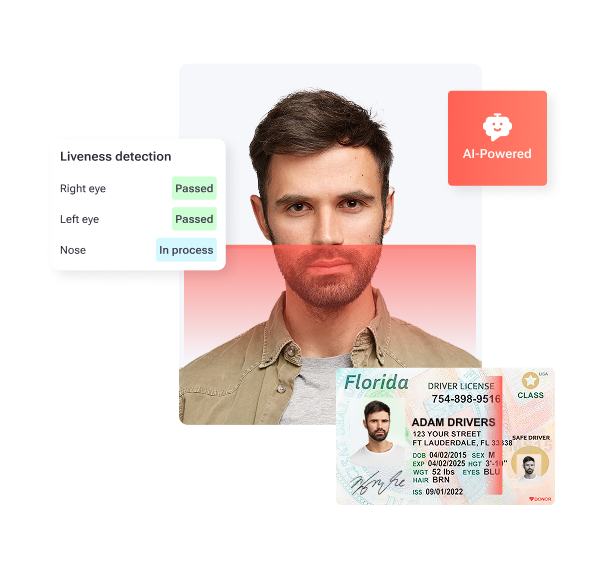
Third, identity verification should extend beyond document uploads to include biometric confirmation. Government ID validation combined with AI-powered liveness detection and facial biometric matching confirms that the applicant is physically present and matches their identification before the application moves to review. This verified identity then supports the next principle. Board approval processes should operate within a structured, auditable interface instead of email chains, which keeps verified applicant information in a controlled environment. Finally, lease documentation should connect directly to the onboarding workflow. Every approved application should generate a corresponding lease record that is searchable, trackable, and audit-ready from day one, closing the loop from identity through approval to occupancy.
Evaluation Framework for Comparing Screening Platforms
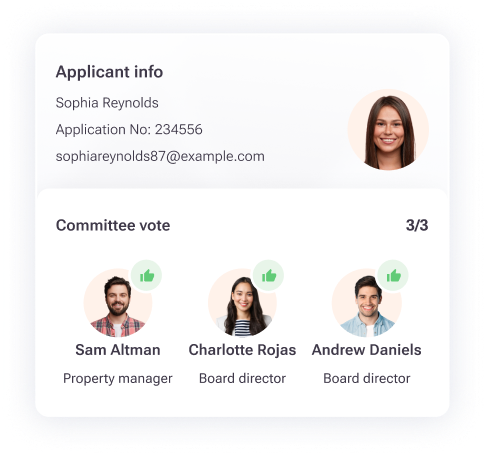
Florida associations evaluating screening platforms can apply a clear set of criteria. FCRA readiness includes direct credit bureau reseller status, automated adverse action, and permissible purpose controls. Operational efficiency covers application-to-decision cycle time and manual follow-up reduction. Board transparency requires a dedicated review and voting interface. Identity verification depth involves a biometric layer beyond document uploads. 55+ documentation handling, lease lifecycle management, auditability through complete timestamped trails, and revenue impact from application fee collection and revenue sharing round out the framework.
| Capability | TenantEvaluation | Generic Landlord Tools (e.g., AppFolio, Buildium) | Background-Check-Only Platforms |
|---|---|---|---|
| Direct credit bureau reseller (TransUnion, Equifax) | Yes, direct reseller relationships under strict bureau rules | No, typically third-party aggregators | Varies, often third-party or white-labeled |
| Board voting dashboard | Yes, dedicated board review and voting panel with AI-generated summaries | No, not designed for association governance | No |
| Biometric identity verification | Yes, IDVerify with liveness detection and facial biometric matching | No | No |
| 55+ Communities Verification | Yes, built-in, standardized workflow for Florida HOAs and condos | No | No |
| Centralized Lease Tracking | Yes, real-time lease status, unit-level tracking, audit-ready records | Partial, property management focus, not association-specific | No |
| Revenue-sharing model | Yes, application fees collected and rebated to association | No, monthly subscription pricing | No |
| Built-in adverse action automation | Yes | No | No |
How TenantEvaluation Solves Florida Association Screening Challenges
TenantEvaluation is built specifically for community associations and management companies, with FCRA compliance at the core of the platform. Founded in 2007 and serving thousands of communities with high annual application volume, TenantEvaluation delivers an end-to-end resident screening and onboarding system that aligns with the evaluation framework above.
As a direct reseller of TransUnion and Equifax data, TenantEvaluation accesses consumer report data under strict bureau rules with regular compliance reviews and audits. The platform avoids gray-market or offshore data sources. Built-in adverse action workflows and strong permissible purpose controls help every application cycle meet FCRA requirements, with a complete audit trail that connects each decision to the underlying data.
QuickApprove, TenantEvaluation’s accelerated approval workflow, moves resident applications from submission to decision faster inside one connected platform. It delivers real-time application tracking, automated communication support, a board-ready approval process with a dedicated voting panel, customized approval letters, and a personalized welcome package. These capabilities reduce manual follow-ups and replace email chains and spreadsheets that slow approvals during peak seasons or in communities with complex requirements.

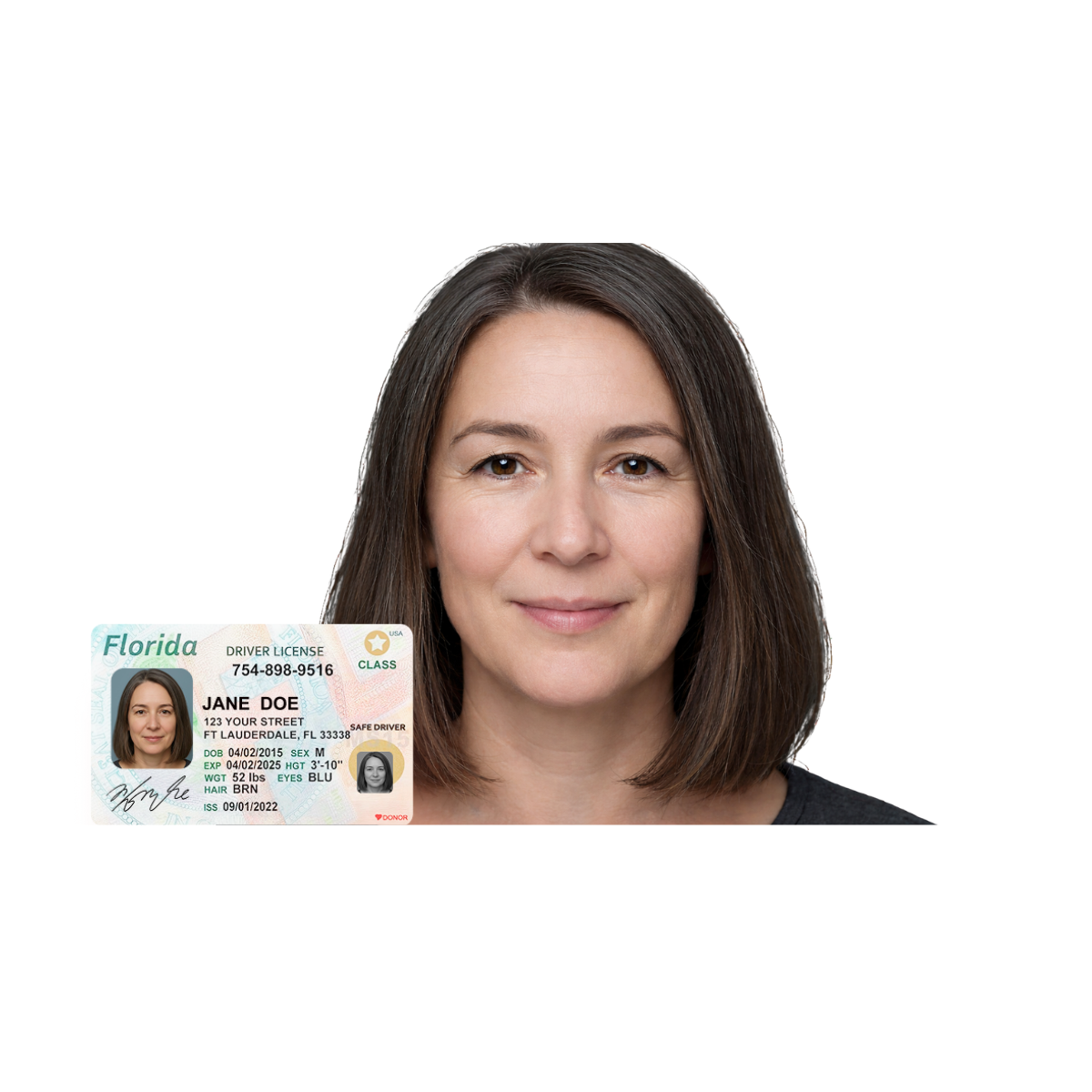
IDVerify brings biometric identity verification directly into the screening workflow. Government ID validation, AI-powered liveness detection, and biometric selfie-to-ID comparison run natively inside TenantEvaluation, without external portals or workflow disruption. CAMs see verification results embedded within the screening report, including ID authenticity, liveness status, and biometric match result. Florida communities move from document-based review to biometric-confirmed identity verification, which strengthens approval confidence and reduces fraud exposure before residents enter the community.

55+ Communities Verification standardizes how age-restricted application requirements are handled across Florida HOAs and condos. It reduces manual work, improves documentation consistency, and strengthens internal processes for CAMs and boards managing age-restricted communities, using workflows tailored to Florida association needs.
Lease Tracking connects resident onboarding, unit data, approvals, and lease documentation in one centralized, real-time workflow. CAMs and boards gain real-time lease status visibility, automated lease document collection, unit-level tracking, and searchable digital records that are ready for audit. Spreadsheets and scattered email chains give way to full lifecycle control from application to occupancy.
TenantEvaluation’s revenue-sharing model turns application processing into a compliant, controlled income stream. The platform has already generated significant revenue for communities, while reducing application processing from days to hours and helping teams recover substantial daily administrative time.
Explore how QuickApprove, IDVerify, and Lease Tracking fit your workflow in a guided platform session.
Frequently Asked Questions
How does the FCRA apply to Florida HOAs and condo associations?
The FCRA applies to any entity that uses consumer reports, including credit, criminal background, and eviction history, to make decisions about individuals. Florida HOAs and condo associations that screen prospective residents or tenants must follow FCRA requirements. Associations need a permissible purpose before ordering a report, written consent from the applicant, and an adverse action notice if the application is denied or conditioned based on report information. Platforms with direct credit bureau reseller relationships, built-in adverse action workflows, and complete audit trails help associations meet these obligations consistently.
What does biometric identity verification add for Florida community associations?
Traditional screening relies on applicants uploading a copy of a government-issued ID, which cannot confirm that the submitter matches the document. Biometric identity verification adds a confirmation layer that document review cannot provide. IDVerify+ inside TenantEvaluation validates the government-issued ID for authenticity, uses AI-powered liveness detection to confirm physical presence, and performs a facial biometric comparison between the applicant’s selfie and their ID photo. Communities move from document-based validation to biometric-confirmed identity verification, which reduces exposure to stolen IDs, synthetic identities, and impersonation attempts before approval decisions.
How does Lease Tracking support compliance readiness in Florida communities?
Lease Tracking inside TenantEvaluation connects resident onboarding, unit data, approvals, and lease documentation in one centralized, real-time workflow. It provides real-time lease status visibility, automated lease document collection during onboarding, unit-level tracking tied to occupancy records, and a searchable digital history of lease records and document trails. Each lease becomes audit-ready and directly connected to the application and approval that generated it. CAMs and boards can access complete lease records instantly instead of searching across folders, inboxes, and spreadsheets, which reduces risk tied to incomplete or disconnected records.
What differentiates TenantEvaluation from generic property management platforms?
Generic property management platforms focus on individual landlords or broad multifamily portfolios, not on the governance structures of Florida HOAs and condos. They lack dedicated board voting dashboards, association-specific document logic, direct credit bureau reseller relationships, built-in adverse action automation, biometric identity verification, 55+ age-restriction documentation workflows, and revenue-sharing models. TenantEvaluation is built exclusively for community associations and management companies. Features such as QuickApprove’s board-ready workflow, IDVerify’s biometric layer, and 55+ Communities Verification align with the operational and compliance requirements of Florida CAMs and boards.
How does TenantEvaluation handle 55+ community age-verification requirements?
55+ Communities Verification is a built-in capability within TenantEvaluation that standardizes age-restricted application requirements across Florida HOAs and condos. It reduces manual work, improves documentation consistency, and strengthens internal processes for CAMs and boards. The feature replaces fragmented manual steps involving emails, PDFs, and follow-ups with a structured, repeatable workflow. It supports documentation and operational control for age-restricted communities, while leaving room for legal guidance where needed, and scales across large portfolios.
Summary and Next Steps for Florida Associations
Florida community associations operate in a compliance, operational, and fraud-prevention environment that generic landlord tools and broad property management platforms do not address effectively. FCRA obligations require direct bureau data access, documented permissible purpose, automated adverse action, and complete audit trails. Identity fraud pressures call for biometric verification beyond document uploads. Board governance needs a structured, auditable approval interface. Age-restricted communities depend on standardized documentation workflows. Lease management benefits from centralized, real-time lifecycle visibility.
The evaluation framework in this article, which covers FCRA readiness, operational efficiency, board transparency, identity verification depth, 55+ documentation, lease lifecycle management, auditability, and revenue impact, offers a structured way to assess any screening approach. Associations using manual processes or generic tools can compare their current operations against each criterion to identify compliance gaps and operational inefficiencies.
TenantEvaluation addresses every dimension of this framework within a single platform built specifically for Florida community associations, while maintaining the direct bureau relationships and compliance-first architecture described earlier.
Evaluate TenantEvaluation against your current screening process and identify where your association can reduce risk and save time.
