Written by: Luis Teran, Co-founder, CEO, TenantEvaluation | Last updated: August 17, 2026
Florida HOA Compliance Pressure in 2026
Florida’s 2026 compliance deadlines are forcing HOAs to rethink how they handle screening, records, and financial reporting. New requirements under Chapters 718 and 720 and HB 1203 raise the stakes for boards that still depend on spreadsheets and email chains. This guide compares seven platforms based on how well they close those compliance gaps for Florida communities.
Key Takeaways
- Florida HOAs must meet strict 2026 compliance rules for financial reporting, website posting, and board elections under Chapter 718/720 and HB 1203.
- Most associations still rely on spreadsheets, which increases audit and liability risks that purpose-built software can reduce.
- Resident screening, lease tracking, and biometric identity verification now play a central role in compliance and fraud prevention.
- Tools vary widely in capabilities, and only a few combine FCRA-compliant screening, board dashboards, and integrated payments in one platform.
- TenantEvaluation provides end-to-end screening, lease tracking, and compliance tools for Florida HOAs, so see how these capabilities work together in a live demo.
How We Ranked These Florida HOA Platforms
These seven platforms appear in order of how completely they address Florida HOA compliance, not general property management. Tools that combine FCRA-compliant screening, biometric identity verification, lease tracking, and board-facing workflows rank higher than accounting-only or operations-only systems. Platforms that still require spreadsheets or third-party tools for core compliance needs appear lower in the list.
1. TenantEvaluation: Florida-Focused Screening and Onboarding
Best for: Self-managed and professionally managed Florida HOAs (30–500 units) that need FCRA-first resident screening, biometric identity verification, board voting dashboards, centralized lease tracking, and connected payment collection in one platform.
TenantEvaluation launched in 2007, built by property managers, board members, and software engineers for community associations and management companies. That focus has enabled the platform to process 100,000+ applications annually across 5,000+ communities, generating $150M for those communities. This scale is possible because FCRA compliance is the foundation, not an afterthought, and TenantEvaluation is a direct reseller of TransUnion and Equifax data operating under strict bureau rules with no gray-market data sources.
Core capabilities relevant to 2026 Florida compliance include features that address the three highest-risk gaps for associations: identity fraud prevention, lease documentation tracking, and board approval transparency. Specifically:
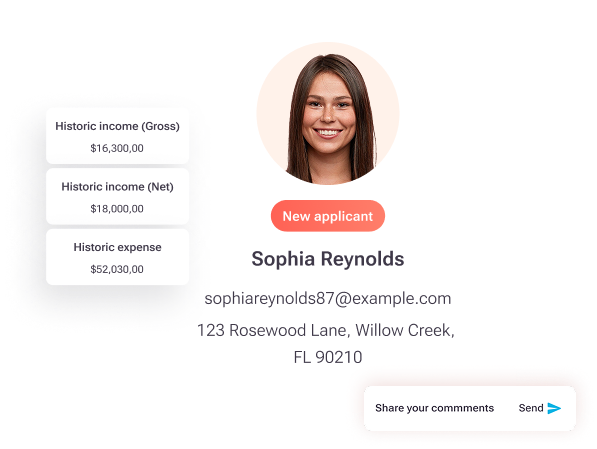
- QuickApprove: An accelerated approval workflow built for CAMs, boards, and property management teams inside one connected platform. It delivers real-time application tracking, automated communication support, customized approval letters, a personalized welcome package, and a board-ready approval process, which reduces manual follow-ups without losing control, compliance, or visibility.
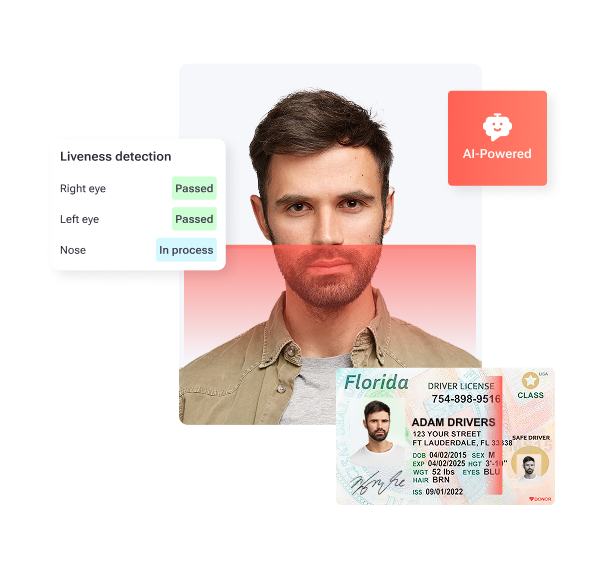
- IDVerify+: Biometric identity verification embedded directly into the screening workflow. Government ID validation, AI-powered liveness detection, and facial biometric matching confirm physical presence before approval, moving communities from document-based review to biometric-backed identity confirmation at a time when deepfake-related fraud caused approximately $1.65 billion in losses in 2025.
- Lease Tracking: Centralized, real-time lease visibility and lifecycle control from application to occupancy. This connects resident onboarding, unit data, approvals, and lease documentation into one audit-ready workflow, replacing spreadsheets and scattered email chains with real-time lease status (active, pending, expired, or missing), automated lease document collection, unit-level tracking, and searchable digital history.
- TEpayments by Zinc: A connected payment workflow inside TenantEvaluation that collects application fees, deposits, and other required resident payments during onboarding. Payments go directly to the association’s designated account, and TenantEvaluation never holds the funds.
- 55+ Communities Verification: A built-in capability that helps Florida condos and HOAs standardize how age-restricted requirements are handled across applications, which reduces manual work and improves documentation consistency.
| Metric | Value |
|---|---|
| Application processing time | 5–10 minutes (vs. 5–10 days manual) |
| Approval time reduction | Up to 70% |
| Staff time freed | Up to 50 hours per day |
| Revenue model | Pay-per-application; no upfront fees |
| Google rating | 4.8 / 5 |
Self-managed HOAs: The pay-per-application model eliminates subscription overhead, and boards access a dedicated voting panel without needing a full management company.
Professional CAMs: Portfolio-wide configuration, PCI Level 1 compliance, end-to-end encryption, and automatic PII redaction support enterprise-level risk management. Partners include FirstService Residential, Campbell Property Management, and Associa.

See how QuickApprove, IDVerify+, and lease tracking work together in a live walkthrough
2. Buildium: Accounting and Maintenance for Mid-Size Firms
Best for: Professional management companies with 50–500 units that prioritize accounting, maintenance tracking, and resident portals over screening depth.
Buildium offers accounting, online payments, maintenance request tracking, and a resident portal. It is a recognized name among self-managed HOAs that rely on basic accounting tools for payments and accounting. However, Buildium lacks a dedicated board voting dashboard, biometric identity verification, and FCRA-first screening infrastructure, which are increasingly necessary under 2026 Florida statute requirements.
Self-managed HOAs: Viable for communities where accounting is the primary need and screening volume is low.
Professional CAMs: Functional for operations management but requires third-party screening tools to meet Florida compliance depth.
Buildium covers accounting and maintenance, yet it leaves a gap in document posting compliance, which is the specific focus of the next platform.
3. HOA Cloud: Automated Website and Records Compliance
Best for: Florida HOAs with 25–100+ units that need automated compliance tracking for Chapter 718/720 document posting obligations.
HOA Cloud automatically tracks which governing documents, budgets, and financial reports must be posted under Florida Chapter 718 and Chapter 720, and alerts users when required items are missing. It enforces automated 7-year record retention policies and provides residents 24/7 digital access to official records. Non-compliance with document posting requirements can result in fines starting at $50 per day.
Self-managed HOAs: Strong fit for communities whose primary gap is document posting compliance rather than resident screening.
Professional CAMs: Useful as a compliance layer but does not replace a dedicated screening and onboarding platform.
Compare TenantEvaluation’s lease tracking to your current workflow
4. PayHOA: Simple Dues Collection for Small HOAs
Best for: Self-managed communities under 50 units with limited budgets that need online dues collection and basic communication tools.
PayHOA costs $49/mo (billed annually) for up to 25 units and is marketed to small self-managed HOAs for online payments, automatic invoicing, late fees, and ACH/autopay collection. It addresses the most common pain point for small boards, which is manual dues tracking, but it does not include resident screening, biometric verification, board voting workflows, or lease lifecycle management.
Self-managed HOAs: Appropriate entry point for communities under 50 units where dues collection is the sole operational gap.
Professional CAMs: Not designed for portfolio-level management or compliance-depth screening.
5. AppFolio: Broad Property Management for Large Portfolios
Best for: Large professional management companies managing mixed residential portfolios that need broad property management functionality.
AppFolio offers property management, screening, and some onboarding features at scale. It operates on a monthly subscription model, unlike TenantEvaluation’s pay-per-application structure. AppFolio’s screening capabilities are generalized for rental markets rather than purpose-built for Florida HOA and condominium compliance workflows, and it does not offer a dedicated board voting dashboard or biometric identity verification embedded in the screening process.
Self-managed HOAs: Overbuilt and cost-prohibitive for most self-managed communities.
Professional CAMs: Functional for broad portfolio operations and still requires supplemental tools for Florida-specific screening compliance.
6. Vantaca: Workflow Automation for Enterprise CAM Firms
Best for: Enterprise-level community association management companies with large portfolios that need workflow automation and accounting integration.
Vantaca targets professional management companies with workflow automation, accounting, and communication tools. Like Buildium, it lacks a strong resident screening focus and does not include biometric identity verification, FCRA-first screening infrastructure, or a dedicated board voting panel. It is positioned for operational management rather than resident onboarding compliance.
Self-managed HOAs: Not designed for self-managed communities.
Professional CAMs: Viable for large-scale operations management, while screening must be handled separately.
7. QuickBooks Online: Accounting Only for Florida HOAs
Best for: Communities that need basic bookkeeping and already have separate tools for every other HOA function.
Small self-managed Florida HOAs commonly rely on QuickBooks Online for accounting along with CPA support for tax filing. QuickBooks handles general ledger accounting but does not track Florida-specific compliance deadlines, manage board elections, process resident screening, or provide lease lifecycle visibility. HOA boards using QuickBooks often struggle to match payment history to the bank statement, locate documentation for disputes, and understand inherited files when a new treasurer takes over.
Self-managed HOAs: Acceptable only as a temporary accounting solution for communities under $150,000 annual revenue where a cash receipts report suffices under F.S. 720.303(7).
Professional CAMs: Not appropriate as a primary management platform.
See what a purpose-built Florida HOA platform looks like in action
Common Florida HOA Compliance Questions
Choosing software is only part of the 2026 readiness plan for Florida HOAs. Boards also face recurring questions about record retention, financial reporting tiers, and identity verification standards. The following answers connect those requirements to the tools discussed above.
What is the 5 Year Rule for HOA in Florida?
The “5-year rule” most commonly referenced in Florida HOA contexts relates to record retention obligations. Under Florida Statutes Chapter 720 and Chapter 718, HOAs and condominium associations are generally required to retain official records, including meeting minutes, financial records, contracts, and governing documents, for a minimum of seven years, not five. The five-year figure sometimes appears in reference to specific document categories or older interpretations of the statute, but the operative standard under current Florida law is seven years for most official records. As noted in the HOA Cloud section, automated enforcement of the 7-year retention requirement addresses a gap that manual spreadsheets and generic accounting tools cannot fill, which reduces audit exposure.
Is QuickBooks Good for an HOA?
QuickBooks handles general ledger accounting but is not purpose-built for HOA management. It does not track Florida-specific compliance deadlines, manage board election notices under F.S. 720.306(9), process resident screening, enforce record retention policies, or provide lease lifecycle visibility. A key sign that an HOA has outgrown QuickBooks is when the treasurer spends more than 4 hours per month on dues tracking and reconciliation. For communities that need to meet 2026 Florida financial reporting thresholds, with audited statements for $500,000+ in annual revenue, reviewed statements for $300,000–$499,999, and compiled statements for $150,000–$299,999, QuickBooks can export data for a CPA but cannot automate the compliance workflow, flag deadline breaches, or connect financial records to resident onboarding and lease tracking. Communities with growing screening and onboarding needs require a purpose-built platform alongside or instead of QuickBooks.
Best Free Accounting Software for Homeowners Association
Genuinely free HOA accounting software with meaningful compliance functionality is rare. Most tools marketed as free are either limited-feature trials or freemium tiers that exclude the capabilities Florida HOAs actually need, such as automated financial reporting thresholds, audit trails, and compliance deadline tracking. Modern HOA management tools that replace spreadsheets cost $40–$150 per month and can be set up in less than an hour, providing automatic invoicing, online payments, real-time payment tracking, complete audit trails, and automated financial reports. For communities where cost is the primary constraint, TenantEvaluation’s pay-per-application model means there are no upfront subscription fees, and the platform generates revenue for the association through its fee structure rather than charging a monthly overhead cost.
Frequently Asked Questions
What Florida HOA compliance requirements changed most significantly for 2026?
The most operationally significant changes center on financial reporting, website posting, and board elections. Website and records posting for certain Florida HOAs was required under HB 1203 (2024) with an effective date of July 1, 2024. Certain larger HOAs must prepare audited financial statements under HB 1243. Board election procedures under F.S. 720.306(9) require notices before the election, with proxies prohibited in director elections unless governing documents expressly allow them. Defective election notices void the election and expose the association to attorney fees. Software platforms that automate these deadline sequences reduce the risk of procedural errors that trigger legal liability.
How does TenantEvaluation differ from general property management software for Florida HOAs?
General property management software is designed for rental operations such as accounting, maintenance, and tenant communication. TenantEvaluation is built exclusively for community associations and management companies, with FCRA compliance as the foundation. It includes a dedicated board voting dashboard (QuickApprove), biometric identity verification (IDVerify+), centralized lease lifecycle tracking, a connected payment workflow (TEpayments by Zinc), and 55+ Communities Verification, which are not standard in general property management platforms. This direct bureau relationship mentioned earlier protects community associations from the liability exposure that comes with gray-market data sources used by some competitors.
What is the financial reporting threshold structure for Florida HOAs in 2026?
Florida HOA financial reporting requirements are tiered by annual revenue under F.S. 720.303(7). Communities with annual revenues under $150,000 (or fewer than 50 units) prepare a cash receipts and expenditures report. Communities with higher revenues move into compiled, reviewed, or audited financial statements based on revenue bands. The tiered structure described earlier applies to all Florida HOAs, and all reports must be completed within 90 days of fiscal year-end, with copies provided to members within 21 days of completion or no later than 120 days from fiscal year-end. Boards relying on manual spreadsheets or QuickBooks have no automated mechanism to classify the required report level or flag the 90-day deadline.
Why is biometric identity verification becoming important for Florida HOA resident screening in 2026?
Deepfake-related fraud caused approximately $1.65 billion in losses in 2025, and AI-generated documents now defeat traditional document-based verification at scale. Traditional screening methods that rely on uploaded ID documents cannot reliably prevent impersonation or synthetic identity fraud. IDVerify+ addresses this by embedding government ID validation, AI-powered liveness detection, and biometric facial matching directly into the TenantEvaluation screening workflow, confirming physical presence and identity authenticity before approval decisions are made. This shift moves communities from document-based review to biometric-backed identity confirmation without disrupting the existing onboarding workflow.
Can a self-managed Florida HOA use TenantEvaluation without a professional management company?
Self-managed Florida HOAs can use TenantEvaluation without hiring a professional management company. TenantEvaluation’s pay-per-application model means there are no monthly subscription fees, which makes it accessible for self-managed communities of any size. Board members access a dedicated voting panel through QuickApprove to review applications, cast votes, and track approval status without needing a licensed CAM to administer the process. The platform handles document collection, background checks, identity verification, lease tracking, and payment collection in one workflow, replacing the combination of spreadsheets, email chains, and disconnected tools that self-managed boards typically rely on. Many of Florida’s approximately 50,100 HOA communities are self-managed, and communities under 50 units are far more likely to self-manage because of the cost of professional management fees.
Conclusion: Matching Platforms to Your Florida HOA
The right platform depends on community size, management structure, and the specific compliance gaps that create the most operational risk in 2026.
Self-managed communities under 50 units with limited budgets and basic accounting needs can start with PayHOA for dues collection or QuickBooks for bookkeeping, but neither addresses screening, lease tracking, or board election compliance. TenantEvaluation’s pay-per-application model makes it accessible at this scale without subscription overhead.
Self-managed and small professional communities (50–200 units) face the highest compliance risk from fragmented tools. The combination of 2026 website posting requirements, tiered financial reporting thresholds, election notice deadlines, and growing identity fraud exposure makes a purpose-built platform, rather than a stack of disconnected tools, the lower-risk operational choice.
Mid-size to large professional CAM firms (200–500+ units) require portfolio-level configuration, audit-ready records, and board-facing dashboards that general property management platforms do not provide at the screening and onboarding layer. Buildium, AppFolio, and Vantaca handle operations management but require supplemental screening infrastructure to meet Florida compliance depth.
HOA Cloud addresses document posting compliance specifically, and QuickBooks addresses bookkeeping only. Neither replaces a resident screening and onboarding platform. Implementation timelines for transitioning from manual to digital HOA management in Florida typically run 30 to 90 days, including record audit, environment setup, and portal onboarding, which makes 2026 the practical window to act before the next election cycle and fiscal year-end reporting deadline.
