Written by: Luis Teran, Co-founder, CEO, TenantEvaluation | Last updated: July 12, 2026
Key Takeaways
- Manual, paper-based HOA screening in Florida creates compliance risk, slows approvals, and exposes CAMs and boards to significant FCRA liability.
- Florida’s 2026 regulatory updates require consistent written screening criteria, expanded recordkeeping, and audit-ready documentation for every applicant decision.
- A structured 7-step digital process with workflow audits, objective criteria, FCRA-compliant automation, and secure record retention reduces variability and strengthens defensibility.
- Compliance-ready platforms need FCRA adverse action automation, direct credit bureau access, biometric identity verification, board-facing dashboards, and centralized lease tracking tailored to Florida HOAs.
- TenantEvaluation is a Florida-specific, FCRA-first platform that unifies these capabilities so CAMs can replace manual processes with audit-ready compliance.
The Operational Pain of Manual Screening for CAMs and Boards
Manual, paper-heavy screening workflows create compounding problems for Florida community associations. Applications arrive incomplete, documents scatter across email chains and folders, and board approvals stall in back-and-forth communication. Willful FCRA violations carry statutory damages of $100–$1,000 per violation plus costs and reasonable attorney’s fees, so a single documentation gap can generate significant liability. For CAMs managing multiple communities, the administrative burden grows every day, and evolving 2026 Florida regulations leave no margin for inconsistency.
See how TenantEvaluation eliminates FCRA liability and manual workflow delays with a fully digital, audit-ready process.
Step 1: Audit Your Current Screening Workflow
Start by mapping every touchpoint in your existing process, from application receipt to final approval or denial. Identify where documents live, who can access them, and where delays consistently occur. This baseline view shows exactly where risk and inefficiency appear.
- List all paper forms and manual steps currently in use.
- Identify which steps lack a documented audit trail.
- Flag any gaps in adverse action notice procedures.
- Confirm whether screening files are stored securely with access limited to individuals with a legitimate business need.
Step 2: Align Screening With Florida’s 2026 Requirements
Florida HOA screening must follow both federal FCRA obligations and state-specific statutes. Florida’s 2026 HOA legislative updates expand transparency and documentation requirements for community associations. Florida HOA rental restrictions also require consistent, documented application of screening criteria across all applicants.
- Review Florida Statutes Chapter 718 (condominiums) and Chapter 720 (HOAs) for current screening authority.
- Confirm your community’s governing documents align with 2026 amendments.
- Document all criteria used in screening decisions to demonstrate consistent application.
- Verify your adverse action workflow meets both FCRA and Florida disclosure standards.
Step 3: Create Written, Objective Screening Criteria
Written, objective criteria applied uniformly to every applicant reduce fair housing risk. Inconsistent use of criteria remains one of the most common sources of fair housing liability for Florida associations.
- Establish minimum credit score thresholds in writing.
- Define income-to-rent ratio requirements, typically three times monthly rent.
- Document criminal history evaluation standards, including nature, severity, time elapsed, and rehabilitation per HUD guidance.
- Specify required documents for each applicant type, including tenant, purchaser, and occupant.
Step 4: Compare Digital Screening Platforms With a Compliance Checklist
Community associations need tools built for boards and CAMs, not generic rental platforms. Many general-purpose tools lack board-facing workflows, Florida-specific configuration, and FCRA-first architecture. Use a clear checklist when you evaluate options.
- FCRA-compliant adverse action automation.
- Direct credit bureau reseller relationships, not third-party data scraping.
- Built-in audit trails with timestamped actions.
- Biometric identity verification capability.
- Board-facing review and voting dashboard.
- Centralized lease tracking connected to onboarding records.
Step 5: Build a Standardized Digital Screening Workflow
A repeatable digital workflow removes the variability that creates compliance risk. Every applicant should follow the same steps, with automated checkpoints that block incomplete submissions from moving forward.
- Configure application forms with intelligent logic that adjusts by applicant type.
- Require electronic consent for background checks before any report is pulled.
- Automate pre-adverse action notices with a minimum five-business-day dispute window before final denial.
- Route completed applications to a board review dashboard instead of email.
Step 6: Standardize Record Retention and Security Protocols
Consistent record retention and security protect associations from discrimination claims and FCRA disputes. All records should live in encrypted digital systems with clear access controls.
- Implement automatic redaction of Social Security numbers and banking details from uploaded documents to prevent unauthorized exposure of sensitive data.
- Restrict file access to individuals with a documented legitimate business need, so even redacted files remain visible only to authorized personnel.
- Maintain a searchable digital history of all applications, decisions, and communications so records can be retrieved quickly during audits.
- Train staff on FCRA requirements and document that training occurred, since human error remains a compliance risk even with strong technical controls.
Step 7: Use TenantEvaluation as Your Florida Compliance Platform
TenantEvaluation is built specifically for community associations and management companies, with FCRA compliance as the foundation, not an afterthought. It satisfies every item on the Step 4 checklist inside one connected system and adds Florida-specific capabilities that generic tools do not provide.
QuickApprove, TenantEvaluation’s accelerated approval workflow, moves resident applications from submission to decision faster with real-time application tracking, automated communication support, customized approval letters, and a personalized welcome package. A board-ready approval process keeps CAMs, boards, and property management teams in control while they manage high-volume seasons and complex onboarding requirements in one platform.

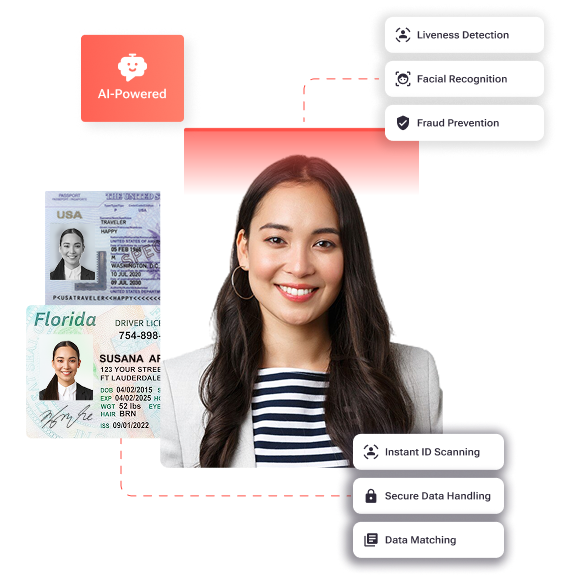
IDVerify adds biometric identity verification directly into the screening workflow by combining government ID validation, AI-powered liveness detection, and biometric facial matching. Communities move from document-based review to verified physical identity confirmation before they make approval decisions.
Lease Tracking connects resident onboarding, unit data, approvals, and lease documentation into one centralized, real-time workflow. It delivers audit-ready digital lease records, real-time lease status visibility for active, pending, expired, or missing leases, and automated lease document collection that replaces spreadsheets and scattered email chains.
For age-restricted communities, 55+ Communities Verification helps Florida condos and HOAs standardize how age-restricted requirements are handled across applications. It reduces manual work, improves documentation consistency, and strengthens operational efficiency and control. This capability supports internal compliance processes and does not replace legal guidance.

The following sections define key compliance terms and regulatory concepts referenced in the 7-step process above, giving CAMs and boards additional context as they implement these workflows.
What Is Florida Screening Compliance?
Florida screening compliance covers the federal and state obligations that govern how community associations collect, evaluate, and retain applicant information during resident screening. At the federal level, the Fair Credit Reporting Act requires written consent before pulling consumer reports, a standalone disclosure form, and a structured adverse action process. That process includes a pre-adverse action notice, a free copy of the report, a minimum five-business-day dispute window, and a formal adverse action notice that cites specific factors. At the state level, Florida HOA laws define what criteria associations may apply, how consistently they must be enforced, and what documentation communities must maintain to show lawful, non-discriminatory screening practices.
How Long Should Florida HOAs Keep Screening Records?
Florida HOA screening practices should include retaining applicant files long enough to defend against potential discrimination claims and FCRA disputes. Consistent retention supports FCRA audit defensibility and fair housing compliance. All retained files must be stored in a locked cabinet or encrypted digital system with access limited to individuals with a legitimate business need. Digital platforms that maintain searchable, timestamped records make this requirement manageable for CAMs who oversee large portfolios.
Key 2026 HOA Law Changes Affecting Screening
Florida’s 2026 HOA legislative updates continue a multi-year trend of increasing transparency, accountability, and documentation requirements for community associations. These housing law changes affect how associations communicate with residents, maintain records, and enforce governing documents. CAMs and boards now face stricter recordkeeping obligations, expanded owner access to association records, and heightened scrutiny of screening criteria consistency. Florida HOA website compliance requirements have also expanded, and associations must publish governing documents and certain operational records online. Communities that still rely on manual, paper-based processes face growing exposure under these updated standards.
What Does Level 2 Screening Mean in Florida?
In Florida, a Level 2 screening refers to a background check that includes fingerprint-based criminal history records from the Florida Department of Law Enforcement and the FBI. This goes beyond a standard name-based search. State law requires Level 2 screening for certain individuals who work with vulnerable populations, such as employees of health-care facilities who have access to clients or their living areas. For HOA and condo resident applicants, communities sometimes use the term informally to describe a more comprehensive screening package that includes criminal background, credit, eviction history, and identity verification. Florida community association legal guidance recommends that boards define screening depth in governing documents and apply it uniformly to avoid fair housing liability.
HOA Screening Compliance Feature Comparison
| Feature | Manual / Paper Process | Generic Screening Tool | TenantEvaluation |
|---|---|---|---|
| FCRA-compliant adverse action automation | Manual, inconsistent | Partial | Built-in, automated |
| Direct credit bureau reseller (TransUnion / Equifax) | No | Varies | Yes, direct reseller |
| Biometric identity verification (IDVerify+) | No | No | Yes, AI liveness and facial match |
| Board-facing review and voting dashboard | No | No | Yes, QuickApprove |
| Centralized lease tracking (audit-ready) | Spreadsheets and email | No | Yes, real-time lifecycle control |
| Encrypted record retention with access controls | No | Varies | Yes, PCI Level 1 with auto-redaction |
| 55+ age-restricted community documentation support | Manual, fragmented | No | Yes, 55+ Communities Verification |
| Florida-specific configuration | N/A | No | Yes, built for Florida associations |
Common Violations and Red Flags in HOA Screening Compliance
- Failing to obtain written, standalone FCRA disclosure and consent before pulling consumer reports.
- Issuing a denial without first sending a pre-adverse action notice and providing a free copy of the report.
- Allowing fewer than five business days for applicants to dispute report inaccuracies before final denial.
- Applying screening criteria inconsistently across applicants of different backgrounds.
- Storing sensitive applicant data in unsecured email folders or unencrypted spreadsheets.
- Retaining applicant files for insufficient periods.
- Using arrest records as a basis for denial without evaluating conviction status, severity, and rehabilitation.
- Lacking a timestamped audit trail for board voting and approval decisions.
- Keeping missing or outdated lease copies that are disconnected from onboarding records.
- Failing to document staff training on FCRA requirements.
Eliminate these compliance red flags with TenantEvaluation’s built-in compliance architecture designed for Florida community associations.
Frequently Asked Questions
Does TenantEvaluation handle FCRA adverse action notices automatically?
TenantEvaluation includes automated adverse action workflows that generate pre-adverse action notices, provide applicants with a copy of the consumer report, enforce the required dispute window, and issue formal adverse action notices with the required disclosures. These workflows remove manual steps for CAMs while maintaining a complete, timestamped audit trail for every application.
How does TenantEvaluation support audit readiness for Florida HOAs?
TenantEvaluation maintains a built-in audit trail for every application that captures each action, timestamp, document submission, board vote, and communication within the platform. Lease Tracking adds centralized, real-time lease records connected to onboarding data, so associations can produce organized documentation quickly during audits, disputes, or regulatory inquiries without searching across folders and email chains.
Can TenantEvaluation be configured for our community’s specific screening criteria?
TenantEvaluation is configured per community and incorporates each association’s governing documents, credit score thresholds, income verification requirements, required documents, and applicant type workflows. Every application is evaluated against the same written criteria, which supports consistent, defensible screening decisions across all applicants.
What makes TenantEvaluation different from generic tenant screening tools?
TenantEvaluation is built exclusively for community associations and management companies, not generic rentals. It combines FCRA-first design, direct TransUnion and Equifax reseller relationships, biometric identity verification through IDVerify+, a board-facing approval dashboard through QuickApprove, centralized lease lifecycle tracking, and Florida-specific configuration in one connected platform. Generic screening tools usually address only a few of these needs and lack the board-facing and compliance infrastructure that Florida HOAs require.
How does TenantEvaluation handle age-restricted community documentation?
For Florida condos and HOAs that manage 55+ communities, TenantEvaluation includes 55+ Communities Verification. This capability standardizes how age-restricted requirements are handled across applications, reduces manual work, improves documentation consistency, and strengthens operational efficiency and internal controls. It supports internal compliance processes and does not replace legal guidance from qualified counsel.
Conclusion: Turning Screening Into an Audit-Ready System
The 7-step process outlined above transforms how Florida community associations handle resident screening and documentation. Associations gain faster approvals, consistent records, reduced administrative burden, and audit-ready files that hold up under regulatory scrutiny. The combination of FCRA-compliant adverse action automation, biometric identity verification, board-facing approval workflows, and centralized lease tracking creates a defensible, repeatable process that scales across portfolios without adding headcount. For CAMs and boards navigating Florida’s evolving 2026 regulatory environment, moving from paper to a purpose-built platform now represents the operational standard that protects communities and the professionals who manage them.
See TenantEvaluation’s Florida-specific compliance platform in action and discover how it delivers streamlined HOA screening documentation solutions built for 2026 regulatory requirements.
