Written by: Luis Teran, Co-founder, CEO, TenantEvaluation | Last updated: June 21, 2026
Key Takeaways for Florida CAMs and Boards
- Digital HOA application processing replaces manual workflows with automated, FCRA-compliant screening, biometric identity verification, and centralized lease tracking for Florida community associations.
- Florida boards are adopting digital platforms in 2026 to combat identity fraud, meet tightening regulatory expectations, and gain real-time dashboards and approval visibility.
- Manual processes create compliance gaps, incomplete records, and audit exposure, especially for 55+ communities and lease lifecycle management, while digital tools standardize documentation and reduce risk.
- Key evaluation criteria include Florida-specific customization, direct credit-bureau reseller status, native biometric verification, board dashboards, 55+ handling, lease tracking, and revenue-sharing models.
- TenantEvaluation delivers purpose-built compliance, biometric IDVerify, QuickApprove workflows, 55+ verification, and real-time lease tracking. See how TenantEvaluation protects your community in a live walkthrough.
Why Florida Community Associations Are Moving to Digital Platforms in 2026
Identity fraud now affects community associations directly. These organizations manage financial accounts and detailed resident information, which makes them appealing targets for cybercriminals using phishing, account takeovers, and synthetic identity attempts. Traditional document-upload screening cannot reliably detect impersonation or fabricated credentials.
Regulatory expectations around data handling, audit trails, and adverse action documentation continue to tighten while boards demand faster, more transparent oversight. A TownSq nationwide industry survey conducted in September 2025 found that 85% of property managers and 75% of boards already use HOA management software. Technology has become a baseline expectation, not a differentiator. The same survey identifies reporting dashboards and approval workflow visibility as the most requested capabilities for 2026.
CAI’s 2026 governance trend analysis confirms that boards are replacing static reports with real-time dashboards and seeking integrated platforms that connect approvals, financial reporting, and document access instead of relying on standalone tools. Florida CAMs managing high-volume application seasons, 55+ age-restricted communities, and multi-portfolio lease records face daily operational realities such as document collection, board voting coordination, lease expiration tracking, and applicant communication that paper and email workflows cannot handle efficiently or safely.
Compliance, Risk, and Governance Considerations for Florida HOAs
FCRA permissible-purpose rules require that consumer reports be requested only for legally authorized purposes. Applicants denied housing based on those reports must receive a written adverse action notice and the right to request a free credit report within 60 days, as outlined by the Federal Trade Commission. Associations that use generic screening tools without automated adverse action workflows carry direct liability exposure for every missed notice.
PCI requirements govern how payment card data collected during application fee processing must be stored, transmitted, and protected. Audit trails must capture every action, including document uploads, board votes, approval decisions, and adverse action issuance, with timestamps that can be produced in a dispute or regulatory review.
TenantEvaluation is built specifically for community associations and management companies, with FCRA compliance as the foundation, not an afterthought. As a direct reseller of TransUnion and Equifax data accessed under strict bureau rules with regular compliance audits, TenantEvaluation maintains a clear separation between data provision and decision-making by the association. This structure protects communities from the liability exposure that gray-market or offshore data sources create. Automated adverse action workflows, built-in audit trails for every application, and PCI Level 1 compliance with end-to-end encryption function as structural features of the platform, not optional add-ons.
See TenantEvaluation’s compliance infrastructure in action by requesting a personalized demo.
Common Challenges with Manual HOA Application Workflows
Manual workflows produce predictable failure points. Incomplete applications arrive without executed leases or valid IDs, which triggers rounds of manual follow-up with applicants, realtors, and owners. Many HOA boards still rely on paper records and in-person meetings, which limits transparency and increases administrative workload for already stretched CAM teams.
55+ age-restricted communities face a compounding problem. Eligibility documentation requirements are handled through fragmented emails, PDFs, and manual follow-ups, which produces inconsistent records that create audit exposure and operational inefficiency. Lease management is equally fragmented. Missing or outdated lease copies, manual expiration tracking, disconnected spreadsheets, and no direct connection between applications and active leases create operational blind spots that slow teams and increase compliance risk. HOA boards relying on spreadsheets and email threads report higher rates of missed payments and lower homeowner satisfaction compared to those using integrated platforms.
Best Practices for Compliant Digital HOA Application Processing
Workflow standardization forms the foundation for compliant digital processing. Every application type, including tenant, purchaser, and additional resident, should follow a defined path with conditional form logic that requests only the documents relevant to that applicant’s scenario. Standardization eliminates the incomplete-submission problem at the source.
Once standardized intake ensures complete submissions, identity verification becomes the next control layer. Identity verification should move beyond document uploads. Multi-factor identity proofing standards require automated credential analysis to confirm the integrity of security features, detect fraudulent or modified credentials, and validate credential details against authoritative sources. Manual document review cannot reliably replicate these capabilities.
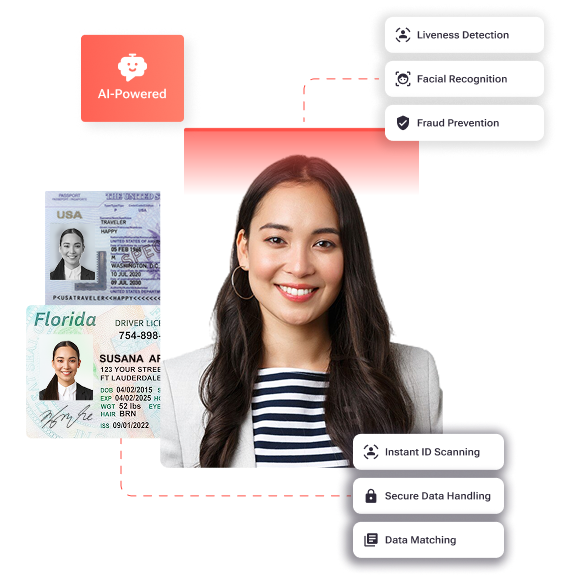
With verified identity established, automated redaction of PII before documents reach reviewers reduces breach exposure and supports privacy compliance by ensuring sensitive data never reaches unauthorized eyes. Centralized digital records that are searchable, timestamped, and connected from application intake through lease occupancy replace the scattered folders, inboxes, and spreadsheets that create audit gaps. Board oversight should sit inside the workflow through a dedicated review and voting dashboard, not through email chains that leave no auditable record.
Evaluation Framework for Digital HOA Application and Screening Solutions
Florida CAMs and boards evaluating platforms in 2026 should apply the following criteria uniformly across every vendor considered.
Florida-specific customization: The platform should configure to your governing documents, screening criteria, and Florida statutes rather than applying generic rental logic. FCRA compliance proof points: The vendor should operate as a direct credit bureau reseller with automated adverse action workflows and built-in audit trails instead of relying on third-party data aggregators. Biometric verification capabilities: The platform should include native government ID validation, liveness detection, and facial biometric matching rather than redirecting applicants to an external portal.
Board dashboard access: The board should have a dedicated, real-time review and voting panel inside the platform. 55+ handling: The platform should standardize age-restricted documentation workflows for Florida condos and HOAs. Lease visibility: The platform should connect applications, approvals, and lease documentation into one real-time, audit-ready workflow.
Time savings and revenue model: The vendor should quantify processing time reduction and offer a revenue-sharing model rather than only a fixed subscription. Audit readiness: Every action, including document uploads, board votes, and adverse actions, should be available with timestamps on demand.
TenantEvaluation vs. Generic Screening Vendors and Property-Management Software
Applying these criteria to the current market reveals a clear capability gap between purpose-built community association platforms and generic alternatives. TenantEvaluation, founded in 2007 and purpose-built for Florida community associations, processes approximately 100,000 applications annually across 5,000+ communities and carries a 4.8/5 Google rating. Operating under the direct bureau reseller model described earlier, TenantEvaluation avoids gray-market sources and offshore data entirely.
IDVerify delivers native biometric identity verification, including government ID authentication, AI-powered liveness detection, and selfie-to-ID facial biometric comparison, running entirely inside TenantEvaluation without redirecting applicants to external portals. QuickApprove accelerates resident approvals with real-time application tracking, automated communication support, customized approval letters, a personalized welcome package, and a board-ready voting dashboard inside one connected platform while preserving control, compliance, and visibility. 55+ Communities Verification standardizes age-restricted application handling across Florida condos and HOAs, which reduces manual work and improves documentation consistency. Lease Tracking delivers centralized, real-time lease visibility and lifecycle control from application to occupancy. This capability connects resident onboarding, unit data, approvals, and lease documentation and replaces spreadsheets and scattered email chains with audit-ready digital records.

The revenue-sharing model means TenantEvaluation deducts its service fee from the collected application fee and rebates the remainder to the association or management company, which turns application processing into a compliant income stream with no upfront cost. One Florida-based management company that switched to TenantEvaluation freed up 50 hours of staff time per day, cut processing time by 50%, and achieved $240,000 in annual savings.
The following comparison applies the evaluation framework above across three platform categories and highlights where purpose-built community association tools deliver capabilities that generic screening vendors and broad property management software do not match.
| Evaluation Criterion | TenantEvaluation | ApplyCheck / Verify Screening Solutions | RealPage / AppFolio |
|---|---|---|---|
| Platform focus | Purpose-built for Florida community associations and HOAs/COAs | Background check platforms using the TazWorks white-label system, not designed for community association onboarding | Broad property management software, not HOA/COA-specific |
| FCRA compliance model | Direct TransUnion and Equifax reseller, automated adverse action workflows, built-in audit trails, built-in FCRA foundation with automated adverse action workflows and audit trails | Resell bureau data via TazWorks, adverse action handling varies by configuration | Screening available but compliance depth varies, designed for multifamily rentals, not community associations |
| Biometric identity verification | IDVerify: native government ID validation, AI liveness detection, and facial biometric matching inside the platform, no external portal | No native biometric verification layer reported | No native biometric verification layer reported |
| Board dashboard and approval workflow | QuickApprove: dedicated board voting panel, real-time application tracking, automated communication, customized approval letters, and personalized welcome package inside one connected platform | No dedicated board voting dashboard, approval coordination handled outside the platform | Board access features vary, not purpose-built for HOA/COA board voting workflows |
| 55+ age-restricted community support | 55+ Communities Verification: standardizes age-restricted documentation handling, reduces manual work, improves consistency across Florida condos and HOAs | No dedicated 55+ documentation workflow reported | No dedicated 55+ documentation workflow reported |
| Lease tracking | Centralized, real-time lease visibility and lifecycle control, connects onboarding, unit data, approvals, and lease documentation, real-time status (active, pending, expired, or missing), audit-ready digital records | No integrated lease tracking reported | Lease management available within broader property management suite, not connected to HOA screening workflow |
| Revenue model | Revenue-sharing, service fee deducted from application fee, remainder rebated to association, no upfront subscription cost | Per-report fee structure, no revenue-sharing model reported | Monthly subscription pricing, no revenue-sharing model reported |
| Processing time reduction | Up to 70% reduction in processing time, up to 50 hours of staff time freed per day | Not quantified for community association workflows | Not quantified for community association workflows |
Generic screening vendors such as ApplyCheck and Verify Screening Solutions operate on the TazWorks white-label platform, which was not designed for community association onboarding and lacks applicant-facing automation, native document redaction, or board voting dashboards. Broader property management platforms such as RealPage and AppFolio offer screening modules built for multifamily rentals, not for the Florida-specific governance, 55+ documentation, and board oversight requirements that community associations require. As integrated platforms become the baseline expectation for HOA governance in 2026, the gap between purpose-built and generic solutions widens.
Experience the full TenantEvaluation platform firsthand with a guided demo.
Frequently Asked Questions
Digital HOA Application Processing Timelines
With a purpose-built digital platform like TenantEvaluation, application processing time is reduced by up to 70% compared to manual workflows. Applications that previously took five to ten business days through paper and email processes can move from submission to decision in hours. TenantEvaluation’s smart form logic rejects incomplete submissions at intake, which eliminates the back-and-forth that accounts for most of the delay in manual workflows. QuickApprove further accelerates the cycle by giving boards a real-time voting dashboard and automating communication and approval letters inside one connected platform.
Redaction Requirements for Sensitive Applicant Data
Florida community associations handling resident applications collect sensitive personally identifiable information including Social Security numbers, financial account details, and government-issued ID data. Best practice, and increasingly a regulatory expectation, requires that this information be automatically redacted from documents before board members review it or before it is stored in association records. TenantEvaluation applies automatic PII redaction natively within the platform, combined with PCI Level 1 compliance and end-to-end encryption, so sensitive data never reaches unauthorized reviewers or sits in unprotected formats.
Role of Biometric Identity Verification for Florida HOAs
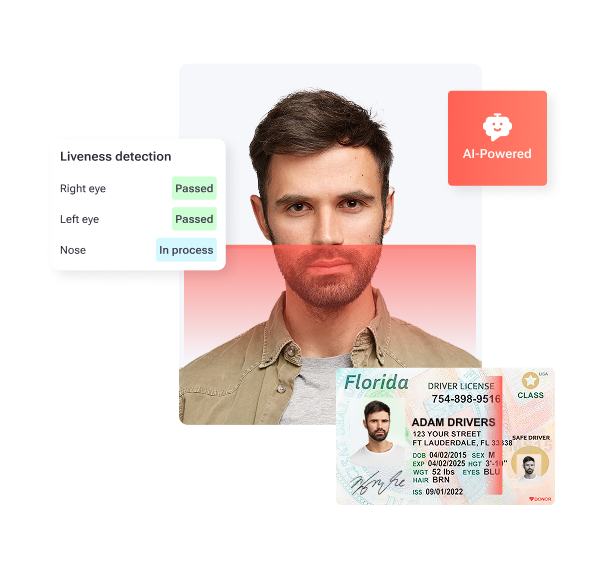
Biometric identity verification is not currently mandated by Florida statute for HOA application processing, but it addresses a growing operational risk. Traditional screening that relies on document uploads cannot detect synthetic identities, impersonation attempts, or stolen credentials. IDVerify+ inside TenantEvaluation adds government ID authentication, AI-powered liveness detection, and facial biometric matching directly into the screening workflow. This process confirms that the applicant is physically present and matches their submitted identification before an approval decision occurs. For communities managing high-density properties, gated access, or high-value residential units, this layer materially reduces fraud exposure and strengthens board approval confidence.
Board Oversight in Digital Approval Workflows
Board oversight in a digital workflow becomes stronger than in a paper-based process when the platform is purpose-built for community associations. TenantEvaluation’s QuickApprove provides boards with a dedicated review and voting panel that displays real-time application status, AI-generated applicant summaries, and a structured voting workflow with timestamped audit trails. Every board action is recorded and retrievable, which replaces the untracked email chains and verbal approvals that create governance gaps in manual processes. Boards retain full decision-making authority, and the platform supplies visibility and structure rather than automating the approval decision itself.
Standardizing 55+ Age-Restricted Documentation
Florida condos and HOAs operating as age-restricted communities under federal housing guidelines must collect and retain consistent documentation across all applications. Manual handling through emails and PDFs produces inconsistent records that create audit exposure and administrative burden. TenantEvaluation’s 55+ Communities Verification functions as a built-in capability that standardizes how age-restricted requirements are handled across applications. This feature reduces manual work, improves documentation consistency, and strengthens internal operational control for CAMs and boards. It operates as a workflow standardization and documentation-consistency tool designed specifically for Florida community associations and supports internal compliance-related processes without replacing legal guidance.

Benefits of Real-Time Lease Tracking for Community Associations
Real-time lease tracking removes the operational blind spots created by disconnected spreadsheets, scattered email chains, and missing lease copies. TenantEvaluation’s Lease Tracking connects resident onboarding, unit data, approvals, and lease documentation into one centralized workflow with real-time lease status visibility, including active, pending, expired, or missing. The platform supports automated lease document collection during onboarding, unit-level tracking tied to occupancy records, and a searchable digital history.
For CAMs managing large portfolios, this structure produces faster administrative workflows and fewer manual follow-ups. For boards, it provides a clearer operational picture of occupancy and resident activity. For community associations overall, it supports compliance readiness through organized, audit-ready digital records that can be produced on demand.
Conclusion: Selecting a Digital HOA Application Processing Platform
Florida community associations evaluating digital HOA application processing and screening compliance documentation solutions in 2026 face a clear choice. They can continue using generic tools that require workarounds for Florida-specific governance, board oversight, 55+ documentation, and lease lifecycle management, or they can adopt a purpose-built platform where every capability is designed for community association workflows from the ground up.
The evaluation criteria remain straightforward. Associations should look for FCRA compliance as the foundation, direct credit bureau reseller status, native biometric identity verification, a board-ready approval workflow, standardized 55+ documentation handling, centralized real-time lease tracking, and a revenue-sharing model that turns application processing into a compliant income stream. TenantEvaluation meets every criterion and has done so across 5,000+ communities and approximately 100,000 applications per year since 2007.
Associations that still operate on paper and email workflows carry compliance risk, identity fraud exposure, and administrative costs that a purpose-built platform can remove. The operational case for migration is quantified through the time savings and cost reductions detailed in the comparison above, including $240,000 in documented annual savings for one Florida management company.
