Written by: Luis Teran, Co-founder, CEO, TenantEvaluation | Last updated: June 23, 2026
Key Takeaways for Florida Condo and HOA Onboarding
- Condo associations need structured onboarding workflows that connect application intake, screening, board approval, and lease documentation to Florida governance and compliance standards.
- Disconnected tools increase administrative burden, compliance exposure, and delays, while purpose-built platforms enforce completeness and maintain a single audit-ready record.
- FCRA compliance, biometric identity verification, and Florida-specific features such as 55+ age verification reduce fraud and legal risk in resident screening.
- TenantEvaluation delivers measurable results, including up to 70% faster approvals, direct bureau data access, and revenue-sharing models that remove upfront costs for associations.
- Centralized lease tracking and board dashboards streamline operations; explore these capabilities through a platform demo to modernize your association's onboarding process.
Building a Complete Condo Onboarding Packet
A complete condo onboarding packet connects governance requirements to daily operations. At minimum, it includes a completed application form with personal and financial disclosures, a government-issued ID, an executed lease or purchase agreement, background and credit authorization, income verification documentation, and any community-specific addenda such as pet policies or vehicle registration forms.
For CAMs managing multiple communities, the daily reality often involves constant document chasing. Applicants submit incomplete packets. Realtors send PDFs to personal inboxes. Board members receive summary emails with no standardized format. Lease copies go missing between submission and move-in. Each gap creates a follow-up cycle that consumes staff hours and delays approvals, which directly affects revenue timing for the association.
Addressing these gaps requires a shift from document-based workflows to structured digital processes. These processes enforce completeness at submission, route documents automatically to the correct reviewers, and maintain a single audit-ready record from application to occupancy. The sections that follow explain why this shift has become urgent for Florida associations.
The Current Landscape: Fraud, FCRA Pressure, and Digital Onboarding
Identity fraud is increasing across condo and HOA communities. Community Association Managers face growing exposure to stolen IDs, synthetic identities, and impersonation attempts that traditional document-upload screening cannot reliably detect. A fraudulent occupant who clears a document-only review creates liability for the board, the management company, and the association's insurer.
The Fair Credit Reporting Act (FCRA) governs how consumer reports, including credit, criminal, and eviction records, are obtained and used in housing decisions. Permissible purpose, adverse action notices, and data retention requirements apply to every application. Associations that rely on informal screening processes or non-compliant data vendors carry direct legal exposure.
Florida's Housing for Older Persons Act (HOPA) adds a separate compliance layer for age-restricted communities. 55+ communities must maintain qualifying occupancy thresholds and document age verification consistently across all applications. Fragmented manual processes that rely heavily on emails, PDFs, and follow-ups create inconsistent records that are difficult to defend in an audit or dispute.
These fraud and compliance pressures have driven a clear shift toward digital platforms. Modern systems embed compliance controls directly into the onboarding workflow instead of treating them as a separate review step after screening.
Compliance, Risk, and Governance in Resident Screening
FCRA compliance in a community association context requires that every consumer report is obtained under a documented permissible purpose, that adverse action notices are issued correctly when an application is denied, and that sensitive data is handled and retained according to bureau and regulatory standards. Associations that use generic rental tools, or that rely on management companies using non-bureau-direct data sources, may be operating outside these requirements without realizing it.
Common failure points include incomplete applications that move to screening without all required documents and missing lease copies that create occupancy record gaps. The absence of biometric verification leaves identity confirmation dependent on document review alone. Board oversight failures, where members vote without access to complete, standardized application summaries, create both governance and liability risk.
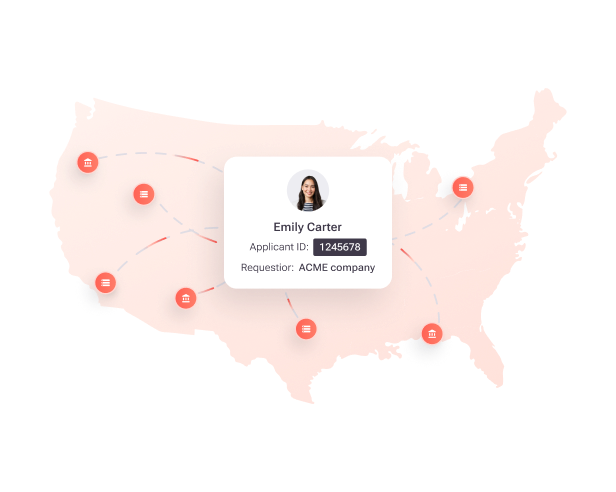
Audit trails are non-negotiable. Every application action, document submission, board vote, and approval decision must be timestamped and retrievable. Platforms that store this data in email threads or shared drives cannot produce the defensible documentation standard described earlier.
The compliance and governance risks outlined above are addressable through specific operational practices that now define well-run associations across Florida.
Operational Best Practices for Condo and HOA Onboarding
Standardized workflows form the foundation of scalable onboarding. Every applicant type, including tenants, purchasers, and adult occupants, should move through a defined sequence with no manual routing decisions required from the CAM. This standardization starts with intelligent form logic that adjusts document requirements based on applicant type and removes irrelevant fields. That approach reduces incomplete submissions before screening begins.
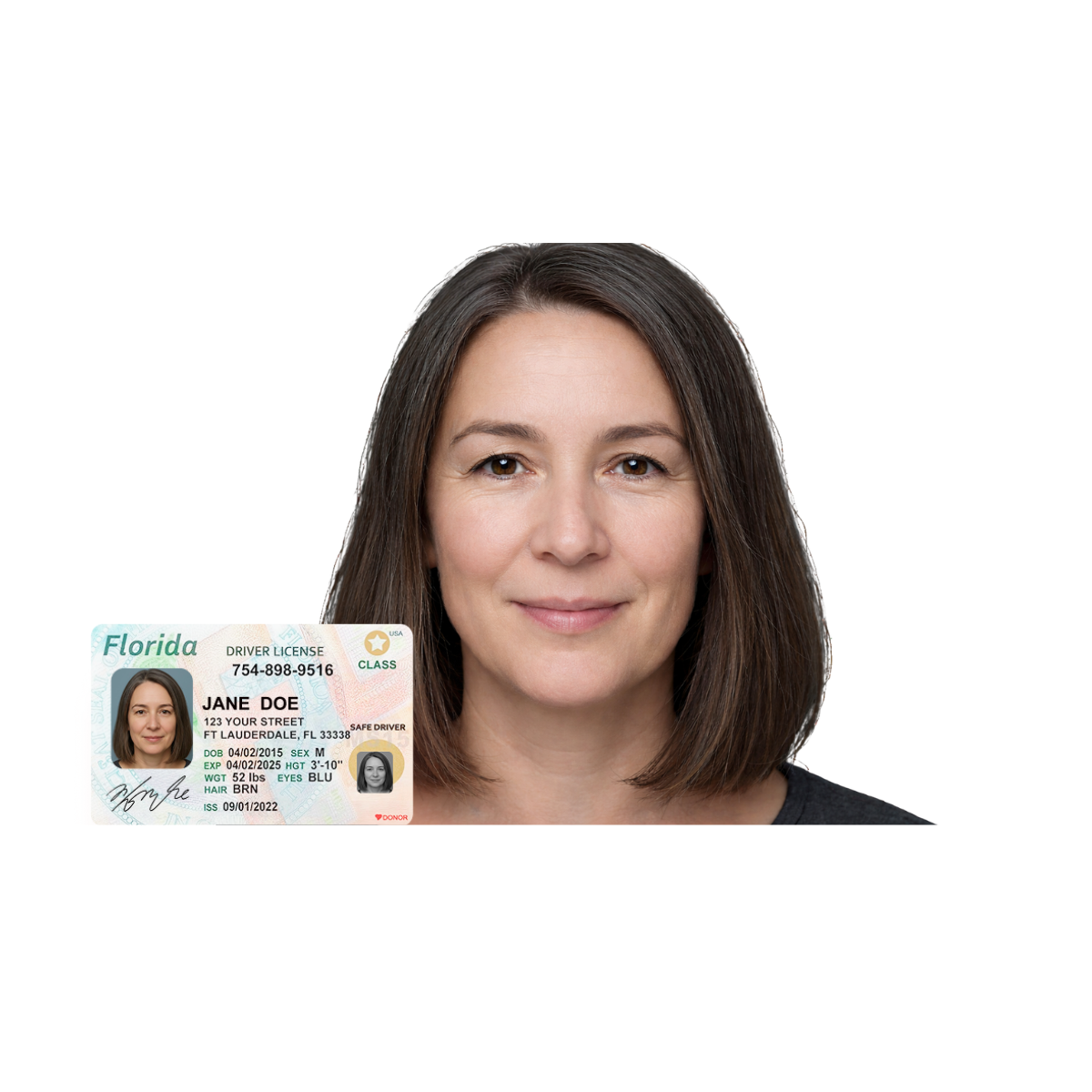
Once the application is complete, biometric identity confirmation has become a best practice for communities with elevated fraud exposure. IDVerify biometric identity verification moves communities from document-based review to verified physical identity confirmation. It combines government ID validation, AI-powered liveness detection, and biometric facial matching inside the same screening workflow, with no external portal redirect.

Centralized lease visibility is equally critical. Lease Tracking connects resident onboarding, unit data, approvals, and lease documentation in one streamlined, real-time workflow. It replaces spreadsheets and scattered email chains with centralized digital records and real-time lease status visibility, including active, pending, expired, or missing leases, while maintaining the same documentation rigor described earlier.
Revenue-sharing models that offset platform costs through application fee collection allow associations to implement enterprise-grade onboarding infrastructure without upfront subscription fees. This structure aligns vendor incentives with association throughput and approval volume.
Evaluating Software for HOA Resident Screening
Selecting HOA resident screening software requires evaluating five criteria: compliance readiness, board access, time savings, fraud prevention, and Florida-specific feature alignment.
Compliance readiness means the platform is a direct credit bureau reseller, not a third-party data aggregator, and includes built-in adverse action workflows and permissible purpose controls. Board access means directors have a dedicated dashboard for reviewing applications, viewing AI-generated summaries, and casting votes without relying on email. Time savings must be measurable. TenantEvaluation clients have documented approval cycle reductions of up to 70 percent and freed up to 50 hours of staff time per day. Fraud prevention now requires biometric verification, not document review alone. Florida-specific features include 55+ application standardization and workflows aligned with Florida condo and HOA governing document structures.

Generic rental platforms, including those widely marketed to multifamily operators, do not meet these criteria for community associations. They lack board dashboards, biometric verification, 55+ standardization, and real-time lease tracking built for association governance.
Comparing AppFolio, Buildium, and TenantEvaluation for Condos
The table below compares leading platforms across attributes that matter most for Florida condo and HOA onboarding. TenantEvaluation appears first as the purpose-built association platform.
| Attribute | TenantEvaluation | AppFolio | Buildium |
|---|---|---|---|
| Onboarding time | Application processing in 5–10 minutes, approval cycles reduced up to 70% | General property management platform, onboarding time varies by manual configuration | Offers onboarding features, no published association-specific cycle time benchmarks |
| Board dashboard access | Dedicated board review and voting panel with AI-generated applicant summaries via QuickApprove accelerated approval workflow | No dedicated board voting dashboard for community associations | No dedicated board voting dashboard for community associations |
| Biometric verification | IDVerify biometric identity verification with liveness detection and facial biometric matching, native to platform | No native biometric identity verification | No native biometric identity verification |
| Lease tracking | Centralized, real-time lease visibility and lifecycle control from application to occupancy with the same documentation rigor | Lease management available within broader property management suite, not association-specific | Lease tracking available, not purpose-built for condo and HOA governance workflows |
| Revenue model | Pay-per-application with revenue sharing, no upfront subscription fees | Monthly subscription pricing | Monthly subscription pricing |
AppFolio and Buildium are capable property management platforms for multifamily and single-family rental portfolios. Neither is purpose-built for board governance, 55+ documentation, or the FCRA-first compliance architecture that Florida community associations require.
Handling Applications in Florida 55+ Communities
Age-restricted communities operating under HOPA must document that at least 80 percent of occupied units have one resident aged 55 or older. They must also maintain and demonstrate policies and procedures for verifying occupant age. This documentation requirement applies to every application cycle, not just initial occupancy.
55+ Communities Verification is a built-in capability within TenantEvaluation that helps Florida condos and HOAs standardize how age-restricted requirements are handled across applications. It reduces manual work, supports documentation consistency, improves operational efficiency, and strengthens internal processes for CAMs and boards managing age-restricted communities. Unlike generic tools that treat 55+ applications as a document checklist item, this capability reflects the real workflows of Florida associations and creates a more structured, scalable process without replacing legal guidance.
How TenantEvaluation Delivers Superior Results
Founded in 2007 and built by property managers, board members, and software engineers with over 50 years of combined experience, TenantEvaluation serves more than 5,000 communities and processes approximately 100,000 applications annually. The platform has generated $150 million for communities through its revenue-sharing model and holds a 4.8 out of 5 Google rating.
A Florida-based management company documented $240,000 in annual savings after switching to TenantEvaluation. The savings came from freeing 50 staff hours per day, cutting processing time by 50 percent, and removing the liability exposure of paper-based sensitive data handling.
As noted in the platform evaluation criteria above, TenantEvaluation maintains direct reseller relationships with TransUnion and Equifax, accessed under strict bureau rules with regular compliance audits. This structure removes gray-market data exposure and protects community associations from liability tied to non-compliant screening sources. FCRA compliance functions as the platform's core architecture, with built-in permissible purpose controls, automated adverse action workflows, and complete audit trails for every application.
Partners include RealManage, Castle Group, FirstService Residential, Campbell Property Management, and Associa, which are among the largest management companies operating in Florida.
Frequently Asked Questions
What makes a resident onboarding platform all-in-one for a condo association?
An all-in-one platform for a condo association handles every stage of the resident intake process inside a single system. These stages include application intake, document collection, identity verification, background and credit screening, board review and voting, approval communication, and lease documentation. The key distinction from generic rental tools is the inclusion of a board dashboard, association-specific compliance controls, and lease lifecycle tracking, all connected to the same applicant record. TenantEvaluation covers all of these stages natively without requiring third-party integrations or manual handoffs between systems.
How does FCRA compliance apply specifically to condo and HOA resident screening?
The FCRA applies whenever a community association uses a consumer report, including credit, criminal, or eviction records, to make a housing decision. The association must have a documented permissible purpose, obtain written authorization from the applicant, and issue a compliant adverse action notice if the application is denied based on report findings. Associations that use non-bureau-direct data sources or that lack documented adverse action workflows carry direct legal exposure. TenantEvaluation is built with these requirements as the operational foundation, including direct bureau reseller relationships with TransUnion and Equifax, strict permissible purpose controls, and automated adverse action workflows.
What is the difference between IDVerify and standard ID document review?
Standard ID document review relies on a CAM or reviewer visually inspecting an uploaded image of a government-issued ID. This process cannot confirm that the person submitting the application is the same person pictured on the ID, and it cannot detect sophisticated synthetic identity fraud. IDVerify biometric identity verification adds three layers that document review cannot replicate. It delivers automated government ID authenticity validation, AI-powered liveness detection that confirms physical presence, and biometric facial matching that compares a live selfie to the ID photo. All three steps run natively inside TenantEvaluation with no external portal redirect, and results are embedded directly in the screening report visible to the CAM.
How does Lease Tracking differ from storing lease PDFs in a shared folder?
Shared folder storage is passive. It holds documents but provides no visibility into lease status, no alerts for expirations, no connection to the application that generated the lease, and no audit trail of who accessed or modified records. Lease Tracking inside TenantEvaluation functions as an active operational workflow. It delivers real-time lease status visibility, including active, pending, expired, or missing leases, automated lease document collection during onboarding, unit-level tracking tied to occupancy records, and a searchable digital history of all lease activity. Every record is audit-ready and connected to the resident's full onboarding file from application submission through occupancy.
Can TenantEvaluation support both large management company portfolios and small self-managed communities?
Yes. TenantEvaluation's platform is configured per community, so each association's governing document requirements, screening criteria, and approval workflows are set up independently within the same system. Large management companies with enterprise portfolios, such as FirstService Residential and Associa, use TenantEvaluation to standardize onboarding across hundreds of communities simultaneously. Self-managed communities benefit from the same automation and compliance infrastructure without needing dedicated administrative staff, because the platform removes the manual follow-up cycles that typically require headcount to manage.
Conclusion: Selecting an All-in-One Platform for Your Association
Generic rental platforms do not match the governance structure, compliance requirements, or operational realities of Florida condo and HOA communities. Board voting dashboards, biometric identity verification, 55+ application standardization, and real-time lease lifecycle tracking now function as baseline requirements for a community association onboarding platform in 2026.
TenantEvaluation is built specifically for this environment, with FCRA compliance as the foundation, direct credit bureau reseller status, and a proven track record across more than 5,000 communities and over 100,000 annual applications. The four capabilities detailed above, including accelerated board approvals, biometric verification, 55+ standardization, and lease lifecycle tracking, are purpose-built for association governance in ways that generic platforms cannot replicate.
