Written by: Luis Teran, Co-founder, CEO, TenantEvaluation | Last updated: June 24, 2026
Key Takeaways for Florida Associations
- Florida condo and HOA associations must follow FCRA, Chapter 718, and Chapter 720. Generic screening tools like ApplyCheck do not fully support these requirements.
- ApplyCheck-style platforms lack board dashboards, Florida-specific workflows, biometric verification, revenue sharing, and centralized lease tracking. These gaps create manual delays and compliance risk.
- TenantEvaluation delivers 5–10 minute processing, real-time board voting, built-in FCRA compliance, and biometric ID verification tailored for Florida communities.
- Purpose-built platforms shorten approval cycles from days to minutes while generating revenue and maintaining full audit trails for statutory compliance.
- Discover how TenantEvaluation streamlines screening and lease management for Florida associations and explore the platform built specifically for community associations.
Background Check Rules for Florida HOAs
Florida HOAs operating under Chapter 720 of the Florida Statutes have clear authority to require background checks as part of their application and approval process, as long as the requirement appears in the association’s governing documents. These documents usually include the declaration, bylaws, or rules and regulations. The association must also follow the FCRA, which requires written consent from the applicant before pulling a consumer report and a documented permissible purpose for that report.
Failure to follow FCRA procedures exposes the association to civil liability. A purpose-built platform collects consent, documents permissible purpose, and issues adverse action notices automatically. Generic tools leave these steps to manual processes, which increases the chance of errors and missed requirements.
Chapter 718 Requirements for Florida Condos
Florida Statute Chapter 718, often called the Condominium Act, governs how condominium associations in Florida are created, operated, and managed. For resident screening, the most relevant provisions address the association’s right of approval over prospective tenants and purchasers, the timelines for board decisions on applications, and the recordkeeping obligations tied to those decisions.
Chapter 718 requires associations to maintain specific records and make them available to unit owners upon request. An approval workflow that does not create a timestamped, auditable record of every application decision exposes the association to risk under this statute. TenantEvaluation embeds these obligations directly into the workflow, instead of treating them as an afterthought.
How Florida HOAs Use Background Checks
Most Florida HOAs with active governing documents use background checks for prospective residents, although the scope and process differ by community. Common checks include criminal history, credit reports, eviction history, and reference verification. The key difference lies in how those checks are handled.
Associations that rely on manual document collection and generic screening platforms see inconsistent results, incomplete applications, and compliance gaps. Associations using a purpose-built platform like TenantEvaluation follow a standardized, FCRA-compliant workflow that covers criminal background, credit, income verification, biometric identity confirmation, and board-ready reporting inside one connected system.
Fraud, Regulation, and the Current Industry Landscape
Identity fraud is rising across Florida condo and HOA communities. Stolen IDs, synthetic identities, and impersonation attempts are slipping through traditional document-based screening processes that were never designed to catch them. At the same time, regulatory pressure on associations has increased, with more scrutiny on recordkeeping, adverse action compliance, and data security.
The industry is shifting from manual, paper-based workflows toward automated platforms, but not all platforms offer the same capabilities. Generic tenant screening tools built for multifamily rentals do not match the governance structure of a Florida condominium association, where board voting, statutory timelines, and audit trail requirements are non-negotiable operational realities.
How Screening and Onboarding Work in Practice
Platform choice matters because it touches every step of the application cycle. In a typical Florida condo or HOA process, the prospective resident submits an application, the CAM reviews it for completeness, documents are collected and verified, a background and credit check is ordered, the board reviews the results and votes, and an approval or denial letter is issued.
Each handoff in this chain can create delays. When the screening platform does not connect these steps, board voting happens over email, lease documents sit in separate folders, and identity verification becomes a manual document review. The cycle then stretches from days to weeks. A connected platform compresses that cycle to minutes by automating each handoff and keeping every stakeholder informed in real time.
Compliance, Risk, and Governance for Florida Boards
Audit trails are mandatory for Florida associations. Every application decision must be defensible, timestamped, documented, and accessible. FCRA compliance requires prompt adverse action notices whenever a consumer report contributes to a denial. Data security rules require encryption and access controls for sensitive personal information, including Social Security numbers and financial data.
Board governance also requires accurate voting records. A screening platform that does not generate these records automatically forces CAMs to create them manually. That manual work introduces error risk and compliance exposure at every step.
Operational Pain Points for Florida Communities
Operational problems for Florida association managers and boards often cluster around four areas. First, lengthy approval cycles arise from manual handoffs and incomplete applications. Second, lease records become fragmented across spreadsheets, email inboxes, and physical folders. Third, boards lack visibility into application status between meetings. Fourth, identity fraud increases because document-only screening cannot reliably detect it.
These problems compound each other. An incomplete application delays the background check. A delayed background check slows the board vote. A board vote conducted over email leaves no auditable record. The result is an approval process that moves slowly, carries more risk, and costs more than necessary.
Best Practices for Modern Resident Screening
Workflow standardization forms the base of an effective screening program. Every applicant should follow the same documented steps, use the same consent forms, provide the same required documents, and face the same approval criteria applied consistently. This consistency creates the baseline that makes fraud detection possible.
Biometric identity verification has become a best practice for communities facing elevated fraud risk. It confirms that the person submitting the application is physically present and matches the government-issued ID on file. Standardization also opens the door to financial improvements. Revenue-sharing models align the platform’s incentives with the association’s financial health, turning application processing from a cost center into a controlled income stream.
Centralized lease tracking then closes the loop between onboarding and occupancy. It ensures that every approved resident’s lease documentation is connected, searchable, and audit-ready from day one.
How to Compare Screening Platforms for Florida Use
Associations evaluating screening platforms should review five core dimensions. Processing speed: the platform should move an application from submission to decision in minutes, not days. Florida-specific customization: the workflows should support Chapter 718 and Chapter 720 requirements without constant manual workarounds.
Board dashboard access: board members should review, vote, and document decisions inside the platform instead of relying on email chains. Compliance defensibility: the provider should act as a direct credit bureau reseller with built-in adverse action workflows and full audit trails. Total cost of ownership: the platform should generate revenue for the association through a fee-sharing model or, at minimum, avoid adding unnecessary operational costs.
Why TenantEvaluation Outperforms ApplyCheck
TenantEvaluation launched in 2007, created by property managers, board members, and software engineers with deep experience in Florida community associations. The platform is built specifically for community associations and management companies, with FCRA compliance as the foundation rather than a late add-on. It processes over 100,000 applications annually across more than 5,000 communities and has generated $150 million for those communities through its revenue-sharing model.
QuickApprove accelerates resident approvals inside one connected platform while preserving control, compliance, and visibility. It replaces email chains and spreadsheets with real-time application tracking, automated communication support, customized approval letters, a personalized welcome package, and a board-ready approval process designed for high-volume seasons and complex onboarding requirements.

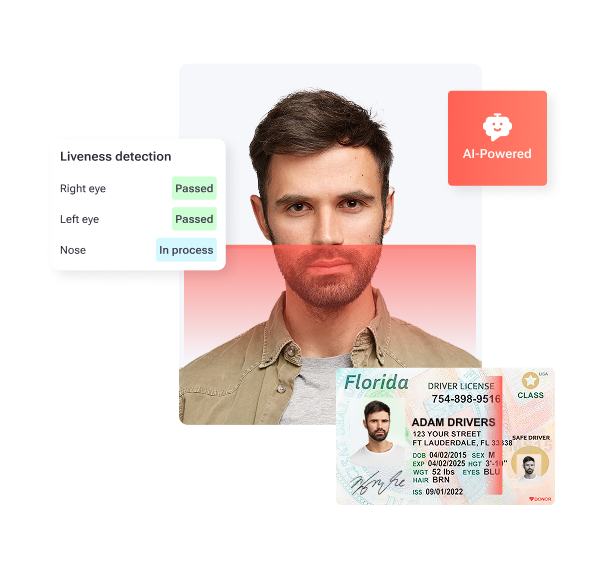
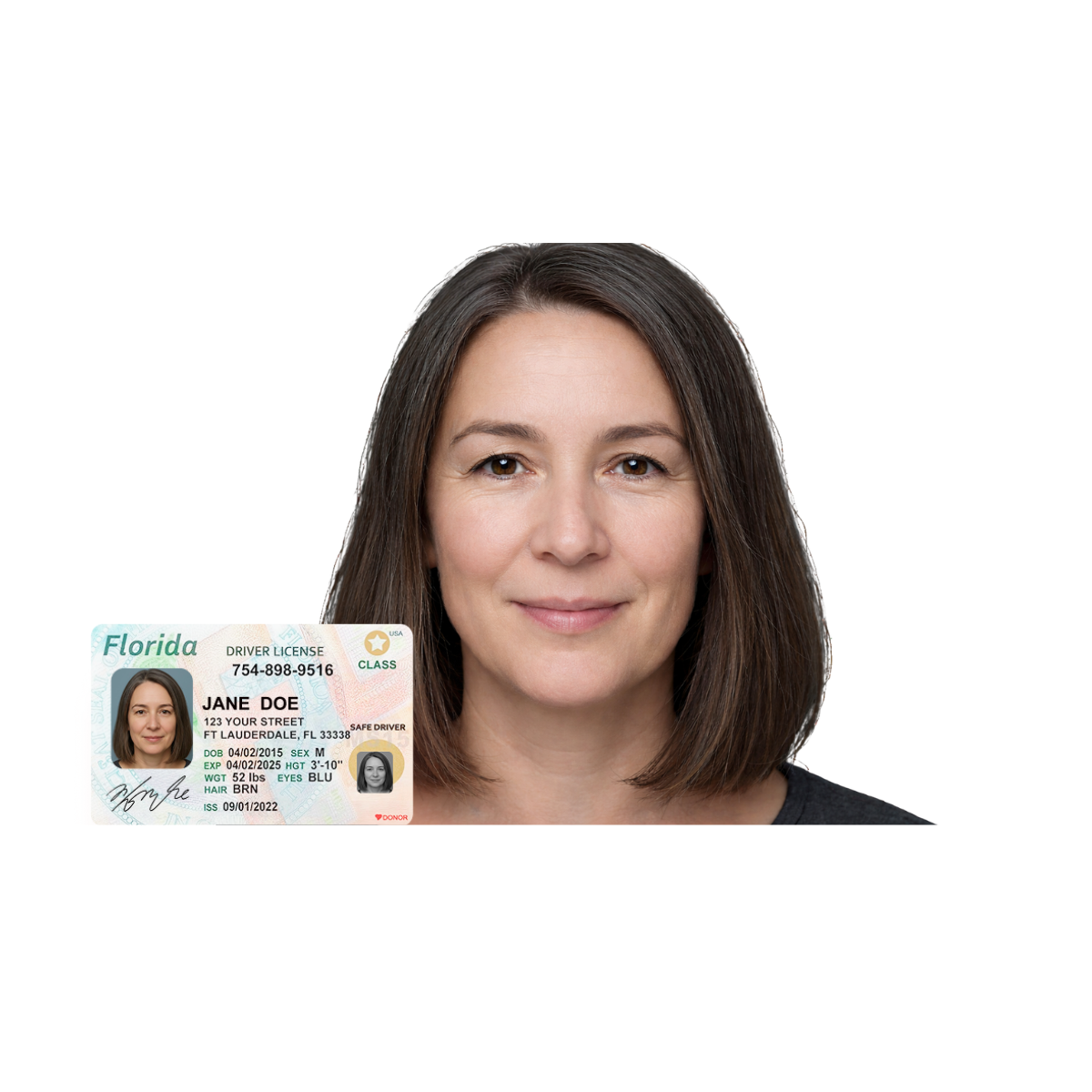
IDVerify+ adds a biometric identity verification layer directly into the screening workflow. It combines government ID validation, AI-powered liveness detection, and biometric facial matching to confirm that applicants are real, present, and matched to their identification before any approval decision. This shifts communities from document-based review to biometric-confirmed identity verification, a capability missing from ApplyCheck-style tools.
55+ Communities Verification reduces manual work, standardizes application handling, and supports documentation consistency for Florida condos and HOAs with age-restricted requirements. It improves operational efficiency and strengthens internal processes while still leaving room for legal guidance where needed.
Lease Tracking provides centralized, real-time lease visibility and lifecycle control from application to occupancy. It connects resident onboarding, unit data, approvals, and lease documentation into one streamlined, audit-ready workflow. This removes spreadsheets, scattered email chains, and operational blind spots. Real-time lease status, automated lease document collection, unit-level tracking, and searchable digital history all live inside one connected platform.
TenantEvaluation acts as a direct reseller of TransUnion and Equifax data, not a third-party scraper. It uses strict permissible purpose controls, automated adverse action workflows, and built-in audit trails for every application.
See how TenantEvaluation works for your community and request a walkthrough of QuickApprove, IDVerify+, and Lease Tracking.
Frequently Asked Questions
How does TenantEvaluation handle FCRA permissible purpose for Florida associations?
TenantEvaluation treats FCRA compliance as the base layer of every workflow. The platform establishes permissible purpose through documented applicant consent collected during the online application process before any consumer report is pulled. As a direct reseller of TransUnion and Equifax data, TenantEvaluation accesses data under strict bureau rules with regular compliance reviews and audits.
Automated adverse action workflows ensure that denial notices are issued correctly and on time. IDVerify+ further strengthens permissible-purpose validation by confirming applicant identity before screening authorization proceeds, which reinforces audit defensibility at every step.
What audit trails are available for board oversight?
Every action inside TenantEvaluation, including application submission, document upload, board vote, approval or denial decision, and communication sent, is timestamped and stored in a searchable, audit-ready digital record. Board members use a dedicated review and voting panel where their decisions are logged automatically.
Lease Tracking extends this audit readiness to occupancy records by connecting lease documentation, unit data, and resident activity into one centralized history. This gives Florida associations a complete, defensible record that satisfies Chapter 718 recordkeeping requirements and FCRA documentation standards without manual record creation.
Can 55+ communities standardize age-restricted documentation without extra manual work?
Yes. TenantEvaluation’s 55+ Communities Verification is a built-in capability designed for Florida condos and HOAs that manage age-restricted application requirements. It standardizes application handling across communities, reduces repetitive manual follow-ups, and supports documentation consistency.
The feature replaces fragmented email chains and PDF-based processes with a structured, scalable workflow. CAMs and boards use it to improve operational efficiency and strengthen internal controls across their 55+ portfolio without adding headcount or creating new manual processes. It supports documentation and consistency while still leaving legal advice to association counsel.
How quickly can boards review and vote on applications?
With QuickApprove, board members use a dedicated review and voting panel inside TenantEvaluation that shows real-time application status, AI-generated applicant summaries, and a structured voting workflow without email chains or spreadsheets. Applications that once waited days for a board meeting can be reviewed and decided as soon as the screening report is complete.
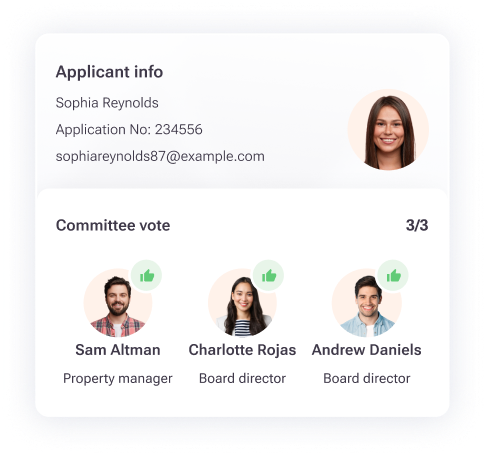
The entire process from application submission to board decision can finish in a fraction of the time required by manual workflows, with every vote documented automatically for compliance. QuickApprove supports CAMs, boards, and property management teams and handles high-volume seasons and complex onboarding requirements while preserving control, compliance, and visibility.
Conclusion: Choosing a Platform Built for Florida Communities
Florida condo and HOA associations that continue using generic screening tools like ApplyCheck accept unnecessary compliance risk, operational drag, and revenue loss. The gap between a purpose-built platform and a generic background check tool is significant. One delivers a five-minute approval workflow with a board dashboard, biometric verification, and centralized lease visibility. The other relies on a five-to-ten-day manual process with no board access, no revenue sharing, and no Florida-specific compliance layer.
With the track record and capabilities described throughout this article, TenantEvaluation offers Florida associations a clear alternative. If your association is reviewing its current screening process, the comparison is straightforward. See the difference a purpose-built platform makes.
