Written by: Luis Teran, Co-founder, CEO, TenantEvaluation | Last updated: June 19, 2026
Key Takeaways
- A repeatable 7-step document review process helps Florida buyers spot financial red flags, lifestyle restrictions, and board dysfunction before closing on an HOA property.
- Request the full resale package immediately after contract acceptance, then read the Rules and Regulations section first to avoid lifestyle mismatches early.
- Financial health checks, including reserve funding near recommended levels, delinquency rates below 15%, and current Structural Integrity Reserve Studies, reduce the risk of surprise costs or lender denials.
- Board meeting minutes and estoppel certificates reveal enforcement patterns, litigation risks, and potential HOA fraud such as illegal reserve transfers that static documents alone may miss.
- TenantEvaluation converts HOA governing documents into automated, FCRA-compliant screening criteria for Florida communities—see how it works for your community.
The Best Way to Screen HOA Rules and Regulations: 7-Step Document Review Process (2026)
- Request the full resale package immediately after contract acceptance. A standard HOA resale package includes the Declaration (CC&Rs), bylaws, rules and regulations, architectural guidelines, current operating budget, recent financial statements, reserve fund information, approved or pending special assessments, the seller’s account history, pending violation status, insurance summary, and required buyer acknowledgment forms. In Florida, associations must issue HOA estoppel certificates within 10 business days of receiving a request, so submit the request as soon as the contract is signed.
- Read the Rules and Regulations section first. This section, typically 5–25 pages, covers pet restrictions, parking rules, use-of-land rules, noise control, and landscaping restrictions. Compare these rules against your lifestyle plans before reviewing financials. This step prevents wasted time on communities that clearly conflict with how you plan to live in the property.
- Review the CC&Rs and Bylaws for decision-making structure. Identify caps on annual dues increases, the process for changing rental policy, supermajority thresholds for major decisions, and whether the association carries FHA approval. Florida House Bill 1203 requires HOA architectural review committees to reasonably and equitably apply governing-document standards and to provide written notice citing the specific rule relied upon when denying a parcel owner’s request. Vague or contradictory language in the CC&Rs is a red flag because it makes consistent enforcement difficult.
- Audit the financials: budget, reserve study, and delinquency rate. Confirm the current operating budget, the last 2–3 years of financial statements, the most recent reserve study, and the current reserve balance. Use the reserve study’s recommended funding level as your benchmark for financial health. Lenders commonly require at least 10% of annual operating income allocated to reserves and will deny financing if more than 15% of owners are over 60 days delinquent on dues.
- Examine the reserve study for structural components. Florida law requires Structural Integrity Reserve Studies (SIRS) for certain structural components, and reserve waivers are prohibited after December 31, 2024. A GoverningDocs analysis of Florida SIRS found that some associations are underfunded relative to their reserve study recommendations. Buyers should confirm that structural components with limited remaining useful life have matching reserves.
- Review 12–24 months of board and annual meeting minutes. Minutes reveal recurring complaints, maintenance deferrals, upcoming capital projects, enforcement patterns, and any discussed but unapproved special assessments. Repeated agenda items around the same repair or the same rule violation signal systemic problems that financials alone will not show.
- Verify the estoppel certificate and litigation disclosures. Florida Statute 720.30851 requires HOAs to issue estoppel certificates listing all amounts owed on a property, which protects buyers from inheriting undisclosed dues, fines, or fees. Pending litigation involving construction defects, contractor disputes, or financial matters is a major red flag that almost always causes lenders to deny a mortgage until the lawsuit is resolved.
HOA Rules and Regulations Checklist: Red Flags to Watch in 2026
| Category | What to Check | Florida-Specific Red Flag |
|---|---|---|
| Reserve Funding | Percent funded vs. reserve study recommendation | Below recommended funding levels, components at zero remaining useful life, or a study older than 5 years or missing |
| Special Assessments | History of assessments and upcoming capital projects without funding | $9,000 per-unit assessment possible in a 100-unit building with only $100K in reserves needing a $1M roof |
| Rental Restrictions | Rental caps, minimum lease terms, and short-term rental bans | Strict rental bans or caps that conflict with the buyer’s investment plans and no clear amendment process |
| Pet Policies | Breed restrictions, weight limits, and number of pets | Blanket breed bans or weight caps not disclosed upfront and no variance process |
| Parking Rules | Assigned spaces, guest parking limits, and vehicle type restrictions | Unauthorized parking is a common HOA violation in many Florida communities |
| Architectural Standards | Approval process for exterior changes, timelines, and fees | Exterior modifications without prior approval can be costly in Florida communities |
| Delinquency Rate | Percentage of owners 60+ days past due | Above 15% |
| Litigation | Active or threatened lawsuits | Construction defect or financial litigation typically blocks mortgage approval |
| Reserve Transfers | Board minutes referencing reserve account activity | Illegal reserve transfers, which divert reserve funds to operating accounts, represent a documented form of HOA fraud |
Signs of a Dysfunctional HOA Board
Board meeting minutes are the most reliable diagnostic tool for identifying dysfunction. The following indicators, drawn from governing document patterns and Florida association management practice, signal elevated risk:
- Inconsistent enforcement. Minutes that show selective application of rules, such as fining some owners for violations while ignoring identical violations by others, indicate the board lacks the process required under Florida House Bill 1203, which requires HOA architectural review committees to reasonably and equitably apply governing-document standards and to provide written notice citing the specific rule relied upon when denying a parcel owner’s request.
- Repeated tabling of the same agenda items. Capital repair discussions, reserve study updates, or budget approvals that appear across multiple consecutive meeting minutes without resolution signal deferred decision-making and potential financial deterioration.
- High board member turnover. Frequent resignations or contested elections noted in annual meeting minutes indicate internal conflict that disrupts operational continuity.
- Vague or missing financial reporting. Boards that present budgets without line-item detail, omit reserve fund balances, or reference financial statements that are not included in the resale package are operating without the transparency that Florida statutes require.
- Undisclosed or minimized litigation. References to legal counsel fees in operating budgets without corresponding litigation disclosures in the resale package suggest the board is not providing complete information to prospective buyers.
- Reserve account irregularities. Any board minute referencing transfers from reserve to operating accounts without a documented vote and legal authorization warrants immediate follow-up, as illegal reserve transfers represent a documented form of HOA fraud.
Common HOA Violations to Watch For
Common violations in Florida communities help buyers assess enforcement culture and anticipate friction points after move-in. The following categories appear frequently in Southwest Florida communities:
- Trash and waste container violations. Leaving bins out beyond the day of pickup ranks among the most cited violations in managed Florida communities. Buyers should confirm the association’s enforcement schedule and fine structure before closing.
- Unauthorized parking. Parking in restricted resident spaces or unauthorized guest spaces is a common violation that typically results from homeowners or guests being unaware of community parking guidelines. Review the parking rules section of the CC&Rs and confirm whether towing is an authorized enforcement remedy.
- Unapproved exterior modifications. New landscaping, repainting, fixture additions, or facade changes performed without prior architectural committee approval can be costly in Florida. Buyers planning renovations should request the architectural approval timeline and fee schedule as part of the resale package review. Understanding these common violations also helps buyers assess how consistently the board enforces its own rules, which connects directly to how associations turn those rules into repeatable screening criteria.
Turning Rules into Screening Criteria for Florida Communities
For buyers, insight into how associations screen applicants reveals enforcement consistency and operational maturity. For CAMs and boards managing those communities, the 7-step review process above identifies the rules, but converting those rules into enforceable, repeatable applicant screening criteria creates a separate operational challenge. Manual conversion involves extracting rental restrictions, pet policies, credit thresholds, income requirements, and document checklists from governing documents and applying them consistently to every applicant. Inconsistency in that application creates fair housing liability. Florida community associations performing background screening are treated as landlords under the FCRA and must have permissible purpose plus proper notice and authorization before obtaining consumer reports, with class-action exposure for associations that use non-compliant authorization forms.
TenantEvaluation is the all-in-one resident screening and onboarding platform built specifically for Florida community associations and management companies, with FCRA compliance as the foundation, not an afterthought. The platform configures each community’s governing documents, screening criteria, and association workflows directly into a digital application process, which converts static CC&Rs into automated, enforceable onboarding criteria without manual re-entry or interpretation errors. TenantEvaluation is a legitimate reseller of TransUnion and Equifax data, accessed under strict bureau rules, with built-in adverse action workflows and complete audit trails for every application.
For Florida age-restricted communities, 55+ Communities Verification is a built-in capability that standardizes how age-restricted requirements are handled across applications. This feature reduces manual work, improves documentation consistency, and strengthens internal processes for Florida condos and HOAs managing 55+ communities.

Turn your governing documents into automated screening criteria—see the platform in action.
Board Workflow: Replacing Email Chains with QuickApprove (2026)
After governing documents are converted into screening criteria, the approval workflow itself often becomes the operational bottleneck. Applications stall while they wait for board review. Managers follow up manually. Applicants ask for status updates. Board members lack a clear view of what requires a decision.
QuickApprove is TenantEvaluation’s accelerated approval workflow built for CAMs, boards, and property management teams inside one connected platform. It provides real-time application tracking so managers always know where each application stands, a board-ready approval process with a dedicated review and voting dashboard that eliminates email threads, automated communication support that keeps applicants informed without manual follow-up, and customized approval letters with personalized welcome packages that complete the onboarding loop. These capabilities replace email chains and spreadsheets while preserving control, compliance, and visibility.
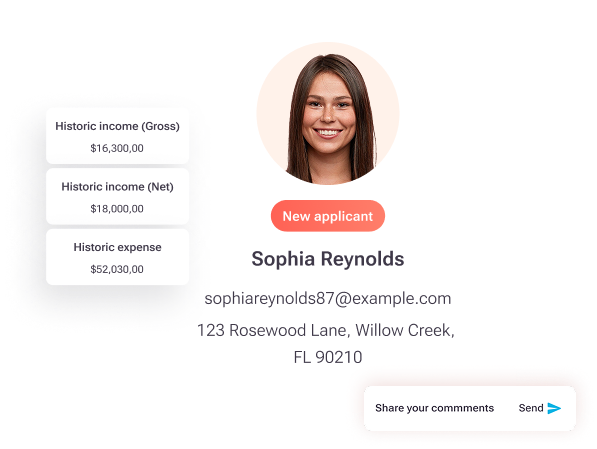
QuickApprove is designed for high-volume seasons and communities with complex onboarding requirements. Boards gain direct access to summarized applicant reports and a structured voting workflow. Managers handle fewer manual follow-ups and move applications to decision faster.
Lease Tracking, also built into TenantEvaluation, connects resident onboarding, unit data, approvals, and lease documentation into one centralized, real-time, audit-ready workflow. This connection eliminates spreadsheets, missing leases, and operational guesswork from application to occupancy and sets up a smoother experience for residents and staff.
Frequently Asked Questions
Where can Florida buyers obtain HOA governing documents before purchase?
Florida buyers can request the full resale package from the seller, the HOA management company, or the association directly. The package typically includes the Declaration (CC&Rs), bylaws, rules and regulations, architectural guidelines, current budget, reserve study, financial statements, meeting minutes, estoppel certificate, and litigation disclosures. Florida Statute 720.30851 requires HOAs to issue estoppel certificates upon request, and Florida House Bill 59 requires HOAs to provide copies of the association’s rules and covenants to every member before October 1, 2024, and to every new member thereafter (plus updated copies upon amendment). Buyers should request documents immediately after contract acceptance to allow sufficient time for review within the contingency period.
How long does it take to review an HOA resale package?
A methodical line-by-line review of an HOA resale package takes 2–4 hours. Associations must issue estoppel certificates within 10 business days of a request, and buyer review periods under standard contract contingencies commonly run 5–15 business days. Buyers should start review early in the contingency period because follow-up questions to the association, lender, or attorney require additional time.
What are the most important financial red flags in a Florida HOA resale package?
The most critical financial red flags are reserve funding significantly below the reserve study recommendation, a reserve study that is more than five years old or missing entirely, multiple structural components at zero remaining useful life, a history of frequent special assessments, a delinquency rate above the 15% threshold mentioned in step 4, and active litigation involving construction defects or financial disputes. Florida’s Structural Integrity Reserve Study mandate took effect in March 2022 (with 2023 amendments), requiring the first SIRS by December 31, 2024 for certain associations, which makes reserve study review non-negotiable for any condominium or HOA purchase in the state.
How do CAMs and boards convert HOA rules into applicant screening criteria without creating fair housing liability?
The safest approach is to document the specific criteria derived from governing documents, such as credit score minimums, income thresholds, rental restrictions, and pet policies, and then apply them consistently to every applicant using a platform that maintains FCRA-compliant authorization, disclosure, and adverse action workflows. Inconsistent application of criteria, or reliance on self-obtained public records for denial decisions, creates significant liability exposure. Platforms like TenantEvaluation are built specifically for Florida community associations, configuring each community’s governing documents into automated screening criteria with built-in compliance controls, audit trails, and direct credit bureau data access.
What is a Structural Integrity Reserve Study and why does it matter for Florida buyers in 2026?
A Structural Integrity Reserve Study (SIRS) is a mandatory engineering assessment required by Florida law for condominiums and HOAs covering certain structural components. Florida’s Structural Integrity Reserve Study mandate took effect in March 2022 (with 2023 amendments), requiring the first SIRS by December 31, 2024 for certain associations and prohibiting reserve waivers. A SIRS quantifies the remaining useful life and replacement cost of each covered component and recommends annual reserve contributions. Buyers should request the most recent SIRS and compare the association’s actual reserve balance against the study’s recommended funding level, using the recommendation as the primary indicator of financial health.
Conclusion: Use a Clear Process to Protect Your Florida HOA Purchase
Screening HOA rules and regulations before purchase or move-in works best as a structured, 7-step process that covers lifestyle restrictions, financial health, reserve adequacy, board behavior, and enforcement patterns. Florida’s recent regulatory environment, including the 2024 SIRS deadline and new HOA transparency requirements, makes this review more consequential than in any prior cycle. For CAMs and boards, the review process is only the starting point. Converting governing documents into consistent, FCRA-compliant screening criteria requires a platform built for that specific purpose.
TenantEvaluation is the Florida-specific, all-in-one resident screening and onboarding platform that automates that conversion, serving 5,000+ communities and processing 100,000+ applications annually with FCRA compliance as the foundation. See TenantEvaluation in action for your Florida community.
