Written by: Luis Teran, Co-founder, CEO, TenantEvaluation | Last updated: July 8, 2026
Key Takeaways
- Florida HOAs manage fragmented documents across declarations, CC&Rs, bylaws, and amendments that can span hundreds of pages, so manual rule searches consume significant time.
- Two main software categories support these communities: AI document-analysis tools for natural-language rule questions and traditional HOA management platforms for daily operations and violation tracking.
- AI tools excel at interpreting governing documents and answering resident questions, but they do not enforce rules or log violations.
- Associations need a dedicated enforcement layer that applies interpreted rules consistently during resident screening and onboarding, closing the gap between interpretation and approval decisions.
- TenantEvaluation provides this enforcement layer and connects rule interpretation to compliant resident approvals; learn more.
Why Florida Associations Struggle to Locate and Compare Rules in 2026
Florida community associations work under layered governing documents, including declarations, CC&Rs, bylaws, rules and regulations, and amendments that often span hundreds of pages. When a resident asks whether a satellite dish is permitted or a CAM needs to confirm a lease-term restriction before approving an application, staff may spend considerable time searching for the controlling clause. That time adds up quickly across dozens of similar questions each month.
Technology adoption in community associations reached a tipping point in 2026, and digital payments, online accounting, and resident portals are now common. The gap between communities using integrated platforms and those still running on spreadsheets and email threads continues to widen from an operational standpoint. Many associations managing 50 or more units use dedicated software for at least some functions, but consolidated single-platform users operate more efficiently than those juggling several disconnected tools.
The core friction is document fragmentation across multiple systems and formats. A board member who spends 30 to 60 minutes per day responding to routine resident questions can redirect that time entirely when a well-configured tool trained on community-specific CC&Rs, rules, and bylaws handles the front line. For management companies overseeing multiple communities, this time savings multiplies when the same tool supports cross-community covenant comparison.
How to Compare CC&Rs Across Communities
Comparing covenants across multiple communities, a common need for management companies with large portfolios, works best with a clear sequence. The process involves three connected steps.
- Digitize all governing documents into searchable, text-based PDFs. Outdated or scan-only PDFs create accuracy problems for AI tools, so clean source files are a prerequisite for reliable search results.
- Upload documents to an AI document-analysis tool that supports natural-language querying. AI systems trained on governing documents can read, interpret, and extract relevant clauses in seconds, which allows quick answers to questions such as whether a short-term rental restriction applies.
- Record extracted clauses in a side-by-side reference document, and note the source section and amendment date for each community. This reference layer then supports consistent enforcement decisions by managers and boards.
Associations should audit their current data processes first and map where documents live, such as spreadsheets, PDFs, inboxes, and property management systems. This mapping clarifies which sources are structured or unstructured before a tool is selected.
AI Tools That Answer Questions from Your Bylaws
AI-powered search tools can understand natural language questions such as “Can I install solar panels on my home?” and direct homeowners to the relevant architectural guidelines, application requirements, and governing documents without a manager response. This capability defines the AI document-analysis category and explains its rapid adoption.
Juliette Hunter, Senior Customer Success Manager at Condo Control and licensed property manager with more than 16 years of experience, notes that AI resolves routine issues before they reach managers. As a result, the items that reach a manager’s desk are the ones that genuinely require judgment, such as complex disputes, board relationships, and strategic decisions.
Limitations remain significant despite these advantages. Kovitz Shifrin Nesbit advises that boards relying solely on AI for legal decisions involving governing documents risk liability because AI tools may generate errors or hallucinate citations. A Stanford University study of purpose-built legal AI tools found they produce errors more than 17% of the time. The study also cited prior work showing that general-purpose AI hallucinates on 58–82% of legal queries. AI document tools therefore function as interpretation aids, not enforcement systems.
How Rule Interpretation Software Differs from Violation Management Platforms
Rule interpretation tools and violation management platforms support different stages of the same workflow, and many associations mix them up. Confusion between these categories often creates gaps in enforcement and documentation.
Rule interpretation software answers what the governing document says. It accepts document uploads, enables natural-language queries, and returns cited excerpts that explain the rule. It does not log violations, generate notices, or track enforcement history across residents or units.
Violation management software answers whether a rule has been broken and what happens next. Purpose-built HOA platforms provide customizable violation tracking, automated notices, escalation rules, and board approval steps that work together to automate the full HOA enforcement cycle.
Best-practice workflows separate rule interpretation from enforcement and use AI-assisted violation tracking to apply standards uniformly, regardless of resident identity or reporter. As noted earlier, AI document tools are interpretation aids, not enforcement systems, so they help identify what the rules say but cannot make the judgment calls required for consistent enforcement. Enforcement matters, neighbor disputes, financial hardship requests, architectural variances, and community conflicts require human judgment that document-query systems are not designed to provide.
Comparing AI Rule Tools and Traditional HOA Platforms
| Capability | AI Rule Interpretation Tools (Solume, HeyNeighbor, HomeHerald) | Traditional HOA Management Platforms (AppFolio, PayHOA, Vantaca) |
|---|---|---|
| Document upload & indexing | Accepts PDF uploads of CC&Rs, bylaws, and amendments, then indexes them for natural-language search | Stores governing documents in a document library, and search is typically keyword-based |
| Natural-language rule queries | Core feature that returns cited clause excerpts in plain English | Not a primary feature, and AI add-ons such as Vantaca AI agents focus on workflow automation, not document querying |
| Violation logging | Limited or absent, so interpretation output must be transferred manually to an enforcement system | Core feature that supports customizable violation tracking, automated notices, and escalation rules |
| Enforcement workflow | Not designed for enforcement, and boards risk liability if AI output replaces legal or managerial review | Supports board approval steps, escalation, and resolution tracking within the platform |
When AI Rule Interpretation Tools Fit Best
AI document-analysis tools work best when the primary need is answering plain-English questions about governing documents, comparing covenant language across communities, or enabling resident self-service on policy questions. Platforms such as ActionLife’s AVA chatbot analyze each association’s governing documents and generate structured answers to key questions about rules, responsibilities, and processes.
These tools suit associations that have already digitized their governing documents, need to reduce manager time spent on routine resident inquiries, or manage multiple communities with varying covenant language that requires frequent cross-reference, as discussed earlier. Once you have interpreted your rules, the next step is applying them consistently during resident screening. See how TenantEvaluation’s enforcement layer turns interpreted rules into compliant approvals.
When Full Management and Enforcement Platforms Fit Best
Traditional HOA management platforms are the stronger choice when the association needs an integrated operational system that covers accounting, assessment collection, work orders, resident communication, violation tracking, and board document storage. The shift in HOA technology adoption is toward consolidation, with these functions increasingly living in one integrated system.
Regulatory oversight in Florida has increased requirements around online document accessibility, digital communication tools, and transparent financial reporting. A full management platform therefore becomes the operational backbone for most mid-to-large associations that must meet these standards.
Neither AI rule tools nor traditional management platforms address the specific workflow of applying interpreted rules consistently during resident screening and onboarding. That workflow is the point where rule interpretation must translate into a documented approval or denial decision for each applicant.
Decision Matrix by Community Size and Use Case
The following criteria help associations match their situation to the right tool category.
- Self-managed communities under 50 units with frequent resident questions about rules benefit most from an AI document-analysis tool as a primary investment.
- Management companies overseeing multiple communities that need cross-covenant comparison gain value from an AI document-analysis tool for interpretation, combined with a management platform for operations.
- Associations with active violation enforcement programs should prioritize a traditional HOA management platform with built-in violation workflows.
- Communities processing high application volumes for rentals, resales, or seasonal occupancy changes need a dedicated resident screening and onboarding platform as the enforcement layer that connects interpreted rules to approval decisions.
- Florida condos and HOAs with 55+ age-restricted requirements benefit from a platform with built-in age-restricted documentation workflows that standardize handling across applications.
How Rule Enforcement Works from Interpretation to Decision
Interpreted rules require a structured process before they affect real applications. After an AI tool identifies that a community’s CC&Rs require a minimum lease term of six months, that interpretation must be applied consistently to every incoming application. Each application then needs verification against the submitted lease, documentation in an approval record, and storage in an audit-ready format.
FirstService Residential recommends using an intake process that separates rule issues from neighbor issues and directs genuine rule violations through a documented enforcement process. Transparent HOA rule enforcement requires a written board-approved procedure, reliable documentation, consistent notices and timelines, and board oversight of enforcement trends.
The enforcement layer, which is the system that applies interpreted rules during resident screening and onboarding, forms a distinct third category that neither AI document tools nor traditional management platforms fully occupy. This is where TenantEvaluation’s QuickApprove and Lease Tracking operate.
When to Add Screening and Onboarding Software
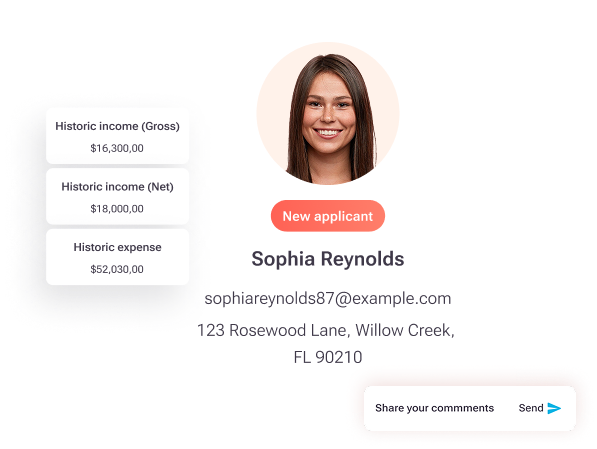
TenantEvaluation serves as the enforcement layer that connects rule interpretation to compliant resident approvals. Founded in 2007 and built specifically for Florida community associations and management companies, TenantEvaluation provides an all-in-one resident screening and onboarding platform with FCRA compliance as the foundation. The platform has processed more than 100,000 applications annually across over 5,000 communities and has generated $150 million for those communities.
QuickApprove accelerates resident approvals inside one connected platform and gives CAMs, boards, and property management teams real-time application tracking. It also supports a board-ready approval process, automated communication, customized approval letters, and a personalized welcome package, while preserving control, compliance, and visibility. Communities with high-volume seasons or complex onboarding requirements benefit most from this structure.
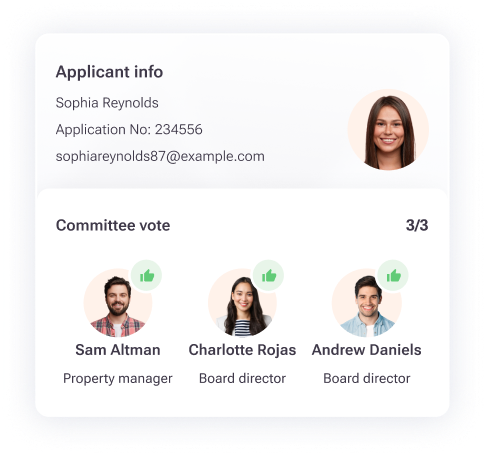
Lease Tracking delivers centralized, real-time lease visibility and lifecycle control by connecting resident onboarding, unit data, approvals, and lease documentation into one streamlined, audit-ready workflow. It provides real-time lease status, including active, pending, expired, or missing, along with automated lease document collection during onboarding, unit-level tracking, and searchable digital history. This setup replaces spreadsheets and scattered email chains from application to occupancy.
For Florida condos and HOAs managing age-restricted communities, 55+ Communities Verification standardizes how age-restricted requirements are handled across applications. This standardization reduces manual work, improves documentation consistency, and strengthens internal operational control. See how QuickApprove and Lease Tracking work together in a live walkthrough and request your personalized demo.

Implementation Checklist for 2026 Rollouts
- Audit all governing documents, including declarations, CC&Rs, bylaws, rules and regulations, and all recorded amendments, and convert any scan-only PDFs to searchable text format. Clean, searchable documents form the base for accurate AI and search tools.
- Once documents are digitized, select an AI document-analysis tool if cross-community covenant comparison or resident self-service Q&A is the primary need, and verify that the tool cites source sections and supports amendment versioning.
- If integrated operations are the main priority rather than document interpretation, select a traditional HOA management platform that handles accounting, violation tracking, work orders, and board governance.
- Identify the resident screening and onboarding workflow as a separate process that needs a dedicated enforcement layer applying interpreted rules consistently at the point of application review and approval.
- Configure the screening platform to reflect each community’s specific governing document requirements, including minimum lease terms, credit thresholds, required documents, and age-restriction criteria.
- Establish a board-approved written enforcement procedure that defines how AI-interpreted rules translate into documented approval or denial decisions, and include human review at every decision point that affects a resident’s housing status.
- Verify that all screening data handling meets FCRA requirements, including permissible purpose controls, adverse action workflows, and audit trail retention.
- Train CAMs and board members on the distinction between interpretation tools, management platforms, and the screening enforcement layer, and define which team members operate each system.
Frequently Asked Questions
What is the best HOA management software?
The best choice depends on the association’s primary operational need. For integrated operations that include accounting, violation tracking, work orders, and resident communication, platforms such as AppFolio, PayHOA, and Vantaca are widely used. For natural-language rule queries and cross-community covenant comparison, AI document-analysis tools are a stronger fit. Neither category treats resident screening and onboarding as a dedicated enforcement workflow. Florida associations that process significant application volume gain the most value by adding a purpose-built screening and onboarding platform such as TenantEvaluation alongside their management software.
Is QuickBooks good for an HOA?
QuickBooks supports general accounting functions but does not address HOA-specific workflows. It lacks native violation tracking, governing document storage, board voting tools, resident portals, and application processing capabilities. Most associations that use QuickBooks for accounting still rely on separate tools for operations, document management, and resident screening. Purpose-built HOA management platforms consolidate these functions and reduce the operational overhead that comes from managing multiple disconnected systems.
What is the difference between rule interpretation software and enforcement software for HOAs?
Rule interpretation software answers what a governing document says by accepting document uploads and returning cited clause excerpts in response to plain-English questions. Enforcement software applies those interpreted rules during operational workflows by logging violations, generating notices, tracking escalation, and documenting approval decisions. A third category, resident screening and onboarding platforms, applies interpreted rules specifically at the point of application review. This category ensures that every incoming resident is evaluated against the community’s governing document requirements in a consistent, documented, and FCRA-compliant process.
How do Florida CAMs ensure consistent rule application during resident screening?
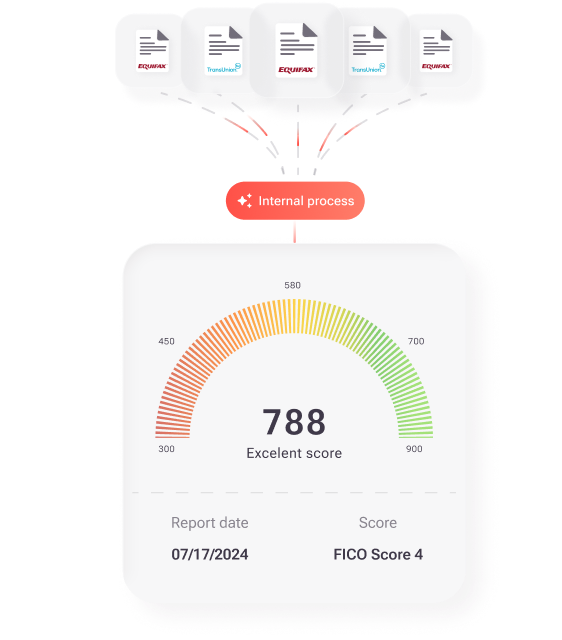
Consistent rule application during screening requires a platform that encodes each community’s specific governing document requirements, including lease term minimums, credit thresholds, required documents, and age-restriction criteria, into the application workflow itself. When requirements are embedded in the screening platform rather than applied manually by individual reviewers, every application is evaluated against the same criteria. TenantEvaluation’s custom setup for rules and compliance configures each community’s specific screening criteria into the platform, and QuickApprove provides a board-ready approval process with real-time tracking and automated communication support. This structure reduces the manual variation that creates inconsistency and liability exposure.
Do AI document tools replace the need for legal counsel in Florida community associations?
AI document tools do not replace legal counsel for Florida community associations. Kovitz Shifrin Nesbit advises that boards relying solely on AI for legal decisions involving governing documents risk liability because AI tools may generate errors or hallucinate citations. AI tools are not reliable for tracking specific statutes and legal requirements that differ between condominium and homeowner association communities under Florida law. AI document tools work best for routine information retrieval and resident self-service, while legal interpretation, enforcement decisions, architectural variance rulings, and fair-housing determinations require qualified human review.
Conclusion: Audit Your Document Search and Enforcement Layers
Florida community associations in 2026 operate across three distinct software layers: AI document-analysis tools for rule interpretation, traditional management platforms for operations and violation tracking, and dedicated screening and onboarding platforms for consistent resident approvals. Confusing these categories often creates gaps, most commonly the absence of a structured enforcement layer that applies interpreted rules at the point of application review.
CAMs and HOA boards that evaluate their current technology stack gain clarity by auditing each layer separately. This audit should cover how governing documents are searched and compared, how operations and violations are managed, and how incoming residents are screened and approved against community-specific requirements. The third layer usually concentrates the most significant compliance and operational risk. Find out where your enforcement gaps are and get a personalized workflow assessment with TenantEvaluation.
