Written by: Luis Teran, Co-founder, CEO, TenantEvaluation | Last updated: June 24, 2026
Key Takeaways for Florida Condo Screening
- Florida condominium associations need resident screening platforms that handle board approvals, FCRA compliance, biometric fraud prevention, and 55+ documentation. Generic landlord tools do not cover these needs.
- Effective association screening platforms provide direct credit bureau reseller status, dedicated board dashboards, biometric identity checks, standardized 55+ documentation, and centralized lease tracking.
- Email chains and disconnected PDFs increase administrative work, compliance risk, and approval delays. End-to-end platforms remove these bottlenecks while preserving board control.
- TenantEvaluation ranks first among providers because it is purpose-built for community associations, delivers FCRA-first compliance, supports biometric verification, powers board voting, and manages the lease lifecycle. Florida CAMs and boards have documented significant time and cost savings.
- Associations that want to modernize screening, reduce fraud risk, and streamline governance should review TenantEvaluation at TenantEvaluation to see how the platform supports Florida condominium requirements from application through occupancy.
Why Screening Now Sits at the Center of Florida Condo Governance
Florida’s condominium market is one of the most active in the United States. Thousands of associations manage complex onboarding requirements across diverse resident populations. Community Association Managers (CAMs), boards, and property management companies face rising identity fraud, stricter Fair Credit Reporting Act (FCRA) enforcement expectations, age-restricted community documentation obligations under the Housing for Older Persons Act (HOPA), and governance requirements that demand transparency and auditability.
Generic landlord screening tools do not address these structural needs. They were built for individual landlords managing single-family rentals, not for boards voting on applications or CAMs tracking lease lifecycles across hundreds of units. They also do not standardize age-restricted documentation at scale for 55+ communities. The gap between what generic tools offer and what Florida condominium associations require has widened significantly entering 2026.
Core Criteria for Evaluating Association-Ready Screening Platforms
Associations need evaluation criteria that go beyond basic background check delivery. These dimensions show whether a platform is truly built for community association governance or lightly adapted from a generic rental tool.
FCRA Compliance Architecture: The platform must operate as a direct credit bureau reseller, not a third-party data aggregator. It needs built-in adverse action workflows, permissible purpose controls, and complete audit trails for every application.
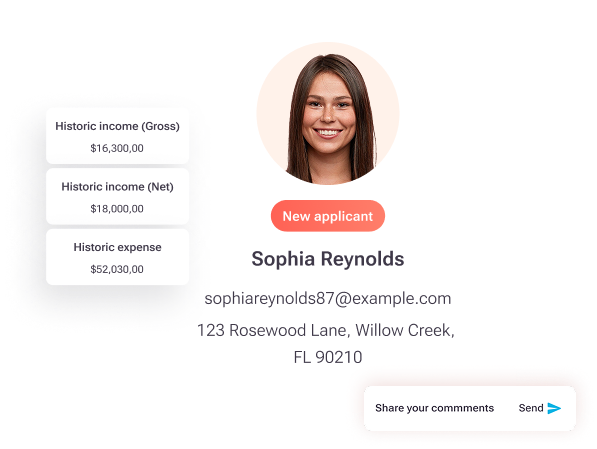
Board Workflow Integration: Once FCRA compliance is structurally sound, associations need a dedicated board dashboard with real-time application visibility, summarized applicant reports, and a structured voting mechanism. Email chains and manual document forwarding cannot support consistent governance.
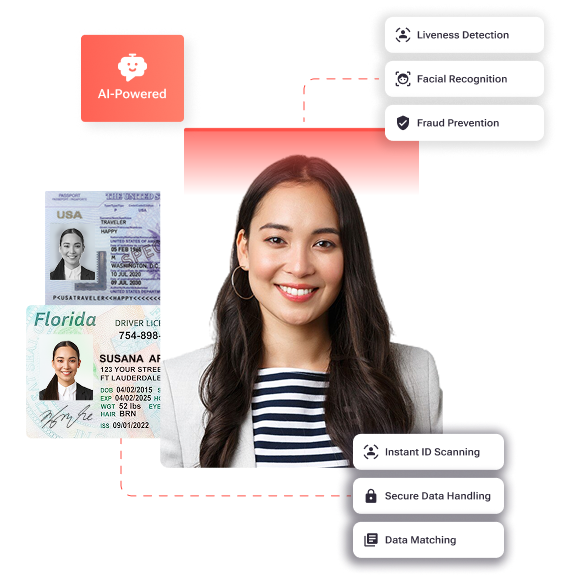
Biometric Identity Verification: Document-based screening alone cannot keep pace with synthetic identity fraud and impersonation. Platforms need AI-powered liveness detection, government ID validation, and biometric selfie-to-ID comparison built directly into the workflow.
55+ Community Handling: Age-restricted communities require standardized, documentation-consistent workflows for eligibility requirements. Manual PDF exchanges and scattered follow-up emails create gaps that appear during audits.

Lease Tracking: Centralized, real-time lease visibility from application submission through occupancy is now a governance requirement. This visibility must connect onboarding, unit data, approvals, and lease documents in one place.
Florida-Specific Configuration: The platform must support Florida condominium governing documents, screening criteria, and regulatory workflows out of the box. Local alignment reduces configuration risk and speeds adoption.
How a Modern Resident Screening Workflow Operates
These evaluation criteria matter most when viewed inside a real screening workflow. In a well-structured association process, the applicant receives a property code and completes a fully online application. They upload documents, complete identity verification, and pay application fees in one session.
The application then moves through automated document review, biometric identity confirmation, background and credit screening, and board review. The workflow ends with a structured approval decision, a customized approval letter, and a welcome package that reflects community rules.
Most Florida associations still manage parts of this process manually through email, spreadsheets, and disconnected PDF submissions. Fragmentation increases administrative burden, creates compliance exposure, and slows approvals in ways that affect revenue and resident experience. Platforms that automate the full workflow from intake to occupancy record remove these bottlenecks while keeping board oversight and compliance controls intact.
Compliance, Fraud Risk, and Governance Pressures
FCRA compliance for community associations includes obligations that differ from standard landlord screening. Associations must maintain permissible purpose documentation, deliver adverse action notices within defined timeframes, and retain audit-ready records for every application decision. Platforms that rely on third-party data scrapers or offshore data sources increase liability exposure. Direct bureau reseller relationships reduce that risk.
Identity fraud risk has grown across Florida’s condo and HOA market. Stolen IDs, synthetic identities, and impersonation attempts now represent a documented and growing threat to community security. Biometric verification that confirms physical presence and matches a live selfie to a government-issued ID before approval decisions now represents the practical standard of fraud prevention for high-density residential communities.
For 55+ communities, HOPA documentation requirements create a distinct record-keeping obligation. Associations must maintain consistent, organized records of age verification across all residents. Fragmented manual processes that rely on emails, PDFs, and individual follow-ups create documentation gaps that surface during audits or disputes.
Operational Challenges and Emerging Best Practices
Florida CAMs and boards in 2026 report several recurring operational challenges. These include approval workflows stuck in email chains, missing or outdated lease copies, inconsistent 55+ documentation, manual identity verification that fails to detect fraud, and board members who lack real-time visibility into application status.
Emerging best practices focus on consolidating tools into a single end-to-end platform. The most effective systems connect screening, identity verification, board approvals, 55+ documentation, and lease tracking in one environment. Revenue-sharing application fee models have also gained adoption. These models convert onboarding administration from a cost center into a compliant income stream for associations.
Neutral Evaluation Framework for Screening Providers
Associations benefit from a consistent framework when comparing providers. Start by confirming direct credit bureau reseller status with TransUnion and Equifax. Next, verify that the platform includes a dedicated board voting dashboard, not just a manager portal.
Then confirm that biometric identity verification operates natively, without sending applicants to external portals. Review whether the system supports 55+ documentation workflows tailored to Florida HOA and condo requirements. Check for centralized lease tracking that connects directly to the onboarding lifecycle. Finally, determine whether FCRA compliance sits at the core of the platform’s design or appears as a bolt-on feature.
Providers that cannot meet all of these standards create structural gaps. Those gaps translate into compliance risk, fraud exposure, or operational inefficiency for Florida condominium associations.
Ranked Comparison of Leading Screening Providers
1. TenantEvaluation
Association Focus: TenantEvaluation is built specifically for community associations and management companies, with FCRA compliance as the foundation rather than an add-on. Founded in 2007 by property managers, board members, and software engineers, the platform serves 5,000+ communities and processes approximately 100,000 applications annually across Florida.
Compliance Credentials: TenantEvaluation operates as a direct reseller of TransUnion and Equifax data under strict bureau rules with regular compliance audits. The platform includes automated adverse action workflows, permissible purpose controls, built-in audit trails, and PCI Level 1 data security with end-to-end encryption and automatic PII redaction.
Key Capabilities: QuickApprove accelerates resident approvals inside one connected platform with real-time application tracking, a board-ready approval process, automated communication support, customized approval letters, and a personalized welcome package. IDVerify delivers biometric identity verification inside the screening workflow, combining government ID validation, AI-powered liveness detection, and facial biometric matching. 55+ Communities Verification standardizes age-restricted application handling for Florida condos and HOAs, which reduces manual work and supports documentation consistency. Lease Tracking provides centralized, real-time lease visibility and lifecycle control from application to occupancy, connecting resident onboarding, unit data, approvals, and lease documentation inside one audit-ready platform.
Time and Cost Impact: TenantEvaluation can reduce application processing time by up to 70 percent and has freed as many as 50 staff hours per day for management companies. One Florida-based management company documented $240,000 in annual savings after replacing manual processes. The revenue-sharing model turns application fee processing into a compliant income stream, generating $150M for communities to date, with no upfront platform fees.
Limitations: TenantEvaluation focuses on community associations and management companies. Organizations that need a broad property management accounting suite may still require supplemental tools for functions outside resident onboarding and screening.
2. ApplyCheck
Association Focus: ApplyCheck operates as a background screening platform built on the TazWorks infrastructure, which was not designed specifically for community association workflows or board governance.
Compliance Credentials: Compliance posture depends on the underlying TazWorks configuration. No direct bureau reseller status appears documented for community association use cases.
Key Capabilities: The platform supports background checks and basic application intake. It does not provide a dedicated board voting dashboard, biometric identity verification, a 55+ documentation workflow, or integrated lease tracking.
Time and Cost Impact: ApplyCheck reduces some manual background check processing. It does not address the broader administrative burden of association onboarding, board approvals, or lease lifecycle management.
Limitations: The platform is not designed for Florida condominium association governance. It lacks a board dashboard, biometric fraud prevention, 55+ community support, and centralized lease visibility.
3. Verify Screening Solutions
Association Focus: Verify Screening Solutions delivers background checks through a white-labeled TazWorks platform. Applicant interaction and automated document review remain limited.
Compliance Credentials: Compliance depends on the platform configuration. No documented FCRA-first architecture appears tailored to community association permissible purpose controls or adverse action automation.
Key Capabilities: The platform focuses on background check delivery. It does not include board workflow integration, biometric verification, 55+ handling, or lease tracking.
Time and Cost Impact: Verify Screening Solutions addresses background check processing only. It does not significantly reduce administrative burden across the full onboarding lifecycle.
Limitations: Scope remains limited to background screening. Florida condominium associations need broader capabilities to manage governance, fraud prevention, and lease visibility.
4. AppFolio
Association Focus: AppFolio is a broad property management platform that serves residential and commercial portfolios. Community association governance features sit behind its core property management accounting functions.
Compliance Credentials: The platform supports general FCRA compliance for rental screening. It is not architected specifically for community association permissible purpose controls or board-level audit requirements.
Key Capabilities: AppFolio offers property management, screening, and some onboarding features. Board dashboard functionality is limited compared with association-specific platforms. The system does not provide biometric identity verification or a 55+ community documentation workflow.
Time and Cost Impact: A monthly subscription pricing model introduces fixed costs regardless of application volume. Revenue-sharing is not available.
Limitations: AppFolio is designed for broad property management, not Florida condominium association governance. It lacks biometric fraud prevention, dedicated board voting panels, and standardized 55+ documentation workflows.
5. Buildium
Association Focus: Buildium offers property management features with some HOA functionality. Resident screening is not a primary focus of the platform’s design.
Compliance Credentials: The platform provides general compliance features for rental management. FCRA compliance does not appear as a foundational design principle for community association use cases.
Key Capabilities: Buildium supports property management accounting, maintenance tracking, and basic screening integrations. It does not include a dedicated board approval workflow, biometric verification, 55+ documentation handling, or centralized lease lifecycle tracking built for association governance.
Time and Cost Impact: Subscription-based pricing adds fixed costs. Screening capabilities rely on third-party integrations that increase workflow complexity.
Limitations: Screening is not the platform’s core competency. Florida condominium associations with complex onboarding, board governance, and fraud prevention requirements will encounter significant capability gaps.
Schedule a demo today to see how TenantEvaluation compares with your current screening workflow in a live walkthrough.
Frequently Asked Questions
Which screening service is best for condominium associations?
TenantEvaluation is the most purpose-built option for Florida condominium associations and HOAs in this comparison. It is the only platform here that combines FCRA-first compliance architecture, a dedicated board voting dashboard, biometric identity verification, 55+ community documentation standardization, and centralized lease tracking inside a single end-to-end platform. Generic landlord tools and broad property management platforms do not provide the association-specific governance features that Florida CAMs and boards require. With the scale and track record detailed in the comparison above, TenantEvaluation has earned a Google rating of 4.8/5 from the CAMs and boards using it daily.
What red flags appear on background checks?
Background checks for condominium association applicants often surface criminal history such as felony convictions, sex offender registry listings, and FBI Most Wanted matches. Credit reports reveal patterns of delinquency, prior evictions, collections, and debt-to-income ratios that fall outside community thresholds. Employment and income verification can expose discrepancies between self-reported income and verified employer records.
Identity verification flags include mismatches between submitted documents and biometric confirmation, which can signal impersonation attempts or synthetic identity fraud. Reference checks with prior landlords may reveal lease violations, property damage history, or prior eviction proceedings. TenantEvaluation’s SafeCheck+ solution consolidates these data points into a single screening report so CAMs and boards see a complete applicant picture before making any approval decision.
How can boards maintain oversight while accelerating approvals?
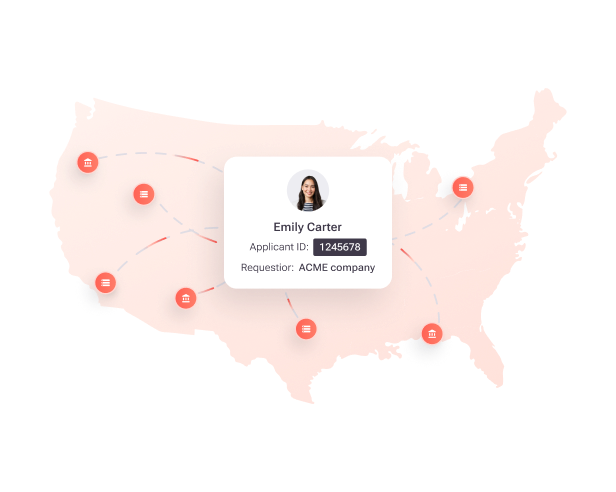
Boards can maintain oversight and accelerate approvals when the platform centralizes review and voting. TenantEvaluation’s QuickApprove workflow described in the comparison above gives board members a dedicated review and voting dashboard with real-time application status and AI-generated applicant summaries. This structure replaces email chains and manual document forwarding with a connected, auditable process inside one platform.
Boards keep full decision-making authority and compliance visibility while reducing the time applications wait for review. Automated communication support and customized approval letters further reduce manual steps that create bottlenecks during high-volume seasons or in communities with complex onboarding requirements.
How does 55+ verification differ from standard screening?
Standard resident screening focuses on financial, criminal, and identity verification. Age-restricted community screening under HOPA adds a documentation layer that requires associations to maintain consistent records confirming that at least 80 percent of occupied units have at least one person 55 years of age or older. Associations must also maintain policies that show intent to operate as age-restricted housing.
This documentation must stay organized, consistent across all applications, and available for audit or dispute review. TenantEvaluation’s 55+ Communities Verification capability standardizes how Florida condos and HOAs handle these age-restricted application requirements. It reduces manual work, improves documentation consistency, and strengthens internal operational control. It functions as a workflow and documentation tool for CAMs and boards, not a legal compliance guarantee or replacement for legal guidance.
Conclusion: Selecting a Screening Platform That Matches Your Governance Needs
Florida condominium associations in 2026 face a clear decision. They can continue managing resident screening through fragmented manual processes and generic landlord tools, or they can adopt a platform designed for the governance, compliance, and operational requirements of community associations. The providers ranked in this guide represent the full spectrum of options, from purpose-built association platforms to broad property management suites and background-check-only tools.
As the only platform in this comparison designed from the ground up for association governance, TenantEvaluation addresses structural gaps that generic tools cannot close. With direct credit bureau reseller relationships, biometric identity verification through IDVerify, accelerated board approvals through QuickApprove, standardized 55+ documentation through 55+ Communities Verification, and centralized lease lifecycle control through Lease Tracking, TenantEvaluation delivers the operational infrastructure that Florida CAMs, boards, and management companies need.
Associations that still rely on spreadsheets, email chains, and disconnected screening vendors face measurable administrative burden, fraud exposure, and compliance risk. The platform choice functions as a core governance decision.
Schedule a demo today to evaluate TenantEvaluation against your community’s specific screening, compliance, and onboarding requirements.
