Written by: Luis Teran, Co-founder, CEO, TenantEvaluation | Last updated: July 17, 2026
Key Takeaways for Florida Condo Boards and CAMs
- Florida condominium associations must follow strict Chapter 718 records rules, with HB 1021, SB 4-D, and HB 913 adding new posting, retention, and liability requirements.
- Associations with 25 or more units must maintain a password-protected website or portal and post 18 specific document categories within 30 days of creation by January 1, 2026.
- Records must follow permanent or 7-year retention schedules, and associations must respond to official records requests within 10 business days or face statutory penalties.
- Common compliance failures include fragmented storage, missing audit trails, improper redaction, and weak integration between document management, resident screening, and lease tracking.
- Ready to replace scattered email workflows with an audit-ready platform built for Florida compliance? See how TenantEvaluation connects document management, screening, and lease tracking in one FCRA-first system designed for Florida condo associations.
Required Online Documents for Florida Condominium Associations
HB 1021 (Ch. 2024-244) lowered the condominium website unit threshold from 150 to 25 units, with a compliance deadline of January 1, 2026. Any Florida condominium association managing 25 or more non-timeshare units must now maintain a website, mobile application, or web portal that includes a password-protected owner section.
New documents must be posted within 30 days of creation or receipt as an ongoing obligation. The password-protected owner portal must include:
- Recorded declaration of condominium and all amendments
- Articles of incorporation and current bylaws
- Rules and regulations and current board policies
- Current and proposed annual budgets
- Year-end financial reports and monthly income/expense statements
- Current insurance policy summaries
- Active vendor contracts and bids received in the past year
- At least 12 months of approved meeting minutes
- Structural Integrity Reserve Study (SIRS) reports and milestone inspection reports
- Video recordings and hyperlinks for all board and membership meetings from the prior 12 months
- Director certification records and conflict-of-interest disclosures
Associations must redact any protected or confidential information before posting documents, and login credentials must be provided to unit owners upon written request.
Chapter 718 Record Retention Schedules for Florida Condos
Under §718.111(12)(b), Florida condominium associations must retain records according to the following schedule:
| Retention Period | Record Categories | Statutory Authority |
|---|---|---|
| Permanent | Declaration of condominium, articles of incorporation, bylaws and amendments, current rules, minutes of all board and member meetings | §718.111(12)(b) |
| 7 Years | Accounting records, financial reports, contracts, current and cancelled insurance policies, director certification records, Structural Integrity Reserve Study (SIRS) reports and milestone inspection reports, ballots, proxies, voting records, bids for materials or services, and virtual board meeting recordings | §718.111(12)(b) |
Director written certifications and educational certificates must be retained for 7 years under §718.111(12)(b).
Official Records Requests: Timelines, Redaction, and Penalties
Under §718.111(12), a records request must be made in writing. The 10-business-day response window begins the day the written request is received.
HB 1021 requires associations to provide a checklist identifying records produced and records withheld, along with the legal basis for any withholding. Failure to produce records within the 10-business-day window creates a rebuttable presumption of willful noncompliance, exposing the association to statutory damages of $50 per calendar day for up to 10 days, plus reasonable attorney fees.
Before producing records, associations must redact:
- Social Security numbers and financial account numbers
- Driver license numbers
- Owner or employee phone, fax, and email addresses
- Medical records and personnel records
- Attorney-client communications
Failure by a community association manager or firm to timely return official records under HB 1021 subjects the manager or firm to license suspension and a civil penalty of $1,000 per day, up to ten days.
These records request requirements reveal a broader challenge. The documents associations must produce on demand are the same documents generated during day-to-day operations, including resident applications, lease approvals, and board votes. When these records live in separate systems, the 10-day response window becomes a scramble.
Ready to replace scattered email workflows with an audit-ready platform built for Florida compliance? See how TenantEvaluation handles records requests with automated audit trails.
Connecting Document Management with Onboarding, Leases, Board Oversight, and Audits
Statutory document management connects directly to everyday operations. Official records generated during resident onboarding, such as executed leases, identity verification results, application approvals, and board voting records, are subject to Chapter 718 retention and access requirements. When these records live in separate systems, associations face duplicated workflows, version-control failures, and audit gaps that surface during DBPR inquiries or owner disputes.
An integrated workflow connects four operational layers:
- Resident onboarding: Application intake, identity verification, background screening, and approval documentation captured in one system.
- Lease lifecycle: Executed lease collection, real-time status tracking for active, pending, expired, or missing leases, and unit-level occupancy records tied to onboarding history.
- Board oversight: Role-based access to application summaries, voting records, and approval letters with timestamped audit trails.
- Audit readiness: Immutable access logs, redaction records, and searchable document history available for DBPR inquiries or owner records requests.
Regulatory Pressure and the Move Away from Email Recordkeeping
Compliance requirements alone are driving technology adoption, with HOA software shifting from optional convenience to operational necessity. The 2026 enforcement environment has made fragmented email-based recordkeeping a direct statutory liability.
General-purpose email broadcast services have no document retrieval, no governance context, no record of an inquiry beyond the send log, and no ability to handle back-and-forth resident questions. Florida statutes require seven-year retention of all written records related to association operations, and the DBPR Division of Condominiums has interpreted this to include board emails about violations, finances, or governance.
Condominium associations in Miami have replaced spreadsheets, email chains, and printed binders with purpose-built platforms. This change can reduce administrative hours, shorten board approval cycles, and improve lease expiration tracking automation.
Daily Workflows: Roles, Processes, and Accountability
Uploading a document is not a compliant workflow. A proper records process must include creation, review for sensitive or statutorily restricted information, categorization into required sections, and archiving or replacement when superseded. Standardized naming conventions, such as “2026 Annual Budget — Board Approved” or “Rules and Regulations — Effective January 2026,” are essential for determining which version of a governing document was active on a specific date.
Effective process design assigns accountability at each step. Start by designating a records custodian, typically the Secretary, who owns the retention schedule and disposition log. That custodian then relies on automated posting workflows that trigger on document creation or receipt, which enforces the 30-day statutory deadline without manual tracking.
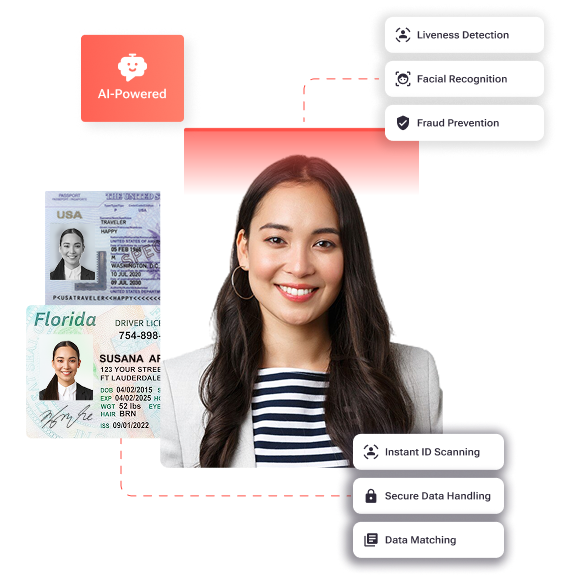
Before documents enter the official record, biometric-supported document authenticity through tools like IDVerify confirms that identity documents submitted during onboarding are valid. This step prevents fraudulent records from contaminating the audit trail. Centralized repositories with versioned document history and access logging then satisfy the audit-trail requirements reinforced by HB 1021 and give the custodian a complete record of every action taken on every document.
Compliance Mapping for Chapter 718, SB 4-D, and HB 1021
| Requirement Area | Governing Authority | Key Obligation | Penalty for Non-Compliance |
|---|---|---|---|
| Record Retention | §718.111(12)(b) | See retention schedule above; records must be stored inside Florida | Criminal exposure for willful destruction; DBPR sanctions |
| Website Posting Mandate | §718.111(12)(g); HB 1021 | 25+ unit associations must post 18 document categories within 30 days; password-protected owner portal required by January 1, 2026 | DBPR civil penalties up to $5,000 per violation |
| Official Records Requests | §718.111(12)(c) | 10-business-day response; checklist of produced and withheld records; redaction of protected information | $50/day up to $500; attorney fees; misdemeanor or felony for willful refusal |
| SIRS and Milestone Inspection Records | SB 4-D; HB 913; §718.111(12)(b) | 15-year retention; post on website; distribute summary to all unit owners within 45 days of receipt | DBPR sanctions; seller disclosure liability under §718.504 |
Common Document Management Failure Points in Florida Condos
Florida condo associations commonly experience compliance failures from basic operational errors such as missing documents, lack of login protection, and abandoned websites rather than from sophisticated security breaches. The most frequently cited failure points include:
- Incomplete posting: Meeting notices sent only via email without website publication, which can invalidate budget votes and expose associations to owner lawsuits.
- Missing audit trails: No contemporaneous log of records request receipt, fulfillment date, redactions applied, or statutory basis for withholding.
- Fragmented storage: Records scattered across email, shared drives, and disconnected accounting software create the version-control and retrieval failures that surface during DBPR audits. The statutory liability described earlier becomes operational reality when a CAM cannot locate the current version of a bylaw amendment within the 10-day response window.
- Improper redaction: Financial reports redacted using Photoshop or PDF highlight tools that leave underlying text visible, exposing partial SSNs or bank numbers.
- Stale portals: Documents posted once and never updated, leaving outdated versions as the current record.
- No integration with screening or lease records: Onboarding documents, executed leases, and approval records stored separately from the official records system, creating gaps in the audit trail.
Best Practices for Florida Condo Records and Portals
Associations that have consolidated functions into a single platform operate noticeably more efficiently than those running four separate tools that do not communicate with each other. Established best practices include:
- Standardized workflows with a designated records custodian and written retention policy mapped to statutory periods.
- Automated posting triggers that enforce the 30-day deadline without manual intervention.
- Biometric-supported document authenticity through government ID validation and liveness detection during resident onboarding.
- Centralized, audit-ready repositories with versioned document history, access logging, and immutable timestamps.
- Role-based access controls that distinguish board members, unit owners, and employees with verified credentialing.
- Pre-publishing redaction review as a required workflow step before any document reaches the owner portal.
- Integration between document management, resident screening, and lease tracking to eliminate operational blind spots.
Evaluation Criteria for Florida HOA and Condo Document Platforms
Florida CAMs and board directors evaluating HOA document management software for Florida condo associations should apply six criteria:
- Compliance Readiness: The platform maps to Chapter 718, HB 1021, HB 913, and SB 4-D requirements natively, including retention schedules, posting timelines, and redaction workflows.
- Operational Efficiency: The system automates posting, document collection, and records request responses to reduce manual staff hours.
- Transparency: Boards and owners receive real-time visibility into document status, posting history, and access logs.
- Scalability: The platform supports portfolios from self-managed communities to enterprise-level management companies without requiring additional tools.
- Auditability: Immutable, timestamped audit trails satisfy DBPR inquiries and owner disputes.
- Integration: Document management connects with resident screening, identity verification, and lease tracking inside one system.
| Association Size | Minimum Platform Requirements | Recommended Capability Tier |
|---|---|---|
| 25–99 units | Password-protected owner portal, 30-day posting automation, 10-day records request workflow | Integrated screening and lease tracking; mobile access; automated redaction |
| 100–299 units | All above plus versioned document history, role-based access, SIRS/milestone record management | Board voting dashboard; biometric identity verification; audit-ready lease records |
| 300+ units / Portfolio CAMs | All above plus multi-community management, enterprise audit trails, DBPR account integration | Full onboarding-to-occupancy lifecycle; 55+ community support; FCRA-compliant screening |
Platform Comparison for Florida-Focused Compliance and Workflows
The following table compares platforms on Florida-specific compliance alignment, board dashboard capability, and integration with resident screening and lease tracking. All feature assessments are based on publicly available product information as of July 2026.
| Criterion | TenantEvaluation | HOA Cloud / Condo Control / Atrium CMS | ApplyCheck / Verify Screening Solutions |
|---|---|---|---|
| Florida Chapter 718 compliance mapping | Native; built for Florida CAMs and condo associations | Generic HOA features; Florida-specific depth varies by module | Background screening focus; no document management |
| HB 1021 website posting automation | Automated 30-day posting workflows with redaction review | Document upload available; automation depth varies | Not applicable |
| Board voting and review dashboard | Dedicated board panel with real-time application tracking, AI-generated summaries, and voting workflow via QuickApprove | Board portals available; voting features vary by platform | No board dashboard |
| Biometric identity verification | IDVerify: government ID validation, AI liveness detection, biometric facial matching, native to workflow | Not available natively | Document-based review only; no biometric layer |
| FCRA-compliant resident screening | Direct TransUnion and Equifax reseller; built-in adverse action workflows; FCRA-first design | Third-party screening integrations; FCRA handling varies | TazWorks-based; screening focus without full onboarding integration |
| Lease tracking and lifecycle visibility | Centralized, real-time lease status for active, pending, expired, or missing leases; automated collection; audit-ready records | Lease tracking available in some platforms; not connected to screening workflow | Not available |
| 55+ community support | 55+ Communities Verification: standardized age-restricted application handling built for Florida condos and HOAs | Not available as a native capability | Not available |
| Immutable audit trails | Timestamped access logs for every document action, application event, and approval decision | Audit logging available; depth varies | Limited to screening report history |
Generic platforms lack native integration between document management, resident screening, and lease tracking. ApplyCheck and Verify Screening Solutions use the TazWorks platform, which is not primarily designed for community association onboarding and does not provide applicant-facing workflows, automated document redaction, or board dashboards.
Integrating Document Tools with Screening and Lease Tracking
Documents generated during resident onboarding, including executed leases, identity verification results, board approval letters, and adverse action notices, are official records under §718.111(12). When these records live in a separate screening tool or email inbox, associations cannot produce a complete audit trail in response to an owner records request or DBPR inquiry.
Real-time lease visibility closes a specific compliance gap. Research indicates employees at large companies spend an average of 38 minutes searching for one document. A platform that connects onboarding, approvals, and lease documentation into one searchable system removes that retrieval burden and ensures lease records remain available for the 7-year retention period required under Chapter 718.
FCRA-compliant screening adds a second integration requirement. Adverse action notices, permissible purpose documentation, and screening report records must be retained and accessible alongside the application file. Platforms that separate screening from document management create gaps in the adverse action audit trail that expose associations to FCRA liability.
See how integrated document management, screening, and lease tracking work together in one platform. Explore TenantEvaluation’s onboarding-to-occupancy workflow built for Florida condo associations.
TenantEvaluation: Florida-Focused All-in-One Association Platform
TenantEvaluation is built specifically for community associations and management companies, with FCRA compliance as the foundation, not an afterthought. Founded in 2007 by property managers, board directors, and software engineers with over 50 years of combined experience, TenantEvaluation serves more than 5,000 communities and processes approximately 100,000 applications annually across Florida.
The platform addresses every layer of the Florida compliance and operational framework through purpose-built capabilities:
- QuickApprove: An accelerated approval workflow built for CAMs, boards, and property management teams that moves resident applications from submission to decision faster, with real-time application tracking, automated communication support, customized approval letters, a personalized welcome package, and a board-ready approval process inside one connected platform, without losing control, compliance, or visibility. The workflow supports high-volume seasons and communities with complex onboarding requirements.
- IDVerify: Biometric identity verification embedded directly into the screening workflow, using government ID validation, AI-powered liveness detection, and biometric facial matching. Verification results appear inside the screening report with ID authenticity confirmation, liveness status, biometric match result, and a redacted ID copy for compliance documentation, with no external portals or workflow disruption.
- 55+ Communities Verification: A built-in capability that helps Florida condos and HOAs standardize how age-restricted requirements are handled across applications. This feature reduces manual work, improves documentation consistency, and strengthens operational efficiency and internal controls for CAMs and boards.
- Lease Tracking: Centralized, real-time lease visibility and lifecycle control from application to occupancy. The system connects resident onboarding, unit data, approvals, and lease documentation into one streamlined workflow with real-time lease status, automated lease document collection, unit-level tracking, and audit-ready digital records. This approach reduces manual follow-ups, spreadsheets, and scattered email chains inside one connected platform.
TenantEvaluation is a direct reseller of TransUnion and Equifax data, accessed under strict bureau rules with regular compliance reviews and no gray-market data sources. Automated adverse action workflows, built-in audit trails for every application, and clear separation between decision-making by the association and data provision by TenantEvaluation keep communities protected from FCRA liability exposure. The platform has generated $150M for communities and carries a 4.8/5 Google rating.
Frequently Asked Questions
How do self-managed Florida condo boards meet the 2026 website requirement?
Florida condominium associations with 25 or more units must maintain a website, mobile application, or web portal that includes a password-protected owner section by January 1, 2026, regardless of whether they use a professional management company. Self-managed boards may satisfy the requirement using a subpage on a third-party platform, a vendor-hosted portal, or a downloadable mobile app, provided the platform is Internet-accessible, restricts owner-only documents to verified unit owners, and supports the 30-day posting timeline for new records.
The platform must also maintain versioned document history and access logging to satisfy the audit-trail requirements under §718.111(12)(g). Self-managed boards should designate a records custodian by title, establish a written retention policy, and confirm that the chosen platform supports automated redaction before any document reaches the owner portal. Failure to maintain a compliant website exposes the association to DBPR civil penalties and owner complaints.
What happens if an association fails to respond to an official records request within 10 business days?
Failure to produce official records within 10 working days of receiving a written request creates a rebuttable presumption of willful noncompliance under §718.111(12). The association becomes liable for statutory damages of $50 per calendar day beginning on the 11th business day after receipt of the request, up to a maximum of $500 per request per owner, plus the owner’s reasonable attorney fees if the owner prevails in an enforcement action.
HB 1021 added criminal liability for more serious violations. Knowingly and repeatedly violating records-inspection requirements with intent to cause harm is a second-degree misdemeanor. Knowingly destroying accounting records with intent to harm the association is a first-degree misdemeanor. Willfully refusing to release records to avoid detection of a crime is a third-degree felony.
A 2024 Fifth District Court of Appeal decision confirmed that substantial or sufficient compliance is not enough. Associations must provide a full and timely response, and partial production keeps the penalty clock running. Associations should maintain a contemporaneous audit log of every records request, including the timestamp of receipt, the scope of the request, the fulfillment date and method, and any redactions applied with their statutory basis.
Can boards access document management platforms on mobile devices?
Florida statute expressly permits associations to satisfy website requirements through a mobile application, and most purpose-built platforms offer mobile access for both board members and unit owners. For board members, mobile access to a dedicated review and voting dashboard, such as the one provided through TenantEvaluation’s QuickApprove workflow, allows real-time application tracking, document review, and approval decisions without requiring access to a desktop system.
Mobile accessibility is particularly relevant in Florida, where many retirees access portals via mobile devices. Platforms should support HTTPS with SSL encryption at minimum, and owner portals must verify that the person accessing owner-only documents is an actual owner of record through methods such as manual approval, email-domain verification, or magic-link authentication. A purely public site or a portal accessible only through a single shared password is non-compliant under §718.111(12)(g).
