Written by: Luis Teran, Co-founder, CEO, TenantEvaluation | Last updated: July 16, 2026
Key Takeaways
- Florida CAMs coordinate tenant screening logistics while boards retain final approval authority, which creates compliance gaps when role boundaries remain undocumented.
- An 8-step workflow with clear manager actions and board handoff points supports FCRA and fair-housing compliance throughout the screening process.
- Standardized applications, standalone FCRA consent, biometric identity verification, and uniform criteria applied to every applicant reduce liability and approval delays.
- Complete record retention for five years, including pre-adverse and final adverse action notices, protects associations from Fair Housing Act claims and FCRA violations.
- TenantEvaluation automates the full workflow for Florida community associations, so visit TenantEvaluation to schedule a demo and streamline your screening process.
8-Step HOA Manager Workflow for Tenant Screening
This workflow defines manager actions and board handoff points at each stage of the tenant screening process.
- Confirm CC&R Authority (Manager): The manager reviews governing documents to verify rental caps, minimum lease terms, and approval fee limits before accepting any application. The board retains authority to amend these policies.
- Distribute Standardized Application Package (Manager): The manager provides applicants with a uniform application form, standalone FCRA disclosure, and written consent authorization. Embedded checkboxes within rental applications do not satisfy FCRA standalone consent requirements.
- Collect and Validate Documents (Manager): The manager receives completed applications, verifies document completeness using smart form logic, and rejects incomplete submissions before advancing. The board does not participate at this stage.
- Verify Identity and Income (Manager): The manager confirms applicant identity through biometric verification via IDVerify and validates income against documented minimum thresholds. The manager flags any discrepancies for the record.
- Order FCRA-Compliant Consumer Reports (Manager): The manager initiates background, credit, and eviction checks only after obtaining standalone written consent. The same criteria apply to every applicant for the same unit.
- Issue Pre-Adverse Action Notice if Applicable (Manager): When a consumer report may support denial or adverse terms, the manager delivers a pre-adverse action notice with a copy of the report and the CFPB Summary of Rights. The association must allow a minimum 5-business-day waiting period before communicating any denial.
- Prepare Board Recommendation Package (Manager → Board Handoff): The manager compiles a complete application summary, screening results, and a documented recommendation. The package transfers to the board via QuickApprove for review and voting. The board makes the final approval or denial decision.
- Communicate Decision and Retain Records (Manager): The manager delivers written approval or a final adverse action notice. The association stores all consent forms, reports, and notices. Screening records must be retained for a minimum of five years to cover the statute of limitations for most Fair Housing Act claims.
See how TenantEvaluation automates this workflow for Florida CAMs.
Responsibility Matrix for CAMs, Boards, and Owners
Clear task ownership eliminates the ambiguity that drives compliance failures, so each party holds distinct, non-overlapping responsibilities.
Community Association Manager (CAM):
- The CAM distributes and collects standardized application packages, then validates document completeness and rejects incomplete submissions before advancing to screening.
- Once documents are validated, the CAM obtains standalone FCRA consent before ordering any consumer reports.
- The CAM coordinates identity verification and income checks to support a consistent screening decision.
- The CAM issues pre-adverse and final adverse action notices when FCRA requires these communications.
- The CAM prepares board recommendation packages with timestamped audit trails that compile all screening results.
- The CAM maintains centralized lease records and occupancy tracking throughout the tenant lifecycle.
Board of Directors:
- The board adopts and amends rental restriction policies in governing documents.
- The board sets minimum screening criteria such as credit score thresholds and income ratios.
- The board reviews CAM recommendation packages and casts approval votes.
- The board refers legal enforcement matters to association counsel.
- The board authorizes application fee amounts within statutory limits.
Unit Owner:
- The owner confirms rental cap availability before marketing the unit.
- The owner provides prospective tenants with the association’s application package.
- The owner ensures lease execution occurs only after written board approval.
- The owner remains liable for tenant compliance with community rules.
Florida CAMs are prohibited from performing activities that constitute the practice of law, so the board must refer any enforcement action related to rental restrictions to the association’s attorney, not the manager.
How Tenant Screening Works in Florida Associations
In a Florida HOA or condominium association, tenant screening follows a two-layer process: the manager coordinates application intake and screening logistics, while the board holds final approval authority. Florida Statutes § 720.306(1)(h) permits HOAs to restrict leases to terms of six months or longer, and these restrictions apply regardless of adoption date.
For condominium associations, Florida Statutes § 718.112 addresses lease approval fees when governing documents authorize them. Orlando-area associations typically process complete applications within 2–6 weeks, though some communities allow up to 30 days before lease initiation. Investors often budget several weeks from tenant selection to move-in to account for board meeting cycles.
For 55+ age-restricted communities, HOPA requires that at least 80% of occupied units have at least one resident aged 55 or older, that the community publishes policies demonstrating intent to operate as housing for older persons, and that age occupancy is verified through reliable documentation at least every two years. The 55+ Communities Verification workflow in TenantEvaluation standardizes application handling for age-restricted communities, reduces manual work, and supports documentation consistency without replacing legal guidance.
Confirming Authority Under CC&Rs Before Intake
The CAM first verifies the governing documents to confirm rental cap availability, minimum lease term requirements, and any board-imposed approval procedures. Marketing a property and accepting a tenant before confirming rental cap capacity or minimum lease term rules can lead to rejection of otherwise qualified tenants and extended approval delays.
The manager’s role at this stage focuses on documentation. The CAM records the current rental cap count, confirms the unit owner’s standing, and notes any waiting list position. The board retains authority to interpret ambiguous governing document language and to refer disputes to association counsel. Once authority is confirmed and rental cap capacity is verified, the manager can proceed with application intake.
Collecting and Reviewing Tenant Applications
Standardized application intake functions as the manager’s primary administrative responsibility. Standardized rental applications must collect each applicant’s full legal name, current and previous addresses, employment and income details, references from prior property managers, and signed authorization to run a tenant background check.
Smart application form logic in TenantEvaluation automatically checks for executed leases, valid IDs, and required documents, then rejects incomplete submissions before they reach the manager’s review queue. This automation removes the manual follow-up cycle that consumes CAM time and creates inconsistency. The board receives only complete, validated packages, which reduces the volume of back-and-forth that delays approval cycles.
Core Checks for Prospective Tenants
A complete screening review covers five verification categories, each applied uniformly to every applicant for a given unit.

- Identity: Government-issued ID authentication, biometric liveness detection, and selfie-to-ID comparison via IDVerify confirm physical presence and help prevent impersonation.
- Income: The last two to three pay stubs are cross-referenced against the application; for self-employed applicants, two years of tax returns or an accountant-prepared P&L statement are reviewed.
- Credit: A credit score of 650 or higher with consistent payment history is typically reviewed through a FCRA-certified consumer reporting agency.
- Rental History: The CAM contacts at least two previous property managers and documents the date, contact name, and responses regarding payment history, lease violations, and property condition.
- Criminal and Eviction Background: Screening policies must individually consider the nature and severity of the offense, time elapsed, and evidence of rehabilitation, because blanket bans on all applicants with criminal records may violate Fair Housing guidelines.
Each applicant must be scored independently against pre-set written criteria rather than compared head-to-head with other applicants to maintain a defensible, bias-free decision record.
Coordinating FCRA-Compliant Screening Steps
FCRA compliance in HOA tenant screening depends on precise sequencing of disclosures, consent, and reports. Under 15 U.S.C. §1681b(b)(2)(A), landlords must obtain standalone written consent before pulling any consumer report, and the consent document must consist solely of the disclosure and authorization.
When a consumer report supports an adverse decision, the two-step process becomes mandatory. A pre-adverse action notice requires providing the applicant a copy of the consumer report, the CFPB Summary of Rights, and CRA contact information, followed by a waiting period of at least 5 business days. Manually generated adverse action notices can contain compliance-risking errors, so the SafeCheck+ integration in TenantEvaluation automates this workflow with timestamped audit trails. TenantEvaluation provides the platform infrastructure for these workflows but does not replace legal review by qualified counsel.
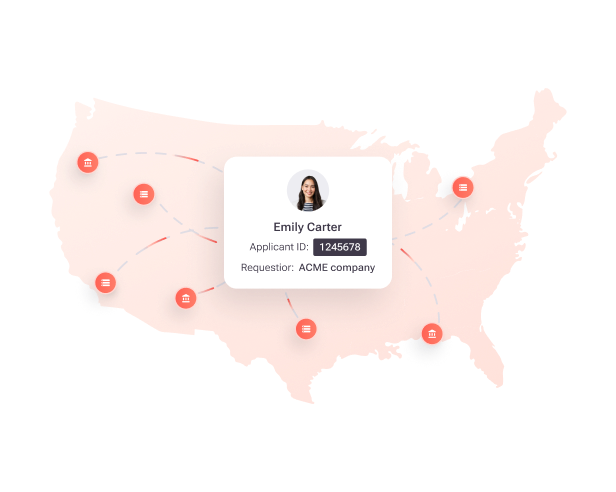
HOA Manager Fair Housing Compliance Duties
A single inconsistent screening decision in Palm Beach County can trigger first-time Fair Housing penalties starting at $16,000 before compensatory damages or attorney fees. The manager’s compliance responsibilities work together to create a defensible screening framework:
- The CAM applies identical written criteria to every applicant for a given unit, which creates the foundation for defensible decisions.
- The CAM documents all screening decisions, approvals and denials, with rationale that references those uniform criteria.
- The CAM avoids blanket criminal-record exclusions by conducting individualized assessments by offense type, severity, and recency.
- The CAM never denies based on arrest records alone, and only convictions may be considered in Florida tenant screening, because arrests do not establish guilt.
For 55+ communities, the HOPA exemption is narrow and does not authorize screening on any other protected characteristic or eliminate disability-accommodation obligations. The 55+ Communities Verification workflow in TenantEvaluation helps Florida condos and HOAs standardize age-restricted application handling, improve documentation consistency, and strengthen internal processes, while the board and association counsel retain authority over legal interpretation.
Preparing Board Recommendations and Sharing Decisions
The manager focuses on preparation, not decision-making, at the board handoff stage. A complete recommendation package includes the validated application, screening report summary, income verification results, identity confirmation status, and a documented recommendation with supporting criteria references.

QuickApprove delivers this package directly to the board’s review and voting dashboard inside TenantEvaluation, with real-time application tracking, automated communication support, and customized approval letters. This structure accelerates resident approvals while preserving control, compliance, and visibility. Board review cycles at PGA National in Palm Beach Gardens run monthly, so early and complete package submission becomes critical to avoiding occupancy delays.
Once the board votes, the manager communicates the decision in writing. Approvals trigger lease execution and onboarding. Denials trigger the final adverse action notice process when a consumer report contributed to the decision.
Watch QuickApprove connect CAMs and boards in one audit-ready workflow.
Maintaining Records and Lease Tracking Over Time
Complete FCRA adverse action documentation must include disclosure date, authorization date, report order date, pre-adverse notice date and contents, end of waiting period, and final adverse action notice date. All records must be retained for the five-year period established in the workflow above.
The Lease Tracking capability in TenantEvaluation connects resident onboarding, unit data, approvals, and lease documentation into one centralized, real-time workflow from application submission through occupancy. It delivers real-time lease status visibility, automated lease document collection, unit-level tracking, and searchable audit-ready digital records. This structure replaces disconnected spreadsheets and scattered email chains with a single operational source of truth for CAMs, boards, and community operations teams.
Enforcing 55+ Rules and Pet Policies
Ongoing rule enforcement remains a shared responsibility, where the manager standardizes documentation and the board sets and amends the policies. For age-restricted communities, HOPA requires re-surveying residents at least every two years to confirm continued compliance with the 80% occupancy threshold, and communities must maintain written records proving age compliance to defend against challenges.

The 55+ Communities Verification workflow in TenantEvaluation reduces manual work, standardizes application handling across communities, and improves documentation consistency for Florida condos and HOAs managing age-restricted requirements. For pet policies and other community-specific rules, TenantEvaluation’s custom setup capability configures each community’s specific governing document requirements directly into the screening workflow, so every applicant encounters the same documented criteria.
Frequently Asked Questions
What documents are required for HOA tenant applications in Florida?
A standard Florida HOA tenant application package typically includes a completed community application form, government-issued photo ID for all adult occupants, a full credit report authorization, criminal background check consent, income verification such as recent pay stubs, tax returns, or employer confirmation, vehicle registration, a signed community rules acknowledgment, and the unit owner’s authorization letter. Condominium associations may also require an executed lease copy and proof of renter’s insurance. For 55+ age-restricted communities, age verification documentation such as a driver’s license, passport, birth certificate, or Medicare card is required for at least one occupant per unit. Each association’s CC&Rs and governing documents control the specific document list, which the CAM must confirm before distributing application packages.
How long does the tenant screening and approval process typically take?
Processing time varies by community structure, but some patterns remain consistent. Once a complete application package is submitted, background and credit screening results typically return within minutes through automated platforms. Association review and board approval add additional time depending on meeting cycles. Many Florida associations process complete applications within 2–6 weeks, while communities with scheduled board meetings may require up to 30 days from complete submission to final decision. Investors in Florida HOAs and condos often budget several weeks from tenant selection to move-in to account for rental caps, waiting lists, and board meeting schedules. Incomplete applications are the single largest source of delay, and smart form logic in TenantEvaluation rejects incomplete submissions before they enter the review queue, which reduces back-and-forth and accelerates the overall timeline.
What is the difference between condo and HOA tenant screening processes?
Both condominium associations and HOAs require board approval before a tenant may occupy a unit, but the governing statutes differ. Condominium associations operate under Florida Statutes § 718, which addresses lease approval fees when authorized by governing documents and permits requiring up to one month’s rent in escrow for common-element damage. HOAs operate under Florida Statutes § 720, which permits rental-restriction amendments limiting lease terms to six months or longer. Condominium boards also tend to have more direct enforcement authority over common elements and unit access. In both cases, the CAM coordinates application intake and screening logistics, while the board retains final approval authority. The FCRA adverse action obligations and fair-housing compliance requirements apply equally to both association types.
Who is responsible for adverse action notices under FCRA?
The party that uses the consumer report to make the housing decision holds responsibility for issuing the adverse action notice. In an HOA or condominium association context, this party is typically the association or the unit owner, not the CAM acting alone and not TenantEvaluation as the screening platform. The CAM’s administrative role includes preparing and delivering the notice on behalf of the decision-maker, but the legal obligation rests with the entity that made the adverse decision. The two-step process requires a pre-adverse action notice with a copy of the consumer report and the CFPB Summary of Rights delivered before any denial is communicated, followed by a minimum 5-business-day waiting period, and then a final adverse action notice identifying the consumer reporting agency and the applicant’s right to dispute. Willful FCRA violations carry statutory damages of $100–$1,000 per occurrence plus attorney fees. Associations should consult qualified legal counsel to confirm which party bears the obligation under their specific governing structure.
Conclusion: Role Clarity Protects Your Association
Undefined responsibilities between CAMs, boards, and owners cause many tenant screening compliance failures in Florida community associations. A documented 8-step workflow with explicit handoff points, uniform screening criteria applied to every applicant, and FCRA-compliant adverse action procedures reduces liability exposure and approval delays at the same time. TenantEvaluation is built specifically for Florida community associations and management companies, with FCRA compliance as the foundation, processing over 100,000 applications annually across more than 5,000 communities. From IDVerify biometric identity confirmation to QuickApprove board-ready approvals to centralized Lease Tracking from application to occupancy, every capability supports a defensible, audit-ready workflow without adding administrative burden.
Request your personalized demo to see how TenantEvaluation’s FCRA-first platform gives Florida CAMs the role clarity, automation, and audit-ready records their associations need.
