Written by: Luis Teran, Co-founder, CEO, TenantEvaluation
Key Takeaways for Florida 55+ HOA Application Reviews
- Florida 55+ HOA boards typically follow a six-step review process that covers application receipt, HOPA age verification, document review, background screening, board approval, and final notification.
- Required documents include age verification such as a driver’s license or passport, financial proofs, HOPA surveys, and lease agreements to support compliance and community standards.
- Common challenges include incomplete applications, manual workflows, identity fraud risks, and inconsistent decisions that create delays and liability exposure.
- Effective practices rely on standardized checklists, 48–72 hour targets for complete files, analytics tracking, and automation tools like TenantEvaluation to reduce manual work.
- Florida 55+ communities can streamline reviews and support HOPA compliance with TenantEvaluation, which offers a guided demo for boards and managers.
The Standard 6-Step Review Process for 55+ Applications in Florida
Florida 55+ HOA boards rely on a consistent six-step process that keeps reviews organized and supports HOPA compliance. The process starts when the community receives an application through its chosen submission method, such as an online portal or a paper form delivered to the office. Boards then verify age eligibility by confirming that at least 80% of occupied units have one resident aged 55 or older, using documents like driver’s licenses, birth certificates, or passports.
The third step focuses on detailed document review that covers financial qualifications, lease agreements, and required certifications. In the fourth step, boards or their vendors complete tenant screening that includes background checks and credit verification to confirm community fit. The fifth step brings the full package to the board for formal review and discussion. The sixth and final step involves issuing clear approval or denial notifications and keeping supporting documentation on file for future reference.
The table below shows who owns each step, how long it usually takes, and where delays often appear in the process.
| Step | Stakeholder | Primary Responsibility | Typical Timeline |
|---|---|---|---|
| Application Receipt | Property Manager/CAM | Initial intake and completeness check | 1-2 days |
| Age Verification | HOA Board/CAM | HOPA 80/20 rule compliance | 2-3 days |
| Document Review | Property Manager | Financial and lease verification | 3-5 days |
| Background Screening | Third-party vendor | Credit and criminal checks | 2-4 days |
| Board Review | HOA Board | Final approval decision | 5-7 days |
| Notification | Property Manager/CAM | Communicate decision | 1-2 days |
Boards can automate steps one through four with TenantEvaluation and see how the platform manages each stage of the workflow.
Florida 55+ HOA Application Requirements and Practical Checklists
Florida 55+ communities rely on clear documentation standards to support HOPA compliance and reduce fair housing risk. Required documentation includes one form of acceptable identification such as a driver’s license, birth certificate, passport, immigration card, or military ID for new residents in age-restricted communities.
Financial documentation covers income verification, credit reports, and proof of funds for purchase or rental deposits. Many communities require all paperwork at least two weeks before closing to avoid delays in issuing qualification letters that support certificates of occupancy. Boards also collect emergency contact forms, HOPA surveys, and lease copies for rental applications to complete the file.

Beyond documentation requirements, Florida boards must understand the legal framework that shapes their review decisions. Florida business judgment rule protections apply to HOA board decisions that are within the association’s authority and reasonable, not arbitrary, capricious, or made in bad faith. Boards also need clear authority to act written into their governing documents so their decisions align with recorded rules.
| Document Type | Required For | Examples |
|---|---|---|
| Age Verification | HOPA Compliance | Driver’s license, birth certificate, passport |
| Financial Qualification | Community Standards | Credit report, income verification, bank statements |
| Occupancy Certification | Household Composition | HOPA survey, emergency contacts, household roster |
| Lease Documentation | Rental Applications | Executed lease, tenant certification packet |
Boards can keep these requirements consistent across every file with TenantEvaluation’s intelligent forms and request a walkthrough of the checklist system.
Common Challenges in Florida 55+ Reviews and Practical Fixes
Florida 55+ communities face recurring review problems that slow approvals and increase risk. Incomplete applications create the most frequent delays because missing documents trigger repeated follow-ups between applicants, realtors, and property managers. Manual verification also consumes staff time and increases the chance of mistakes during age checks and document review.
Identity fraud risk continues to grow as basic document uploads fail to stop advanced impersonation attempts and synthetic identities. Board dysfunction appears when criteria change from file to file, processes lack standardization, and audit trails for compliance remain thin or scattered.
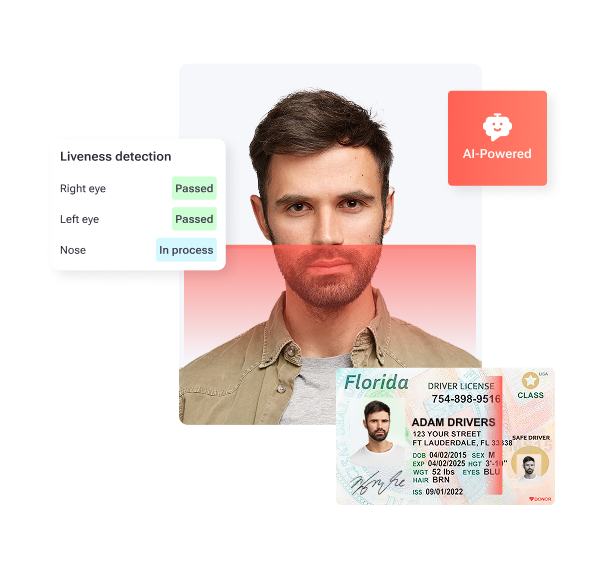
These interconnected challenges, including incomplete files, manual steps, fraud exposure, and inconsistent decisions, often come from outdated workflows. TenantEvaluation addresses these issues through its comprehensive 55+ Communities Verification system that reduces manual work, standardizes application handling, and supports documentation consistency for Florida Condos and HOAs. To combat identity fraud specifically, the platform’s IDVerify feature uses biometric identity verification that goes beyond document uploads to confirm physical presence and identity authenticity. For board coordination and oversight, the QuickApprove dashboard gives boards a single view of applications while streamlining approval workflows.
With over 5,000 communities served and 100,000 applications processed each year, TenantEvaluation delivers measurable time savings and maintains a 4.8/5 Google rating. One Florida management company reduced 50 hours of daily manual processing and achieved $240,000 in annual savings by shifting to TenantEvaluation’s automation.
Best Practices and Tools for Faster 55+ HOA Approvals
Efficient 55+ communities rely on structured checklists and realistic timelines that target 48–72 hour processing for complete applications. Analytics help teams spot bottlenecks, track performance over time, and document compliance efforts for future audits.
TenantEvaluation supports these best practices by providing end-to-end automation that converts manual tasks into digital workflows tailored to Florida 55+ communities. The platform’s revenue-sharing model removes upfront software costs and can create a new income stream through streamlined application processing.
The comparison below shows how TenantEvaluation’s 55+ specific features improve processing speed and board oversight compared with generic screening tools and traditional methods.

| Feature | TenantEvaluation | ApplyCheck | Verify Screening Solutions | Traditional Methods |
|---|---|---|---|---|
| Processing Speed | 5-10 minutes | 5-10 days | 5-10 days | 2+ weeks |
| Florida 55+ Support | Built-in verification | Generic screening | Generic screening | Manual processes |
| Board Dashboard | QuickApprove included | Not available | Not available | Email/phone updates |
| Time Savings | Significant reduction | Limited automation | Limited automation | No automation |
Boards ready to modernize their process can start a free trial with TenantEvaluation and explore the platform in a guided session.
Florida 55+ HOA boards can dramatically improve application reviews by following a clear six-step workflow, using comprehensive documentation checklists, and adopting automation built for age-restricted communities. TenantEvaluation’s platform focuses on the specific needs of Florida 55+ properties, supports HOPA compliance, and reduces administrative workload for managers and boards. The most effective next step involves auditing your current process, identifying manual pain points, and mapping those steps to automation features that fit your community.
Boards that want hands-on support can connect with TenantEvaluation’s Florida 55+ specialists for a tailored demo.
FAQ
What is the 80/20 rule in a 55+ community?
The 80/20 rule under the Housing for Older Persons Act requires that at least 80% of occupied units in qualifying 55+ communities have at least one resident aged 55 or older. This structure allows up to 20% of units to house residents under 55 in situations such as caregivers or surviving younger spouses. Communities must maintain this ratio to qualify for exemption from Fair Housing Act familial status protections. The rule balances flexibility for residents with preservation of the community’s age-restricted character.
What Florida 55+ documents are required for HOA application review?
Florida 55+ communities require standard age verification documents such as a driver’s license, birth certificate, passport, immigration card, or military ID as outlined in the requirements section above. Boards also collect emergency contact forms, HOPA surveys completed every two years, lease copies for rentals, and financial documentation like income verification and credit reports. Many communities set a deadline of at least two weeks before closing or occupancy so staff can complete reviews without last-minute pressure.
What are ideal timelines for 55+ HOA application reviews?
Ideal timelines aim for 48–72 hours when applications arrive complete and accurate. Traditional manual processes often stretch to two weeks or more before closing because each step waits on the previous one. Efficient communities break the process into segments such as 1–2 days for intake, 2–3 days for age verification, 3–5 days for document review, 2–4 days for background screening, 5–7 days for board review, and 1–2 days for final notification. Automated systems compress these windows while preserving thorough review standards.
What are common HOA board mistakes in 55+ application reviews?
Frequent mistakes include inconsistent review criteria, manual fraud checks that miss advanced schemes, and uneven documentation requirements from file to file. Boards also struggle with weak audit trails for compliance, missed HOPA survey schedules, unclear authority definitions in governing documents, and arbitrary decisions that increase liability. Limited technology adoption often compounds these issues and creates bottlenecks.
What are TenantEvaluation’s benefits for 55+ communities?
TenantEvaluation delivers time savings through automated workflows tailored to Florida 55+ communities. The platform reduces manual work, standardizes application handling, and supports documentation consistency across every file. Features include biometric identity verification, board-focused dashboards, FCRA-compliant screening, and revenue-sharing options that remove upfront costs. TenantEvaluation improves operational efficiency and strengthens internal processes while providing the measurable savings and performance gains described earlier in this article.
