Written by: Luis Teran, Co-founder, CEO, TenantEvaluation | Last updated: August 22, 2026
Key Takeaways
- Florida 55+ communities struggle with inconsistent application handling that depends on scattered emails and manual follow-ups.
- The 55+ screening process works best as a six-step workflow that covers age verification, financial documentation, background checks, occupancy tracking, and board approval.
- Common challenges such as incomplete submissions, manual follow-ups, and scattered documentation can be solved with standardized intake and automated workflows.
- Effective practices for Florida associations focus on uniform documentation standards, less manual work, and centralized records that support consistent internal processes.
- TenantEvaluation helps Florida 55+ communities replace fragmented workflows with a structured, scalable platform built for CAMs and boards.
How the 55+ Community Screening Process Works
The 55+ community screening process is the structured workflow Florida Condos and HOAs use to confirm that prospective residents meet age-restricted eligibility requirements under the Housing for Older Persons Act (HOPA), along with financial, background, and occupancy criteria. It covers age verification, income and asset documentation, criminal and credit screening, spouse or co-occupant rules, 80/20 occupancy tracking, and board-level approval. Associations must apply these steps consistently across every application to maintain clear, defensible documentation.

Section 1: Six-Step Screening Sequence for Florida 55+ Communities
The following six-step sequence reflects the standard workflow used by Florida associations managing age-restricted communities. This structure turns scattered, email-based approvals into a repeatable process where each step builds documentation for the next and no application advances without complete records. Each step must be applied uniformly across all applicants to maintain documentation consistency.
- Age Verification: Confirm that at least one occupant per unit meets the minimum age threshold of 55 years. Accepted documents include government-issued photo ID, birth certificate, passport, or driver's license. This step forms the core of HOPA eligibility and must be documented for every application.
- Income and Asset Documentation: Collect proof of financial stability. Common documents include Social Security statements, pension or retirement account statements, tax returns, and bank statements. Asset verification best practices recommend refreshing financial data at key decision points, such as pre-approval and prior to final approval, to keep balances current.
- Background and Credit Screening: Run a criminal background check and credit report for all adult applicants. Many Florida condo associations require applicants to pass a background check and credit check as part of the standard approval process. Each association's governing documents define credit thresholds and disqualifying criminal criteria.
- Spouse or Under-55 Occupant Rules: Determine whether any co-occupant is under 55 and whether the association's governing documents permit this under HOPA provisions. Document the qualifying occupant's age verification separately from any under-55 co-occupant.
- 80/20 Occupancy Documentation: Confirm that the community maintains the required occupancy ratio, where at least 80% of occupied units have at least one resident aged 55 or older. This step requires current, unit-level occupancy records that are updated as applications are approved.
- Board Approval Workflow: Route the completed application package to the board for review and formal approval. Florida HOA communities enforce a mandatory board-level tenant approval process that involves a formal application, background check, and written association approval, with violations subject to fines of up to $100 per violation under Florida Statute 720.305.
Section 2: Documentation Standards for Reliable Screening
Reliable screening depends on collecting the right documentation in a consistent format at every stage. The requirements below support accurate decisions and a clear audit trail.

Accepted Age-Verification Documents:
- Government-issued photo ID or driver's license
- Birth certificate
- Passport
- Medicare card or Social Security card as supplemental verification
Income and Asset Proof Standards:
- Social Security benefit statements
- Pension or retirement account statements
- Federal tax returns, typically the most recent two years
- Bank statements, usually two to three months
- Pay stubs or employment verification letters when applicable
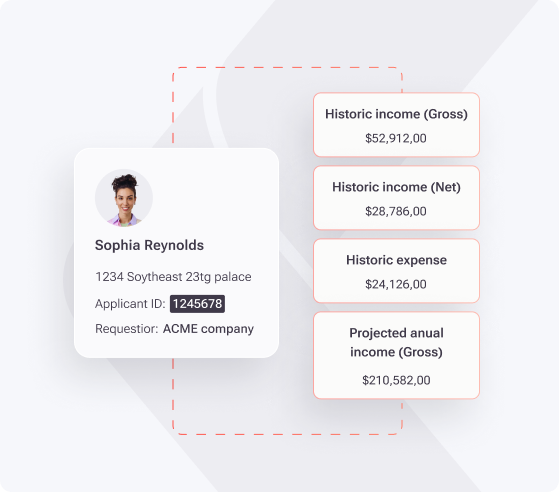
Criminal and Credit Criteria: Each association's governing documents define minimum credit score thresholds and disqualifying criminal history. Many Florida HOA communities require credit reports and criminal background checks for adult applicants as part of the approval process.
80/20 Rule Documentation: Associations must maintain a current survey or registry of qualifying residents by unit. Staff should update this record regularly and retain it as part of the association's internal documentation to support the 80/20 occupancy threshold.
Section 3: Common Screening Challenges and Practical Fixes
Even well-organized associations encounter recurring operational problems in the 55+ screening process. The challenges below appear most often, and each has a clear, practical fix.
- Incomplete Submissions: Applicants frequently omit required documents, which triggers manual follow-up cycles. The solution is a structured intake checklist that flags missing items before the application moves to review. Preparing a complete packet with all requested items at submission is the most effective way to prevent eligibility review delays.
- Manual Follow-Ups: Relying on email to chase missing documents or board responses creates bottlenecks and inconsistent communication records. Automated notification workflows reduce manual outreach and create a documented communication trail.
- Inconsistent Documentation Across Email and PDF Chains: When applications live in scattered email threads and PDF attachments, version control breaks down and records become difficult to audit. Centralizing document collection into a single platform resolves this fragmentation.
- Board Visibility Gaps: Boards often lack real-time access to application status, which forces managers to prepare manual updates. A board-facing dashboard with live application data closes this gap and supports faster, more informed decisions.
- Outdated Financial Data: Asset verification data should be refreshed at key decision points to keep balances and ownership details current, rather than relying only on documents uploaded at the start of the application.
These challenges share a common root cause: fragmented workflows that depend on manual coordination across disconnected tools. The best practices below address these gaps by standardizing how applications are collected, reviewed, and approved.
Section 4: Best Practices That Replace Fragmented Workflows
Florida Condos and HOAs managing age-restricted communities benefit from governance structures and documentation standards that apply uniformly across every application. The table below shows how standardization removes common failure points in manual workflows, such as scattered records, outdated financial data, and board visibility gaps, by centralizing each process step into a single, auditable sequence.
| Process Step | Manual Approach | Standardized Approach | Outcome |
|---|---|---|---|
| Age Verification | Collected via email, stored in folders | Structured intake with required document fields | Consistent records across all applications |
| Income and Asset Review | Manually reviewed PDFs, no refresh protocol | Timestamped records with refresh activity at key decision points | Lower risk of outdated or altered financial data |
| Background and Credit Screening | Ordered separately, results stored in email | Integrated screening within the application workflow | Faster turnaround and centralized records |
| Board Approval | Email chains, no centralized status tracking | Board dashboard with real-time application visibility | Faster decisions and a full audit trail |
Best practices for Florida associations build on one another to create a single, reliable workflow.
- Standardizes application handling by using a uniform intake process for every applicant, regardless of unit type or application volume. This consistency forms the base for all other improvements, because downstream documentation and automation only work when intake is predictable.
- Supports documentation consistency by retaining timestamped records of all submitted documents, verification steps, and board decisions in one location. Centralized records prevent version control issues that arise when applications move across email threads and attachments.
- Reduces manual work by replacing email-based follow-ups with automated notifications and structured workflows. Automation then runs on top of standardized intake and centralized records, instead of amplifying inconsistent processes.
- Strengthens internal processes by defining who reviews applications, in what order, and with what documentation. Clear governance ensures that standardization, documentation, and automation are applied the same way by CAMs, boards, and property managers.
- Improves operational efficiency by connecting age verification, financial review, background screening, and board approval into a single, repeatable sequence. Each step builds on the previous one rather than operating in isolation.
A platform tailored to Florida Condos and HOAs replaces ad hoc processes with a structured, scalable workflow that supports both CAMs and boards.
How TenantEvaluation Brings Structure to 55+ Community Screening
TenantEvaluation's 55+ Communities Verification is a built-in capability within TenantEvaluation's resident screening and onboarding platform. It serves Florida Condos and HOAs that need a consistent and scalable way to manage age-restricted application requirements.

Unlike generic screening tools that use a one-size-fits-all approach, 55+ Communities Verification standardizes application handling across every submission. It reduces manual work, supports documentation consistency, and strengthens internal processes for associations that manage age-restricted communities. Associations move from fragmented email and PDF workflows to a single, organized intake and review sequence.
For Florida associations, this shift creates clear operational gains:
- Fewer manual follow-ups with applicants and realtors over missing age or income documents
- Consistent documentation records across all applications that support internal review and audit readiness
- Faster board approvals supported by QuickApprove, TenantEvaluation's accelerated approval workflow for CAMs, boards, and property management teams inside one connected platform
- Improved efficiency across communities with high application volumes or complex onboarding requirements
TenantEvaluation processes more than 100,000 applications annually across over 5,000 communities, with FCRA compliance built into the platform. The system is designed specifically for community associations and management companies, with Florida-specific workflows that reflect how CAMs and boards actually operate.
55+ Communities Verification supports documentation and consistency while not replacing legal guidance. It functions as a workflow standardization platform, a documentation-first onboarding solution, and an operational control layer for higher-risk application scenarios. CAMs and boards gain the structure they need to manage age-restricted requirements at scale.
Schedule a demo today and see how TenantEvaluation's 55+ Communities Verification standardizes application handling for Florida Condos and HOAs.
Conclusion: Turning 55+ Screening Into a Repeatable Workflow
A clear, well-documented 55+ community screening process forms the base for consistent, defensible application handling for Florida Condos and HOAs. Manual, fragmented workflows create administrative burden, incomplete records, and limited board visibility, and these problems grow as application volume increases. A repeatable six-step sequence, paired with standardized documentation requirements and a structured board approval workflow, lowers these risks and improves operational efficiency across the association.
TenantEvaluation's 55+ Communities Verification delivers this structure as a built-in capability. CAMs and boards gain a screening process that is consistent, scalable, and aligned with how Florida community associations operate.
Schedule a demo today to see how TenantEvaluation helps Florida associations build a screening process that is clear, repeatable, and easy for teams to manage.
Frequently Asked Questions
What is the 80/20 rule in a 55+ community?
The 80/20 rule is an occupancy requirement under the Housing for Older Persons Act (HOPA). It requires that at least 80% of occupied units in a qualifying 55+ community have at least one resident who is 55 years of age or older. The remaining 20% of units may be occupied by residents who do not meet the age threshold, provided the community also publishes and follows policies that show its intent to be age-restricted housing. Associations must maintain current occupancy records by unit and update them as new applications are approved to document ongoing compliance with this threshold.
Can a spouse under 55 live in a 55+ community?
Yes, in most cases. HOPA does not require every occupant to be 55 or older, and it requires that at least one occupant per unit meets the age threshold. A spouse or co-occupant who is under 55 may live in the unit as long as the qualifying resident aged 55 or older also occupies the unit. Each association's governing documents may impose additional restrictions, and associations should document the qualifying occupant's age verification separately from any under-55 co-occupant. Associations should consult legal counsel when evaluating specific household configurations against their governing documents.
How strict are 55+ communities?
Strictness varies by association, but Florida 55+ communities generally follow a documented screening process that includes age verification for every application. Many associations also require income verification, credit checks, criminal background screening, and board-level approval before occupancy is permitted. Some communities, including those in Palm Beach County, require a multi-item application package that includes photo ID for all adult occupants, a full credit report, a criminal background check, income verification, and a signed community rules acknowledgment. The approval process can take several weeks depending on the board’s meeting schedule and the completeness of the submitted documentation.
What documents are required to qualify for a 55+ community in Florida?
Required documents vary by association but typically include a government-issued photo ID or birth certificate for age verification, Social Security benefit statements or pension statements for income verification, bank statements for asset verification, federal tax returns, and a completed application with personal and financial information. Some associations also require vehicle registration, a signed community rules acknowledgment, and a landlord authorization letter. Incomplete submissions are one of the most common reasons applications are delayed, so applicants should prepare a complete documentation packet before submitting.
