Written by: Luis Teran, Co-founder, CEO, TenantEvaluation | Last updated: July 28, 2026
Key Takeaways
- Florida 55+ communities must keep at least 80% of occupied units with one resident aged 55 or older to preserve their exemption.
- HUD-approved documents such as birth certificates, passports, and military discharge papers support age verification, and communities must complete surveys every two years.
- Fragmented email-and-PDF processes create audit and compliance risks, while centralized, timestamped records support lender reviews and HUD inquiries.
- Common rejection triggers include expired IDs, unsigned affidavits, lapsed surveys, and occupancy dropping to 79% or below.
- TenantEvaluation standardizes 55+ document verification workflows for Florida HOAs and CAMs, so learn more.
Why Florida 55+ Communities Need Tight Document Verification
Under HOPA, a 55+ community must satisfy a three-part test to maintain its familial-status exemption. At least 80% of occupied units must have one resident aged 55 or older. The community must publish and follow policies that show it intends to operate as 55+ housing. It must also maintain reliable age verification procedures under 24 CFR § 100.307. Florida has a similar statute at F.S. 760.29(4) that addresses these exemptions.
These verification procedures require systematic documentation, yet many communities still rely on scattered email-and-PDF workflows. Fragmented processes create conditions for exemption loss, with documents stored across inboxes, surveys missed on two-year cycles, and no central record of what was collected, when, and from whom. The operational risk is concrete. A community whose age-qualified occupancy falls to 79% is immediately exposed to fair housing complaints and lender rejection.
See how to protect your exemption status with TenantEvaluation’s 55+ Communities Verification, which standardizes application handling for Florida Condos and HOAs.
Five HUD-Approved Age Documents and the 80/20 Rule
HUD lists the following as acceptable forms of verification for age under HOPA: Birth Certificate, Baptismal Certificate, Military Discharge papers, Valid passport, Census document showing age, Naturalization certificate, and Social Security Administration Benefits printout.

When primary documents are unavailable, 24 CFR § 100.307 permits verification through reliable surveys and affidavits. These alternatives still need clear records that show who provided the information and when.
The 80/20 rule described earlier focuses on occupied units, not total units. Vacant units do not count against the threshold. The remaining 20% may be occupied by residents under 55, including younger spouses, live-in caregivers, or other permitted occupants under community rules.
| Document | Acceptable | Notes |
|---|---|---|
| Birth Certificate | Yes | Official record of age |
| Baptismal Certificate | Yes | Can be used to establish age |
| Military Discharge papers | Yes | Government issued |
| Valid passport | Yes | Shows date of birth |
| Census document showing age | Yes | Official census record |
| Naturalization certificate | Yes | Immigration record |
| Social Security Administration Benefits printout | Yes | Government benefits record |
Florida HOPA Age Verification and Daily Intake Practices
Florida Statutes Section 760.29(4)(a) requires that at least one resident in at least 80% of units be aged 55 or older. The association board must also present the community as housing for older persons in its marketing and governing documents. Florida no longer requires state registration of 55+ communities as of July 2020, yet the core HOPA age rules still apply. Associations that stop maintaining the 80% threshold, published policies, or verification records risk losing the exemption entirely.
Every application intake should collect one of the HUD-accepted documents listed above. The record should note the document type, the date of collection, and the name of the staff member who reviewed it. This detail creates the audit trail needed if the association is ever challenged by HUD, a lender, or a fair housing complaint.
Biennial Survey Duties for 55+ Communities
HOPA regulations require 55+ communities to re-survey residents at least every two years to confirm continued compliance with the 80% threshold. The survey must use reliable methods, and results must be documented with enough detail to demonstrate compliance to HUD upon request.
| Survey Element | Requirement | Record-Keeping Standard |
|---|---|---|
| Frequency | At minimum every two years | Log the date of each survey cycle |
| Methodology | Reliable documents or sworn affidavits | Record the document type reviewed per unit |
| Retention | Maintain records through the next cycle and beyond | Adopt a written retention policy; shredding prior records is insufficient |
| Resale disclosure | Include most recent survey results in resale package | Title teams should request survey results at closing |
Communities that fail to conduct biennial surveys or maintain systematic records cannot prove HOPA compliance if challenged. This gap exposes them to fair housing complaints and potential loss of exemption.
Handling Document Gaps in Florida 55+ Communities
The HUD-accepted documents cover the majority of applications. Common documentation gaps that create delays or rejections include expired government IDs, photocopies without legible date-of-birth fields, and affidavits that are unsigned or undated. Boards should adopt a written checklist and share it with applicants at the start of the process to reduce incomplete submissions.
Some residents refuse to provide documentation, which still requires a clear record. In that situation, 24 CFR § 100.307 permits the community to rely on government records, prior forms, or a penalty-of-perjury statement from someone with personal knowledge of the occupants’ ages. This fallback must also be documented in the unit’s verification file.
Rejection Risks During 55+ Document Verification
Rejection during 55+ document verification occurs for both operational and eligibility reasons. The most common scenarios include:
- Submitted ID is expired or does not display a legible date of birth
- No qualifying resident aged 55 or older is identified for the unit
- The community’s overall age-qualified occupancy is at or below 79%, placing it out of compliance and at immediate risk of lender or title rejection
- The biennial survey has lapsed, and the association cannot produce current verification data
- The affidavit submitted is unsigned, undated, or not executed under penalty of perjury
- The HOPA compliance letter provided to a lender is missing required elements such as the survey date, methodology summary, or signer’s title
Resolution steps follow a consistent pattern. First, collect a replacement document from the HUD-accepted list to close the documentation gap. If the biennial survey has lapsed, refresh it to restore current occupancy data. Then update the unit’s verification file with the document type, collection date, and reviewer, which creates a clear audit trail. For lender submissions, a complete HOPA compliance letter must include the community’s name and address, confirmation of 80% status, date of the most recent survey, summary of verification procedures, reference to published policies, and the signer’s name and title.
Adult Children, Guests, and Caregivers in 55+ Housing
Adult children who are not caregivers generally cannot reside permanently in a 55+ community unless the community allocates part of its 20% flexibility to under-55 residents or the adult child meets the community’s own minimum age requirement. Adult children who inherit property may own it but cannot occupy it without meeting the community’s age-occupancy requirements.
Guest stays also affect compliance. Many 55+ communities limit overnight visits. A guest becomes an occupant, and therefore subject to the 80/20 rule, when the stay exceeds posted day limits, involves repeated back-to-back visits, or includes behaviors such as receiving mail at the address or registering a vehicle there. Each community’s governing documents set the specific thresholds, and boards should enforce them consistently to protect HOPA status.
Live-in caregivers are generally permitted regardless of age as an exception within the 20% allowance. The community’s rules must allow this, and the caregiver should be documented as providing medical or personal care for a qualifying resident.
Survey Requirements for Florida 55+ Communities in 2026
The two-year survey cycle described earlier remains in place for 2026. Communities whose last survey was conducted in 2024 must complete a new cycle by the end of 2026. Associations should keep surveys on a predictable schedule to maintain compliance.
Survey methodology must use reliable documentation, including the HUD-accepted document types listed above, and results must be retained with enough detail to demonstrate compliance. Florida no longer requires state registration, and the Florida Commission on Human Relations no longer maintains a registry of 55+ communities because the state registration requirement was eliminated effective July 1, 2020. Boards should confirm their internal records align with current federal and state requirements.
How Florida HOAs Replace Manual 55+ Workflows
Manual 55+ document handling through email chains, PDF attachments, and shared drives produces inconsistent records and repeated follow-ups. These fragmented steps leave boards without a repeatable, board-ready approval workflow. When a lender or HUD requests documentation, associations that rely on manual processes often cannot produce a complete, timestamped file for every unit.
TenantEvaluation’s 55+ Communities Verification is a built-in capability that reduces manual work and standardizes application handling across every application. Because it is built specifically for Florida Condos and HOAs, it addresses the real-world requirements Community Association Managers face in age-restricted communities. This purpose-built design improves operational efficiency by replacing fragmented email-and-PDF processes with a structured workflow that connects document collection, review, and approval in a single platform.
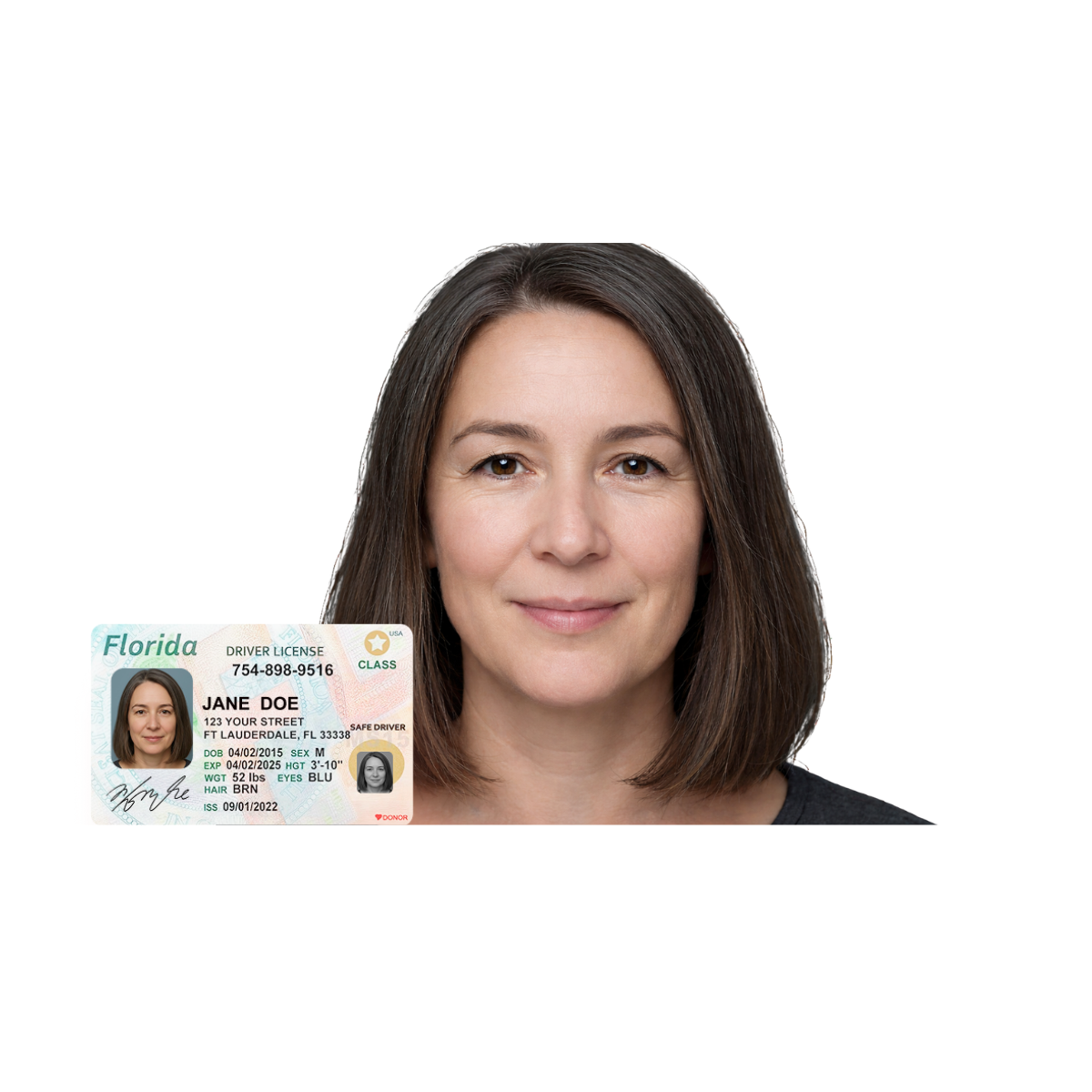
Boards gain a clearer operational picture at every stage of the application cycle. CAMs who manage multiple communities gain a scalable process that does not require adding headcount as application volume grows. TenantEvaluation has processed 100,000+ applications annually across 5,000+ communities in Florida, and its platform is built for community associations rather than adapted from generic rental tools.
See the centralized workflow in action as Florida CAMs replace manual 55+ processes with TenantEvaluation’s documentation-first platform.
Conclusion
55+ community document verification functions as an ongoing operational requirement, not a one-time move-in task. It involves defined timing rules, an accepted document list, biennial survey obligations, and rejection scenarios that every Florida CAM and board member must manage consistently. The checklists and timing rules in this playbook provide a baseline for evaluating current workflows against HOPA’s three-part test under Florida Statutes Section 760.29(4) and 24 CFR § 100.307.
Associations that standardize their documentation workflows now are better positioned for lender reviews, title requests, and any HUD inquiry that arrives without advance notice. TenantEvaluation’s 55+ Communities Verification gives Florida Condos and HOAs a structured, repeatable process that manual workflows cannot reliably deliver.
Evaluate your current workflow and see whether it meets the operational standard your community requires.
Frequently Asked Questions
What is the minimum documentation a Florida 55+ community must collect to maintain HOPA status?
Every occupied unit must have on file at least one HUD-accepted document confirming that a resident aged 55 or older lives there. Acceptable documents include a driver’s license, passport, birth certificate, military ID, or Medicare card showing date of birth. When primary documents are unavailable, a sworn affidavit or self-certification signed under penalty of perjury is acceptable as a fallback. The record must note the document type, the date it was collected, and who reviewed it. This file must be maintained and updated at least every two years through the biennial survey process. A community that cannot produce these records for at least 80% of occupied units risks losing its HOPA exemption.
How often does a Florida 55+ community need to conduct a biennial survey, and what happens if it lapses?
The biennial survey must be completed at minimum once every two years. There is no grace period built into the federal rule, so a lapsed survey means the community cannot demonstrate current compliance with the 80% threshold. In practice, this gap creates immediate exposure during lender reviews, title transactions, and any HUD inquiry. If a survey has lapsed, the association should initiate a new one immediately, collect updated documentation from residents using the HUD-accepted document list, and retain all results with a written record of the methodology used. Boards should calendar the next survey cycle at the close of each completed survey to prevent future lapses.
Can an adult child permanently reside in a Florida 55+ community?
Permanent residency by an adult child under 55 is generally not permitted unless the community allocates part of its 20% flexibility to under-55 residents or the adult child independently meets the community’s minimum age requirement. Some communities set their own minimum age for all permanent residents, such as 45 or 50, which may exclude adult children even within the 20% allowance. An adult child who inherits a unit may own the property but typically cannot occupy it without meeting the community’s age-occupancy rules. Guest stays are governed separately by each community’s own policies, with most communities capping consecutive overnight visits at 14 to 30 days and total annual stays at 30 to 60 days. Boards should enforce guest policies consistently, as extended or repeated stays can convert a guest into an occupant for HOPA compliance purposes.
What are the most common reasons a 55+ community fails document verification during a lender or title review?
The most frequent failure points include an expired or illegible government-issued ID, a lapsed biennial survey with no current occupancy data on file, and an overall age-qualified occupancy rate at or below 79%. An incomplete HOPA compliance letter that omits required elements such as the survey date, methodology summary, or the signer’s title also creates problems. Affidavits that are unsigned, undated, or not executed under penalty of perjury are commonly rejected. Resolution requires collecting replacement documents from the HUD-accepted list, refreshing the biennial survey if it has lapsed, and producing a complete compliance letter that includes all required fields. Associations with centralized, timestamped documentation files resolve these issues faster than those relying on scattered email records.
How does TenantEvaluation’s 55+ Communities Verification help Florida CAMs manage these requirements?
TenantEvaluation’s 55+ Communities Verification is a built-in capability within the TenantEvaluation platform that reduces manual work and standardizes application handling across every 55+ application. It is built for Florida Condos and HOAs and designed specifically for Community Association Managers who manage age-restricted communities. Instead of relying on email chains, PDF attachments, and manual follow-ups, CAMs and boards work within a single structured workflow where document collection, application review, and approval processes are connected. This approach improves operational efficiency, strengthens internal processes, and creates more organized records for audit readiness, without replacing legal guidance or guaranteeing any specific compliance outcome. It functions as a workflow standardization tool, not a legal verification system.
