Written by: Luis Teran, Co-founder, CEO, TenantEvaluation | Last updated: August 3, 2026
Key Takeaways
- Florida 55+ communities rely on three core financial checks: income verification, credit evaluation, and asset or reserve documentation. These checks protect community financial health and support HOPA compliance.
- The 80/20 rule under HOPA requires that at least 80% of occupied units have one resident aged 55 or older. This rule creates ongoing age-verification and documentation duties for associations.
- Associations use income-to-fee ratio calculations similar to lender DTI logic. Requirements vary by community type, including standard HOAs, luxury condominiums, and CCRCs.
- Standardized documentation workflows reduce administrative burden and strengthen associations during audits or disputes by maintaining consistent, audit-ready records.
- TenantEvaluation helps Florida CAMs and boards standardize 55+ financial qualification workflows with FCRA-compliant tools and automated processes. Schedule a demo today to see how TenantEvaluation streamlines these requirements.
How Florida 55+ Communities Apply the 80/20 HOPA Rule
Under the Housing for Older Persons Act (HOPA), an amendment to the Fair Housing Act, at least 80% of occupied units in a 55+ community must have at least one resident aged 55 or older for the community to maintain its legal age-restricted status. The remaining 20% of occupied units may be occupied by younger residents, including spouses, live-in caregivers, or property inheritors, subject to each community’s specific HOA rules.

Florida law reinforces this federal standard by granting exemptions from the Fair Housing Act’s familial status provisions to communities that meet the required age occupancy criteria.
Florida associations operationalize HOPA enforcement through the following steps:
- Confirm that the community’s governing documents explicitly state its intent to operate as 55+ housing.
- Maintain an age-verification survey or registry updated at least every two years, as required by HOPA.
- Track occupancy by unit. Vacant units do not count against the 80% threshold, so the ratio is calculated on occupied units only.
- Document each qualifying resident’s age at the time of application and retain that documentation in an audit-ready format.
- Monitor the 80% threshold continuously. If a community falls below the threshold, it risks losing its HOPA exemption and can no longer legally enforce age restrictions.
- Register the community with the Florida Commission on Human Relations, which maintains a searchable registry of 55+ communities in the state.
Florida-specific checklist for 80/20 compliance:
- Governing documents include explicit 55+ intent language
- Age-verification survey conducted and documented within the past 24 months
- Occupancy records distinguish between occupied and vacant units
- Age documentation retained per unit in a searchable, audit-ready format
- Community registered with the Florida Commission on Human Relations
- Board has reviewed the 80% threshold calculation at the most recent annual meeting
How Florida 55+ Communities Use Income-to-Fee Ratios
Lenders include monthly HOA fees in a borrower’s debt-to-income (DTI) ratio as part of total monthly housing expense when qualifying for a mortgage on a home in a Florida 55+ community, and a $400 monthly HOA fee reduces borrowing capacity the same way a car payment would. Florida associations apply similar logic when setting internal income thresholds for applicants.

Boards consider an applicant’s income relative to the monthly fee when reviewing applications for 55+ communities. These benchmarks vary based on community type and risk tolerance.
- Standard HOAs: applicant gross monthly income is evaluated in relation to the monthly association fee
- Luxury condominiums: may require higher income levels along with additional asset documentation
- CCRCs: income sufficient to cover the monthly service fee and any entrance fee obligations
- Communities with high special assessment history: boards may establish higher standards
Verification steps for income qualification:
- Collect two to three months of bank statements or brokerage account statements.
- Request the two most recent federal tax returns (Form 1040) to confirm recurring income sources.
- Obtain Social Security award letters or pension statements for retirement-income applicants.
- Calculate income relative to the fee using gross monthly income divided by the total monthly association fee obligation.
- Document the calculation and the supporting documents in the applicant’s file before the board vote.
Florida-specific income verification checklist:
- Bank or brokerage statements (2–3 months)
- Federal tax returns (2 most recent years)
- Social Security award letter or pension statement, if applicable
- Income-to-fee ratio calculation documented in writing
- All documents retained in an audit-ready format per community governing documents
Financial Safety Nets in CCRCs vs Standard 55+ HOAs
Florida CCRCs and standard 55+ HOAs use very different financial qualification and ongoing monitoring approaches. CCRCs typically require residents to pay a one-time entrance fee at move-in plus an ongoing monthly service fee, unlike standard 55+ HOAs that charge only recurring association dues.
Florida CCRCs are regulated under Chapter 651 of the Florida Statutes, which mandates specific reserve requirements and financial disclosure practices not applicable to standard 55+ HOAs. When a CCRC resident’s assets are depleted, the outcome depends on the contract type and the community’s financial assistance policies. Not-for-profit CCRCs such as Westminster Communities of Florida maintain benevolent assistance funds that allow residents who outlive their assets to remain in the community for life, subject to contractual terms.
Standard 55+ HOAs do not offer this protection. Unpaid assessments may result in liens or collection proceedings under Florida Statutes Chapter 720 or 718.
Comparison of ongoing financial monitoring by community type:
- Standard 55+ HOA: Monitors assessment payment history, with no ongoing income re-verification unless required by governing documents
- CCRC (Type A LifeCare): Monthly fee remains essentially unchanged when a resident transitions from independent living to higher levels of care, and the community may conduct periodic financial reviews
- CCRC (Type B or C): Monthly fees increase as care levels rise, so residents bear more financial risk and may require updated asset documentation
Steps for ongoing financial monitoring in Florida 55+ communities:
- Establish a written policy in the governing documents specifying when, if ever, financial re-verification is required.
- Track assessment payment status in real time to identify delinquency patterns early.
- For CCRCs, review the Chapter 651 annual financial disclosure filed with the Florida Office of Insurance Regulation.
- Retain all financial documentation in a centralized, searchable format for audit readiness.
Florida-specific checklist for CCRC vs HOA financial monitoring:
- Governing documents specify re-verification triggers
- Assessment payment history tracked and documented
- CCRC contract type (A, B, or C) identified and disclosed to applicant at intake
- Chapter 651 annual disclosure reviewed by board (CCRCs only)
- Benevolent assistance fund policy documented and communicated (if applicable)
How Florida Associations Verify Financial Qualifications
A standardized documentation workflow reduces inconsistency and strengthens the association’s position in the event of an audit or dispute by ensuring every application is evaluated using the same criteria and documented in the same format. When every file contains the same categories of information captured through the same process, the association can demonstrate that its decisions are consistent and defensible. The following sequence reflects current best practice for Florida 55+ communities in 2026:
- Applicant submits a completed online application including income, asset, and identity documentation.
- CAM or management team reviews submitted documents against the community’s written qualification criteria.
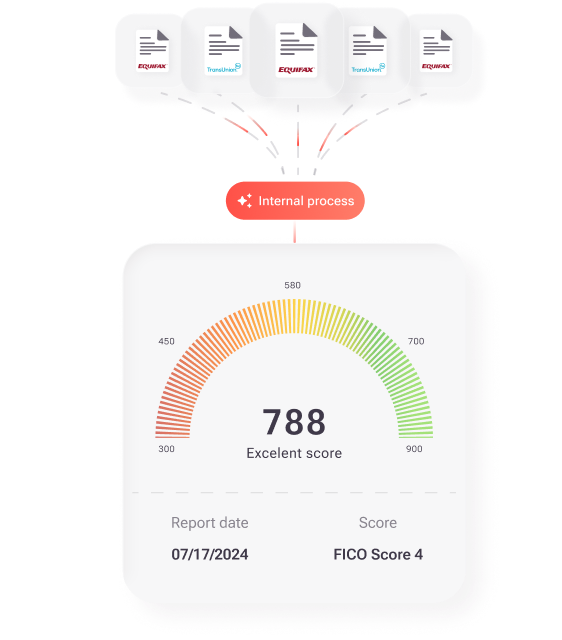
- Credit report is pulled through an FCRA-compliant, permissible-purpose channel. TenantEvaluation is a direct reseller of TransUnion and Equifax data, which prevents use of gray-market or offshore data sources.
- Income-to-fee ratio is calculated and documented using the applicant’s verified gross monthly income.
- Asset or reserve documentation is reviewed and compared against the community’s minimum threshold.
- Age verification documentation is collected and filed to support the 80% occupancy calculation.
- Board reviews the complete application package and votes using a documented, timestamped process.
- Adverse action notices are issued where required under FCRA, with automated workflows reducing manual error risk.
- All documentation is retained in an audit-ready digital record.
TenantEvaluation’s 55+ Communities Verification helps Florida Condos and HOAs standardize age-restricted requirements across applications. The platform reduces manual work, improves documentation consistency, and strengthens operational efficiency and control. Unlike generic screening tools, this capability aligns with the real workflows of Florida associations and supports internal compliance-related processes without replacing legal guidance.
Florida-specific documentation checklist:
- Completed application with income, asset, and identity fields
- FCRA-compliant credit report from a direct bureau reseller
- Income-to-fee ratio calculation on file
- Asset or reserve documentation meeting community threshold
- Age verification document per qualifying resident
- Board vote record with timestamps
- Adverse action notice issued where applicable
- Full application package retained in searchable digital format
Schedule a demo today and see how TenantEvaluation’s FCRA-compliant platform handles every step of this workflow inside one connected system.
Best Practices for Implementing Financial Qualification Policies
Governance, workflow clarity, documentation standards, and stakeholder communication form the four pillars of a defensible financial qualification process for Florida 55+ communities.
Governance:
- Adopt a written financial qualification policy approved by the board and consistent with the community’s governing documents. This policy becomes the foundation for all qualification decisions.
- Review the policy annually and update it to reflect changes in Florida Statutes Chapters 718, 720, or 651, as applicable, because state and federal rules evolve over time.
- Ensure the policy references HOPA’s 80% occupancy requirement and the community’s age-verification survey schedule so age and financial standards stay aligned.
Workflow Clarity:
- Map each step of the qualification process, from application intake to board vote, in a written standard operating procedure.
- Assign clear ownership for each step, including who collects documents, who calculates ratios, who pulls credit, and who notifies the board.
- Use QuickApprove accelerated approval workflow to move applications from submission to decision faster, with real-time application tracking, automated communication support, and a board-ready approval process, while maintaining control, compliance, and visibility.

Documentation Standards:
- Require all documents to be submitted digitally to eliminate paper handling and reduce data breach risk.
- Once documents are digital, apply auto-redaction to sensitive personal information such as Social Security numbers and banking details, which further reduces exposure if records are accessed.
- Retain all application records in a searchable, audit-ready digital format with timestamped activity logs so the association can respond quickly to audits or disputes.
Stakeholder Communication:
- Provide applicants with a clear written checklist of required documents and qualification thresholds before they begin the application.
- Use automated notifications to keep applicants, realtors, and board members informed of application status without manual follow-up.
- Issue adverse action notices promptly and through a documented channel when an application is declined based on credit or financial information.
Implementation checklist:
- Written financial qualification policy adopted and board-approved
- Annual policy review scheduled
- Standard operating procedure for each workflow step documented
- Digital document collection and auto-redaction in place
- Audit-ready record retention confirmed
- Applicant-facing qualification checklist published
- Automated status notifications configured
- Adverse action workflow documented and tested
Frequently Asked Questions
What is the 80/20 rule in a 55+ community, and how does it affect financial qualification?
The 80/20 rule under HOPA governs age eligibility by requiring that at least 80% of occupied units have a qualifying resident aged 55 or older. This rule does not set financial standards directly, but it creates an operational requirement for associations. Every application must include age verification documentation, and that documentation must be retained in a format that supports the community’s ongoing HOPA compliance posture. Florida associations also register with the Florida Commission on Human Relations and maintain an age-verification survey updated at least every two years.
What income-to-fee ratio do Florida 55+ communities typically require in 2026?
Florida associations evaluate gross monthly income relative to the monthly association fee, with thresholds varying by community type and fee structure. The standards are not set by statute and instead are defined by each community through its governing documents and written qualification policy. Each association should document its specific income-to-fee threshold in that policy and apply it consistently across all applicants.
What happens financially if a CCRC resident runs out of money in Florida?
The outcome depends on the CCRC’s contract type and the community’s financial assistance policies, as described in the CCRC section above. The key distinction lies between not-for-profit CCRCs with benevolent assistance funds, which may allow residents who deplete their assets to remain, and standard 55+ HOAs, which have no safety net and may pursue liens for unpaid assessments. Prospective residents should review the CCRC’s Chapter 651 disclosure and contract type before committing.
How does TenantEvaluation’s 55+ Communities Verification help Florida CAMs and boards?
TenantEvaluation’s 55+ Communities Verification is a built-in capability that helps Florida Condos and HOAs standardize how age-restricted requirements are handled across applications. The platform reduces manual work by replacing fragmented email chains, PDFs, and follow-ups with a structured and consistent workflow. It improves documentation consistency so that every application file contains the same categories of information in the same format, which strengthens the association’s position during audits or disputes. The system is designed specifically for Community Association Managers and boards and supports internal compliance-related processes without replacing legal guidance.
What credit score do Florida 55+ communities require for financial approval?
Credit score minimums in Florida 55+ communities are set by each association’s governing documents and qualification policy, not by state statute. Each community determines its own requirements for credit scores and should document the threshold in its written policy. The credit report must be pulled through an FCRA-compliant, permissible-purpose channel. As noted earlier, TenantEvaluation’s direct bureau reseller status protects associations from gray-market data liability while supporting consistent, compliant screening.
Conclusion: Building a Defensible 55+ Qualification Process
Financial qualification in Florida 55+ communities involves interconnected requirements such as income-to-fee ratios, credit thresholds, asset documentation, and HOPA’s 80% occupancy rule. Managing these pieces manually creates significant administrative complexity for CAMs and boards and increases the risk of inconsistent decisions.
TenantEvaluation is an FCRA-compliant platform built specifically for Florida community associations. With 55+ Communities Verification, TenantEvaluation helps Florida Condos and HOAs standardize age-restricted application handling, reduce manual work, and improve documentation consistency across every application. As a direct reseller of TransUnion and Equifax data, with built-in adverse action workflows, automated audit trails, and a board-ready approval process through QuickApprove, TenantEvaluation delivers the operational control and compliance foundation that 55+ communities require without replacing legal guidance.
TenantEvaluation has processed more than 100,000 applications annually across over 5,000 communities, with FCRA compliance as the foundation. Schedule a demo today and see how TenantEvaluation standardizes 55+ financial qualification for Florida CAMs and boards.
