Written by: Luis Teran, Co-founder, CEO, TenantEvaluation
Key Takeaways for Florida 55+ Communities
- Florida 55+ communities must meet the federal HOPA 80/20 rule, publish age-restriction policies, and conduct biennial age verification to keep their exemption from familial-status protections.
- Only permanent residents count toward the 80% threshold. Guests and visitors follow each community’s CC&R stay limits instead of HOPA rules.
- Associations must retain acceptable age-verification documents (driver’s license, passport, birth certificate) and update records at least every two years to avoid losing HOPA status.
- Guest policies, adult-child residency rules, and caregiver allowances vary by community. Buyers and renters must review specific CC&Rs before assuming any arrangement is allowed.
- Streamline age-restricted application tracking and biennial surveys with TenantEvaluation’s 55+ Communities Verification.
How the HOPA 80/20 Rule Works in Florida Communities
The Housing for Older Persons Act (HOPA), enacted in 1995, creates a limited exemption from the Fair Housing Act’s familial-status protections for qualifying 55+ communities. Three conditions must be met at the same time:
- At least 80% of occupied units must include one resident aged 55 or older.
- The community must publish and follow policies that show intent to operate as 55+ housing.
- The community must maintain ongoing age-verification procedures consistent with HUD 24 CFR 100.307.
The 80% threshold applies only to occupied units. Vacant homes do not count against the requirement. The remaining 20% of occupied units may house residents under 55, including younger spouses or partners, live-in caregivers, and occupants of inherited properties.
A community that falls below the 80% threshold risks losing its legal age-restricted status and its exemption from familial-status discrimination protections. Loss of that exemption effectively requires the community to accept residents of any age.
In practical Florida terms, a 200-unit condominium in Sarasota with 180 occupied units must have at least 144 of those units occupied by at least one resident aged 55 or older to maintain HOPA status. The core requirements of the 1995 HOPA framework remain in effect.
Who Counts as a 55+ Resident and Who Counts as a Guest
HOPA’s 80/20 rule governs only permanent residents who live in the community full-time. As established under HOPA’s 80/20 rule, only permanent residents count toward the threshold. Visitors and guests are excluded and instead follow each community’s individual guest policies.
A qualifying resident is any person who occupies a unit as a primary or permanent residence and is aged 55 or older. A younger spouse or domestic partner living with a qualifying resident generally does not disqualify the unit from counting toward the 80%. Live-in caregivers are also typically permitted regardless of age and fall within the 20% allowance under HOPA.
Guests, including grandchildren, adult children visiting temporarily, and other non-permanent occupants, are subject to community-defined stay limits rather than HOPA’s age threshold. The distinction between a guest and a permanent resident is operationally significant. A guest who exceeds stay limits may be treated as an unauthorized occupant, which can trigger enforcement procedures under the community’s CC&Rs.
Biennial Age Survey Requirements and Documentation Standards
HOPA requires communities to verify occupancy on an ongoing basis, not only at move-in. Under HUD 24 CFR 100.307, age verification records must be updated at least once every two years to confirm the community continues to meet the 80% threshold.
Under 24 CFR 100.307, acceptable documentation includes driver’s licenses, birth certificates, passports, immigration cards, and military IDs. Communities should apply these standards consistently across all units.
Communities must systematically collect and retain records that include the verification date, document type reviewed, and survey methodology. Relying on memory or informal tracking is insufficient. A complete HOPA compliance record must confirm that at least 80% of occupied units have one resident aged 55 or older, summarize verification procedures, and reference the most recent survey date.
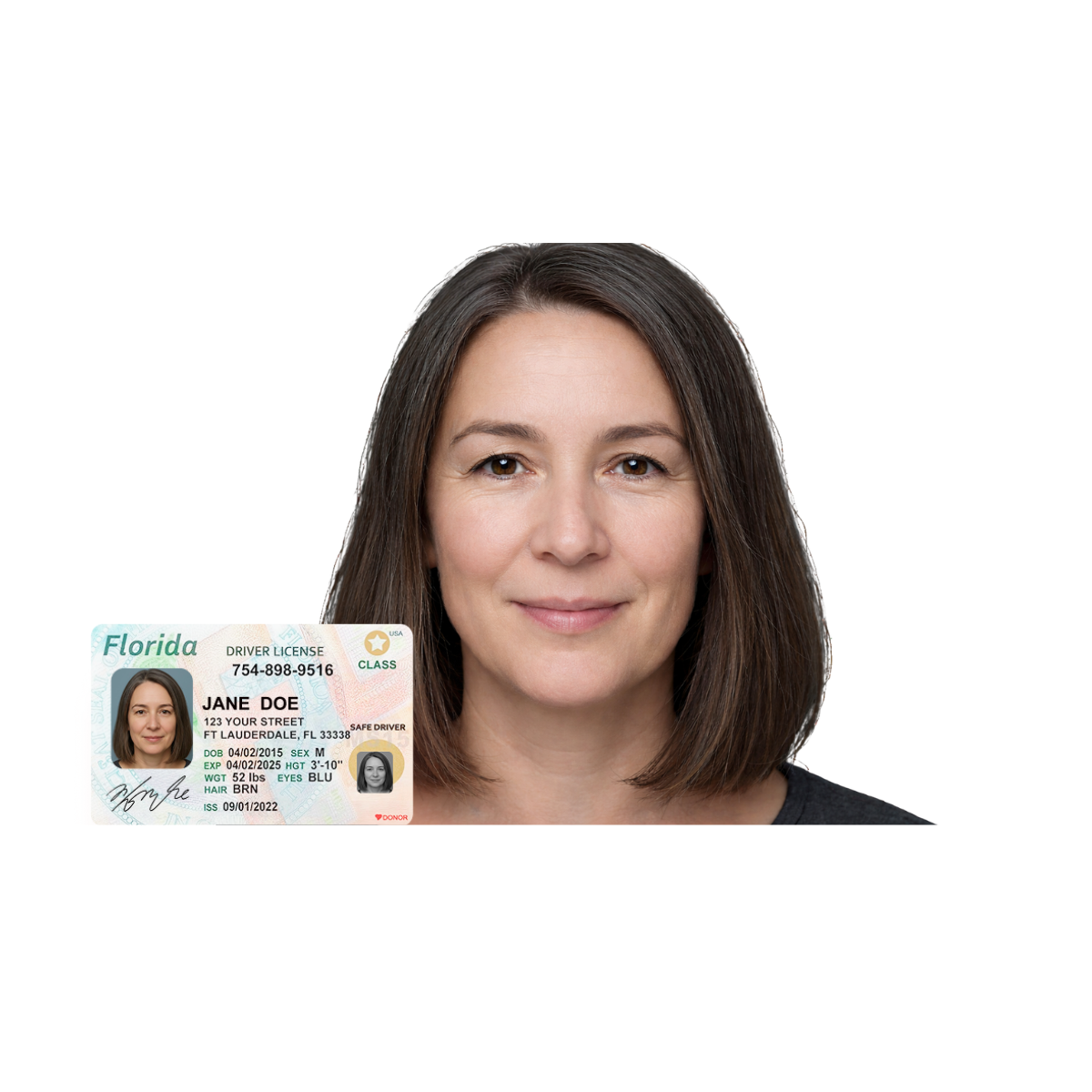
These documentation requirements explain why Florida associations managing age-restricted housing are increasingly shifting toward proactive HOPA compliance administration. Associations now treat age certification, resident surveys, and documentation as core operational functions rather than periodic tasks.
Guest Stay Limits and Common Enforcement Challenges
Guest stay limits in Florida 55+ communities are governed by each community’s CC&Rs, not by HOPA directly. Common limits range from 30 to 60 consecutive days per year, although specific terms vary by community and must be verified before purchase or rental.
Typical guest policy restrictions in Florida 55+ communities include:
- Maximum consecutive days per visit, commonly 30 to 60 days
- Annual cumulative day limits
- Guest registration requirements with the association
- Restrictions on recreational amenity access, such as pools, fitness centers, and golf carts
- Prohibitions on minors as permanent residents
Enforcement challenges arise when guest stays are not tracked systematically. Without centralized records, associations may struggle to document when a guest’s stay began, whether registration requirements were met, or whether a pattern of extended stays constitutes de facto residency. These gaps create inconsistency in enforcement and potential exposure in fair housing disputes.
Adult Children, Caregivers, and Permanent Residency Rules
Adult child residency in a Florida 55+ community depends on the community’s governing documents, not on any automatic federal allowance. HOPA does not prohibit adult children from residing with a qualifying parent, but individual HOA rules may impose minimum age requirements for additional occupants or restrict full-time residency for those under a specified age.
Many Florida 55+ communities allow adult children to reside with a parent if one resident in the unit meets the age requirement and the community’s 80% threshold is maintained. Some communities set a minimum age, commonly 40 or 45, for any permanent occupant. Buyers and renters must review the specific CC&Rs of each community before assuming an adult child may reside there.
Live-in caregivers occupy a distinct category. HOPA generally permits caregivers to reside with an eligible resident regardless of the caregiver’s age, and they fall within the 20% allowance. The association may require documentation confirming the caregiving relationship. Permanent residency for those under 18 is typically not permitted in Florida 55+ communities, with very limited medical or caregiving exceptions.
Florida HOA Fine Processes and 2025–2026 Statute Updates
Florida HOAs operating under Chapter 720 of the Florida Statutes must follow a defined enforcement process before imposing fines for CC&R violations, including age-restriction violations. Florida Statute 718.303 governs condominium association enforcement and remedies for noncompliance. Key provisions of HB 1203 took effect in 2024 and 2025.
The standard enforcement sequence under Florida law is:
- Written notice of the violation sent to the homeowner’s address of record.
- At least 14 days’ written notice of the right to a hearing before any fine or suspension is imposed.
- A hearing held within 90 days of the notice, conducted by an independent committee of at least three members who are not officers, directors, or employees of the association.
- If the violation is cured before the hearing, no fine may be imposed.
- Written findings issued within seven days after the hearing, stating whether the fine was approved or rejected and the due date for payment.
- Payment due date set at least 30 days after the written findings are delivered.
Fine caps under Florida Statute 720.305 are $100 per violation and $1,000 aggregate, unless governing documents specify otherwise. Fines under $1,000 cannot become a lien on the property. For legal guidance on enforcement strategy, associations should consult qualified Florida community association counsel such as Becker Lawyers.
Requesting and Reviewing CC&Rs Before Buying or Renting
Given the complexity of enforcement procedures and the variation in community-specific rules, prospective buyers and renters must verify the exact requirements that will govern their residency before completing a transaction. Buyers and renters in Florida 55+ communities should request and review the following documents before closing or signing a lease:
- Declaration of Covenants, Conditions, and Restrictions (CC&Rs)
- Community bylaws and rules and regulations
- Age-restriction policy and most recent age verification survey results
- Guest and caregiver rule summaries
- Any pending fair housing complaints or HUD investigations
- Resale certificate for purchases
In Florida, sellers in 55+ communities are expected to provide the age-restriction policy and most recent age verification survey results alongside the standard resale certificate. Buyers should confirm guest stay limits, minimum age requirements for additional occupants, and any restrictions on adult children before assuming residency arrangements are permissible. CC&Rs are community-specific and govern matters that HOPA does not address at the federal level.
Practical Age-Verification Workflow Considerations for Associations
Many Florida condos and HOAs still manage age-restricted application requirements through fragmented manual processes, using emails, PDFs, and follow-ups to collect documentation, track survey cycles, and maintain records across applicants. This approach creates inconsistent documentation, administrative burden, and operational gaps that become visible during audits or disputes.
Addressing these gaps requires a structured approach that centralizes documentation, automates survey tracking, and maintains audit-ready records. TenantEvaluation’s 55+ Communities Verification is a built-in capability that helps Florida condos and HOAs standardize how age-restricted requirements are handled across applications.
This capability reduces manual work, supports documentation consistency, improves operational efficiency, and strengthens internal processes without replacing legal guidance. Unlike generic tools, it aligns with the real workflows of Florida associations and is designed specifically for Community Association Managers.
| Requirement | HOPA Standard | Common HOA CC&Rs | Notes |
|---|---|---|---|
| Minimum age threshold | At least one occupant aged 55+ per qualifying unit | May set higher minimums, such as 55 for all permanent occupants | CC&Rs can be more restrictive than HOPA |
| 80% occupancy rule | 80% of occupied units must have one resident aged 55+ | Often mirrors HOPA; some communities target higher thresholds | Applies to occupied units only, with vacancies excluded |
| Age verification documentation | Driver’s license, passport, birth certificate, or sworn affidavit per 24 CFR 100.307 | Typically requires the same documents at application and may add community-specific forms | Both HOPA and CC&Rs require retention of records |
| Biennial survey | Required at least every two years under HUD framework | Varies; some communities survey annually | Failure to survey risks loss of HOPA exemption |
| Guest stay limits | Not governed by HOPA; guests excluded from 80% calculation | Commonly 30 to 60 consecutive days per year | Community CC&Rs control and must be reviewed individually |
| Published intent policies | Required: governing documents, marketing, and operations must reflect 55+ intent | Typically included in CC&Rs and community rules | Informal assumptions are insufficient under HOPA |
Competing platforms such as ApplyCheck and Verify Screening Solutions offer background check capabilities using the TazWorks platform, but neither is designed specifically for the age-restricted application workflows that Florida 55+ communities require. They lack the association-focused documentation structure, Florida-specific workflow alignment, and built-in 55+ handling that CAMs and boards need to manage these requirements consistently at scale. TenantEvaluation’s 55+ Communities Verification is a documentation-first, workflow standardization capability built for this environment, not adapted from a generic screening tool.
Frequently Asked Questions
Can someone younger than 55 live in a 55+ community in Florida?
Yes, under certain conditions. HOPA permits up to 20% of occupied units to have no resident aged 55 or older, which creates room for younger residents in qualifying circumstances. Common examples include a younger spouse or domestic partner living with a qualifying resident aged 55 or older, a live-in caregiver regardless of age, and occupants of inherited properties.
Whether a specific younger resident may live in a particular community depends on that community’s CC&Rs, which may impose additional restrictions beyond the federal HOPA minimum. Permanent residency for those under 18 is typically not permitted in Florida 55+ communities, with very limited exceptions. Buyers and renters should review the community’s governing documents before assuming any younger occupant is automatically permitted.
What is the 80/20 rule in a 55+ community?
The 80/20 rule requires that at least 80% of occupied units include one resident aged 55 or older, with the remaining 20% permitted to house younger residents. This threshold, detailed in the HOPA section above, applies only to occupied units and must be maintained to preserve the community’s age-restricted status. The rule governs permanent residents only, while guests and visitors follow each community’s guest policies.
Can your adult child live with you in a 55+ community in Florida?
This answer depends on the community’s CC&Rs. While HOPA permits up to 20% of units to house younger residents, individual communities often impose minimum age requirements, commonly 40 or 45, for all permanent occupants. Adult children who do not meet the community’s minimum age requirement may still visit as guests within the defined guest stay limits. Review the specific governing documents before making residency arrangements, because rules vary significantly by community.
How long can guests stay in a Florida 55+ community?
Guest stay limits in Florida 55+ communities are set by each community’s CC&Rs, not by HOPA. Common limits range from 30 to 60 consecutive days per year, although the specific terms vary by community and must be verified directly with the HOA before planning extended visits.
Many communities also impose registration requirements, restrict guest access to recreational amenities such as pools and fitness centers, and prohibit guests from using community vehicles or golf carts. Guests who exceed stay limits may be treated as unauthorized occupants, which can trigger the association’s enforcement procedures under Florida Statute 720 or 718. Buyers should request and review the guest policy section of the CC&Rs before purchasing in any 55+ community.
Conclusion: Keeping Florida 55+ Communities Compliant and Efficient
Florida 55+ communities operate at the intersection of federal HOPA requirements, state statutes under Chapters 718 and 720, and community-specific CC&Rs. Maintaining the 80/20 threshold, conducting biennial age surveys, enforcing guest stay limits, and processing age-restricted applications consistently are ongoing operational responsibilities, not one-time tasks. Associations that rely on fragmented manual processes face documentation gaps, administrative burden, and operational risk that compound over time.
Florida CAMs, boards, and management companies managing 55+ communities should evaluate whether their current age-restricted application handling processes are structured, consistent, and scalable. TenantEvaluation’s 55+ Communities Verification provides the documentation-first, association-focused workflow that replaces fragmented manual processes with a standardized, audit-ready approach built specifically for Florida condos and HOAs.
Ready to replace fragmented manual processes with audit-ready 55+ application workflows?
